
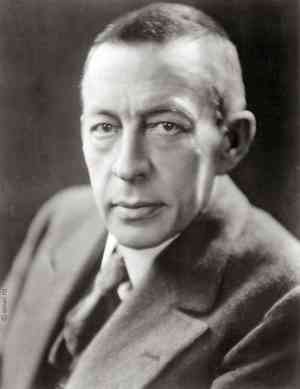
Sergei Rachmaninoff
Source: geenohjeu
The Romantic period was brought to its apex by Russian composer, Sergei Rachmaninoff. Rachmaninoff wrote largely orchestral, chamber and choral works, as well as pieces for piano and voice. Assisting him was a remarkable memory, able to play complex works, upon hearing them once, years later. Born near Novgorod on 1 April 1873, Rachmaninoff was a virtuoso who regularly performed compositions in concert which are a challenge to the world's finest pianists. Sergei faced criticism for his lack of interest in Modernistic trends, but his technical ability was off the charts and his high popularity due to an ultimate romanticism uttered through strains of melancholy sufficient to bring a tear as leaves fall on any given autumn day. Some find in him no more than a second-class composer for being only romantic and not writing a lot during the latter decades of his life. But the Romantic period that Beethoven began with beauty and boom as the 18th century became the 19th Rachmaninoff brought to its finish with beauty and dipping heart into the 20th century, a "Don't forget me" to a wind of all now dead and gone, yet in the midst of which brooding waves exists the counterpoint, so to speak, of some of the most awesome piano compositions ever written. I mean "awesome" not as the watered down term in general use these years, but in reference to what is actually jaw-dropping awesome.
Rachmaninoff's father was an aristocratic army officer whose marriage brought with it five estates, soon to be reduced to none via gambling. If his father was the pathological liar that it's said he was then Rachmaninoff's childhood was likely a nightmare. His mother nevertheless brought a tutor from St. Petersburg to their home in 1882 with whom Rachmaninoff studied until that home was lost and the family moved into an apartment. In 1883 Rachmaninoff entered the Saint Petersburg Conservatory. In the fall of 1885 he began studies beneath Nikolai Zverev at the latter's home, Scriabin a fellow student. His first composition that is since lost, 'Etude' in F sharp major, is thought to have arrived sometime between latter 1886 and 1888 prior to entering the Moscow Conservatory on a Rubenstein scholarship [Wikipedia]. His 'Song Without Words' ('Lento') in D minor TN ii/11 was one of the studies he wrote while a student there perhaps in 1887 or 1888. Instant Encore lends 'Romance' in A minor for violin and piano TN ii/31 a date of 1889 though earlier dates like 1880 and 1885 are seen. For the towering figure that is Rachmaninoff, the dating of his early compositions is ambiguous or contentious at best, another example being 'Piano Piece' in D minor widely given a date of 1884 but is more likely to be in the vicinity of 1890-91 [IMSLP / Wikipedia]. This was eventually published in 1949 by Muzgiz. Rach had also begun but abandoned a piano concerto in C minor in 1889 while yet attending the Conservatory. As for "TN" numbering, it isn't seen a lot since the works to which it refers are generally Rachmaninoff's lesser known like those without Opus, or arrangements and transcriptions of pieces by other composers. The TN system is per 'A Catalogue of the Compositions of S. Rachmaninoff' (London 1982) by R. Threlfall & G. Norris.
'Song Without Words' ('Lento') TN ii/11 in D minor Sergei Rachmaninoff
Comp 1887 or 1888 Pub 1994
Vladimir Ashkenazy
Rachmaninoff graduated from the Conservatory in 1891. His 'Trio élégiaque 1' in G minor TN ii/34 was composed between January 18 and 21 of 1892 toward its first performance the next month on 11 February in Moscow. 'Prelude et Danse Orientale' Op 2 for cello and piano had premiered on 30 January of 1992 at Vostryakov Hall in Moscow. That preceded the premiere of the first movement of his beautiful Opus 1, 'Piano Concerto No.1' in F sharp minor on 17 March 1892 which he had written the year before.
'Trio élégiaque No.1' TN ii/34 in G minor Sergei Rachmaninoff
Comp 1892 Premiere 11 Feb in Moscow Pub 1947
Piano: Anastasia Markina Violin: Aleksandr Snytkin Cello: Marie-Thaïs Levesque Oliver
Northridge Presbyterian Church in Dallas 4 March 2012
Wikipedia Français
'Piano Concerto No.1' Op 1 in F-sharp minor Sergei Rachmaninoff
Comp 1890–91 Revised 1919 Premiere of 1st movement 17 March 1892 in Moscow
Premiere entire 29 Jan 1919 in NYC
University Philharmonia Orchestra / Oriol Sans
Piano: Mimi Minagawa
University of Michigan Ann Arbor 4 Feb 2015
Fugue for Thought Orrin Howard IMSLP George Predota Score
Wikipedia Deutschsprachige Wikipedia English Wikipedia Français
'Two Pieces' ('Prelude et Danse Orientale') Op 2 Sergei Rachmaninoff
Comp 1891-92 Premiere 30 Jan 1892 at Vostryakov Hall in Moscow
Piano: Jean-Yves Thibaudet Cello: Truls Mork
IMSLP Robert Matthew-Walker Score Score West Cork Music
Come 'Morceaux de fantaisie' Op 3 to Moscow on 20 September 1892. Six days later on the 26th Sergei performed 'Prelude' ('The Bells of Moscow') in C Sharp minor Op 3 No.2.
'Morceaux de fantaisie' ('Pieces of Fantasy') Five pieces Op 3 Sergei Rachmaninoff
Comp 1892 Revised 1940 Premiere 20 Sep 1892 in Moscow
Piano: Vladimir Ashkenazy
Maureen Buja Steven Coburn IMSLP Robert Matthew-Walker
Wikipedia Deutschsprachige Wikipedia English Wikipedia Français
Sergei Rachmaninoff
'Prelude' ('The Bells of Moscow') From 'Morceaux de fantaisie' Op 3 No.2 in C-sharp minor
Comp 1892 Revised 1940 Premiere 20 Sep 1892 in Moscow
Piano: Lars Roos
Rachmaninoff completed three of the five operas he'd begun. His first, 'Aleko', premiered at the Bolshoi Theatre in Moscow on 9 May of 1893. Aleko is a Russian who has abandoned ordinary life for that of a gypsy. Unfortunately, he kills his lover, Zemfira, upon discovering her with a younger partner, and gets banned from the group of gypsies which had joined.
'Aleko' WoO First opera by Sergei Rachmaninoff
Comp 1892 Premiere 9 May of 1893 at the Bolshoi Theatre in Moscow
Libretto: Vladimir Nemirovich-Danchenko
After 'The Gypsies' ('Цыганы') by Aleksandr Pushkin 1824
Orchestre Symphonique et Lyrique de Nancy / Rani Calderon
Aleko: Alexander Vinogradov
Opéra National de Lorraine 15 Feb 2015
IMSLP Steven Ledbetter Wikipedia English
In the summer of 1893 Rachmaninoff composed the fourteen-minute symphonic poem, 'The Rock' Op 7, toward its first performance in Moscow by the RMS Orchestra conducted by Vasily Safonov on 20 March 1894. His 'Trio élégiaque No. 2' in D minor Op 9 saw writing between 5 October 1893 and 15 December 1893 toward premiere on 31 January 1894. Its publication was dedicated to Tchaikovsky who had died of cholera during its composing on 6 November 1893.
'The Rock' Op 7 Symphonic poem by Sergei Rachmaninoff
Comp summer 1893 Premiere 20 March 1894 in Moscow
Philadelphia Orchestra / Charles Dutoit
Fugue for Thought IMSLP Timothy Judd Ricordi Wikipedia English
'Trio élégiaque No.2' Op 9 in D minor Sergei Rachmaninoff
Comp 5 Oct 1893-15 Dec 1893 Premiere 31 Jan 1894
Dedication to Tchaikovsky
Piano: Andrei Korobeinikov Violin: Dmitri Makhtin Cello: Alexander Kniazev
Dennis Bade Elisa Braga Galeano IMSLP
Robert Matthew-Walker Wikipedia English Wikipedia Français
Rachmaninoff composed his 'Symphony No.1' in D minor Op 13 between January and October of 1895 toward a poor reception in St. Petersburg on 28 March 1897 with Glazunov conducting the Russian Symphony Society Orchestra. From autumn of 1900 to April 1901 Rachmaninoff wrote 'Concerto No.2' Op 18 toward the premiere of its 2nd and 3rd movements on 2 December 1901, its entirety on 9 November 1901 with Alexander Siloti conducting.
'Symphony No.1' Op 13 in D minor Sergei Rachmaninoff
Comp Jan-Oct 1895 Premiere 28 March 1897 in St. Petersburg
Netherlands Radio Philharmonic Orchestra / Stanislav Kochanovsky 16 March 2019
Richard Freed Emily E. Hogstad Andrew Huth IMSLP
Timothy Judd Wikipedia English Wikipedia Français
'Piano Concerto No.2' Op 18 in C minor Sergei Rachmaninoff
Premiere 9 Nov 1901 in Moscow
NordwestDeutschsprachigee Philharmonie / Martin Panteleev
Piano: Anna Fedorova
Het Zondagochtend Concert in Amsterdam 1 Sep 2013
Nick Dobreff Jessica Duchen IMSLP Danielle Meath
Harlow Robinson Score Marianne Williams Tobias
Wikipedia Deutschsprachige Wikipedia English Wikipedia Français Frances Wilson
Rachmaninoff became director of the Bolshoi Theatre for a couple of years in 1904, after which he worked briefly in Italy, then spent the next few winters in Dresden, residing in Ivanovka in the summers. His 'Symphony No.2' in E minor Op 27 was written from 1906 toward its premiere on 8 February of 1908 with the Russian Symphony Society Orchestra. 'Symphony No.2' includes strains from the 'Dies irae' ('Day of Wrath') from the Latin Mass for the Dead which would become a motif to recur in numerous future works [Wikipedia].
'Symphony No.2' Op 27 in E minor Sergei Rachmaninoff
Comp 1906 Premiere 8 Feb 1908 in Moscow
Orchestra of the Academy of Santa Cecilia / Sir Antonio Pappano
Rome 2013
BBC Max Derrickson Fugue for Thought Herbert Glass IMSLP Paul Laki
Steven Ledbetter Ken Meltzer Wikipedia Deutschsprachige Wikipedia English Wikipedia Français
Rach finished 'Piano Sonata No.1' in D minor Op 28 in 1908. Come 'The Isle of the Dead' Op 29 to Moscow on 1 May 1909, which Rachmaninoff would take to the United States for performance by the Chicago Symphony in December that year. The 'Dies Irae' emerged again in the 'The Isle of the Dead' inspired by the eponymous painting [Wikipedia] by Swiss artist, Arnold Böcklin.
'Piano Sonata No.1' Op 28 in D minor Sergei Rachmaninoff
Comp 1907 Premiere 17 Oct 1908 in Moscow
Orchestra of the Academy of Santa Cecilia / Sir Antonio Pappano
Piano: Boris Giltburg
Greg Anderson Marina Frolova-Walker The Gilmore Grant Hiroshima
IMSLP Roy Westbrook Wikipedia English Wikipedia Français
'The Isle of the Dead' Op 29 in A minor Symphonic poem by Sergei Rachmaninoff
Comp 1909 Premiere 1 May 1909 in Moscow
Azusa Pacific University Symphony Orchestra / Christopher Russell
Haugh Performing Arts Center in Glendora CA 7 Nov 2014
IMSLP Dr. Richard E. Rodda Wikipedia English Wikipedia Français
Rachmaninoff also took 'Piano Concerto No.3' Op 30 to America. Completing it in Dresden on 23 Sep 1909, it was performed in NYC on 28 November that year by the New York Symphony Orchestra with Walter Damrosch conducting. Rachmaninoff's trip to America included performances with Max Fiedler and the Boston Symphony Orchestra before returning to Russia in February of 1910 to become vice president of the Imperial Russian Musical Society.
'Piano Concerto No.3' Op 30 in D minor Sergei Rachmaninoff
Comp 23 Sep 1909 Premiere 28 Nov 1909 in NYC
Fort Worth Symphony Orchestra / Marin Alsop
Piano: Yunchan Lim (임윤찬)
Bass Performance Hall 17 June 2022
AMFS Catherine Beeson Berliner Philharmoniker Michael Clive Robert Cummings
Calvin Dotsey Fugue for Thought IMSLP Georg Predota Meg Ryan
SLSO Wikipedia Deutschsprachige Wikipedia English Wikipedia Français
Come Sergei's 'Liturgy of St. John Chrysostom' Op 31 written for mixed choir in July toward its first performance in Moscow on 25 November 1910. Late summer of 1911 brought nine exercises called 'Etudes-Tableaux' ('Picture Studies') Op 33. Rachmaninoff had composed thirteen of '14 Romances' Op 34 in 1912. No.14, however, didn't arrive until 1915, well into World War I, written for soprano, Antonina Nezhdanova, and orchestrated toward premiere in Moscow on 25 January 1916. No.14 is titled 'Vocalise', a song without words not to be confused with extemporaneous vocalese in jazz. 'Piano Sonata No.2' Op 36 had arrived in 1913 for publishing in 1914, later revised in 1931. Rachmaninoff composed the Eastern Orthodox liturgical 'All-Night Vigil' Op 37 in 1915 with fifteen movements. Nine more 'Etudes-Tableaux' arrived in 1916 as Op 39 first performed in Petrograd (St. Petersburg) on 29 November 1916. These were the last pieces composed by Rachmaninoff in Russia.
'Liturgy of St. John Chrysostom' Op 31 in D minor Sergei Rachmaninoff
Comp 23 Sep 1909 Premiere 25 Nov 1910 in Moscow
Helsinki Chamber Choir / Nils Schweckendiek
Cathedral Brixen 25 March 2024
Yoshi Campbell Barry Creasy IMSLP Robert Matthew-Walker
Ivan Moody Wikipedia English Wikipedia Français
'Etudes-Tableaux' ('Picture Studies') Op 33 Sergei Rachmaninoff
Comp 1911 Premiere 1911 in England
Piano: JaeSung Bae (배재성)
Cross-Eyed Pianist IMSLP Robert Matthew-Walker
Wikipedia Deutschsprachige Wikipedia English Wikipedia Français Frances Wilson
'Sonata No.2' Op 36 Sergei Rachmaninoff
Comp 1913 Revised 1931 Pub 1914
Two performances w score:
Nikolai Lugansky Zoltán Kocsis (24:28)
Adrian Corleonis Grokipedia IMSLP
Dominik Rahmer Dominik Rahmer Wikipedia English Wikipedia Français
'All-Night Vigil' Op 37 Choral music by Sergei Rachmaninoff
Comp 1915 Premiere March 1915
Tenebrae Choir / Nigel Short
St. Augustine Church in Kilburn (London) 2020
Bucks County Choral Society Maureen Buja Sanford Dole IMSLP
Patricia Jennerjohn PaTRAM Institute Te Deum Wikipedia English Wikipedia Français
'Vocalise' Op 34 No.14 of '14 Romances' Sergei Rachmaninoff
Comp 1 April 1915 Revised 21 Sep 1915
Premiere 25 January 1916 in St. Petersburg (Petrograd)
Soprano: Dame Kiri Te Kanawa
Royal Opera House at Covent Garden in London 1994
IMSLP Hermione Lai Dominik Rahmer Wikipedia English
'Etudes-Tableaux' ('Picture Studies') Op 39 Sergei Rachmaninoff
Final work composed by Rachmaninoff in Russia
Comp 1916 Premiere 29 Nov 1916 in St. Petersburg (Petrograd)
Piano: Aristo Sham
17th Van Cliburn International Piano Competition in Hong Kong, China 28 May 1925
Wikipedia Deutschsprachige Wikipedia English Wikipedia Français
During the Russian Revolution in 1917 Rachmaninoff came to losing everything but some compositions on which he was working, leaving Petrograd for Helsinki by sleigh with his family. He toured Scandinavia for a year before returning to the United States in 1918. Residing first in Manhattan, he'd not see Russia again, though numerous trips between the States and Europe would be made. His career in the States was tour-intensive for the next couple of decades, composing as could amidst emphasis on delivering concerts. Some fault Rachmaninoff for rehashing his works on stage rather than inventing new material, citing the better money to had from concerts than composing. Yet what he repeated was a far distance from hash. He was in fact polite to the notion of getting repeated any and everywhere even in the mechanically stunted form of piano rolls when on 17 March of 1919 he documented the first of 35 of them for Ampico to as late as 1 Feb 1929. Among the nine that he put away on 17 March of 1919 was one of Rachmaninoff's favorite pieces, his 'Prelude' Op 3 No.2 in C# minor on Ampico 57504B. A month later on 18 April of 1919 he recorded the first of eight flat discs as listed by Gabrelian and Wikipedia for Edison Records' Diamond Disc label.
'Prelude' ('The Bells of Moscow') Op 3 No.2 Piano roll by Sergei Rachmaninoff
Comp 1892 Revised 1940 Recorded 17 March 1919 Ampico 57504B
IMSLP Philadelphia Piano Institute Score
Wikipedia Deutschsprachige Wikipedia English
Rachmaninoff's first sessions for Victor arrived on 3 May 1920, he that day recording 'Troika en Traineaux' Op 37 No.11 for release on Victor 74630 and 'Prelude' in G major Op 32 No.5 on Victor 74645. Recordings at Rachmaninoff Diary are listed as Gramophone, British parent to a line of HMV and Victor, RCA acquiring Victor in 1929. Sergei recorded for RCA to as late as 27 February 1942 when he documented three titles by Chopin, Schubert and Schumann.
'Prelude' ('The Bells of Moscow') Op 38 No.3 Disc recording by Sergei Rachmaninoff
Comp 1892 Revised 1940 Recorded 18 March 1940 RCA Victor 74645
IMSLP Philadelphia Piano Institute Score
Wikipedia Deutschsprachige Wikipedia English
'Symphonic Dances' Op 45 Private recording by Sergei Rachmaninoff
Comp 1940 Recorded sometime 1940 at the home of Eugene Ormandy
Rachmaninoff premiered his 'Piano Concerto No.4' in G minor Op 40 in Philadelphia on 18 March 1927 with a second version arriving in 1928 and a third in 1941. Returning to Europe on numerous trips in the twenties, Rachmaninoff finally purchased a plot of land on which to build a second home in Switzerland in 1932, there spending his summers with his family until 1939. He spent 3 July to 18 August 1934 composing his concertante, 'Rhapsody on a Theme of Paganini' Op 43, toward its premiere at the Lyric Opera House in Baltimore on 7 November. This work is based on No.24 of Paganini's '24 Caprices for Solo Violin' Op 1 composed from 1802 to 1817. Opus 43 is another work in which the 'Dies Irae' motif is found [Wikipedia]. Rachmaninoff arranged this work for two pianos the same year.
'Piano Concerto No.4' Op 40 in G minor Sergei Rachmaninoff
Comp 1926 Revised 1928 / 1941 Premiere 18 March 1927 in Philadelphia
Iceland Symphony Orchestra / Gennady Rozhdestvensky
Piano: Viktoria Postnikova
Harpa Concert Hall in Reykjavik 30 April 2015
IMSLP Georg Predota SF Symphony
Wikipedia Deutschsprachige Wikipedia English Wikipedia Français
'Rhapsody on a Theme of Paganini' Op 43 of 24 Variations
Concertante by Sergei Rachmaninoff
Comp 1934 Premiere 7 Nov 1934 in Baltimore
Based on No.24 of '24 Caprices for Solo Violin' Op 1 by Paganini written 1802-17
Chicago Symphony Orchestra / Fritz Reiner
Piano: Arthur Rubinstein
Boston Symphony Hall 16 Jan 1956
Alex Burns Michael Clive Jeff Counts Robert Cummings
Herbert Glass Houston Symphony IMSLP Thomas May Utah Symphony
Wikipedia Deutschsprachige Wikipedia English Wikipedia Français
'Symphony No.3' Op 44 arrived to Philadelphia on 6 Nov 1936 w Leopold Stokowski conducting:
'Symphony No.3' Op 44 in A minor Sergei Rachmaninoff
Comp 1935–36 Revised 1938 Premiere 6 Nov 1936 in Philadelphia
Frankfurt Radio Symphony / Andris Poga 20 Jan 2023
Marin Alsop Nick Dobreff Herbert Glass IMSLP
Steven Ledbetter Michael Steinberg Wikipedia English Wikipedia Français
Rachmaninoff's final Opus was given to 'Symphonic Dances' Op 45 premiering in Philadelphia on 3 January 1941 with a dedication upon its publishing to Eugene Ormandy and the Philadelphia Orchestra, his favorite. Rachmaninoff had privately recorded from 'Symphonic Dances' on 21 December 1940, likely at Ormandy's home, prior to its premiere. The work again includes Sergei's motif from the 'Dies Irae' in its third movement. Upon writing 'Symphonic Dances' Rachmaninoff added an arrangement for two pianos that he and Vladimir Horowitz performed in August 1942 at a private party in Beverly Hills, California.
'Symphonic Dances' Op 45 Sergei Rachmaninoff
Comp 1940 Premiere 3 Jan 1941 in Philadelphia
Dedication: Eugene Ormandy and the Philadelphia Orchestra
Radio Filharmonisch Orkest / Edward Gardner
18 Dec 2011 at the Concertgebouw in Amsterdam
Maureen Buja Jeff Counts Herbert Glass
Soo Kian Hing IMSLP Lansdowne Symphony Orchestra Steven Ledbetter
MTC Harlow Robinson Marianne Williams Tobias Wikipedia Deutschsprachige
Wikipedia English Wikipedia Français Ileen Zovluck
'Symphonic Dances' For two pianos Op 45 Sergei Rachmaninoff
Comp 1940
Piano: Eleonora Karpukhova / Ekaterina Mechetina
Moscow Conservatory 2022
In 1942 Rachmaninoff became ill of melanoma, prompting a move to Beverly Hills. He finally became a U.S. citizen with his wife on 1 February 1943, but gave his last piano recital that month, performing Chopin's 'Piano Sonata No.2'. Rachmaninoff died the next month of melanoma in Beverly Hills on 28 March 1943, to be buried in New York. As his heart was as large as Russia's landscape the latter has sought his reburial there to no success.
Sources & References for Sergei Rachmaninoff:
Patsy Morita (All Music)
VF History (notes)
Audio of Rachmaninoff: Corpora:
Altervista Rachmaninoff (YouTube)
BBC (Ten Best)
Classic Cat (YouTube)
Europeana (song)
Rachmaninoff Network (YouTube)
Senar (performed by Rachmaninoff)
uDiscover Music (Ten Essential)
YouTube (w scores)
Audio of Rachmaninoff: Individual (chronological):
Trio élégiaque No.1 (WoO in G minor / comp 21 January 1892 / premiere 11 Feb 1892 Moscow):
Emerald Piano Trio Trio Borodin
Piano Concerto No.1 (Op 1 in F-sharp minor / comp 1892 / revised 1919):
Royal Liverpool Philharmonic Orchestra / Vasily Petrenko (piano by Simon Trpceski / 2010)
Morceaux de fantaisie (Op 2 in D minor/ comp 1892 / 20 September 1892 Moscow):
Aleko (opera WoO / comp 1892 / premiere 9 May 1893 Moscow):
Bolshoi Theatre Chorus and Orchestra / Nikolai Golovanov (1971)
Trio élégiaque No.2 (Op 9 in D minor / comp 15 December 1893 / premiere 1 January 1894 Moscow):
Kogan Piano Trio Trio RoVerde (1975)
Symphony No.1 (Op 13 in D minor / comp October 1895 / premiere 28 March 1897 St. Petersburg):
Royal Concertgebouw Orchestra / Vladimir Ashkenazy
Piano Concerto No.2 (Op 18 in C minor / comp 1901 / premiere 9 November 1901 Moscow):
Boston Symphony Orchestra / Seiji Ozawa
Warsaw National Philharmonic Orchestra / Stanislaw Wislocki
The Isle of the Dead (Op 29 in A minor / comp 1909 / premiere 1 May 1909 Moscow):
Royal Stockholm Philharmonic Orchestra / Sir Andrew Davis
Piano Concerto No.3 (Op 30 in D minor / comp 23 September 1909 / premiere 28 November 1909 NYC):
Olga Kern NordwestDeutschsprachigee Philharmonie / Gerard Oskamp (piano by Anna Fedorova)
All-Night Vigil Op 37 / comp 1915 / premiere March 1915):
Latvian Radio Choir / Sigvards Klava
National Academic Choir Ukraine Dumka / Yevhen Savchuk
Tambov Chamber Choir (Praise the Lord, O My Soul / Op 37 No.2)
Etudes-Tableaux (Op 39 / comp 1916-17 / premiere 1916-17):
Chubrik / Fernandez / Giltburg / Gryshyn / Januševičius Boris Giltburg (London 2018)
Piano Concerto No.4 (Op 40 in G minor / comp 1926 / premiere 18 March 1927 Philadelphia):
Philharmonia Orchestra / Ettore Gracis (piano by Arturo Benedetti Michelangeli / 1957)
Symphonic Dances (Op 45 / comp 1940 / premiere 3 January 1941 Philadelphia):
Saint-Petersburg Philharmonic Orchestra / Yuri Temirkanov
Symphonic Dances (for two pianos / Op 45 / comp 1940):
Vessela Marinova w Vesko Stambolov
Ingryd Thorson w Julian Thurber
Audio of Rachmaninoff: MIDI (file downloads):
Altervista Rachmaninoff Chubrik Classic Kunsterfuge
Authorship: Correspondence Publications
Compositions: Corpora:
Boosey
(chronological)
Classic Cat
(by date / opus)
Concertos
(piano)
Grokipedia
(by genre)
IMSLP
(by date / force / genre / key / opus / title / TN) (alt)
Instant Encore
(by popularity / title)
Klassika
(by date / genre / opus / title)
Rate Your Music
(by genre)
Senar
(chronological)
Wikipedia Deutschsprachige
(by date / opus)
Wikipedia English
(by date / force / genre / opus / title)
Wikipedia Français
(by genre)
Wikipedia Français
(by opus / period)
Iconography:
Wikimedia Commons
Recordings by Rachmaninoff: Select:
The Edison Recordings
(April 1919 / 2017)
Recordings by Rachmaninoff: Sessions:
Classical Pianists
(alphabetical 1919-1942)
DAHR
(disc 1920-1924)
Rachmaninoff Diary
(disc 1919-1942)
Rachmaninoff Diary
(piano rolls 1919-1929)
Wikipedia
(disc 1919-1942)
Wikipedia
(piano rolls 1919-1929)
Recordings of Rachmaninoff: Catalogs:
1922 Catalogue of Victor Records
DAHR
(sessions 1911-1947)
Recordings of Rachmaninoff: Select:
Rachmaninoff: Symphonic Dances | Études-tableaux | Vocalise
(Minnesota Orchestra / Eiji Oue / 2001)
Scores / Sheet Music:
IMSLP
International Piano Competition
(piano works)
Musicalics
(vendor)
MusOpen
Mutopia Project
Scorser
Senar
Further Reading by Source:
Tanya Gabrielian
(Flexibility of the Score: Issues Regarding Performance Practice / CUNY / 2018)
B.G. Gnilov
(Sergei Rachmaninoff’s Personal Stylized Rhythmic
Formula)
Georg Predota
(The Russian Romanzas)
Georg Predota
(Sergei Rachmaninoff and His Circle of Friends)
Georg Predota
(Transcriptions and Arrangements)
Charles O'Connell
(Some Reflections on Rachmaninoff and His Music)
Further Reading by Topic:
The Dies Irae (The Day of Wrath /
13th century / common motif in Rachmaninoff):
Martin Carline
Vincent Pallaver
Team Liquid
Documentary Films of Rachmaninoff
Film / Television
(usage in visual media)
Memories of Rachmaninoff
(by various)
Private Recordings:
Stephen Greenbank
Rachmaninoff Network
WRTI
Bibliography:
Robert Cunningham
(Sergei Rachmaninoff: A Bio-Bibliography / Bloomsbury Academic /
2001)
Fiona Maddocks (Goodbye
Russia: Rachmaninoff in Exile / Faber & Faber / 2023)
Barrie Martyn
(Rachmaninoff: Composer, Pianist, Conductor / Taylor & Francis /
2017)
Richard Sylvester
(Rachmaninoff's Complete Songs / Indiana University Press / 2014)
Other Profiles: Encyclopedic:
Britannica
Encyclopedia
Other Profiles: Musical:
8 Notes
Altervista Rachmaninoff (Italian)
Boosey
Classic Cat
Classical Net
Find a Grave
Music Theatre International
Steinway
Tchaikovsky Research
Classical
Main Menu
Modern Recording