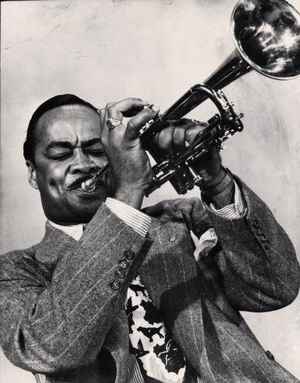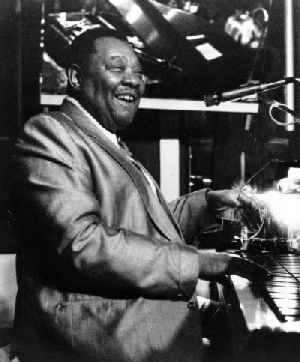
Group & Last Name Index to Full History:
A B C D E F G H I J K L M N O P Q R S T U V W X Y Z
Tracks are listed in chronological order by year, then alphabetically.
Listings do not reflect proper order by month or day: later oft precedes earlier.
Find on Page = F3. Not on this page? See history tree below.
Featured on this page loosely in order of first recording if not record release (as possible).
Names are alphabetical, not chronological, per year:
|
Caveats in the employment of this page: 1. It descends in chronological
order by the year the artist or band is first found on a commercial record
issue (ideally) by year only, alphabetical thereat. One musician above
another doesn't necessarily translate to earlier issue unless the year
changed. 2. Though release dates are the aim with links to YouTube, some
are recording dates and may not be everywhere clearly distinguished. 3.
Reissues are used to represent originals without much discussion. |
||||||||||||||||||||||||||||||||||||||||||||||||||||||||||||||||||||||||||||||||||||||||||||||||||||||||||||||||||||||||||||||||||||||||||||||||||||||||||||||||||||||||||||||||||||||||||||||||||||||||||||||
| Nice online sources for early
jazz including swing are
history and
theory at Jazz Standards,
and the Great American Songbook at 1,
2,
3.
Timelines at Jazz In America
and All About Jazz.
If what you're seeking isn't on this page
it might be found on any of the other jazz pages. Early jazz musicians
preceding but extending into swing such
as
Andy Kirk,
Ben Moten,
Fletcher Henderson,
Louis Armstrong, etc., are listed
in Early Jazz 1. Other swing musicians such as
Big Sid Catlett,
Papa Jo Jones,
Coleman Hawkins,
Django Reinhardt,
Stephane Grappelli,
Sweets Edison,
Julian Dash, etc., are found
on other jazz pages. Other early jazz musicians who led large bands and/or
performed swing jazz include
Louis Armstrong,
Gus Arnheim,
Benny Carter,
Jan Garber,
Roger Wolfe Kahn,
Hal Kemp,
Stan Kenton,
Guy Lombardo,
Abe Lyman,
Wingy Manone,
Don Redman,
Muggsy Spanier,
Jack Teagarden,
Fred Waring and
Anson Weeks. This page
includes dance (sweet jazz) orchestras. Sessions this page are largely
Lord's Disco.
References to the
Discography of American Historical Recordings (DAHR 1,
2) and Red Hot Jazz (RHJ
1,
2,
3)
also point to sessions. See also Walter Bruyninckx' [1,
2,
3] '85 Years
of Recorded Jazz 1917-2002 A-Z Complete'
compared
to Lord in 2011,
Jørgen Grunnet Jepson,
and Brian Rust 'Jazz and Ragtime Records 1897 – 1942' and 'Jazz Records
1917–1934'.
Composers for this period at Songbook. A good source for lyrics for this period in jazz is
Lyrics Playground.
Ditto songwriting credits at
Cafe Songbook,
Jazz Standards,
Songfacts and
Second Hand Songs.
Other big bands in Boogie Woogie.
|
||||||||||||||||||||||||||||||||||||||||||||||||||||||||||||||||||||||||||||||||||||||||||||||||||||||||||||||||||||||||||||||||||||||||||||||||||||||||||||||||||||||||||||||||||||||||||||||||||||||||||||||
|
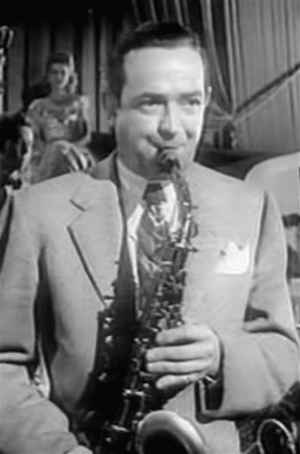
Jimmie Lunceford Source: Preston Lauterbach |
Born in 1902 in Fulton, Mississippi, bandleader
Jimmie
Lunceford, alto sax, grew up in Denver where he studied music under
Paul Whiteman's father, Wilberforce J. Whiteman. Upon graduating from high
school he attended Fisk University in Nashville. He had already been
working professionally with the George Morrison Orchestra, recording
several unissued tracks in spring of 1920 for Columbia, one which was
released (A2945): 'I Know Why' [Lord's]. Lunceford was an athletic instructor at Manassas High School
in Memphis, Tennessee, when he put together an orchestra of students called the
Chickasaw Syncopators in 1927. That band is said to have made one solitary
recording, Lunceford out, in December 1927, but not until 1930 did it
record to issue, those for Victor in Memphis, Tennessee, on June 6: 'In
Dat Mornin'' and 'Sweet Rhythm'. With the Syncopators grown from a high
school band into a professional operation, Lunceford changed its name to
His Orchestra, though he would call it the Syncopators on future
occasions. It was with His Orchestra that he next laid tracks on May 5,
1933, in NYC: 'Flaming Reeds and Screaming Brass' and 'While Love Lasts'.
It was 1934 when Lunceford and his Orchestra began recording en force up
to the time of Lunceford's death in '47. Among Lunceford's most important associations was arranger, Sy Oliver
[1,
2], with whom he worked in the thirties. In 1937 Lunceford took his
band to Europe. He died of cardiac arrest on 12 July 1947 in Seaside, Oregon,
while signing autographs. It's thought, though not proven, that he was
poisoned by a restaurant owner for having to serve a black person, as
other members of his band became ill as well. Every recording Lunceford's
band made from 1930 to 1949 (the last directed by Eddie Wilcox and Joe
Thomas after Lunceford's death) is available in ten volumes as 'The
Chronological Jimmie Lunceford & His Orchestra'. References:
1,
2,
3,
4,
5,
6.
Discographies: Chickasaw Syncopators: 1,
2,
3;
Lunceford: 1,
2,
3,
4.
Compilations: 'The Jimmie Lunceford Collection 1930-47' by
Fabulous 2014;
Decca Jazz Heritage Series 1934-42: 1,
2,
3;
Select Chronological Classics 1934-47: 1,
2,
3,
4,
5.
Lunceford in visual media.
Further reading:
New York Times
1996. Other profiles: 1,
2.
'Ain't Gonna Study War No More' 1940 below is a black spiritual of unknown
authorship preceding the Civil War, also known as 'Down by the Riverside'
or 'Gonna Lay Down My Burden'. It didn't get published until 1918 in
'Plantation Melodies' [1,
2]. Jimmie Lunceford 1920 With the George Morrison Orchestra Composition: Benny Davis/Frank Warshauer/Jimmy Morgan Jimmie Lunceford 1930 Composition: Edwin Wilcox Jimmie Lunceford 1934 Composition: Al Jolson/Vincent Rose Composition: Jimmie Lunceford/Sy Oliver/Will Hudson Composition: Harold Arlen/Ted Koehler Composition: Henry Wells Composition: Will Hudson Composition: Fats Waller/Andy Razaf/Irving Mills Composition: Arthur Swanstrom/Carey Morgan/Eugene Ford Composition: Hoagy Carmichael/Mitchell Parish Composition: Jimmie Lunceford/Sammy Cahn/Saul Chaplin Composition: Benny Davis/Con Conrad/Joseph Russel Robinson Composition: Andy Razaf/Harold Raymond/Nat Simon Jimmie Lunceford 1936 Composition: Abner Silver/Al Sherman/Jack Meskill Jimmie Lunceford 1937 Composition: Lady John Scott Jimmie Lunceford 1939 Baby Won't You Please Come Home Composition: Charles Warfield Possibly Clarence Williams Composition: Sam Nowlin/Sy Oliver Composition: Kay & Sue Werner Composition: Gene Austin/Nathaniel Shilkret Composition: Chick Adams/Larry Wagner Composition: Hugh MacKay Composition: Will Hudson Composition: Bulee Slim Gaillard/Green/Block Jimmie Lunceford 1940 I Ain't Gonna Study War No More With the Dandridge Sisters Composition: Traditional black spiritual Jimmie Lunceford 1941 Composition: Harold Arlen/Johnny Mercer Composition: Gerald Wilson Jimmie Lunceford 1946 Composition: Jimmie Lunceford Composition: Edwin Wilcox Jimmie Lunceford 1947 Composition: Nat King Cole
|
|||||||||||||||||||||||||||||||||||||||||||||||||||||||||||||||||||||||||||||||||||||||||||||||||||||||||||||||||||||||||||||||||||||||||||||||||||||||||||||||||||||||||||||||||||||||||||||||||||||||||||||
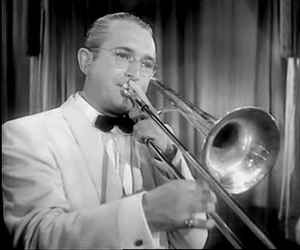
Jimmy Dorsey Source: Wikipedia |
Jimmy and Tommy Dorsey were brothers who didn't always get along, but played together off and on over the years. Jimmy was almost two years older than Tommy, they born in February 1904 and November 1905 respectively. Jimmy (largely a clarinetist) and Tommy (mostly trombone) began their recordings careers in the Scranton Sirens Orchestra in May of 1923 in NYC: 'Three O'Clock in the Morning' and 'Fate' [Lord]. Those were for the Sirens label before they grooved tunes for Victor with the Jean Goldkette Orchestra, their first session on March 27, 1924: 'In the Evening', 'Where the Lazy Daises Grow', 'My Sweetheart' and 'It's the Blues'. Continuing with Goldkette, the Dorseys began recording apart from one another in latter 1924. They both began laying tracks with the Varsity Eight and the California Ramblers. Jimmy, having performed in the California Ramblers with Red Nichols, moved on to the Goofus Five with the same. (Goofus was bass saxophonist, Adrian Rollini, also a member of the Varsity Eight and the California Ramblers) Tommy recorded with Bix Beiderbecke and his Rhythm Jugglers in January of 1925. He would also join Nichols and Rollini in the Little Ramblers. The Dorseys began recording with the Sam Lanin Dance Orchestra together in June of 1925. They would both record with the Fred Rich Hotel Astor Orchestra, though on separate occasions, before Jimmy moved onward with Goldkette and Fred Rich, finding himself with Nichols again, now with the Red Heads, in latter 1926. Tommy would perform in the Vagabonds in latter '26, moving on to Ted Wallace and his Orchestra in January of '27, both with Rollini. Jimmy and Tommy would record with Lanin again before Jimmy would lay tracks with Frank Trumbauer, Red And Miff's Stompers, the Charleston Chasers (Red Nichols and Miff Mole), Red Nichios' Five Pennies, Miff Mole. the Six Hottentots (Red Nichols and Miff Mole) and Sophie Tucker. They would perform together in Paul Whiteman's orchestra as well, among others. 1928 found Jimmy continuing with Trumbauer and Whiteman as Tommy continued with the California Ramblers, the Varsity Eight, the Vagabonds and Lanin. The date was February 14, 1928 when the Dorsey Brothers Orchestra recorded their first releases for Okeh in NYC: 'Mary Ann' and 'Persian Rug'. Their second session on March 14, also for Okeh, wrought 'Coquette' with 'The Yale Blues'. Tommy's first issues as a leader apart from Jimmy were also in 1928 in NYC, yielding 'It's Right Here for You' and 'Tiger Rag' on November 8. Guitarist, Eddie Lang, was part of that ensemble. Jimmy's first session as a leader included Tommy on 13 May or June of 1929: 'Beebe' and 'Prayin' the Blues'. The Dorsey Brothers Orchestra was meanwhile becoming a pretty big deal in jazz, issuing a load of recordings into 1935. Their last session together with that band was in NYC on August 1, 1935, with Bobby Byrne on trombone [Lord]. A final session with Tommy out was held on September 11. The Dorsey Brothers Orchestra became Jimmy Dorsey & His Orchestra which held its initial session on 19 September 1935 with Kay Weber and Bob Eberly sharing vocals on 'A Picture of Me Without You'. Jimmy recorded prolifically with his orchestras until his death of throat cancer on June 12, 1957, having given his final show in Joplin, Missouri on 12 March 1957. He had employed vocalists such as Helen O'Connell and Kitty Kallen along his way to a highly prolific recording career of 1013 sessions as counted by Lord. Tommy held even more sessions than Jimmy overall at 1185 until his earlier death, choking while eating or sleeping, on November 26, 1956. For all the industry he'd put into his work, minus the expenses of touring w an orchestra he reportedly left his wife only $15,000. He had employed singers such as Frank Sinatra and Connee Boswell. After their falling out in 1935 Jimmy and Tommy met again in 1939 for an NBC radio broadcast of the 'Raleigh Kool Show' to perform 'Honeysucke Rose' with their combined orchestras [Lord]. Jimmy played trumpet in Tommy's band for 'Trumpet Contest' during a CBS radio broadcast from the Meadowbrook in Cedar Grove, NJ, on 14 February 1941 [Lord]. Lord has Tommy contributing trombone to 'Grand Central Getaway' during an AFRS radio broadcast from the Palladium in Hollywood on June 13, 1944. Tommy joined Jimmy again on June 21 for another AFRS broadcast from the Palladium. They both backed Eddie Condon at a radio broadcast from the Ritz Theatre in NYC on 24 Feb 1945. It was their combined orchestras again for 'Saturday Night' on a 'Spotlight Bands' radio broadcast from La Guardia Air Field in New York on 12 March 1945. They reunited in 1946 for the filming of 'The Fabulous Dorseys' [1, 2] premiering on 21 Feb 1947. They reunited again in 1954 for their television program produced by Jackie Gleason, 'Stage Show'. Elvis Presley made his first television appearance on 'Stage Show' on 28 Jan 1956 [1, 2, 3], an important date in the annals of the old meeting the new. Presley returned consecutively for five more shows. Upon Tommy's death his ghost band was led by Jimmy until his own death half a year later, whence trombonist/vocalist, Warren Covington, took over. Another ghost band was created in 1961 by Tino Barzie, Tommy's manager. In 1977 trombonist, Buddy Morrow, assumed leadership. The current Tommy Dorsey Orchestra directed by Terry Myers. The current Jimmy Dorsey Orchestra directed By David Pruyn: *. References for Jimmy Dorsey: 1, 2, 3, 4, 5, 6, 7. Sessions: DAHR, RHJ, Lord. Discos: 1, 2, 3. Compilations: Jimmy on V-Disc. Jimmy in visual media. Further reading: Steven Cerra. Other profiles: 1, 2, 3 References for Tommy Dorsey: 1, 2, 3, 4, 5, 6. Sessions: DAHR; Lord; RHJ; w Frank Sinatra: Albin; 1940: U of CO. Discos: 1, 2, 3. Compilations: Chronological Classics 1928-1935; 'The Complete Tommy Dorsey' 1935-1939 by Bluebird: I, II, III, IV, V, VI, VII, VIII; Tommy on V-Disc. Lyrics. Tommy in visual media. Further reading: John Cooper on Tommy's big bands; Peter Levinson on Tommy w Frank Sinatra; Joe Mosbrook on the Dance Caravan Tour of 1941; George Simon; Scott Yanow. Other profiles: 1, 2, 3, 4, 5, 6 The Dorsey Brothers: 1, 2, 3, 4. The briefly existing Dorsey Brothers Orchestra: sessions: DAHR, RHJ; discos: 1, 2. See also 'American Big Bands' by William Lee. Jimmy & Tommy Dorsey 1923 Scranton Sirens Orchestra Composition: Byron Cage Thought the Dorsey's 2nd recording issued Scranton Sirens Orchestra Composition: Julián Robledo Thought the Dorsey's 1st recording issued Jimmy & Tommy Dorsey 1924 Composition: Cliff Friend 2nd track issued w the Jean Goldkette Orchestra Jimmy Dorsey 1927 W the Arkansas Travellers Alto sax: Fred Morrow Trumpet: Red Nichols Trombone: Miff Mole Clarinet: Jimmy Dorsey Piano: Arthur Schutt Drums: Vic Berton Composition: Hoagy Carmichael/Irving Mills Dorsey Brothers Orchestra 1928 The Dorsey Orchestra's 1st recording issued Music: Abner Silver Lyrics: Benny Davis The Dorsey Orchestra's 2nd recording issued Composition: Cliff Friend Tommy Dorsey 1928 1st recording issued as a leader Composition: Perry Bradford 2nd recording issued as a leader Composition: ODJP: Nick LaRocca/Eddie Edwards Tony Sbarbaro/Henry Ragas Credited: Larry Shields Lyrics: Harry DeCosta Jimmy & Tommy Dorsey 1929 Jimmy's 1st recording issued as a leader Composition: Jimmy Dorsey Jimmy's 2nd recording issued as a leader Composition: Jimmy Dorsey Jimmy Dorsey 1935 Composition: Harry Warren/Al Dubin Tommy Dorsey 1938 Composition: Pinetop Smith Arrangement: Tommy Dorsey Note: Dorsey arranged 'Song of India' from Rimsky-Korsakov's aria, 'Pesni︠a︡ indiĭskogo gosti︠a︡', in the 1898 opera, 'Sadko'. You Must Have Been a Beautiful Baby With Edith Wright Music: Harry Warren 1938 Lyrics: Johnny Mercer Jimmy Dorsey 1940 Music: Hoagy Carmichael 1938 Lyrics: Ned Washington Tommy Dorsey 1944 Vocal: Bonnie Lou Williams Composition: Axel Stordahl Paul Weston Sammy Cahn On the Sunny Side of the Street Music: Jimmy McHugh 1930 Lyrics: Dorothy Fields For the film 'Broadway Rhythm' Recorded June 1943 premiere: 13 April 1944 Tommy Dorsey 1949 Composition: James Weldon Johnson Jimmy & Tommy Dorsey 1954 Composition: Mort Dixon/Joe Young/Harry Warren Jimmy Dorsey 1957 Music: Jerry Herst 1937 Lyrics: Jack Sharpe Composition: Will Hudson/Mitchell Parish
|
Tommy Dorsey Source: Wikiwand |
||||||||||||||||||||||||||||||||||||||||||||||||||||||||||||||||||||||||||||||||||||||||||||||||||||||||||||||||||||||||||||||||||||||||||||||||||||||||||||||||||||||||||||||||||||||||||||||||||||||||||||
|
Born in 1903 in Pennsylvania, extraordinary pianist Earl "Fatha" Hines, first recorded per 'Falling' and 'Congaine' on October 23, 1923, with Lois Deppe's Serenaders at the Gennett studio in Richmond, IN. Hines had left home at age seventeen to play piano in Philadelphia at a nightclub called the Liederhaus with a band named the Symphonian Serenaders led by Lois Deppe. He was paid board, two meals a day and $15 per week. In 1925 he moved to Chicago to play at the Elite No. 2 Club and tour to Los Angeles with Carroll Dickerson's band. Upon his return he laid a couple unissued tracks with Kathryn Perry ('Mandy' and 'Sadie Green') in July of 1926 before recording with Johnny Dodds' Black Bottom Stompers in April of '27. That was fortuitous because Johnny was the brother of Baby Dodds, both of whom were partners of Louis Armstrong and Bud Scott, all of whom had first recorded together with Lil Armstrong and King Oliver in 1923. Also in Dodds's Black Bottom Stompers were Roy Palmer on trombone and Barney Bigard on trombone. Hines and Armstrong had met in 1926 in the pool room at the musician's union local #208, with whom he began playing at the Sunset Cafe. Following Dodds's Stompers came a session with Armstrong's Stompers on May 9 of '27. Hines found himself with Jimmie Noone and his Apex Club Orchestra in 1928, with whom he recorded 14 tracks that year, along with additional sides by Louis Armstrong adding up to 38 with the latter that year. Hines capped 1928 in December with a string of debut piano solo recordings in Long Island City for QRS and Okeh. Among fifteen from multiple sessions Red McKenzie is vocalist on four of them (Okeh). It was also 1928 that Hines began leading his own orchestra, at the Grand Terrace Cafe owned by Al Capone. His first issues as a bandleader are thought to have been from a session on February 13, 1929, yielding two takes of 'Sweet Ella May' and three of 'Everybody Loves My Baby'. With his orchestra to employ as many as 28 members, Hines began broadcasting nationally on radio from the Grand Terrace. Touring in the summers, the Grand Terrace closed in 1940, after which Hines took his band traveling year round. In 1943 the draft for World War II made it difficult for Hines to keep a band together, so he formed an all female orchestra. It was during that time in the early forties that Hines began seeding bebop, the first period of modern jazz often associated with sax man Charlie Parker and trumpeter Dizzy Gillespie, both of whom passed through Hines' orchestra. Between 1948 and 1951 Hines played with Louis Armstrong's All-Stars, after which he began touring again in 1954 with the Harlem Globetrotters (an exhibition basketball team). Things slowed down for Hines in the sixties, when he opened a tobacco shop, though he did tour much internationally. But the list of prominent musicians with whom Hines played and recorded in the seventies is nigh endless. Among Hines' notable performances were solos for Duke Ellington's funeral, the White House (twice) and the Pope. It is thought Hines last recorded in 1981 in São Paulo, Brazil: 'One O'clock Jump' among 13 titles on 'Fatha's Birthday' with Marva Josie and the 150 Band. He died on 22 April 1983 in Oakland, California. References encyclopedia: 1, 2, 3; musical: 1, 2, 3, 4. Sessions: DAHR, Lord, RHJ, RHJ. Discos: 1, 2, 3, 4. Compilations: 'Louis Armstrong Vol IV: Louis Armstrong and Earl Hines' 1927-28 by CBS 1989; 'Classic Earl Hines Sessions: 1928-1945' by Mosaic 2012: 1, 2, 3; 'Chronological Classics' 1932-1954 in eleven volumes #514 to #1440; 'The Indispensable Earl Hines' Vol 1-6 1939-1966: 1, 2, 3. Criticism: 'Rosetta' composed by Hines in 1933. Biblio: 'The World of Earl Hines' by Stanley Dance (Charles Scribner's Sons 1977). Other profiles: *. Earl Hines 1923 With Lois Deppe Composition: Hines Earl Hines 1928 Composition: Roger Graham/Spencer Williams Earl Hines 1929 Composition: Dan Dougherty/Jack Yellen/Milton Ager Earl Hines 1932 Composition: Josef Myrow Earl Hines 1934 Composition: Dudley Mecum/Jules Cassard Composition: Josef Myrow Composition: Hines Composition: Lew Pollack 1914 (No relation to Ben Pollack) Earl Hines 1938 Vocals: Ida James Music: Saul Chaplin 1938 Lyrics: Sammy Cahn Earl Hines 1939 Music: Hines Lyrics: Henri Woode Composition: Albert Johnson/Hines Earl Hines 1940 Boogie Woogie on St. Louis Blues Composition: WC Handy Earl Hines 1942 Composition: Hines/Billy Eckstine/Bob Crowder Earl Hines 1963 Composition: Clarence Williams/Fats Waller Earl Hines 1964 Composition: Richard Whiting Earl Hines 1965 Duet with Teddy Wilson Composition: Gerald Marks/Seymour Simons 1931 Composition: Hines Composition: Sigmund Romberg/Oscar Hammerstein II Composition: Eubie Blake/Andy Razaf Earl Hines 1976 Boogie Woogie on St. Louis Blues Filmed live Wolf Trap Park Jazz Festival Composition: WC Handy Filmed live Wolf Trap Park Jazz Festival Composition: Fred Rose/Walter Hirsch Concert filmed live Concert filmed live
|
Earl Hines Source: Draai om je oren |
|
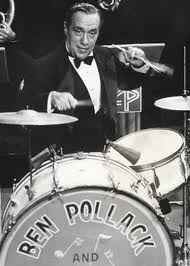
Born in Chicago in 1903, drummer Ben Pollack began his career large with the New Orleans Rhythm Kings, his first recordings with that outfit on March 21, 1923, in Richmond, IN, 'Weary Blues'/'Wolverine Blues' (Gennett 5102) among them. Three more full sessions with NORK followed to July before Pollack formed his own band called the Californians and made a test recording, probably for Golden Records in Los Angeles, in the summer of 1924. His next recordings with the Californians went unissued as well, on September 14, 1926, in Chicago. Pollack's first releases as a leader were recorded December 9, 1926, yielding 'When I first Met Mary' on Victor 20394 (vocal: Joey Ray) and 'Deed I Do' on Victor 20408 (vocal: Pollack). Those were also the first issues for Benny Goodman and Glenn Miller who were in Pollack's band. Popular during the period when jazz bands were expanding into swing orchestras, Pollack is regarded by some as the Father of Swing for his early hiring of names that became big to the period including Jimmy McPartland and Jack Teagarden. He took his band from Chicago to New York in 1928, but the Depression years found him touring the Midwest and Canada, albeit still in business and recording prolifically throughout throughout those years. Of note in 1937 were titles released with both the Rhythm Wreckers and Connie Boswell. In 1943 he performed in the Bob Crosby Orchestra in the film, 'Presenting Lily Mars'. In addition to music Pollack was a businessman. He had his own record label called Jewel (not to be confused with the ARC label) from 1945 to 1947. He worked in several other films from 1951 to 1956. From the latter fifties into the early sixties Pollack ran the Pick-a-Rib restaurant at 8250 Sunset Blvd (Sunset Strip) where he led a Dixieland band. This became the Body Shop strip club when Pollack sold the place to ramrod a Dixieland band at the Knickerbocker Hotel at 1714 N. Ivar Ave in Hollywood in 1963. In 1965 he and his sister, Esther, opened the Easy North Street bar at 2777 N. Palm Canyon Drive in Palm Springs. Six years later he hung himself by belt from a shower curtain rod in Palm Springs on 7 June 1971. Leaving a note mentioning financial and personal troubles, his death certificate listed his occupation as owner of the Easy North Street. References 1, 2, 3, 4. Sessionographies: Lord's, RHJ. Discographies: 1, 2, 3, 4. Pollack in visual media. Further reading: 1 2, 3. Each 1923 title below is from Pollack's first session with the New Orleans Rhythm Kings. Ben Pollack 1923 Composition: Lil Hardin/Walter Melrose Music: Lew Pollack 1914 Lyrics: Ray Gilbert Composition: Artie Matthews Ben Pollack 1927 Clarinet: Benny Goodman 2nd recording issued as a leader Composition: Walter Hirsch/Fred Rose Clarinet: Benny Goodman Composition: WC Handy Composition: Ted Shapiro/Gus Kahn Ben Pollack 1928 Composition: Victor Young/Will J. Harris Composition: Terry/Mills Ben Pollack 1929 Composition: Cliff Friend/Abner Silver Live With Smith Ballew Music: Richard Whiting Lyrics: Leo Robin Live Composition: Louis Alter/Jo Trent 1929 Live Composition: Charles Kin Composition: Joseph McCarthy/Harry Tierney Composition: Leo Robin/Sam Coslow/Richard Whiting Ben Pollack 1931 Music: James Hanley (James Frederick) Lyrics: Joseph McCarthy Published 1930 Ben Pollack 1934 Composition: Harry Revel/Mack Gordon Ben Pollack 1936 Composition: William Clay/Willard Robison Ben Pollack 1937 Composition: Joseph McCarthy/Harry Tierney First performance: Edith Day 1919 Ben Pollack 1951 Composition: Eddie Condon/Pete Kelly George Rubens/Jack Teagarden
Ben Pollack Photo: 1955 film 'The Benny Goodman Story' Source: Harlem National Jazz Museum
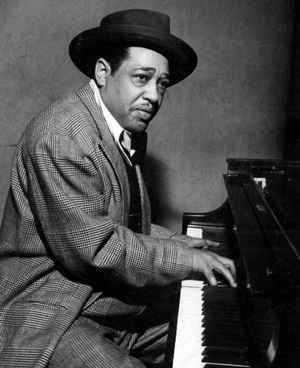
Duke Ellington Source: Pre-Party
|
Born in 1899 in Washington D.C., seriously talented pianist and big band leader Duke Ellington is another early example of a major swing musician thought good enough to entertain white America, but not to eat in its dining rooms or sleep in its hotels. Ellington was father to trumpeter and bandleader, Mercer Ellington [1919-1996/ 1, 2, 3, 4, 5]. He married a girl named Edna in 1918 who remained with him until his death. The Duke had been a sign painter before beginning his recording career in 1924 in NYC with Wilbur Sweatman and his Acme Syncopators, two unissued titles of 'Battleship Kate' and 'She Loves Me'. Ellington's first to go to issue may have been the same year, same titles recorded a month later. Ellington more certainly backed vocalist, Florence Bristol, before his debut recordings as a leader with his Washingtonians in November of '24. That operation was composed of Bubber Miley (trumpet), Charlie Irvis (trombone), Otto Hardwick (alto sax), George Francis (banjo) and Sonny Greer (drums) recording two tracks each of 'Choo Choo' and 'Rainy Nights'. Those were followed by sessions with Greer, Alberta Pryme ('Parlor Social De Luxe') and Jo Trent ('Deacon Jazz'), all for the Blu-Disc label. Irving Mills, also a music publisher, became Ellington's agent from 1925 to 1939, replaced by the William Morris Agency. Ellington had taken up residency at the Cotton Club in latter 1927. He would run all manner of bands by various names throughout his career, maintaining his flagship Washingtonians only to 1929, their last session before their retirement yielding 'Doin' the Voom Voom', 'Flaming Youth' and 'Saturday Night Function'. Ellington followed that with another session with his Jungle Band with which he'd already recorded on a few prior occasions in '29. Ellington appeared in his first film, 'Black and Tan', in 1929. Among his major credits is the hiring of pianist, Billy Strayhorn [1, 2, 3, 4, 5, 6, 7, 8], in 1939 (whom he had met the year before) to arrange, compose and otherwise collaborate until Strayhorn's death of cancer in 1967. Strayhorn's first composition for Ellington was 'Something to Live For' in 1939. A few of the tracks below were either composed by Strayhorn (including 'Take the 'A' Train', first recorded in 1939) or in collaboration with Ellington. A few of the more important musicians to pass through Ellington's numerous orchestras were bassist Jimmy Blanton, sax men Johnny Hodges and Ben Webster, Cootie Williams, Ray Nance and pianist Mary Lou Williams (as an arranger). A few of the vocalists he employed were Herb Jeffries, Al Hibbler and Ivie Anderson. In the sixties Ellington scratched vinyl with Louis Armstrong, Count Basie, Coleman Hawkins, John Coltrane, Charles Mingus and Max Roach. Ellington himself considered his most important works to be the three Sacred Concerts he composed in 1965, 1968 and 1973. Upon a remarkably full career Ellington is thought to have given his final concert in March 1974 at Northern Illinois University, the year he died that May on the 24th of lung cancer and pneumonia. His last words were reportedly, "Music is how I live, why I live and how I will be remembered." His son, Mercer, assumed leadership of Ellington's band until his own death in 1996. Among countless honors, such as multiple doctorates, Ellington won a Pulitzer Special Award in 1999. 2009 saw the issue of the Duke Ellington coin by the U.S. Mint. More Ellington under Johnny Hodges. References: 1, 2, 3, 4, 5, 6, 7, 8, 9, 10, 11, 12, 13. Orchestra members. Compositions by Ellington and/or Strayhorn at SHS: 1, 2. Sessionographies: Ellingtonia, Lord's. Discographies: 1, 2, 3, 4, 5. Compilations at Discogs 1924 to World War II by label: 1924-26 Masters of Jazz; 1924-30 Chronological Classics (8 volumes); 1926-27 Masters of Jazz; 1927-41 History of Jazz; 1928-30 History of Jazz; 1928-33 Archive of Jazz; 1936-40 Mosaic; 1940-41 Nostalgia Series; World War II History of Jazz. See also 1953-55 Mosaic. Among 'Best Of' releases was 'At His Very Best' in 1959. Ellington on Broadway. Ellington in visual media. Reviews. Interviews: Les Tomkins 1964-74. Further reading : 'Duke Ellington's America' by Harvey Cohen; Jazz Rhythm: 1, 2; PBS; Popa; Riverwalk; Scaruffi; 'A Life of Duke Ellington' by Terry Teachout. See also Mercer Ellington's 1978 'Duke Ellington in Person: An Intimate Memoir' by Houghton Mifflin. Per 1924 below, banjo is played by George Francis on all tracks. Per 'It Don't Mean a Thing' below, the full title is 'It Don't Mean a Thing If It Ain't Got That Swing'. Duke Ellington 1924 The Washingtonians Composition: Bob Schafer/Dave Ringle/Ellington Jo Trent & The D C'ns Composition: Jo Trent/Ellington How Come You Do Me Like You Do? Vocal: Florence Bristol Thought Ellington's 3rd recording issued Composition: Gene Austin/Roy Bergere Sunny & The D C'ns Composition: Ellington/Jo Trent The Washingtonians Composition: Jo Trent/Vincent Lopez/Will Donaldson Duke Ellington 1927 Composition: Bubber Miley/Ellington Composition: Billy Meyers/Elmer Schoebel Duke Ellington 1928 Composition: Ellington Composition: Dorothy Fields/Jimmy McHugh Composition: Ellington Composition: Ellington/Irving Mills Duke Ellington 1929 Composition: Ellington/Bubber Miley Composition: Cootie Williams/Ellington/Johnny Hodges Composition: Ellington Duke Ellington 1930 Composition: Barney Bigard/Johnny Hodges/Wellman Braud Music: Ellington/Barney Bigard Lyrics: Irving Mills Composition: Ellington Composition: Ellington/Irving Mills Composition: Ellington/Irving Mills Duke Ellington 1931 Music: Fats Waller Lyrics: Alexander Hill Duke Ellington 1932 Composition: Ellington/Irving Mills Duke Ellington 1940 Music: Ellington Lyrics: Bob Russell Duke Ellington 1941 Composition: Billy Strayhorn Duke Ellington 1943 Composition: Ellington/Irving Mills Duke Ellington 1944 Radio transcription Duke Ellington 1947 Vocal: Al Hibbler Music: Ellington Lyrics: Bob Russell Duke Ellington 1953 Music: Ellington/Billy Strayhorn Lyrics: Johnny Mercer Duke Ellington 1957 Composition: Seymour Simons/Gerald Marks Live at Ravinia Festival Composition: Ellington/Billy Strayhorn Duke Ellington 1965 Composition: Billy Strayhorn/Ellington Concert Duke Ellington 1970 Bass: Joe Benjamin Composition: Ellington
|
|
Born in 1901 in Denver,
cornetist and trumpeter,
Roy Fox [1,
2], was raised in Hollywood in a Salvation Army family together with
his sister. He first performed in public at age thirteen, playing cornet in
a newsboy band with the 'Los Angeles Examiner'. He next worked as a studio
musician playing bugle for Cecille B DeMille. At age sixteen he joined the
Abe Lyman Orchestra.
In 1920 he formed his first band. Sources have Hickman recording radio
transcriptions for Columbia at the Biltmore Hotel in New York City from
1919-1921. He was with the
Art Hickman Orchestra at
the Biltmore for Columbia in 1924. His initial issued recordings
were with
Hickman in June of 1924 for
Victor in Los Angeles, 'Patsy' among those titles.
Hickman was on a national
tour at the time which would take him to Miami, then NYC, where he would lead his own
band at the Avalon and Beaux Arts nightclubs before returning to
California in 1927 to work with
Gus Arnheim at the
Ambassador Hotel in Hollywood. It was in Los Angeles that Fox formed his
Montmartre (Cafe) Orchestra to record three titles for Brunswick in two
sessions in the summer of 1929: 'Painting the Clouds with Sunshine',
'Tip-Toe Through the Tulips' and 'I've Waited a Lifetime for You'. He
thereafter called his orchestra simply His Band, which he took on the
first of multiple trips to London, first to perform at the Café de Paris
in latter 1930, his ballroom style to become popular via BBC radio
broadcasts. Fox recorded 'A Peach of a Pair' in January of 1931 back in
Los Angeles before another trip to London where he assumed a half-year
residency at the Monseigneur Restaurant. Most of Fox' recordings as a
leader would take place in London, first for Decca (1931-35), then HMV
(1936-38), then VJM (1938). He traveled to Australia in 1938, there to
lead the Jay Whidden Orchestra. Returning to the U.S. to wait out World II, he made his way
back to London after that conflict, there to domicile. In 1952
he opened a booking agency, less performing music. Fox died on 20 March of 1982 in London.
Discographies: 45Worlds,
DAHR,
Discogs, Lord,
RYM.
Compilations: Vocalion.
Fox in visual media.
Archives. |
Roy Fox 1924 With the Art Hickman Orchestra Music: Hickman/Earl Burtnett Lyrics: Harry Kerr With the Art Hickman Orchestra Composition: Richard Winfree/Earl Burtnett Roy Fox 1929 Painting the Clouds with Sunshine Music: Joe Burke 1929 Lyrics: Al Dubin For the musical film 'Gold Diggers of Broadway' Tip Toe Through the Tulips with Me Music: Joe Burke 1929 Lyrics: Al Dubin For the musical film 'Gold Diggers of Broadway' Roy Fox 1931 Composition: Irving Berlin 1930 For the musical film 'Reaching for the Moon' Composition: Harold Arlen/Jack Yellen Roy Fox 1932 Composition: Gershwin Brothers For the musical 'Reaching for the Moon' Composition: Joe Washburne/Ted Weems Composition: Joseph Meyer Roy Fox 1933 Composition: Billy Meyers/Elmer Schoebel Ernie Erdman/Gus Kahn Composition: John Schonberger Richard Coburn Vincent Rose Roy Fox 1934 Music: Jimmy McHugh 1933 Lyrics: Dorothy Fields Composition: 1934: Harry Woods/Jimmy Campbell/Reg Connelly 'Cuando Vuelva a Tu Lado' ('When I Return to Your Side') Composition: María Grever 1934 Lyrics English: Stanley Adams Music: Dana Suesse 1934 Lyrics: Edward Heyman Roy Fox 1935 Roy Fox 1936 Let's Face the Music and Dance Vocal: Denny Dennis Composition: Irving Berlin 1936 For the film 'Follow the Fleet' Sung by Fred Astaire Composition: Ray Noble/Alan Murray Roy Fox 1937 Composition: Hugh Williams/Jimmy Kennedy 1937 Let's Call the Whole Thing Off Composition: Gershwin Brothers 1937 For the film 'Shall We Dance' Sung by Fred Astaire & Ginger Rogers
|
Roy Fox Source: R2OK
|
Carroll Gibbons Source: Songbook Born in 1903 in Clinton, Massachusetts,
pianist Carroll Gibbons
[1,
2,
3,
4]
studied at the New England Conservatory of Music (NEC) with Rudy Vallee.
He also studied at the Royal Academy of Music in London while yet a
teenager [Wikipedia]. Vallee played saxophone before his crooning days and
while at NEC he and Gibbons formed a band together. Chet Williamson has
them in London together playing at the Savoy Hotel in 1923, taken to
England by banjo and guitar player, Joe Branelley [Bhamra]. Gibbons may
have recorded unidentified titles as early as 1923. Another questionable
date arrived in August 1924 in London with the Savoy (Hotel) Orpheans for
Columbia per 'Oh! Eva' and 'Any Way the Wind Blows'. Tom Lord suggests
Billy Thorburn, Gibbons if not. Gibbons more definitely recorded with the
Savoy Orpheans as the Boston Orchestra in Hayes on 31 January 1925 toward
'Unfortunate Blues', 'Nola' and 'Mamma's Gone' for HMV. Carroll is thought
to have
first recorded as a leader for the HMV label during a performance in
November of '28 at Small Queen's Hall in London with the New Mayfair
Orchestra studio band: 'I Can't Give You
Anything But Love'. The New Mayfair Orchestra of '29 released 'I'm Crazy Over You', 'What a Wonderful Wedding That Will Be' and 'Deep
Hollow'. In 1931 Gibbons assumed sole leadership of the Savoy Orpheans.
Pulling members from that orchestra to form his smaller ensemble called
the Boyfriends, his debut tracks with that group went down on 17 Dec 1931
toward 'Life is Just a Bowl of Cherries' (CA12287) and 'Sleepy Time Down
South' (CA12287) [see Brown].
Gibbons began backing vocalist, Anne Lenner, in 1934, they to record more
than 150 titles until her departure from the Savoy Hotel in 1941. Gibbons died in London on 10 May 1954 only age fifty-one.
Sessions: DAHR (w composing credits), Lord.
Discos: Gibbons: 1,
2,
3;
Gibbons and his Boyfriends: 1,
2;
featuring piano.
Gibbons in visual media.
Archives: 1,
2.
HMR Project. Per below,
Gibbons did not perform in the soundtracks of films mentioned below.
Rather, he recorded versions selected from the original soundtracks. |
Carroll Gibbons 1924 Poss w the Savoy Orpheans Carroll Gibbons 1925 With Arthur Young Composition: James P. Johnson/Cecil Mack Savoy Havana Band Composition: Elmer Schoebel Carroll Gibbons 1926 Composition: Joe Brown/Sam Lerner Carroll Gibbons 1927 Carroll Gibbons 1928 Vocal: Whispering Jack Smith Carroll Gibbons 1931 Music: Franz Lehár 1929 Lyrics English: Harry Graham Carroll Gibbons 1932 Music: Richard Rodgers 1932 Lyrics: Lorenz Hart Let Me Give My Happiness to You Composition: George Posford Composition: Gibbons/Jimmy Campbell/Reg Connelly Carroll Gibbons 1933 Vocal: Harry Bentley Music: Jimmy McHugh 1933 Lyrics: Dorothy Fields Carroll Gibbons 1934 Music: John Fred Coots 1934 Lyrics: Sam M. Lewis Carroll Gibbons 1935 Vocals: Frances Day & Sybil Jason Composition: Marion Harris/Reg Montgomery Composition: Irving Berlin 1935 For the film 'Top Hat' Carroll Gibbons 1936 Music: Walter Donaldson Lyrics: Harold Adamson Carroll Gibbons 1937 Composition: Irving Berlin Selections from the film 'Shall We Dance' Carroll Gibbons 1938 Selections from the film 'Double or Nothing' Composition: Hoagy Carmichael/Frank Loesser Carroll Gibbons 1939 From the film 'Gold Diggers in Paris': Composition: Harry Warren/Al Dubin Composition: Harry Warren/Johnny Mercer Composition: Harry Warren/Al Dubin
|
|
Sonny Greer Source: Rock e Martello
Born in 1895 in Long Branch, New Jersey, drummer
Sonny Greer's
star doesn't shine as bright these days as some of his contemporaries, but a quarter century of daily
steady consistency with Duke Ellington made him a major contributor to swing
jazz with an extensive scroll of sessions (589 counted by Lord). He began his career playing with both banjoist, Elmer Snowden, and the
Howard Theatre Orchestra. In 1919 he met Duke Ellington, the two becoming
close friends. He would be a member of Ellington's operation from 1924 to
1951. It was with Ellington's
Washingtonians that Greer made his first recording in Ellington's
employ
in November of 1924 for the Blu-Disc label: 'Choo Choo' and 'Rainy
Nights' (Blu-Disc T1002). That same month they switched roles, Ellington
to back Greer's first session (of not a lot) as a leader, that with his
Deacons on 'Oh! How I Love My Darling' also for Blu-Disc. Greer's
discography is a very long one, both as a duplicate of much of Ellington's
own catalogue and with others. It was a dispute that permanently ended their
relationship, said to concern Greer's heavy drinking and increasing
undependability. Ellington had
hired drummer, Butch Ballard, to take Greer's place when Greer was
indisposed, which Greer found to be a disagreeable threat. Tom Lord's
discography shows Greer's last session with Ellington
as January 21, 1951 at the Metropolitan Opera House in NYC, though they
would find themselves recording together on occasions in the future. Greer
had already joined
Johnny Hodges on 15 Jan on
titles toward the latter's 'Castle Rock' issued later in 1955.
Norman Granz also produced
Hodges' 'Creamy' supported by
Greer. Greer and
Hodges went back to 1928 and
the Washingtonians. Lord finds them recording together as early as 1 Oct
that year for 'The Mooche' (Okeh 8623), 'Move Over' (Okeh 8638) and 'Hot
and Bothered' (Okeh 8623). As
Hodges was a major member of
Ellington's operation over the years, he and Greer were strong compatriots
found together on hundreds of recordings. Greer freelanced after
Ellington, also appearing in
films, and briefly led his own band. He died on 23 March 1982
[obit].
References:
1,
2,
3.
Sessions: DAHR (w songwriting credits), Lord.
Discos: 1,
2,
3.
Greer in visual media.
Documentaries: 'Portrait of Sonny Greer'
at Ellington Reflections.
Further reading: Whitney Balliett.
Other profiles: DrummerWorld;
HMR Project. As Greer is on
nigh every recording made by Ellington from 1924 to 1951
he is thereunder found. Below are listed only his first two titles w the Washingtonians and the Deacons,
followed by a couple tracks
he recorded with Ellington as Sonny Greer
and his Memphis Men, and a later track supporting
Hodges. |
Sonny Greer 1924 The Washingtonians Composition: Duke Ellington/Dave Ringle/Bob Schafer Joe Trent & the Deacons Composition: Joe Trent Sunny & the Deacons Composition: Harry Woods/Edgar Leslie The Washingtonians Composition: Will Donaldson/Vincent Lopez/Jo Trent Sonny Greer 1929 Memphis Men Composition: Barney Bigard/Johnny Hodges Memphis Men Composition: Barney Bigard/Duke Ellington Sonny Greer 1951 Johnny Hodges Septet Composition: Duke Ellington 1932
|
|
Bandleader, vocalist and actor,
Phil Harris, was born in
1904 in Linton, Indiana,
to be raised in Nashville, Tennessee. He began his career as a drummer in a circus
band, his parents both circus performers. Harris was a popular entertainer
of diverse capacity concerning which recording was a small
portion, his not an especially huge or long-lasting fame as popular
recording artists go. As for jazz, Lord is reluctant to list him in more than 12
sessions. Either way, Harris' greater fame arrived as a radio star, first as musical
director for the 'Jack Benny Program' from 1936 to 1946, then the 'Phil Harris
-Alice Faye Show' from '47 to '54. DAHR finds Harris playing drums in the
Henry Halstead Orchestra on four tracks including 'Panama' (Victor 19514)
and 'Frantic' (Victor 19513) on 20 June of 1924 in Oakland, California.
Harris hung w Halstead's outfit into 1927. It was September of 1927 that
he married Australian actress, Marcia Ralston, in Sydney, he there on tour
with an unidentified band. Upon returning to the States he and Carol Lofner formed an orchestra in San Francisco in which he performed as both
a drummer and singer in residence at the St. Francis Hotel. The next year
in 1929 he performed at the Cocoanut Grove in Los Angeles. First recording with Lofner in 1931, upon the dissolution
of their partnership in 1932 Harris put together his own orchestra with which
he released his first records as a bandleader in 1933. He won an Academy
Award that same year for the film, 'So This Is Harris!' (The Academy
Awards or, Oscars, were conceived in 1929.) In 1941 Harris married actress
and singer, Alice Faye. In 1946 he became musical director for the radio program, 'The Jell-O Show
Starring Jack Benny', with which he remained until '52. It was also 1946
when he and Alice Faye began 'The Phil Harris-Alice Faye Show' which
aired until 1954. In the latter sixties Harris began working as a voice
actor on a number of Disney animated films, which he continued into
the latter eighties. His last movie role was in 1991 for 'Rock-a-Doodle'.
Harris died in California on 11 August 1995 of heart attack [obits: 1,
2].
References encyclopedic: 1,
2;
musical: 1,
2,
3,
4.
Harris in radio.
Harris in visual media: 1,
2. Sessionographies:
DAHR w composing credits; Lord.
Discos: 1 (strike Bill Harris),
2.
Compilations: 'The Thing About Phil Harris' 1931-50 swing to popular
by ASV 1996.
Interviews: NAMM 1985;
Chuck Schaden 1988.
The broader spectrum of Harris' early recording is represented below. |
Phil Harris 1924 Henry Halstead Orchestra Drums: Phil Harris [DAHR] Composition: William H. Tyers Phil Harris 1931 I Got the Ritz from the One I Love Phil Harris-Carol Lofner Orchestra Composition: Harry Barris/JC Lewis Phil Harris 1933 Composition: Louis Alter Charlotte Kent Gus Kahn Vocal: Leah Ray Composition: Joe Young Ira Schuster Little Jack Little Phil Harris 1935 Between the Devil and the Deep Blue Sea Music: Harold Arlen 1931 Lyrics: Ted Koehler For the Cotton Club show 'Rhythmania' First recording: Cab Calloway Phil Harris 1947 Composition: Joe Arzonia (Arthur Longbrake) Published 1904 First recording: Arthur Francis Collins 1905 Smoke! Smoke! Smoke! (That Cigarette) Composition: Merle Travis/Tex Williams That's What I Like About the South Composition: Andy Razaf Phil Harris 1948 Composition: Buddy DeSylva Phil Harris 1950 Composition: Beasley Smith/Haven Gillespie Composition: Charles Randolph Grean
|
Phil Harris Source: Famous Fix
|
Frankie Carle Source: Vintage Music Born Francis Nunzio Carlone in 1903 in Providence,
Rhode Island, composer Frankie Carle
played a lot of beautiful piano, beginning to work
professionally in his latter teens. He early changed his name to Carle
because Carlone sounded too Italian. In 1921 he joined Edwin J. McEnelley's band, with whom he made his debut recording
[Lord] on 2 November 1925
in NYC: 'Spanish Shawl' (Victor 19851). His composition, 'Best Black', had
been recorded by the Mound City Blues Blowers earlier that year on 26
January. In 1936 Carle began working with
Mal Hallett's orchestra, his first session with Hallett on May 9,
1936: 'Mary Lou' and 'Swing Fever' (Vocalion 3236). He joined Horace Heidt in 1939, which brought him
to national attention via radio. His first session with
Heidt's Musical Knights was on September 20, 1939: 'Good Morning' and 'Are
You Having Any Fun?'. From a kid earning a dollar a week to
play gigs, Carle was now pocketing a thousand dollars a week plus 5% of
gross. He left Heidt to form his own orchestra in 1944,
recording for Circle from '44 to '47. He had also recorded with the
Casa Loma Orchestra ('39)
and Bobby
Hackett ('40). Having been elected into the Big Band and Jazz Hall of
Fame in 1989, Carle died in Mesa, Arizona,
on March 7 2001, his career spanning seventy years.
References: 1,
2,
3,
4.
Sessions: DAHR w songwriting credits; Lord.
Discos: 1,
2,
3,
4.
NAMM interview 1994.
HMR Project. |
Frankie Carle 1925 Edwin J. McEnelly Orchestra Composition: Elmer Schoebel Note: Recorded 2 Nov 1925. Issued on Vocalion 19851. Vocalion 19852 is George Olsen also in 1925. Frankie Carle 1937 Mal Hallett Orchestra Composition: Antonín Dvořák (Op 101) 1894 Mal Hallett Orchestra Composition: Cole Porter Frankie Carle 1939 Glen Gray & the Casa Loma Orchestra Music: Frankie Carle Lyrics: Jack Lawrence Frankie Carle 1940 Composition: Frankie Carle Composition: Euday Bowman First recorded and issued 1917: Earl Fuller's Rector Novelty Orch * Frankie Carle 1942 Composition: Burke Bivens/Wayne King Composition: Richard Whiting/Leo Robin Frankie Carle 1944 Composition: Dick Robertson Frank Weldon James Cavanaugh Frankie Carle 1945 Composition: Bennie Benjamin George Weiss Frankie Carle Frankie Carle 1946 Composition: Sunny Skylar/Don Marcotte Composition: Eddie DeLange Ernesto Lecuona Josef Myrow Composition: Bennie Benjamin/George David Weiss Frankie Carle 1947 Composition: Francis Craig/Beasley Smith Composition: Frankie Carle Recorded 1944 Composition: Arthur Berman Bernard Bierman Jack Manus Frankie Carle 1948 Film Frankie Carle 1950 Vocal: Joan House Composition: Harry Stride/Bert Douglas/McCarthy Composition: Gladys Shelley/Paul McGrane/Harry Moss Frankie Carle 1954 Music: Frankie Carle Lyrics: Jack Lawrence Frankie Carle 1968 Composition: Antônio Carlos Jobim Frankie Carle 1973 Television performance Music: Frankie Carle Lyrics: Jack Lawrence
|
|
Xavier Cugat Source: Big Band Library Born in 1900 in Girona, Spain,
violinist,
Xavier Cugat,
was relocated to Cuba by his family at age five. Trained in classical
violin, in the photo to the left he is caught just as he harkens to one of
many calls to reality. Cugat was twelve when he began playing with the Orchestra of the
Teatro Nacional in Havana. In 1915 he immigrated to New York with his
family, where he performed recitals with opera singer, Enrico Caruso. He
toured both Europe and the States. The 'New York Times' has him on a radio
broadcast with WDY in New Jersey from the Victor Talking Machine Company
in Camden as early as 1917. IMDb has him in the role of a violinist,
uncredited, in the film, 'The Four Horsemen of the Apocalypse', as early
as 1921. He had performed twice at Carnegie Hall in NYC before there
joining Vincent Lopez' dance orchestra at the Casa Lopez in 1924. Both Tom
Lord's discography and Brian Rust's 'The American Dance Band Discography
1917-1942' have Cugat recording with Vincent Lopez for Okeh from February 13, 1925 to May 2, 1930 for Perfect in more than thirty
sessions, all in NYC. Which is difficult to figure since, for all those
recordings, multiple biographies of violinist, Xavier Cugat, don't mention
Lopez at all. Be as may, one source has him leaving the East Coast for Los
Angeles a year after having joined Lopez' band, where he formed his
Gigolos, a tango band which played intermissions, thought in 1928, at the
Coconut Grove between performances by
Bing Crosby and the
Gus Arnheim Orchestra.
Cugat's Gigolos were also featured in the short film by Vitaphone, 'Cugat
and His Gigolos'. Cugat was featured in another with Carmen Castillo
titled, 'By a Camp Fire'. IMDb wants his first soundtrack titles in 1930
for 'In Gay Madrid', uncredited, for 'Santiago' and 'Dark Night'. Cugat
also performed on KFWB Radio and drew cartoons for the 'Los Angeles Times'
while in California. In 1931 Cugat returned to NYC with his Gigolos where
they found a spot at
the new Waldorf Astoria Hotel. It was Cugat's trademark to conduct while
holding a Chihuahua underarm. Cugat recorded from the thirties for several
decades to come. He is found on transcription
discs from radio broadcasts for Western Electric in 1932. Among his early
titles were 'Silencio', 'Ombo -
My Shawl', 'Gypsy Air Tango' and 'Rancho Grande' in 1933 for Victor. Cugat
hired Dinah
Shore in 1939, whence she made her debut recordings. Beyond
the tango, Cugat also recorded the mambo, the cha-cha-cha, the rumba, the twist and
music especially for the conga. Cugat's fifth and last wife had been
actress, singer and Spanish guitarist, Charo, from 1966 to 1978. He died of heart failure
on 27 October 1990 in
Barcelona. References encyclopedic: 1,
2,
3;
musical: 1,
2,
3,
4.
Sessions: DAHR w
composing credits; Lord. Discographies: 1,
2,
3.
Cugat in visual media.
Tribute sites: 1,
2,
3.
Collections. |
Xavier Cugat 1926 Vincent Lopez and his Casa Lopez Orchestra Composition: Irving Berlin First recording Irving Kaufman 1926 Vincent Lopez and his Casa Lopez Orchestra Composition: Donald Lindley/Owen Murphy Xavier Cugat 1927 Vincent Lopez and his Casa Lopez Orchestra Composition: Al Lewis/Carmen Lombardo Vincent Lopez and his Casa Lopez Orchestra Composition: Ted Fiorito/Gus Kahn Xavier Cugat 1933 Composition: Carmen Lombardo Charles O'Flynn Ernesto Lecuona Xavier Cugat 1935 'Say Si Si' Music: Ernesto Lecuona Lyrics Spanish: Francia Luban Lyrics English: Al Stillman Xavier Cugat 1939 Composition: Alberto Domínguez Xavier Cugat 1942 or 1944 Composition: Ricardo López Méndez/Gabriel Ruiz Xavier Cugat 1943 She's a Bombshell from Brooklyn Film: 'Stage Door Canteen' Composition: Al Dubin/Jack Mason/James Monaco Xavier Cugat 1947 Composition: Irving Fields/Albert Gamse Xavier Cugat 1959 Television program with Abbe Lane Music: Ricardo Lopez Mendez Gabriel Ruiz Galindo Lyrics: Sunny Skylar Xavier Cugat 1962 With Abbe Lane 'Il signore delle 21' television show
|
Lionel Hampton Source: El Mirador Nocturno
|
Born in 1908 in Louisville, Kentucky, Lionel Hampton was a no-joke drummer though he more distinguished himself with the vibraphone. Born to a single mother who raised him largely in Chicago, he was nineteen or twenty years old when he left Chicago for California to drum for the Dixieland Blues-Blowers. Hampton's earliest issues are estimated to have been in 1925 from a session circa November 1924 in Hollywood with Reb's Legion Club Forty Fives: 'Steppin' High' ('Mammy's Blues') and 'Shefield Blues'. Those likely weren't released until far later on Arcadia 2001 and VJM VLP6. He entered the studio again in April of 1929 with Paul Howard's Quality Serenaders in Culver City, California. The first session that month for Victor went unissued: 'Overnight Blues' and 'Quality Shout'. The next two, however, yielded 'The Ramble', 'Midnight Blues, 'Charlie's Idea', two takes of 'Overnight Blues', 'Quality Shout' and 'Stuff'. Hampton continued with Howard until another big name came his way in Los Angeles, his first session with Louis Armstrong on July 31, 1930. That was with Armstrong's Sebastian New Cotton Club Orchestra yielding 'I'm a Ding Dong Daddy' and 'I'm in the Market for You'. Hampton hung with Armstrong's bands until the latter's Polynesians in 1936 ('To You Sweetheart Aloha' and 'On a Coconut Island') when he held his first session with Benny Goodman on August 21 (three days after the Polynesians' session): 'St. Louis Blues', Love Me or Leave Me', Bugle Call' and 'Moonglow'. He also recorded with Teddy Wilson and Helen Ward as Vera Lane that month. Hampton stuck with Goodman into 1940, by which time his own orchestra was in full swing. Hampton is thought to have laid his first tracks as a leader on February 8, 1937 in NYC, yielding 'My Last Affair' (two takes), 'Jivin' the Vibes', 'The Mood That I'm In' and 'Stomp'. He issued his composition, 'Central Avenue Breakdown', in 1940. Come his most popular issue, 'Flyin' Home', in 1942, and 'Ridin' on the L&N' in 1946, also authored by him. Hampton manufactured an extensive catalogue with every who's who in jazz passing through his band at one time or another. Among vocalists with whom he'd worked were Dinah Washington (1943-45/46) and Annie Ross (European tour of 1953 *). The all-star group backing his 1964 album, 'You Better Know It!!!', consisted of Ben Webster (tenor sax), Clark Terry (trumpet), Hank Jones (piano), Milt Hinton (bass) and Osie Johnson at drums. Hampton had married his business manager, Gladys Riddle, back in 1936. Upon her death in 1971 he never remarried. Hampton was a Republican and had worked to raise money for Israel. He also became involved in philanthropic housing projects in New York and New Jersey during the sixties. In 1987 the University of Idaho named its music department the Lionel Hampton School of Music [1, 2]. Ironically per his efforts in housing, in 1997 his own apartment caught fire and his possessions destroyed. Hampton died of heart failure in NYC in 2002. He was a 33rd degree Mason, thus associated for above fifty years. He had later become involved w Christian Science. References encyclopedic: 1, 2, 3, 4; musical: 1, 2, 3, 4. Sessions all: Lord; name: 1929-1963, 1966-78. Discographies: 1, 2, 3, 4. Compilations: 'Hot Mallets' 1937-39 Vol 1 1992 and 1937-40 Vol 21997; 'The Complete Lionel Hampton Victor Sessions 1937-1941' on Mosaic Records MD5-238 per 2007: 1, 2; 'Air Mail Special' 1953-55 by Verve 1987. Hampton in visual media. Interviews: Les Tomkins 1974/83, BBC 1983, NAMM 1989. Further reading: 'Lionel Hampton in Action' by Gene Tuttle 1959. Internet Archives. U of Idaho Collection. Other profiles: 1, 2, 3, 4, 5, 6, 7, 8, 9. Lionel Hampton 1929 With Paul Howard's Serenaders Composition: Charlie Lawrence With Paul Howard's Serenaders Composition: Harvey O. Brooks Lionel Hampton 1930 With Paul Howard's Serenaders Composition: Charlie Lawrence Lionel Hampton 1937 Composition: Haven Johnson On the Sunny Side of the Street Music: Jimmy McHugh 1930 Lyrics: Dorothy Fields Lionel Hampton 1939 Composition: Buster Harding/Teddy Wilson With Charlie Christian and Benny Goodman Composition: Christian/Goodman/Hampton Composition: Hampton Composition: Duke Ellington/Irving Mills Composition: Duke Ellington/Irving Mills Cab Calloway/Frank Froeba/Jack Palmer Music: Eubie Blake 1930 Lyrics: Andy Razaf Lionel Hampton 1940 Guitar: Irving Ashby Composition: Hampton Composition: Goodman/Hampton Guitar: Irving Ashby Composition: Hampton Composition: Don Redman Composition: Hampton Composition: Roy Alfred/Andy Gibson Composition: Quincy Jones Composition: Hampton Album: 'Sea Breeze' With Chick Corea
|
|
|
British trombonist, Ted Heath [1, 2, 3, 4], was the UK's major version of a swing bandleader. Born in 1902 in South London, Heath is thought to have first recorded trombone on February 20, 1922, in Middlesex with Rector's Paramount Six, those titles unissued: 'After a While' and 'Everybody Step' [Lord's]. His first recordings to see issue are thought per 1925 with the Hannan Dance Band: 'No One Knows What It's All About' (Columbia 3598), 'Suite 16' (Columbia 3653), et al. Heath also put down tracks in '25 with the Corona Dance Band and the Kit-Cat Band. Among one the more nonstop acts in jazz, Heath's career isn't going to fit in this small space but for a few major names. Among the more significant was the orchestra of Bert Ambrose, which he joined in time for 'Singapore Sorrows' on April 2, 1928. Heath sat in Ambrose' band to as late as 1936. In 1942 he reunited with Ambrose directing the Melody Maker Band for 'I Didn't Want to Walk Without You'. The Melody Maker Band was a revolving outfit per the 'Melody Maker' music industry trade paper. Heath's first tracks with the band of Philip Lewis were laid on October 1, 1929, his last on August 19, 1930, resulting in 'Livin' In the Sunlight' etc.. Heath's first titles with Joe Brannelly's Blue Mountaineers were on February 29, 1932: 'In the Jailhouse Now' and 'Open Up Dem Pearly Gates'. His last were March 27, 1933: 'Won't You Stay to Tea?' and 'There's a Tiny Little Hair on Your Shoulder'. Among Heath's frequent partners, both supporting each other's projects and other bands, was clarinetist/saxophonist, Freddy Gardner. Heath and Gardner first recorded together on October 17, 1932, with Phil Allen's Merrymakers: 'Since I Fell In Love With Emmalina'. Gardner last supported Heath's orchestra on January 28, 1946, for 'Wotcher!' and 'Bakerloo Nonstop'. Another frequent partner was clarinetist/saxophonist, Sid Phillips. First recording with Phillips in the Bert Ambrose Orchestra on October 5, 1933 ('Dinner at Eight'), Heath and Phillips partnered on multiple occasions, both backing other operations and each other. Their last session was in December of '39, Heath siding Phillips on such as 'Music For You' and 'Plain Jane'. On April 15, 1936, he laid tracks with Benny Carter in London when the latter was touring Europe, among them: 'Swingin' at the Maida Vale', 'Night Fall' and 'Big Ben Blues'. Heath put together his first band in 1944 to broadcast for the BBC. His first session as a leader that year bore such as 'South of the Border' and 'Caravan'. He first appeared in film, 'London Town', in 1945. It was 1950 that he hired vocalist, Lita Roza, to his orchestra, for which he is perhaps best known. His first Royal Command Performance was for King George VI in 1951. His second arrived in 1954 for Queen Elizabeth II. In 1956 he visited America, touring with June Christy and Nat King Cole. Heath toured the States, Australia and Europe a number of times over the years. In 1958 he managed to record nine albums. Heath collapsed on stage on his 62nd birthday in 1964 of cerebral thrombosis. He continued to perform and record, though toured less, eventually dying in 1969 in Surrey, England. By the end of his career spanning more than five decades Heath had recorded more than a hundred albums and sold 20 million of them. His band's library of commissioned original arrangements exceeded eight hundred. Discographies: 1, 2, 3, 4. Sessions: henrybebop (select), Lord (417 sessions). Heath in visual media. HMR Project. More of Ted Heath's orchestra in Modern Jazz Song under Lita Roza. Per 'Hawaiian War Chant' in 1956, that was originally composed broadly circa 1865 by Prince Leleiohoku, Kingdom of Hawaii. Originally a love song titled 'Kāua I Ka Huahuaʻi' ('We Two in the Spray'). That saw issue in June 1911 by the Crowel Glee Club on Columbia Records. The song received English lyrics in 1936 by Ralph Freed, Ray Noble altering the melody a bit about that time as well. Tommy Dorsey released a version in Nov 1938 on Victor. The song was also featured in the 1942 film, 'Ships Ahoy'. Ted Heath 1926 With the Kit-Cat Band Vocal: Al Starita With Bert Firman Ted Heath 1942 With the Geraldo Orchestra Composition: Maurice Burman Ted Heath 1950 With Jack Parnell Composition: Ray Noble Ted Heath 1952 With Lita Roza Composition: Jack Holmes Ted Heath 1953 Composition: Herb Hendler/Ralph Flanagan Ted Heath 1954 Composition: Louis Belson Ted Heath 1956 Carnegie Hall Drums: Ronnie Verrell Composition: See above Ted Heath 1958 Composition: Moe Koffman Ted Heath 1959 Composition: Ricardo López Méndez/Gabriel Ruiz Ted Heath 1962 Drums: Ronnie Verrell and Kenny Clare Composition: Irving Berlin
|
Ted Heath Source: Jazz Wax
Blanche Calloway Source: Jazz Music Archives
|
Born in 1902 in Rochester, New York, singer, Blanche Calloway, sister of Cab Calloway who was five years younger, made her professional debut in Baltimore in 1921 with Eubie Blake and Noble Sissle's musical 'Shuffle Along'. After touring for a few years she made her first recordings on November 9, 1925, in Chicago with Louis Armstrong at cornet and Richard Jones on piano: 'Lazy Woman's Blues' and 'Lonesome Lovesick' (Okeh 8279). Touring as a dancer and singer w NYC on her itinerary, 1929 found Calloway on a number of titles with trumpeter, Reuben Reeves, their first recording in Chicago on August 13: 'Black and Blue' (Vocalion 1407). Blanche performed w her brother, Cab, before touring w Andy Kirk's Clouds of Joy, meeting w Kirk at the Pearl Theater in Philadelphia in 1931. Her first recordings with her Joy Boys spanned five sessions in 1931. Their first on March 2 yielded 'Casey Jones Blues' (Vocalion 22640), 'There's Rhythm in the River' and 'I Need Lovin'' (Victor 22641). Much of her band was borrowed from Kirk's Clouds of Joy, such as Harry Lawson and Edgar Battle on trumpet, John Harrington at alto sax and clarinet, Lawrence Freeman on tenor, William Dirvin on banjo and Billy Massey at vocals. Montgomery at Old Time Blues draws attention to 'Growling Dan' and 'I Got What It Takes' recorded on 18 Nov of '31 toward Victor 22866. With the exception of Battle that was a totally different configuration. Blanche grooved more titles with her Orchestra in '34 before her last with her Band in '35. Now well into the Great Depression, Blanche disbanded her orchestra in 1938 to declare bankruptcy. Blanche was, of course, unique in being a female bandleader in a patriarchal society where women more commonly kept house and raised children. She wasn't, however, particularly unique in facing a segregationist America when she toured, this the experience of all black bandleaders at her time. Wikipedia mentions an unhappy incident involving Calloway when she was jailed and fined $7.50 in 1936 for using the women's bathroom at a gas station in Yazoo, Mississippi. One member of her band who reportedly took a pistol whipping was arrested with her. While in jail another musician in her ensemble stole the band's funds, forcing Blanche to sell her bright yellow Cadillac for money, that tour gone sour. The forties had been a lean time for Calloway, she moving to Philadelphia. In the fifties she headed for Washington D.C. to run the Crystal Caverns nightclub, then moved to Miami Beach where she spent the next couple decades as a disc jockey for WMBM Radio. It's said Calloway was the first black woman to vote in Florida in 1958. She also became an active member of the NAACP, the Congress of Racial Equality and the National Urban League. Calloway died in Baltimore on 16 Dec 1978. References: 1, 2, 3. Sessions: DAHR (w composing credits), Lord. Catalogs: Discogs, Discogs, RYM. Compilations: 'The Essential Blanche Calloway 1925-1935' issued by Le Jazz in 1990; 'Chronological Classics 1925-1935' issued in 1996: 1, 2. Other profiles: 1, 2. Blanche Calloway 1926 Cornet: Louis Armstrong Piano: Richard M. Jones Composition: Richard M. Jones Blanche Calloway 1931 Music: James P. Johnson Lyrics: Andy Razaf I'm Gettin' Myself Ready for You Composition: Cole Porter Music: Hezekiah Jenkins Lyrics: Clarence Williams Composition: Perry Bradford Composition: Cliff Friend Arrangement: Frank Skinner Composition: Red Nichols Composition: Fess Williams Blanche Calloway 1934 Composition: Blanche Calloway Music: James P. Johnson Lyrics: Henry Creamer Composition: Blanche Calloway Blanche Calloway 1935 Composition: Eli Robinson/Blanche Calloway Composition: Herman Stein/Blanche Calloway
|
|
Lew Stone Source: Vintage Jazz & Dance Band Born in 1898 in London,
Lew Stone [1,
2,
3] would grow up to rival
British bandleaders like violinist, Bert Ambrose [1,
2] and Ted Heath.
He began recording in London
with Bert Ralton and his Havana Band in January of 1926, the first of
three sessions yielding 'Lillian', 'Memory's Melody', 'I Would Like to
Know Why' and 'Goodbye'. 'Maritana' followed from the next session
estimated in February. Stone began arranging in 1927 for the Savoy Orpheans,
Ray Starita and Ambrose, the last for whom he arranged
'Without You, Sweetheart', on February 14, 1928. Stone arranged for Ambrose
into 1931. Meanwhile he put away 'Breakaway' with his own band on
September 27, 1929, after which he did time with Roy Fox from '31 to '32.
He arranged and played cello on his first track with
Fox on January 28, 1931: 'A Peach of a Pair'.
Al Bowlly sang vocals on that, a
crooner with whom Stone would have multiple occasions to record in the next
few years. IMDb has Stone directing music for his first
film, 'The Chance of a Night Time', to premiere in Ireland on 4 Dec 1931. He
would arrange or direct music for above twenty more films during his
career. Stone assumed leadership
of the Roy Fox Orchestra at the Monseigneur Restaurant in Piccadilly while
Fox was convalescing from illness in Switzerland in the spring of '32. When Fox returned seven
months later his band was the most popular in London. When Fox's contract
expired in 1932, Stone became leader of the band as radio broadcasts from
the Monseigneur made his fame. His first recordings with the Monseigneur
Band were October 31, 1932, yielding 'Nightfall', 'Rain, Rain, Go Away,
'In the Still of the Night' and 'Why Waste Your Tears?'. Stone worked largely
in ballrooms and restaurants while broadcasting. In 1940 he configured his Stonecrackers, followed by
shifting formations of that in '41. Stone had also contributed to musical
productions for stage. He died on 12 January 1969 in London. Sessionographies: DAHR w composing credits; Lord.
Discos: 1,
2,
3,
4.
Compilations: 'Al Bowlly with Lew Stone and His Band' 1932-38 by
Ace of Clubs 1964.
HMR Project. |
Lew Stone 1928 Arrangement for Bert Ambrose Lew Stone 1929 Composition: Conrad/Mitchell/Gottler Lew Stone 1932 Vocal: Al Bowlly Composition: Bing Crosby/Irving Wallman/Max Wartell Lew Stone 1933 Composition: Cole Porter Music: Harry Warren Lyrics: Al Dubin Lew Stone 1934 Music: Harold Arlen Lyrics: Ted Koehler Music: Herbert Magidson Lyrics: Con Conrad Composition: Sam Coslow Vocal: Al Bowlly Composition: Walter Donaldson/Gus Kahn Composition: Leon Roppolo Paul Mares Jelly Roll Morton Arrengement: Fred Rose Music: Lew Pollack 1914 Lyrics: Ray Gilbert Lew Stone 1935 Composition: Cole Porter Vocal: Sam Browne Composition: Irving Berlin Vocal: Tiny Winters Composition: Eddie Pola/Michael Carr Lew Stone 1938 Music: Jerome Kern 1938 Lyrics: Dorothy Fields Lew Stone 1939 Lew Stone 1941 Composition: Andy Kirk/Leslie Johnakins
|
|
Bud Freeman Born Lawrence Freeman in 1906 in Chicago,
bandleader, Bud Freeman, also played tenor sax and
clarinet. Freeman was an original member of the Austin High School Gang.
In 1927 he moved to NYC and became a session player. Freeman is thought to
have first recorded with
Red McKenzie and
Eddie Condon's Chicagoans
on December 8, 1927 for Okeh: 'Sugar' and 'China Boy'. Freeman would
record heavily in
Condon's bands into the
sixties. Another huge figure entered Freeman's space when in April 1928 he
first recorded next to
Benny Goodman in the
Californians, a band led by
Ben Pollack: two takes of
'Singapore Sorrows' and 'Sweet Sue, Just You' unissued. Freeman would
record numerously with
Goodman into the forties,
including with
Goodman's orchestra. Freeman
led his first session as a leader later that year in Chicago on December
3, 1928, bearing 'Crazeology' and 'Can't Help Lovin' That Man' for Okeh.
His would be a strong career as a bandleader into the eighties. As a
session player Freeman backed all number of prominent names, to list but
several: Joe Haymes, Ray
Noble, George Wettilng, Stan Rubin,
Jimmy McPartland, Art
Hodes and
Pee Wee Russell. With
so much to highlight in Freeman's career it somehow sifts out to a session
with
Hoagy Carmichael on
May 21, 1930 in NYC: 'Rockin' Chair' and 'Barnacle Bill the Sailor'.
Contributing to that session something illustrates the heady climate in
which Freeman bumped shoulders:
Bix Beiderbecke
(cornet), Bubber Miley (trumpet),
Tommy Dorsey (trombone),
Benny Goodman (clarinet),
Arnold Brilhart (alto sax),
Joe Venuti (violin), Irving
Brodsky (piano),
Eddie Lang (guitar), Harry
Goodman (tuba), Gene Krupa (drums)
and
Carson Robison with
Carmichael on vocals.
Freeman led groups from trios to bands of more than ten members. Among
his various orchestras was his Summa Cum Laude active from 1939 as an
octet to 1958 as a trio with Bob Hammer (piano) and Mousie Alexander
(drums). Freeman had appeared w his Summa Cum Laude in
the Broadway
production of 'Swingin' the Dream' in latter 1939. During World War II Freeman led an Army band, stationed in the Aleutian
Islands. Returning to NYC after the war, Freeman freelanced with various
orchestras. Notable work in his later career with the World's
Greatest Jazz Band. He published his first memoir in 1974, followed by a
second in 1976. Freeman moved to England in 1974, then returned to Chicago
in 1980, where he died on 15 March 1991
[obit].
He was inducted into the Big Band and Jazz
Hall of Fame in 1992. References: 1,
2,
3.
Sessionographies: DAHR w composing credits; Lord.
Discos: 1,
2,
3,
4.
Compilations: 'All Star Swing Sessions' 1935/60/62 by
Prestige 2003;
Chronological Classics:
781 1928-38,
811 1939-40,
942 1945-46,
975 1946.
Further reading: John Litweiler,
Margaret Pick.
See also: 1,
2,
3,
4. |
Bud Freeman 1927 With the Chicagoans Composition: Phil Boutelje/Dick Winfree With the Chicagoans Composition: Gus Kahn/Ernie Erdman Elmer Schoebel/Billy Meyers Bud Freeman 1928 Composition: Freeman Bud Freeman 1929 With Benny Goodman and His Boys Composition: Freeman/Benny Goodman With the Louisiana Rhythm Kings Composition: Spencer Williams First issue Louis Armstrong 1928 With the Louisiana Rhythm Kings Composition: Edgar Dowell/Mamie Medina Bud Freeman 1938 Music: Jimmy McHugh Lyrics: Dorothy Fields Composition: Gershwin Brothers Bud Freeman 1939 Composition: Jack Palmer/Spencer Williams First issue: Clarence Williams' Blue Five 1926 Composition: Freeman Bud Freeman 1940 With the Chicagoans Composition: Spencer Williams Bud Freeman 1945 Composition: Freeman/Jack Palmer/Jay Livingston Bud Freeman 1947 Composition: Johnny Green/Gus Kahn/Carmen Lombardo Bud Freeman 1960 Composition: Paul Denniker/Andy Razaf Bud Freeman 1978 Live performance Music: Vincent Youmans 1924 Lyrics: Irving Caesar
|
Benny Goodman Source: Radionomy
|
A good example of swing in full bloom is bandleader and clarinetist Benny Goodman, generally designated the King of Swing. Born in 1909 in Chicago, Goodman's first recordings were at age 16 as a session clarinetist with both Ben Pollack's Californians and his White Tops in Chicago. Those went unissued: 'I'd Love to Call You M Sweetheart', 'Sunday' and 'Hot Stuff' [Lord]. Goodman is also listed on the 1979 issue of 'The Legendary Earl Baker Cylinders 1926', a collection of cylinders performed in 1926 on a record shared with radio transcriptions by Red Nichols. Goodman first saw release in 1927 from a session with Pollack on December 9, 1926: 'When I First Met Mary' and 'Deed I Do'. Goodman's first recordings with Pollack were also Glenn Miller's. Goodman's first name recordings were released in 1928 as Bennie Goodman's Boys with Jim and Glenn (Jimmy McPartland and Glenn Miller) from a session on January 23: 'A Jazz Holiday' and 'Wolverine Blues' [*]. Among Goodman's major credits are the hiring of pianist Ted Wilson and vibraphonist Lionel Hampton early in their careers when it wasn't proper for black and white musicians to play in the same band. Among recordings accounted essential in the Penguin Guide to Jazz [1, 2] was Goodman's delivery of the first jazz concert to be held at Carnegie Hall in NYC on 16 Jan 1938, that not released until 1950 [1, 2, 3, 4, 5, 6]. Goodman's is also the orchestra with which Charlie Christian came to fame. Among the vocalists Goodman employed were Helen Forrest, Peggy Lee and Anita O'Day. Though Goodman experimented with bebop in the forties it wasn't his bag, and he returned to the swing of his major arranger, Fletcher Henderson. Goodman was also a classical musician, releasing his first classical recordings in 1938 with the Budapest Quartet. He died of heart attack on 13 June 1986 in New York City leaving a legacy of one of the largest catalogues in jazz. More Benny Goodman under Peggy Lee in Swing Jazz 3. References academic: CMS; encyclopedic: 1, 2, 3, 4, 5, 6; musical: 1 (cached), 2, 3, 4, 5, 6, 7. Compositions. Discographies: 1, 2, 3, 4; albums. Compilations: 'Benny Goodman Sextet Featuring Charlie Christian': *. Collections: New York Public Library, Rutgers, Yale. Goodman in visual media. Interviews w Goodman: 1955 audio, 1962-70 text, 1980 audio, 1981 video, 1982 text. Other profiles at HMR Project and Riverwalk Jazz. Benny Goodman 1927 Bandleader: Ben Pollack Music: Fred Rose 1926 Lyrics: Walter Hirsch Benny Goodman 1928 Composition: Goodman Composition: Ferd (Jelly Roll) Morton Music: Lew Pollack 1914 Composition: Terry/Mills Composition: Benjamin Sikes/John Spikes/Jelly Roll Morton Benny Goodman 1933 Composition: Victor Young/Ned Washington/Joe Young Benny Goodman 1935 With Billie Holiday Composition: Ralph Rainger/Dorothy Parker With Billie Holiday Music: Richard Whiting/Ralph Rainger Lyrics: Leo Robin Benny Goodman 1936 Composition: Dave Franklin/Ned Washington/Sam Stept With Helen Ward Composition: Harold Adamson/Walter Donaldson With Billie Holiday Music: Arthur Johnston Lyrics: Johnny Burke Composition: Edgar Sampson 1934 Benny Goodman 1937 Composition: Neil Moret/Gus Kahn Vocals: Helen Ward Music: Harry Link/Jack Strachey Lyrics: Eric Maschwitz/Holt Marvell Benny Goodman 1938 Clarinet Quintet in A Major K. 581 With the Budapest String Quartet Composition: Wolfgang Mozart Contrasts for Violin, Clarinet and Pianoforte Composition: Béla Bartok Sing, Sing, Sing Composition: Louis Prima Benny Goodman 1941 On the Sunny Side of the Street Vocals: Peggy Lee Composition: Jimmy McHugh/Dorothy Fields Vocals: Helen Forrest Composition: Alec Wilder Vocals: Tommy Taylor Composition: Henry Nemo Benny Goodman 1943 Composition: Jack Palmer/Spencer Williams First issue: Clarence Williams' Blue Five 1926 Composition: King Oliver/Louis Armstrong Benny Goodman 1945 Composition: Benny Goodman/Buck Clayton/Count Basie Composition: Benny Goodman Benny Goodman 1948 Tenor Sax: Wardell Gray Trumpet: Fats Navarro Composition: Fats Waller/Andy Razaf Composition: Bernice Petkere/Joe Young Benny Goodman 1959 Filmed live in Holland Composition: Jack Pettis/Billy Meyers/Elmer Schoebel Filmed live in Holland Composition: WC Handy Benny Goodman 1967 Composition: Carl Weberr Benny Goodman 1973 Composition: Henry Creamer/Turner Layton Henry Creamer/Turner Layton 1918 Benny Goodman 1985 Filmed live at the New York Marriott Marquis
|
Edmond Hall Source: Wikimedia Commons
|
Born in 1901 in Reserve, Louisiana, clarinet player Edmond Hall [1, 2, 3] had been a farmhand until beginning his professional career in New Orleans in 1920. He is thought to have first recorded in August of 1927 in Savannah, Georgia, with Alonzo Ross and the Deluxe Syncopators, Margaret Miller at vocals (Victor Records). In 1930 he boarded Claude Hopkins' train to until 1935. Playing at the Savoy Ballroom in 1930, Hall would record with Hopkins in May of 1932, 'Mad Moments' and 'Mush Mouth' among several. His last tracks with Hopkins were for the soundtrack to 'By Request' three years later. In the latter thirties Hall played with Lucky Millinder, Zutty Singleton, Joe Sullivan and Henry Red Allen before forming the Celeste Quartet to record his first tiles as a leader on February 5, 1941. That group with Meade Lux Lewis (celeste), Charlie Christian (guitar) and Israel Crosby (bass) was good for five titles including two takes of 'Profoundly Blue'. Hall led a number of orchestras during his career, though his catalogue is not so extensive as a leader. The same year he debuted as a leader he joined Teddy Wilson's orchestra (1941). In 1950 he joined Eddie Condon's band, in 1955 Louis Armstrong's All Stars. Hall saw California with the All Stars in 1956, to shoot the film, 'High Society'. He had already toured Canada, the States, Europe and Ghana, and would make a failed attempt to live in Ghana in 1959 as a music instructor. Hall is thought to have made his last studio recordings in Copenhagen in 1966. All Music has Hall recording as late as February 3, 1967, contributing to tracks on the album, 'Edmond Hall's Last Concert' (tracks from 1964 included). That '67 performance was Hall's last at the Governor Dummer Academy with George Poor. He died nine days later on 11 February of heart attack. Hall was overall a steady, clean-living, non-drinking (preferring lemonade), wife-faithful (twice) musician. Sessionographies: DAHR w comp credits; Lord. Discos: 1, 2, 3. Compilations: 'Profoundly Blue' 1941/44 by Blue Note 1998: 1, 2; 'Flyin' High 1949-1959' by IAJRC 2006: 1, 2. Hall in visual media. HMR Project. 'Blue Interval', below, is an excellent example of early "smooth" jazz. Edmond Hall 1927 With Alonzo Ross Composition: Robert H. Cloud Robert Cookie Mason Edmond Hall 1932 With Claude Hopkins Composition: Hopkins With Claude Hopkins Composition: Jimmy Mundy Edmond Hall 1941 With Ida Cox Composition: Ida Cox/Jesse Crump (married) Trumpet: Henry Red Allen Piano: Ken Kersey Music: Jerome Kern 1927 Lyrics: Oscar Hammerstein II For the musical 'Show Boat' Guitar: Charlie Christian Composition: Meade Lux Lewis Edmond Hall 1944 Piano: Teddy Wilson Vibes: Red Norvo Composition: Edmond Hall Piano: Teddy Wilson Composition: Cole Porter Music: Richard Rodgers Lyrics: Lorenz Hart Edmond Hall 1955 Music: Felix Bernard/Johnny Black Lyrics: Fred Fisher Published 1919 Edmond Hall 1958 Film Trumpet: Louis Armstrong Music: Kid Ory 1926 Lyrics: Ray Gilbert Edmond Hall 1959 Composition: Benny Goodman/Lionel Hampton
|
|
Born in 1901 in Alameda, California,
Horace Heidt
[1,
2,
3]
was a popular bandleader who performed a type of jazz called schmaltz
[1,
2,
3],
his now more famous rival in that being
Guy Lombardo ('Auld Lang
Syne'). Heidt put
together his first band, the Californians, in 1923 while in college. His
first recordings are thought to have been a couple tracks for Victor in
April of 1927: 'Mine' and 'Hello cutie' [DAHR]. Heidt would also direct the
Brigadiers with which he first appeared on radio station WJZ in New York
City in 1931 [*].
Radio being one of Heidt's major avenues to stardom, he later hosted
programs including 'Pot o' Gold' ('39), 'Tums Treasure Chest', 'The
American Way' and 'The Horace Heidt Youth Opportunity Program' throughout
the forties, the last becoming a television show in 1950. Heidt and his Musical Knights
had first issued for Columbia
in 1939 per 'Good Morning' and 'Are You Havin' Any Fun?'. He scored nearly thirty Top Ten
titles from 1937 to 1945.
TsorT
figures his most popular overall to be 'I Don't Want to Set the World on
Fire', reaching Billboard's #1 in 1941 to hang around for 13 weeks. From
1945 to 1948 Heidt turned his attention to real estate, building a resort
apartment complex of 180 units, with a golf course, on ten acres of land
in the San Fernando Valley (CA). Heidt is said to have been the first to
put a band on a vaudeville stage, give away money on radio ('Pot o' Gold'), host a
television talent show and perform with a big band on television. He
passed away on 1 December 1986 [obit]. Sessions: DAHR, Lord,
Rust ('The American Dance Band Discography 1917-1942').
Discos (Californians, Brigadiers, Musical Knights, Heidt and His Orchestra):
45Worlds;
Discogs; RYM:
1,
2,
3.
Heidt in visual media.
Archives: 'Capital Journal' 1955.
See also: 1;
2,
3,
4,
5. |
Horace Heidt 1927 Composition: Cliff Friend Horace Heidt 1928 Composition: Dave Dreyer/Joseph Meyer Al Jolson/Billy Rose What a Wonderful Wedding That Will Be Composition: Kahal/Wheele/Fain Horace Heidt 1929 Composition: Dave Dreyer/Al Jolson/Billy Rose Music: Lou Handman Lyrics: Ben Ryan Composition: Nacio Brown The Wedding of the Painted Doll Composition: Nacio Herb Brown/Arthur Freed Horace Heidt 1937 Music: Allie Wrubel 1937 Lyrics: Herb Magidson Composition: Cole Porter There's a Gold Mine in the Sky Composition: Larry Cotton Horace Heidt 1938 'The Bells of St. Mary's' Composition: Larry Cotton/Jean Farney Music: Richard Rodgers Lyrics: Lorenz Hart Horace Heidt 1939 Composition: Léon Jessel Composition: Hugh Williams/Sam Coslow Horace Heidt 1941 Composition: Ole Olsen/Chic Johnson Jay Levison (Livingston)/Ray Evans I Don't Want to Set the World on Fire Composition: Bennie Benjamin/Eddie Durham Sol Marcus/Eddie Seiler Horace Heidt 1942 Music: Don Swander 1941 Lyrics: June Hershey Horace Heidt 1944 Music: Cole Porter 1934 Lyrics: Cole Porter/Robert Fletcher Horace Heidt 1950
|
Horace Heidt Source: Horace Heidt |
|
Born in 1906 in Cambridge, Massachusetts, Johnny Hodges, clarinet and sax, is largely associated with Duke Ellington, both as a composer and musician. Hodges first played professionally as a kid, performing piano for eight dollars an evening. He was playing soprano sax by the time he was teenager and was making a local name for himself around Boston when he moved to New York City in 1924. After an unissued track with Chick Webb in 1926 he joined Ellington's orchestra in 1928. He is thought to have first recorded with Ellington with the latter's Washingtonians on June 25 that year per two tracks each of 'What a Life' (unissued), 'Yellow Dog Blues' and 'Tishomingo Blues' (Brunswick 3987). Hodges attended above a thousand sessions during his career, most of them with Ellington, excepting 1951-55 when he led his own orchestra, up to 'New Orleans Suite' in 1970 (Ellington's eighth studio album, Hodges' final). Hodges had returned to Ellington's operation in time for the 1956 Newport Jazz Festival that summer. He had first recorded as a band leader in NYC on May 20, 1937, 'Peckin' with vocal by Buddy Clark among them. Ellington contributed piano, backing Hodges' bands numerously throughout the decades to come. Hodges first recorded 'Passion Flower' in 1941, a title rendered numerously for the next thirty years. His last performance was at the Imperial Room in Toronto, Ontario, in 1970. He died of heart attack at the dentist several days later on 11 May while working on his eighth studio album, 'New Orleans Suite', per above. References encyclopedic: 1, 2, 3; musical: 1, 2, 3, 4. Sessions: J-Disc, JDP, Lord. Discos: 1, 2, 3, 4. Compilations: 'Passion Flower 1940-46' by Bluebird 1995; 'The Stanley Dance Sessions' 1959/61 by Lone Hill Jazz 2005. Hodges in visual media. Hodges' saxophone: 1, 2. Further reading: Balliett, Clarke, HMR Project, Myers, Reney. All tracks for 1928 below are with Ellington. Johnny Hodges 1928 Music: Jimmy McHugh 1928 Lyrics: Dorothy Fields Composition: Duke Ellington Music: Jimmy McHugh 1928 Lyrics: Dorothy Fields Composition: Ray Henderson/Lew Brown/Buddy DeSylva Composition: 1928: Duke Ellington/Irving Mills How it sounded in 1928 Composition: WC Handy 1928 Johnny Hodges 1936 It's Like Reaching for the Moon With Billie Holiday Composition: Al Lewis/Gerald Marqusee/Al Sherman Johnny Hodges 1938 Composition: Duke Ellington/Hodges Johnny Hodges 1941 Composition: Billy Strayhorn Johnny Hodges 1946 Composition: Don Redman/Ray Gilbert Johnny Hodges 1956 With Duke Ellington Composition: Billy Strayhorn Album: 'Blue Rose' Johnny Hodges 1965 With Wild Bill Davis Music: Billy Strayhorn 1939 Lyrics: Joya Sherrill 1944 Album: 'Wings and Things' Johnny Hodges 1969 Live performance Music: Duke Ellington 1940 Lyrics: Bob Russell
Johnny Hodges Source: Michihisa Ishikawa |
Born in in Alexandria, Virginia, in 1903,
pianist, Claude Hopkins
(aka Hop Hopkins),
is said to have not left home until age 21. Even so he is documented by
Lord to
have made a couple unissued recordings for Columbia in New York City in 1922 with blues
singer,
Sara Martin: 'I Loved You Once but
You Stayed Away Too Long' and 'Tain't Nobody's Business If I Do'. His first professional employment
is generally given per leaving home with the
Wilbur Sweatman Band in
1924. The major break in his career occurred in 1925 when
he became director of The Review Negre, touring Europe with
Josephine Baker and
Sidney Bechet. Upon returning to the United States in 1927 he toured the
vaudeville circuit, performing piano on recordings with
Ma Rainey in Chicago in August of that
year: 'Misery Blues' w 'Dead Drunk Blues' toward Paramount 12508 and 'Slow Driving Moan'
toward Paramount 12526. Lord
has him next recording with
Clarence Williams in September 1928: 'Walk
That Broad' and 'Have You Ever Felt That Way?'. In 1932 Hopkins formed his
own orchestra with which he first recorded on 24 May: 'I Would Do Anything
for You' and 'Mad Moments' released on Columbia 2665-D. 'Mush Mouth' and 'How'm
I Doin'?' saw issue on Columbia 2674-D. In addition to touring with that band Hopkins held residencies at the
Savoy in Harlem, the Roseland in Manhattan and the Cotton Club in Harlem.
Among sessions he held along the way were those likely held sometime in 1934
to result in the later release of 'The Golden Swing Years: 1935' by Polydor in the UK in 1968, same
as 'Harlem 1934'
but the latter w additional tracks
issued by Swing Classics in Sweden in 1977. In 1940 he broke up his band to
begin arranging for CBS for several years, afterward filling out his
career as a sideman in countless groups. He later formed his All Stars w which he
backed Juanita Hall [1,
2,
3] in 1958 on 'The Original Bloody Mary Sings the
Blues' (various issues w various titles like 'Juanita Hall Sings the
Blues', 'Sings Bessie Smith', et al). His All Stars consisted of
Coleman Hawkins,
Buster Bailey,
Doc
Cheatham,
George Duvivier and Jimmy Crawford.
Bailey played clarinet again on Hopkins' release of 'Music of the Early
Jazz Dances' the same year. Filling Hopkins' band on that were Lyle Smith,
Charlie Shavers,
Henry Red Allen, Tyree Glenn,
Vic Dickenson,
Milt Hinton,
Panama Francis and Julia Steel at vocals. Lord has Hopkins' 'Golden Era of
Dixieland Jazz' going down on 23 Oct 1958, citing liner notes
to Gala GLP 347 which Discogs has recorded in '57. He recorded in the quartets of
Bailey and
Dickenson in '59. Backing
various others in 1960, such as 'Blues by Lonnie Johnson' that March,
Hopkins' 'Yes Indeed!' went down on 25 March (same month) that year w his
All Stars consisting of
Buddy Tate, Emmett Berry,
Wendell Marshall and
Osie Johnson. Piano solos by
Hopkins were later strung along in the early seventies: 'Soliloquy'
(Sackville) and 'Crazy Fingers' (Chiaroscuro). On 17 July of 1974 Hopkins
was in Valaurisis, France, to lay out 'Safari Stomp' w his trio filled by
Arvell Shaw at bass and
Papa Jo Jones on drums [arwulf/All
Music]. Lord traces sessions as a leader to as far as the Manassas Jazz
Fest on 8 December 1974 issued on 'Sophisticated Swing' Fat Cat's Jazz FCJ
197. On 29 March of '75 Hopkins joined the Dixieland Rhythm Kings on
'Squeeze Me' and 'After You've Gone', those issued that year on 'Jazz of
the Connecticut Traditional Jazz Club 11'. He remained busy in New York
until his death in NYC on 19 Feb 1984.
Chronological Classics has issued
three volumes covering Hopkins from
1932-34,
1934-35 to
1937-40.
References: 1,
2,
3,
4.
Sessions: DAHR w composing credits; Lord.
Discos: 1,
2,
3.
Hopkins in visual media since 1932.
Further reading at Keep Swinging: 1,
2.
Biblio: 'Crazy Fingers: Claude Hopkins' Life in Jazz' by Warren Vache Sr.
(Smithsonian Institution Press 1992). Other profiles: 1,
2. |
Claude Hopkins 1927 With Ma Rainey Composition: Ma Rainey Hopkins' 2nd recording issued With Ma Rainey Composition: Ma Rainey Hopkins' 1st recording issued With Ma Rainey Composition: Ma Rainey Hopkins' 3rd recording issued Claude Hopkins 1932 1st recording issued by Hopkin's orchestra Composition: Alex Hill/Claude Hopkins Composition: Jimmy Mundy Claude Hopkins 1934 Composition: Jesse Greer/Raymond Klages Claude Hopkins 1935 Featuring Tip Tap and Toe From the film 'By Request' Claude Hopkins 1937 With Betty White Music: Jo Trent Lyrics: Bob Russell Claude Hopkins 1958 Baby Won't You Please Come Home Backing Juanita Hall Composition: Charles Warfield/Clarence Williams
|
Claude Hopkins |
|
Born in 1904 in Clarinda, Iowa, trombonist/arranger Glenn Miller remains one of the most enduring figures in big bands despite his death at an early age. He'd left high school for college in Boulder, Colorado. As a student he played in the band of Boyd Senter in Denver, then dropped out of school to tour with bands that eventually took him to Los Angeles where he found spots with Ben Pollack and Victor Young. Miller first recorded with Pollack and his Californians on September 14, 1926, those unissued by Victor. Miller is also listed on the 1979 issue of 'The Legendary Earl Baker Cylinders 1926'. Miller's initial recordings were also Benny Goodman's, as would be his first issues, recorded on December 9: 'When I first met Mary' and 'Deed I Do'. While with Pollack Miller issued a couple titles with Red Nichols' Stompers in latter '27: 'Sugar' and 'Make My Cot Where the Cot-Cot-Cotton Grows'. 1928 saw the release of 'A Jazz Holiday' and 'Wolverine Blues' by Bennie Goodman's Boys With Jim And Glenn (Jimmy McPartland). Miller began setting tracks with the Sam Lanin Orchestra in January of '28: 'Everywhere You Go'. In March of '28 he was with Goodman and McPartland to record 'I'm More Than Satisfied' and two takes of 'Oh Baby' with Nat Shilkret's All Star Orchestra. Miller issued strongly in those early days with such as Red Nichols, the Dorsey Brothers Orchestra, Benny Goodman, the Boswell Sisters, Lee Wiley, Mildred Bailey and Clark Randall before releasing his first issues as a bandleader with vocalist, Smith Ballew, in 1935: 'A Blues Serenade' and 'Moonlight on the Ganges'. By 1939 Miller's band was such a success that he performed at Carnegie Hall that year. Miller then began broadcasting on CBS for Chesterfield cigarettes on December 27, 1939, with the Andrews Sisters, a series that would run nearly three years with 'Moonlight Serenade' it's theme excepting the use of 'Slumber Song' during the ASCAP boycott of 1941. Miller released his most popular title over all, 'In the Mood', in 1939, that reaching Billboard's #1 spot to hang around for thirty weeks [TsorT]. Among vocalists with whom Miller worked were Gordon Tex Beneke, the Modernaires, Marion Hutton, Kay Starr and Dinah Shore. In 1941 Miller's dance band appeared in the film, 'Sun Valley Serenade', followed by 'Orchestra Wives' the next year. Miller gave his last 'Chesterfield Show' on 24 September of 1942. He gave his last concert in the United States on November 27, 1942, in Passaic, New Jersey. He then joined the Army for patriotic causes, sacrificing an income in the vicinity of $70,000 per month to lead an Army band. He was soon promoted to captain, then major, then was even more swiftly downed over the English Channel in a plane with a faulty carburetor [*], disappearing on 15 December 1944. Miller's last recording had been in England only 3 days prior on 12 December at the Queensbury Club in London where Tom Lord has him putting away 'Red Cavalry March' ('Russian Patrol') with his Army Air Forces Band with which he'd given some 800 performances. ''Little Brown Jug' and Parachute' had preceded that on 1 Dec of '44. Ten years after Miller's death Anthony Mann directed the 1954 film tribute to Miller titled 'The Glenn Miller Story' starring James Stewart and June Allyson. References: 1, 2, 3, 4, 5, 6, 7, 8, 9. Sessions: DAHR; Lord. Discos: 1, 2, 3, 4. Compilations: Miller's Army Air Force Band: 'The Lost Recordings' by Happy Days 1995/96; 'Missing Chapters' Vol 1 through 9 by Avid; 'Secret Broadcasts' by RCA Victor 1996. Miller's disappearance and death in 1944: books : 'Glenn Miller Declassified' by Dennis Spragg (Potomac 2017); articles based on research by Spragg: 1, 2, 3, 4; documentaries based on research by Spragg: PBS 'History Detectives'. Members of the Glenn Miller Orchestra. Further reading on Miller: 'The Glenn Miller Years' by Gene Lees for 'Jazzletter' 2007: 1, 2, 3, 4, 5, 6, 7; Christopher Popa on Miller's Army Air Force Band. The current Glenn Miller Orchestra. See also Glenn's Swing Orchestra. Glenn Miller licensing. Other profiles: 1, 2, 3, 4, 5, 6, 7, 8, 9, 10. All tracks below are chronological by year only. All for year 1944 are with the Army Air Force Band. More Miller under Marion Hutton in Swing Jazz Song. Glenn Miller 1927 Bandleader: Ben Pollack Music: Fred Rose 1926 Lyrics: Walter Hirsch Glenn Miller 1934 With the Dorseys Composition: Glenn Miller Glenn Miller 1935 With the Dorseys Composition: Glenn Miller Composition: Glenn Miller Glenn Miller 1938 Live at the Paradise Restaurant Vocals: Ray Eberle & Marion Hutton Radio broadcast Glenn Miller 1939 Composition: Joe Garland Composition: Joseph Eastburn Winner 1869 Music: Glenn Miller Lyrics: Mitchell Parish Music: Frankie Carle Lyrics: Jack Lawrence Glenn Miller 1940 Music: Frankie Carle Erskine Hawkins/Bill Johnson/Julian Dash Lyrics: Buddy Feyne Glenn Miller 1941 Music: Harry Warren Lyrics: Mack Gordon Film: 'Sun Valley Serenade' Glenn Miller 1942 Vocals: Lynn Bari and Ray Eberle Composition: Harry Warren/Mack Gordon Film: 'Orchestra Wives' Music: Jerry Gray Lyrics: Eddie DeLange Glenn Miller 1943 War Bond Parade From 'St Louis Blues' by WC Handy Glenn Miller 1944 With the Army Air Force Band: Vocal: Johnny Desmond Music: Jerome Kern Lyrics: Oscar Hammerstein II Music: Glenn Miller Lyrics: Mitchell Parish Music: Jerome Kern Lyrics: Otto Harbach
Glenn Miller Photo: Chesterfield (cigarettes) Source: Glenn Miller Orchestra
|
Vic Dickenson Photo: 'Life' magazine Source: Jazz Lives Born in 1906 in Xeniz, Ohio,
trombonist Vic Dickenson's career spanned early to modern jazz. He first
played professionally in 1921 with the Elite Syncopators. Discogs and Tom
Lord have him possibly recording as early as Nov 1927 with Willie Jones and his Orchestra for Gennett at its
studios in Richmond, Indiana, per 'Ragmuffin Stomp' (6370), 'Michigan Stomp'
(6326) and 'Bugs' (6326). Brian Rust and the writer at 45 Worlds, however,
prefer trombonist, Sam Searce. Lord doesn't state why he adds the
possibility of Dickenson, so the 1928 release date in the menu above is
tentative. Dickenson more certainly recorded with
Luis Russell in Dec of 1930
as a vocalist on 'Honey, That Reminds Me'. See the CD 'Vic Dickenson: Nice
Work: 1930-1961' on Retrospective RTR4294. Dickenson's next issues were in 1934 with
Blanche Calloway from a
session in August in Chicago, leading to another in NYC, which town
Dickenson made his neighborhood as a studio musician, he coming to a national
stature. In 1936 Dickenson began three years with
Claude Hopkins. He
started working with Benny Carter in 1939 and
Count Basie in 1940. After
another brief time with Carter Dickenson gave up big bands for smaller
ensembles. Together with leading his own bands Dickenson worked largely as
a freelancer, performing with pianist, Eddie Heywood,
Henry Red Allen, the
Saints and the Sinners. Trumpeter, Bobby Hackett,
would be a frequent session partner during his career, he first recording
with Hackett with Peggy Lee
and the Jubilee Allstars in 1945: 'You Was Right, Baby'.
Dickenson's first issues as a leader were recorded in late 1947 in Los
Angeles with his Sextet consisting of Jack Trainor (trumpet), Jewell Grant
(alto sax), JD King (tenor sax), Skip Johnson (piano/arrangement), Billy
Hadnott (bass), Chico Hamilton
(drums as Forrest Hamilton). Dickenson issued as ramrod of various
ensembles throughout his career, though not so extensively as were his
backing engagements. In 1957 he participated in the CBS broadcast of
'The Sound of Jazz'. He and Eddie Condon
toured Asia in 1964. Dickenson began working with Bobby Hackett in 1968.
The early seventies brought The World's Greatest Jazz Band
[1,
2,
3], 'Live at
the Roosevelt Grill' gone down on April 17 and 18 of 1970
[*]. Dickenson died of cancer
on 16 November 1984 in New York City
[obit].
References: 1,
2,
3.
Sessionographies: DAHR w composing credits; Lord.
Discographies: 1,
2,
3.
Compilations: 'The Essential Vic Dickenson' 1953/54 by Vanguard 1995 (nigh
the same w 11 tracks as 'Vic Dickenson Septet' in 1972 with twelve):
1,
2;
'Five Classic Albums Plus' by Avid 2012 containing 'Vic Dickenson Septet'
Vol 1-4 ('53/'54) and 'Mainstream' ('58).
Dickenson in visual media. Further reading
at Jazz Profiles.
HMR Project. |
Vic Dickenson 1928 Willie Jones and his Orchestra Tentative: Brian Rust credits Sam Searce at trombone Composition: Grier Vic Dickenson 1931 Luis Russell and his Orchestra Vocal: Dickenson Trombone: J.C. Higginbotham Composition: John Nesbitt Vic Dickenson 1940 Good example of jump jazz Count Basie Orchestra Music: Josef Myrow/Gene Irwin Lyrics: Kim Gannon Arrangement: Don Redman Vic Dickenson 1946 With Lester Young Music: Harold Arlen Lyrics: Billy Rose/EY Harburg Vocal: Kay Starr Composition: Walter Donaldson/Gus Kahn Vocal: Kay Starr Composition: Clifford Burwell/Mitchell Parish Vic Dickenson 1953 Composition: Sir Charles Thompson Composition: Irving Berlin Vic Dickenson 1958 Composition: Spencer Williams Filmed live at Cannes Composition: Earl Hines/Henri Woode Filmed live at Cannes Composition: Charlie Shavers/Sid Robin Originally 'Yellow Dog Rag' Composition: WC Handy 1915 Vic Dickenson 1970 World's Greatest Jazz Band Composition: Joseph Meyer/Herman Ruby 1922 Vic Dickenson 1976 Album Vic Dickenson 1983 Filmed live Music: James Price Johnson Lyrics: Henry Creamer
|
|
|
Born in 1909 in Chicago, drummer Gene Krupa, expanded the drums ensemble beyond the usual bass, cymbals and snare. Famous for his work with Benny Goodman, he recorded as early as 1927 with Eddie Condon and Red McKenzie. His first session with their Chicagoans was held in Chicago on December 8, yielding 'Sugar' and 'China Boy'. Another on the 16th wrought 'Nobody's Sweetheart' and 'Liza'. Several more unissued tracks with Condon followed in '28 until Thelma Terry and her Play Boys recorded 'Lady of Havana', among others, on March 29. From spring to summer that year Krupa found himself recording with Condon in various groups from the Chicago Rhythm Kings, the Jungle Kings, Frank Teschemacher's Chicagoans and a band run by Miff Mole to the Eddie Condon Quartet before recording with Wingy Manone's Club Royal Orchestra in September: 'Downright Disgusted' and ''Fare Thee Well'. Tracks were also recorded in September with the Wabash Dance Orchestra, partnering with Red Nichols and, again, Wingy Manone. Krupa finished 1928 with Red McKenzie in December, recording 'Crazeology' and 'Can't Help Lovin' That Man' with the Bud Freeman Orchestra. 1929 found Krupa backing Red Nichols' Five Pennies before more tracks with Condon and McKenzie, now with the Mound City Blue Blowers. He also performed with Emmett Miller, Red Nichols' Midnight Airedales and Fats Waller in '29, to begin 1930 with Irving Mills and further configurations run by Nichols such as the Louisiana Rhythm Kings. A load of recordings with Nichols, among others, followed into 1931. In latter 1934 Krupa joined the Benny Goodman operation, having first worked with Goodman on recordings with Nichols' Five Pennies in April of '29. Krupa remained with Goodman into 1938. Krupa had begun recording with his own orchestras in 1935, a session with his Chicagoans on November 19 that year yielding 'The Last Round-Up', 'Jazz Me Blues', 'Three Little Words' and 'Blues of Israel'. Goodman was also a member of his Swing Band in '36. Krupa and Goodman would record numerously together in various configurations throughout their careers. Krupa's last recordings were with the Benny Goodman Quartet at Carnegie Hall in NYC on June 29, 1973. Also in that ensemble were Lionel Hampton on vibes, Teddy Wilson on piano and Slam Stewart on bass. Krupa had first worked with Hampton with Benny Goodman in 1936 and would record with Hampton often, both with Goodman and in Hampton's orchestras. Teddy Wilson would drift in and out of his path on various occasions, including Krupa's bands. Krupa's film debut was in 1939 in Hollywood in the film, 'Some Like It Hot'. He was such a skilled drummer that it was inevitable the drum solo be introduced to jazz by him, drum battles to ensue (such as the example below for 1952). In 1943 he was arrested for possession of two joints of cannabis and contributing to the delinquency of a minor. He'd spent nearly three months in jail when it was decided that he'd been framed and was cleared of charges. Krupa recorded extensively both with other musicians and his own ensembles, often quartets. Highlights of his career include several occasions with Norman Granz' Jazz at the Philharmonic, the first on February 12, 1945 in Los Angeles. (The initial Jazz at the Philharmonic was held on July 2, 1944 in Los Angeles.) Krupa performed in the 'Timex All Star Jazz Show' for NBC in '57, '58 and '59. More than thirty years into his profession, Krupa was hardly history, but a happy drummer long acquainted with people making a fuss of him when a movie was made about his career in 1959 called 'The Gene Krupa Story' w screenplay by Orin Jannings, direction by Don Weis and Sal Mineo as Krupa. Krupa worked with Condon again in 1961 per 'Chicago and All That Jazz' for NBC. His last performance as a leader listed in Tom Lord's discography was a quartet with Eddie Shu on tenor sax, John Bunch at piano and Nobil Totah on bass in April, 1973 at the New School in New York. Krupa died of leukemia and heart failure in Yonkers, New York, in October 1973. References: 1, 2, 3, 4, 5, 6, 7. Sessions: 1, 2, Lord. Discos: 1, 2, 3. Krupa in visual media: 1, 2. Compilations: 'Drummin' Man' 1938-49 by Columbia 1963. Archives. Interview w Buddy Rich by Willis Conover 1956. Equipment. Facebook tribute page. Biblio: articles: Owen Edwards; Bobby Scott; books: 'World of Gene Krupa' by Bruce Klauber (Pathfinder 1990). Other profiles: 1, 2, 3, 4, 5, 6, 7, 8. More Krupa under Eddie Condon in Early Jazz. Gene Krupa 1927 With the Chicagoans Composition: Phil Boutelje/Dick Winfree With the Chicagoans Composition: Ernie Erdman/Gus Kahn Billy Meyers/Elmer Schoebel Gene Krupa 1928 Composition: Alfred Bryan/Pete Wendling Gene Krupa 1929 Film With the Chicagoans Composition: Phil Boutelje/Dick Winfree Gene Krupa 1935 With the Chicagoans Composition: Gene Krupa With the Chicagoans Composition: Tom Delaney With the Chicagoans Composition: Bert Kalmar/Harry Ruby Gene Krupa 1937 Film: 'Hollywood Hotel' With Benny Goodman Composition: Louis Prima Gene Krupa 1939 Film: 'Some Like It Hot' Gene Krupa 1941 Composition: Henry Creamer/Turner Layton Film: 'Ball of Fire' Actress: Barbara Stanwyck Voice dubb: Martha Tilton Composition: Gene Krupa/Roy Eldridge Gene Krupa 1946 Film Vocal: Judy Carroll Gene Krupa 1948 Film: 'Thrills of Music' Vocal: Dolores Hawkins Gene Krupa 1949 Album Gene Krupa 1952 JATP live at Carnegie Hall With Buddy Rich Live at Carnegie Hall With Buddy Rich Composition: Goodman/Hampton Gene Krupa 1954 Composition: Louis Prima Gene Krupa 1967 Film w Benny Goodman Composition: Fred Fisher
Gene Krupa Source: Quotation Of |
Born James Kern Kyser in 1905 in Rocky
Mount, North Carolina, Kay Kyser
ran a popular dance band which played but little jazz unless one consider
his humor through lyric or performance a sort of jazzing things up. Kyser grooved his first records for Victor
on 26
November 1928 as a bandleader: 'Broken Dreams Of Yesterday'/'Tell Her'
(V-40028) among other tracks. He had already led a band at the University of North Carolina,
taking over the Carolina Club Orchestra in 1927 upon
Hal Kemp, its prior
leader, leaving for NYC to lead his first professional orchestra. Choosing
the middle initial of his name to call himself Kay, Kyser was best known
for his 'Kollege of Musical Knowledge' radio broadcasts beginning in 1938
for Mutual Radio, then NBC from 1939 to 1949 [1,
2]. Albeit Kyser was a comedian
he was also recognized as a top notch musician. He first appeared in film
in 'That's Right You're Wrong' premiering 24 Nov 1939. Among the vocalists with whom Kyser recorded after World War II were the actress Jane Russell,
Frank Sinatra and
Dinah Shore. About 1955 Kyser became a Christian Scientist.
He died in Chapel Hill, North
Carolina on 23 July 1985. References: 1,
2,
3. Kay Kyser Orchestra major
personnel. Sessions: DAHR w composing credits; Lord.
Discos: 1,
2,
3,
4.
Filmographies: 1,
2.
Archives. Biblio: 'Kay Kyser: The Ol' Professor of Swing!: America's Forgotten Superstar' by Steven Beasley (Richland Creek 2009).
Collections.
Other profiles: 1,
2,
3,
4,
5. |
Kay Kyser 1928 Composition: Kyser Composition: Saxie Dowell/Kyser/Hal James Kay Kyser 1932 Radio broadcast Kay Kyser 1938 Composition: James Cavanaugh Larry Stock Vincent Rose Kay Kyser 1939 Music: Saxie Dowell Lyrics: Josephine Carringer Kay Kyser 1940 Vocal: Sully Mason Composition: Sidney Clare/Con Conrad Live Kay Kyser 1941 Vocals: Harry Babbitt & Ginny Simms Composition: Johnny Burke/Jimmy Van Heusen Kay Kyser 1942 Vocal: Julie Conway Composition: Jimmy McHugh/Frank Loesser Composition: Joseph Lilley/Frank Loesser Kay Kyser 1943 Praise the Lord & Pass the Ammunition Composition: Frank Loesser 1942 Kay Kyser 1946 Vocal: Mike Douglas Composition: Hoagy Carmichael/Jack Brooks Kay Kyser 1947 Vocal: Gloria Wood Composition: Albert Gamse/Irving Fields Kay Kyser 1948 Vocals: Harry Babbitt & Gloria Wood Composition: Frank Loesser Vocals: Harry Babbitt & Gloria Wood Composition: George Tibbles/Ramey Idriss
|
Kay Kyser Source: Pretty & Vacant |
Born in 1903 in Brighton, England, British
bandleader and composer, Ray Noble
[1,
2,
3], studied at the Royal Academy of Music
in 1926.
DAHR has him directing the Ben Selvin Orchestra as early as 13
May 1925 in New York City per 'Steppin' in Society' issued on Vocalion 15038.
But that's probably incorrect. There is no
mention anywhere of Noble visiting New York City so early as 1925. Nor is
there anywhere mention that he ever worked w Selvin, an American bandleader,
at anytime anywhere. Nor does
Discogs
mention Noble on Vocalion 15038. Incidentally, though Noble had nothing to
do with it, Selvin recorded 'Steppin'
in Society' in NYC again on 26 May w his Knickerbockers toward Columbia 391. Lord's disco traces Noble to no earlier
than 22 October 1928 as an arranger with Jack Payne and his
BBC Dance Orchestra for 'Out of the Dawn' and 'Sweet Sue,
Just You' (Columbia 5074), which seems the more likely year of Noble's
debut participation on a commercial record release. Noble arranged more titles for Payne, also
directing 'Am I Blue?' (HMV B3174) for Anona Winn in September, when the next month he began playing
cello with the New Mayfair Dance Orchestra, a studio band for HMV Records.
A session with Noble in that capacity was recorded at Small Queen's Hall
on October 7, yielding 'Teardrops' with a couple of medleys. Noble was
made leader of that orchestra, meanwhile continuing to work with Payne.
The combination of vocalist,
Al Bowlly, supported by Noble's New
Mayfair Orchestra in London brought each to shared acclaim in the early
thirties. Noble backed
Bowlly as early as 14 July
1930 in Hayes toward 'The Prisoner's Song' on HMV FJ-133. Lord has Noble backing
Bowlly as early as 17 July of 1930
in Hayes, Middlesex, directing the Night Club Kings w Norman Payne at
trumpet and Jock Fleming on trombone, et al, for unissued tracks: 'Allah's
Holiday', 'Whispering' and 'Give Me Back My Heart'. Noble arranged and
contributed cello.
Bowlly saw backing by Noble's New
Mayfair Orchestra at Small Queen's Hall in London on 19 February 1931 for
'Makin' Wicki-Wacki Down in Waikiki' (HMV B5989) and 'Shout for Happiness'
(HMV B5984). They topped Billboard's chart in the States in 1933 w 'Love
Is the Sweetest Thing'. Come 'The Very Thought of You' in 1934 prior to
'Isle of Capri', the latter topping Billboard in December. Noble had moved
to New York City in October of 1934,
Bowlly joining him for a time as
well as drummer and manager, Bill Harty. In 1935 Noble recruited Glenn
Miller to both play trombone and help find members for his new orchestra.
His first issue in the United States per Lord was 'Down By the River' with
Bowlly at vocals in early 1935.
Come 'Top Hat' the same year followed by numerous Top Ten titles in 1936.
As indicated below, Bowlly
was a major element in Noble's early renown. Numerous compilations of
their recordings together have been issued. Despite the early fuss they
made, TsorT has
Noble's most successful
title arriving years later w
Buddy Clark at vocals on 'Linda' issued in 1946. Noble's continuing
career included radio and television until he retired to Santa Barbara,
CA, after his last performance for 'The Edgar Bergen
and Charlie McCarthy Show' on 26 December 1954, a radio program on which he'd
appeared numerously since 21 September 1941
[OldTimeRadio].
Wikipedia has Noble leaving the United States in the latter sixties to
live his remaining years in Bailiwick of Jersey off the coast of Normandy. He died in London of cancer
on 3 April 1978 [obit],
later to be inducted into the Big Band and Jazz Hall of
Fame in '87 and the Songwriters Hall of Fame in '96. Sessionographies:
DAHR w composing credits; Lord.
Discos: 1,
2,
3,
4.
Noble in visual media.
Further reading: John Wilson 'NYTimes'. Other profiles:
1,
2,
3,
4. |
Ben Selvin 1925 Ben Selvin Orchestra recorded in NYC Issued on Vocalion 15038 Composition: Alex Gerber/Harry Akst Note: Noble very likely had nothing to do with the above recording made too early and too far away for him to be involved. I list it as a peculiarity in the DAHR sessionography largely because Selvin was a well-known bandleader whom I've neglected in this history. Ray Noble 1930 Ray Noble Orchestra Vocal: Harry Shalson Music: Milton Ager 1929 Lyrics: Jack Yellen Jack Payne and his BBC Dance Orchestra Arrangement: Ray Noble New Mayfair Orchestra Vocal: W. Vernon Composition: Eddie Brandt/Eddie Pola/Ray Vincent New Mayfair Orchestra Note: Medley above from the 1930 film 'King of Jazz' w score performed by the Paul Whiteman Orchestra. Vocal: Al Bowlly Music: Vincent Youmans Ray Noble 1931 Vocal: Al Bowlly Composition: Ray Noble/Jimmy Campbell/Reg Connelly Vocal: George Metaxa There's Something in Your Eyes New Mayfair Orchestra Vocal: Al Bowlly Composition: Franz Grothe New Mayfair Orchestra Vocal: Al Bowlly Music: Vincent Youmans 1930 Lyrics: Harold Adamson/Mack Gordon Ray Noble 1932 Vocals all Al Bowlly: Composition: Ray Noble Composition: Joe Burke/Al Bryan/Al Dubin For the film 'Safe in Hell' 1931 Ray Noble 1933 Vocals all Al Bowlly: Composition: Ray Noble/Jimmy Campbell/Reg Connelly Composition: Simon Posford Ray Noble 1934 Vocals all Al Bowlly: Composition: Carrie Jacobs-Bond 1901 Composition: Ray Noble Composition: Jimmy Campbell/Brown Woods Composition: Ray Noble Ray Noble 1935 Vocal: Al Bowlly Recorded in NYC June 1935 [Discogs] Composition: Irving Berlin Ray Noble 1936 Vocal: Al Bowlly Composition: Ray Noble Ray Noble 1946 Vocal: Buddy Clark Composition: Jack Lawrence Note: Named after musician, Linda McCartney, one year old at the time [*].
|
Ray Noble Source: Archive Org |
|
After saxophone, trumpet is the main horn via which modern jazz advanced. Born in Mobile, Alabama, in 1911, swing trumpeter Cootie Williams began his career at age fourteen with the Young Family Band, of which saxophonist, Lester Young, was also a member. Williams first recorded at age eighteen with pianist James Johnson in 1928 in NYC: 'Chicago Blues' and 'Mournful Tho'ts'. His next session on March 1, 1929, was with Duke Ellington's Jungle Band, putting down 'Rent Party Blues', 'Paducah' and 'Harlem Flat Blues'. It was Ellington's Cotton Club Orchestra on March 7, his Washingtonians on March 15, his Memphis Men on April 4. Ellington's orchestras would be Williams' main hammer into 1940, those eleven or so years constituting his first of two long periods with Ellington. His last session with Ellington's band in '40 was on October 28 in Chicago for such as 'Across the Tracks Blues' and 'Chloe'. His last recordings with Ellington were per the latter contributing piano to titles by Johnny Hodges on November 2: 'Day Dream', 'Good Queen Bess', etc.. Among Williams' frequent longtime partners with Ellington was cornetist, Rex Stewart, who first joined Ellington's orchestra on January 9, 1935, in Chicago for such as 'Admiration' and 'Farewell Blues'. Stewart recorded with Ellington's orchestra to October 2 of 1940, just prior to William's last on the 28th per above. They would reunite, however, in 1957-58 to co-lead 'The Big Challenge', perform at the '58 Newport Jazz Festival and co-lead 'Porgy & Bess Revisited'. Williams had recorded with Benny Goodman as early as January 16, 1938, at Carnegie Hall, next to Hodges on 'Blue Reverie'. A week after William's last session with Ellington in October, 1940, he joined the Benny Goodman Sextet in NYC on November 7 for multiple takes of 'Wholly Cats' and 'Royal Garden Blues'. Williams hung with Goodman into 1942. They would reunite twenty years later on August 12, 1962, for a Goodman radio broadcast from WNEW in NYC: 'Love For Sale', 'I've Got a Lot of Living to Do', etc.. Marking the commencement of Williams' second period with the Duke Ellington's orchestra was a session held one month later on September 12 for multiple takes of 'Tootie for Cootie', 'Broadstream' and 'To Know You Is to Love You'. A session the next day included multiple takes of 'Monk's Dream' and 'The Lonely Ones'. Williams would grace Ellington's operation for more than a decade, he last recording with Ellington a few months before the latter's death (May '74) on February 10, 1974, at Georgetown University in Washington, D.C.: 'C Jam Blues', 'Take the 'A' Train', etc.. Williams' had been hugely prolific with above 550 sessions to his name, some 57 his own. William's first session as a leader had been with his Rug Cutters (including Ellington at piano) on March 8, 1937, recording double takes of 'I Can't Believe That You're in Love With Me', 'Downtown Uproar', 'Diga Diga Doo', 'Blue Reverie' and 'Tiger Rag'. His final recordings are thought to have been at Carnegie Hall on April 5, 1978, guesting for Teresa Brewer. He died in New York City on September 15, 1985. In 1991 he was elected into the Alabama Jazz Hall of Fame. References: 1, 2, 3. Catalogs: 1, 2, 3. Chronological Classics 1941-49: 1, 2, 3. Williams in visual media. Further reading: 1, 2]. Per 1928 below, Jimmy Johnson = James Johnson. Cootie Williams 1928 With the Jimmy Johnson Orchestra Thought Williams' 1st recording issued Composition: James Altiere/Paul Biese/Spence Williams With the Jimmy Johnson Orchestra Thought Williams' 2nd recording issued Composition: James Johnson Cootie Williams 1937 Piano: Duke Ellington Composition: Ellington Cootie Williams 1938 Issued 1956 on Epic LN3237 Composition: Ellington/Cootie Williams Cootie Williams 1942 Not issued Composition: Thelonious Monk Cootie Williams 1944 Composition: Bob Haggart Composition: Ellington Composition: Thelonious Monk Composition: Cootie Williams Cootie Williams 1945 Composition: Don George/Ellington
Cootie Williams Source: The Music's Over
|
|
Born in 1904 in Red Bank, New Jersey pianist and swing band leader Count Basie began his musical career in Red Bank with drummer, Sonny Greer, playing at dances and resorts. About 1920 he made his way to Harlem where Greer, who had preceded him to NYC and was drumming for Duke Ellington, introduced him to his scene. Basie then began touring the States with vaudeville acts. Returning to Harlem in 1925, his first employment of note was at a place called Leroy's where cutting contests were held for upper class clientele. Finally, in 1928 Basie joined Walter Page's Blue Devils in Tulsa. Beginning to make progress now (and beginning to be called the "Count"), he joined Bennie Moten's band the next year in Kansas City. It was with Moten that Basie started to shine as a talent to be dealt with, also making his debut issued recordings with Moten in Chicago on October 23, 1921, 'The Jones Law Blues' and 'Small Black' among several. Basie briefly led that orchestra upon Moten's eventual absence in the early thirties, renaming it the Cherry Blossoms. In 1936 he reshaped that orchestra, called it the Barons of Rhythm, and began a residency in Chicago at the Grand Terrace Ballroom. Basie's first recordings as a leader were with that orchestra (credited as Jones-Smith Incorporated) on November 9, 1936. They were also tenor saxophonist, Lester Young's, first four featured releases: 'Shoe Shine Boy', 'Evening', 'Boogie Woogie' and 'Oh, Lady Be Good'. The next year Basie began recording for Decca (such as 'Pennies From Heaven' and 'Honeysuckle Rose'), upon moving his band to NYC for a residency at the Roseland Ballroom. He also played at the Apollo Theater and the Savoy before hiring vocalist Helen Humes in 1938, who remained with him for the next four years. Following World War II Basie experimented with bebop while maintaining his disciplined rhythm. Basie first took his orchestra to Europe in 1958. He didn't begin wearing his trademark yachting cap until 1964. Among his contributions to composition were such as 'One O'Clock Jump' in '37 and 'Jumpin' at the Woodside' in '38. Basie died in Hollywood, Florida, 26 April 1984. References: 1, 2, 3, 4, 5, 6, 7, 8, 9. Discographies: 1, 2, 3, 4. Compilations: Jazzotheque Vol I -VI 1936-1951; Super Chief; 'Basic Basie Featuring Lester Young 1937-38' by Nostalgia; 'Blues & Boogie Woogie 1937-1947' by Jazz Archives; 'Swingin' the Blues' by Success. Basie in visual media. 1963 interview w Max Barker. Current Count Basie Orchestra. Further reading at HMR Project, Riverwalk. Per Jones-Smith Incorporated 1936 below, that ensemble consisted of Basie at piano, Carl Smith at trumpet, Jo Jones at drums, Lester Young at sax and Walter Page at upright bass. Count Basie 1929 With Bennie Moten Composition: Bennie Moten/Basie Count Basie 1936 With Jones-Smith Incorporated Composition: Sammy Cahn/Saul Chaplin Count Basie 1937 Music: Fats Waller Lyrics: Andy Razaf Composition: Basie Composition: Arthur Johnston / Johnny Burke Count Basie 1938 Sent for You Yesterday and Here You Come Today Composition: Basie Count Basie 1939 With James Rushing Composition: Charles Carpenter/Earl Hines/Louis Dunlap Count Basie 1948 Composition: Jimmy Giuffre Count Basie 1950 Featuring Clark Terry Composition: Walter Donaldson Count Basie 1951 Featuring Wardell Gray Composition: Basie Count Basie 1954 Vocal: Billie Holiday Music: Jimmy Davis Lyrics: Ram Ramirez/James Sherman Count Basie 1957 Composition: Yip Harburg/Vernon Duke Composition: Freddie Green Count Basie 1960 'Aka 'Blues in Hoss' Flat' Composition: Frank Foster Film Live Flute: Frank Wess Composition: Neil Hefti Composition: Frank Foster Film Count Basie 1968 Composition: Gerald Marks/Seymour Simons Film
Count Basie Source: Time Toast
Les Brown Source: Jazz Wax
|
Born in 1912 in Reinerton, Pennsylvania, although Les Brown (Sr.) played clarinet and largely alto saxophone he was better known as an arranger and bandleader, especially with actress/vocalist, Doris Day. Brown had enrolled at the Conway Military Band School in 1926. Tom Lord has him recording to issue as early as June 26, 1929, with Floyd Mills and his Marylanders: 'Hard Luck' with two takes of 'Chicago Rhythm'. Those were for Gennett at its studio in Richmond, Indiana, about the time he won a scholarship to study music at the New York Military Academy from which he graduated in 1932. He then graduated from Duke University in 1936, the same year he'd laid his first tracks as a bandleader in April with the Rhythmakers (also called the Duke University Blue Devils) for the Thesaurus label. Brown first appeared in film in 1942 in 'Seven Days' Leave'. His first recordings with his Band of Renown was a radio broadcast from the Cafe Rouge (Hotel Pennsylvania) in New York City on December 28, 1945, those issued by Giants of Jazz. Doris Day's study, Jane Harvey, was featured, due to Day having a cold. In 1950 Brown joined comedian, Bob Hope, in the first of eighteen USO tours and his Band of Renown would remain Hope's orchestra for decades to come. Brown's was also the house band for the Steve Allen Show (1959 to '61) and the Dean Martin Show (1965 to '72). Among the numerous big names with whom Brown had worked through the years were Ella Fitzgerald, Frank Sinatra and Nat King Cole. Brown died of lung cancer on January 4, 2001, in Los Angeles [obits: 1, 2, 3, 4]. His son, Les Brown Jr., thereafter assumed leadership of the Band of Renown. References: 1, 2, 3, 4. Sessions: DAHR w composing credits; Lord. Brown in visual media. Interview with Stumpy Brown (brother and band member) and Les Brown Jr. by Bill Kohlhaase: 1993. NAMM interview: 1994. Further reading: Gene Lees 'Jazzletter' 1996: 1, 2. Collections: 1, 2. Les Brown 1929 Floyd Mills and his Marylanders Composition: Grossman/Konter/Smith Floyd Mills and his Marylanders Thought Brown's 1st recording to issue Composition: Thew Les Brown 1940 Vocal: Doris Day Composition: Cole Porter 1940 For the Broadway show 'Panama Hattie' Vocal: Doris Day Composition: Arthur Johnson/Archie Gottler Les Brown 1949 I've Got My Love to Keep Me Warm Composition: Irving Berlin 1937 For the film musical 'On the Avenue' Les Brown 1951 Film montage Vocal: Lucy Ann Polk Les Brown 1963 Vocals: Brenda Lee Music: Sigmund Romberg Lyrics: Oscar Hammerstein II Les Brown 1983 Vocals: Henry Butch Stone Music: Kurt Weill Lyrics: Bertolt Brecht For 'Die Dreigroschenoper' ('The Threepenny Opera') Berlin premiere 1928 Composition: Louis Prima Vocals: Jo Ann Greer Composition: Gershwin Brothers 1927 For the Broadway musical 'Funny Face'
|
Putney Dandridge Source: Last FM
|
Born in 1902 in Richmond, Virginia, pianist and vocalist Putney Dandridge [1, 2] never ran a big band. Though record issues credit him leading orchestras, they were actually smaller groups. He began his professional career in 1918, spending a decade or so touring and doing shows before forming his own band in Ohio in the early thirties. Jan Evensmo finds Dandridge making his first recording as a vocalist for the Six Jolly Jesters on 29 Oct 1929 ('Goin' Nuts' for Vocalion). He next performed piano and vocals with tap dancer, Bill "Bojangles" Robinson, in the film, 'Harlem Is Heaven' in the spring of 1932. He then performed in the film, 'Scandal', in 1933. He first released his own recordings in 1935. Recorded on March 25 for Vocalion 2935 in NYC were 'You're a Heavenly Thing' and 'Mr. Bluebird' [Lord]. Members of his band are thought to have been Herman Autrey (trumpet), Gene Sedric (tenor sax), Al Casey (guitar), Henry Turner (bass) and Harry Dial (drums). A few months later Dandridge recorded as one of Adrian Rollini's Tap Room Gang before continuing with his own orchestras, leading only eleven more sessions in '35 and '36 before he went ghost, Wikipedia noting that he may have dropped out of the music business due to poor health. Though his career was brief it had held a lot a of promise, particularly as he was able to recruit some of the big shots in jazz into his bands, such as Roy Eldridge. His last recordings in Lord who identifies only 13 sessions were on December 10, 1936 in NYC for Vocalion with Doc Cheatham (trumpet), Tom Mace (clarinet), Teddy Wilson (piano), Allan Reuss (guitar) Ernest Hill (bass) and Sidney Catlett (drums): 'I'm in a Dancing Mood', 'With Plenty of Money and You', 'That Foolish Feeling' and 'Gee, You're Swell'. Dandridge died in New Jersey on 15 Feb 1946 only 44 years of age. Vocal solography. Discos: 1, 2, 3. Compilations: Chronological Classics: #846 '1935-1936', #869 '1936'. IMDb. Further reading: Jazz Lives. HMR Poject. Putney Dandridge 1935 Composition: Abner Silver/Benny Davis Composition: Leo Robin/Richard Whiting/Ralph Rainger Composition: Hoagy Carmichael Composition: Cecil Mack/Ford Dabney/Lew Brown Composition: Joe Young/Jack Little Composition: Richard A. Whiting Putney Dandridge 1936 Composition: Charlie Tobias/Dave Franklin
|
|
|
Jean Goldkette's Orange Blossoms were formed in 1927. But Goldkette had trouble getting his musicians paid. So in 1929 the Blossoms became the Casa Loma Orchestra [1, 2, 3] with sax player Glen Gray [1, 2, 3, 4] as leader, two takes of 'Love Is a Dreamer' (OKeh 41329) among the titles from their first session in NYC on October 29. Gray incorporated the band, members paid by shares rather than hired, which may be what took the band through the Depression. The corporation was dissolved in 1942 but Gray kept the orchestra working with employed musicians until 1947. Gray returned with another version of the band in the fifties, which finally disbanded for good in 1963 upon Gray's death that year on August 23. Sessions: DAHR: CLO, Gray; Lord's. Discographies: CLO: 1, 2, 3, 4; Gray: 1, 2. Compilations: 'White Jazz' 1985. Collections: Northeastern University. Other CLO profiles: 1, 2, 3, 4. Glen Gray means Casa Loma Orchestra in all the samples below. Glen Gray 1929 Music: Sam Stept Lyrics: Bud Green Glen Gray 1932 Composition: H. Eugene Gifford/Ned Washington Glen Gray 1933 Composition: Gordon Jenkins/Joe Bishop With Kenny Sargent Composition: Marty Symes/Al Neiburg/Jerry Levinson Glen Gray 1937 Composition: H. Eugene Gifford/Ned Washington Glen Gray 1939 Piano: Frankie Carle Composition: Frankie Carle Glen Gray 1942 Composition: Al Neiburg/Jerry Livingston/Marty Symes
Glen Gray Photo: Rockwell O'Keefe Inc. Source: Planet Barberella
Louis Jordan Source: Bio
|
Born in 1908 in Brinkley, Arkansas, bandleader, saxophonist and vocalist, Louis Jordan [1, 2, 3, 4], is thought to have begun his recording career with the Jungle Band of Chick Webb on June 14, 1929, contributing alto sax and clarinet to 'Dog Bottom' in New York City. He would later perform with Webb's band at the Savoy Ballroom in 1936. Which was great until Jordan developed the notion that Ella Fitzgerald might leave Webb's orchestra to help him form his own band. Webb fired him for the attempt, after which Jordan put his own band together anyway, 'Honey In the Bee Ball' and 'Barnacle Bill the Sailor' his first recordings as a bandleader in December 20, 1938, with his Elks Rendez Vous Band. From thereon Jordan never missed a beat, enjoying a stellar career that rivaled the likes of Cab Calloway and Count Basie, largely with his band, the Tympany Five which debut tracks were Jordan's second session as a leader on March 29, 1939. Jordan participated in well above 100 sessions into the seventies until his death by heart attack in 1975. Releases by Jordan documented at 45Worlds and Discogs at 1, 2, 3. Discography with composing credits. Not only an important jazz musician, Jordan was a natural to rock & roll later in his career: Louis Jordan in Birth of Rock & Roll 1. As to credits below to Fleecie Moore, that was Jordan's wife at the time. She herself wasn't a musician, titles credited to her actually written by Jordan using her name so he could work with more than one publisher. Which was a nice arrangement for Fleecie, as she collected royalties thereafter. Louis Jordan 1929 With Chick Webb's Jungle Band Thought Jordan's 1st recording issued Composition: Chick Webb With Chick Webb's Jungle Band Thought Jordan's 2nd recording issued Composition: Chick Webb Louis Jordan 1938 Thought Jordan's 2nd recording issued Composition: Louis Jordan Louis Jordan 1939 Keep a Knocking But You Can't Come In Composition: Perry Bradford/J. Mayo Williams Louis Jordan 1944 Composition: Hy Heath/Johnny Lange/Richard Loring Is You Or Is You Ain't My Baby Composition: Louis Jordan/Billy Austin Louis Jordan 1946 Composition: Fleecie Moore Composition: Fleecie Moore/Charlie Stewar Duke Groaner/Wild Bill Davis Composition: Fleecie Moore/Sam Theard Louis Jordan 1947 Composition: Jack McVea/Dan Howell Dusty Fletcher/John Mason Film: 'Reet, Petite and Gone' Dancing: Mabel Lee Composition: Louis Jordan Louis Jordan 1949 Composition: Fleecie Moore/Fred Clark Louis Jordan 1951 Composition: Louis Jordan/Joe Willoughby Louis Jordan 1956 Don't Let the Sun Catch You Crying Composition: Joe Greene
|
|
|
Born in 1908 in Dallas, trumpeter and vocalist Hot Lips Page (Oran Thaddeus Page), began his musical career as a teenager performing at circuses and minstrel shows. He would soon back blues singers such as Ma Rainey, Bessie Smith and Ida Cox. Lord's Disco begins its account of Page in Dallas, TX, on October 24, 1929, per seven tracks with Eddie and Sugar Lou's Hotel Tyler Orchestra, including two takes of 'Eddie and Sugar Lou Stomp' w one issued on Vocalion 1514. Lord qualifies that with "some sources" while neither RHJ nor Rust make mention of Page [see also 1, 2]. The next month he blew trumpet on a couple tracks by Walter Page's Blue Devils: 'Blue Devil Blues' and 'Squabblin'. (There is no relation between Hot Lips and Walter Page.) The next year Page found himself with Bennie Moten through 1932. He would perform for Chu Berry (with whom he began recording vocals in addition to trumpet), Barney Rapp and Teddy Wilson during the thirties before forming his own band in NYC at Small's Paradise in Harlem in 1937. His first issues as a leader (also at trumpet and vocals) were from a session held March 10, 1938: 'Good Old Bosom Bread', 'He's Pulling His Whiskers', 'Down on the Levee' and 'A Old Man Ben'. Page recorded both with his own bands and major names in jazz such as Billie Holiday, Chu Berry again in 1941, Artie Shaw (1941-42), Eddie Condon in '44 and '49, Mezz Mezzrow (1944-45) and bluesman, Lonnie Johnson, from '47 into '49. Page died in New York on 5 Nov 1954, only 46 years of age. References 1, 2, 3, 4, 5. Sessions: DAHR, Lord's. Catalogues: 1, 2, 3. Compilations: 'The Hot Lips Page Collection 1929-53' per Jazz Legends. Page in visual media. See also 'Luck’s in My Corner' by Todd Weeks. Recordings below resume Page's career as of 1940. Earlier recordings at Hot Lips Page in Early Jazz 1. Credits for Hot Lips Page below are given as Oran Page. Hot Lips Page 1940 Composition: Oran Page/Walter Page Composition: Count Basie/Eddie Durham Hot Lips Page 1941 Composition: Joe Primrose (Irving Mills) See Wikipedia Hot Lips Page 1944 Composition: Oran Page Composition: Oran Page Composition: Oran Page Hot Lips Page 1945 Composition: Oran Page Francis Wheeler/Harry Smith/Ted Snyder Hot Lips Page 1949 Composition: Frank Loesser Hot Lips Page 1952 Composition: Oran Page
Hot Lips Page Photo: William P. Gottlieb Source: Wikipedia |
|
Born William Henry Webb in 1905 in Baltimore, drummer Chick Webb left Maryland for New York City in 1922 (age 17), to form his own band, the Harlem Stompers, in 1926. Webb's first recording in 1927, 'Low Levee - High Water', wasn't issued. Webb led his first orchestra to fruition possibly in 1928 for the soundtrack to 'After Seben' released on 18 May 1929. Webb first appeared on shellac for Brunswick backing the Jungle Band on June 15 1929: 'Dog Bottom'. Another session with that band was held on the 27th, yielding 'Jungle Mama'. His next titles as an orchestra leader weren't until March 30, 1931: 'Heebie Jeebies', 'Blues in My Heart' and 'Soft and Sweet'. It was 1931 that Webb had secured a gig at the Savoy Ballroom [1, 2, 3, 4] which would be his bastion for years to come. He recorded with his Savoy Orchestra on December 30, 1933: 'On the Sunny Side of the Street' and 'At the Darktown Strutter's Ball'. In 1935 he would discover Ella Fitzgerald, for which he is largely credited and known. It was a June 12 session that he and Fitzgerald released 'I'll Chase the Blues Away', 'Down Home Rag', 'Are You Here to Stay?' and 'Love and Kisses'. Among Webb's most popular releases was 'Stompin' at the Savoy' in 1934. The Savoy was famous for its "Battle of the Bands" in which the "King of Swing" was voted. Webb won over Benny Goodman, lost to Duke Ellington in 1937, then won over Count Basie in '38 (though not without dispute by musicians). Webb's last recordings were with Fitzgerald for a radio broadcast from the Southland Cafe in Boston, MA, on May 4, 1939. Unfortunately Webb's great talent was cut short at the young age of 34 when spinal tuberculosis claimed his life on June 16 that year. His last words were reportedly, "I'm sorry, I've got to go." More Chick Webb under Ella Fitzgerald at Swing Jazz Song. References encyclopedic: 1, 2, 3, 4; musical: 1, 2, 3. Drums solography. Catalogues: 1, 2, 3, 4. Webb in visual media. Further reading: 1, 2, 3, 4, 5, 6, 7, 8. Chick Webb 1929 With the Jungle Band Composition: Chick Webb With the Jungle Band Composition: Chick Webb Film: 'After Seben' Chick Webb 1931 Composition: Benny Carter/Irving Mills Chick Webb 1934 Vocal: Charles Litton Composition: Fats Waller/Don Redman/Andy Razaf Chick Webb 1936 Vocal: Ella Fitzgerald Composition: Al Neiburg/Jerry Levinson Vocal: Ella Fitzgerald Composition: Edgar Sampson/Ken Harrison Vocal: Ella Fitzgerald Composition: Al Siegal/Leo Robin/Ralph Rainger Chick Webb 1937 Vocal: Ella Fitzgerald Composition: Marion Sunshine Composition: Larry Clinton Vocal: Ella Fitzgerald Composition: Ella Fitzgerald/Bubby Green Teddy McRae/Chick Webb Chick Webb 1938 Vocal: Ella Fitzgerald Composition: Harold Rome Chick Webb 1939 Vocal: Ella Fitzgerald
Chick Webb Source: In One Ear |
Born Roland Bernard Berigan in 1908 in
Hilbert, Wisconsin, trumpeter Bunny Berigan
played in local orchestras as a teenager until joining
Hal Kemp's band in
1930, with whom he made his first recordings the same year on March 14:
'Give Yourself a Little Pat' and 'Washin' the Blues from My Soul'. Tom
Lord's discography notes though, that Berigan may have laid his first
track per 'Beside an Open Fireplace' with the
Dorsey Brothers Orchestra in
January, as suggested by Bozy White in 'The Miracle Man of Swing' (2013). Berigan toured
Europe with
Kemp, after which he became a session player in NYC. His
recording debut as a singer is thought to have been 'At Your Command' in 1931. Berigan first performed with
Benny Goodman in
'31. He joined
Paul Whiteman's orchestra in 1932
(recording 'Night and Day' in '33),
later
Abe Lyman's in '34. He
appeared uncredited w Freddie Rich and His Orchestra in the short film,
'Mirrors', in Sep of '34. Berigan's
first session as a bandleader was with his Blue Boys on December 13, 1935,
releasing 'I'm Coming, Virginia'/'Blues' (Decca 18116) and 'You Took Advantage of Me'/'Chicken and Waffles'
(Decca 18117) in 1937 [RYM]. As a studio musician Berigan recorded hundreds of tracks,
among his
most significant with
Tommy Dorsey. In 1936 Berigan began performing on
the 'Saturday Night Swing Club' radio show for CBS. Among the many Berigan
backed during his career were Fred Rich,
Mildred Bailey, the
Boswell Sisters,
Lee Wiley and guitarist,
Dick McDonough. Berigan was something
unique in that he consistently delivered high quality music while at once
an alcoholic with a death wish, and it was alcohol that killed him of
liver cirrhosis on 2 June 1942 at the young age of only 33. References:
1,
2,
3,
4,
5,
6.
Catalogues:
1,
2,
3,
4.
Further reading: 1,
2,
3. |
Bunny Berigan 1930 With Hal Kemp and His Orchestra Composition: Doris Tauber/Maceo Pinkard/William Tracey Bunny Berigan 1931 With Fred Rich and His Orchestra Music: Harry Barris Lyrics: Harry Tobias/Bing Crosby Bunny Berigan 1932 With the Boswell Sisters Guitar: Eddy Lang Composition: Edgar Leslie/James Monaco With Bennie Krueger and His Orchestra Vocal: Dick Robertson Composition: J. Fred Coots/Joe Young Bunny Berigan 1933 If I Had My Way 'Bout My Sweetie With the ARC Studio Band Composition: J. Palmer/S. Williams ('The Gold Digger's Song') As Benno Bondy Music: Harry Warren Lyrics: Al Dubin Bunny Berigan 1934 Music: Richard Rodgers Lyrics: Lorenz Hart Bunny Berigan 1936 Music: Vernon Duke Lyrics: Ira Gershwin Composition: Harold Adamson/Jimmy McHugh Live with the Freddie Rich Orchestra Bunny Berigan 1937 Composition: Edgar Sampson Composition: Berigan Composition: Duke Ellington/Irving Mills//Juan Tizol Music: Vernon Duke Lyrics: Ira Gershwin Composition: Basil Ziegler/Lou Shank Composition: Guy Massey Bunny Berigan 1939 Live radio broadcast at Manhattan Center
|
Bunny Berigan Source: Jazz Profiles |
|
Born Cabell Calloway in 1907 in Rochester, New York, extraordinary performer Cab Calloway was the younger brother by nearly six years, of Blanche Calloway. He is early associated with a couple of the more notable night clubs in NYC, the Savoy Ballroom [1, 2, 3, 4] and the Cotton Club [1, 2, 3, 4]. The Cotton Club had first been the Club Deluxe opened in 1920 by heavyweight boxer, Jack Johnson. Mobster, Owney Madden, bought the place in 1923 after some time in prison and called it the Cotton Club. He ran the joint through the Prohibition into the Great Depression until 1935 when pressured to leave NYC for Hot Springs, Arkansas, where he died thirty years later in '65. The Cotton Club remains in business to this day, though not at its original location that was 142nd and Lenox Avenue (now 656 W 125th Street). The Savoy at 140th and 141st Streets in the Harlem had opened its doors in 1926 until 1958 when it was demolished to make space for a Delano Village housing project. Calloway made his first recordings in 1930 with his own orchestra, those in NYC on July 24 toward 'Got a Darn Good Reason Now' (two takes on Brunswick 4936), 'I'll Be a Friend with Pleasure' (unissued) and 'St. Louis Blues' (Brunswick 4936) [Lord], those issued that year [Discogs]. Backing up to his graduation from high school, the zoot-suited indisputable master of hi-de-ho and jive had joined his sister in the traveling revue, 'Plantation Days'. He then attended Crane College while playing drums in various Chicago nightclubs, eventually becoming vocalist for the Alabamians. He next led a band called the Missourians in 1930, which would become Cab Calloway and His Orchestra, mentioned above, to fill Duke Ellington's vacant spot at the Cotton Club. This was so Ellington could tour. Ellington would then fill Calloway's vacancy while the latter toured. Calloway's fame was by then made, as NBC regularly broadcasted live from the Cotton Club. His famous 'Minnie the Moocher' was recorded with 'Doin' the Rhumba' for Brunswick in NYC on March 3, 1931. Calloway also held engagements at the Savoy in '31. His arranger in those early days was Walter Thomas. Calloway began to appear in films in 1932 per a couple of shorts, 'Minnie the Moocher' and 'Just a Gigolo'. His first full length feature film was also released that year, 'The Big Broadcast'. Hollywood was another venue elemental in Calloway's career both as a musician and actor. Among the more notably cited is 'Stormy Weather' in 1943. He appeared as Sportin' Life in the 1953 Broadway presentation of 'Porgy and Bess'. Calloway had published his 'Hepsters Dictionary: Language of Jive' in 1938 or '39, numerous revisions to follow [1, 2, 3, 4, 5, 6]. He also wrote a column called 'Coastin' with Cab' for 'Song Hits Magazine'. In 1976 Thomas Crowell published Calloway's memoir, 'Of Minnie the Moocher and Me' with assistance from Bryant Rollins. Calloway died on 18 Nov 1994 in Delaware survived by his wife, Zulme "Nuffie" MacNeal who later passed away on 13 October 2008. Calloway had wedded one Wenonah "Betty” Conacher in June 1928 with whom he adopted a daughter born in 1938 and found to be mentally retarded. Cab met Nuffie in 1942 who bore him his daughters Chris in 1945 and Cecilia Lael in 1949 (exact date unidentified). Cab and Betty didn't divorce until 11 February 1949, after which he married Nuffie on 7 Oct 1949. Whether Cecilia Leal was born before, in the meantime or after those events is indeterminable. Cab and Nuffie's next and last daughter, Cabella, was born in 1952. Chris died of breast cancer in 2008. Cabella died in 2023. Cab's first grandson, Chris Calloway Brooks, runs the contemporary Cab Calloway Orchestra. He was born in 1955 to Camay Calloway Murphy, daughter of Cab born on 15 January 1927 to girlfriend, Zelma Proctor. Cab and Zelma were high school students who ended their relationship before Camay was born. As a grandson conceived by a mother out of wedlock, Brooks' hasn't enjoyed the blessing of the Calloway daughters as leader of a band called the Cab Calloway Orchestra. They took him to court in 1999 but Brooks prevailed and performs with his orchestra to this day [1, 2, 3]. References for Cab Calloway: 1, 2, 3, 4. Chronologies: 1, 2, 3. Sessions: in alpha 1, 2; DAHR w songwriting credits; Lord. Discos: 1, 2, 3, 4. Compilations: '1930-1944: The Alternative Takes' by neatwork 2003, 'Cab Calloway' 1938-47 by International Joker 1984, Cab Calloway Volume 2: 1935-1940, 'The Early Years 1930-34': 'The Early Years 1930-34', Chronological Classics: 1 & 2 1931-32 of thirteen to 1955; 'The Hi-De-Ho Man 1930-1933' by JAZ 2003. Major band members 1930-48. Filmographies: 1, 2. Calloway on Broadway. Terminology in lyrics: jive, Yiddish. Awards. Documentaries: 1, 2. NAMM interview 1993. Further reading: Odie Henderson; Tessa Melvinjune; 'Hi-De-Ho: The Life of Cab Calloway' by Alyn Shipton (Oxford U Press 2010): 1, 2; Songbook: 1, 2. Other profiles: 1, 2, 3, 4, 5, 6, 7. See also the Cab Calloway School of the Arts *. Cab Calloway 1930 Composition: De Priest Wheeler/Lamar Wright Cab Calloway 1931 Composition: Cab Calloway/Clarence Gaskill/Irving Mills Composition: Yuri Worontschak/Gina Riley Cab Calloway 1932 I Gotta Right to Sing the Blues Music: Harold Arlen 1932 Lyrics: Ted Koehler For the Broadway show 'Earl Carroll's Vanities' Music: Con Conrad/Joseph Russel Robinson Lyrics: Benny Davisr Composition: Frank Perkins/Cab Calloway/Mitchell Parish Cab Calloway 1933 Music: Joseph Russel Robinson Lyrics: Andy Razaf Composition: Cab Calloway/Harry White Cab Calloway 1935 Film Composition 'Jitter Bug': Cab Calloway/Edwin Swayzee Cab Calloway 1939 Composition: Cab Calloway/Frank Froeba/Jack Palmer Music: Rube Bloom Lyrics: Ted Koehler Cab Calloway 1941 Composition: Andy Gibson/Cab Calloway/Jack Palmer Cab Calloway 1943 Film: 'Stormy Weather' Composition: Cab Calloway/Frank Froeba/Jack Palmer Film: 'Stormy Weather' Cab Calloway 1950 Filmed live Composition: Allen Leroy Gibson/Cab Calloway Cab Calloway 1988 Filmed live Composition: Cab Calloway/Clarence Gaskill/Irving Mills
Cab Calloway Source: Songbook |
Born in 1909 in New Jersey, drummer
Cozy Cole
began his professional career in 1928 by joining the
Wilbur Sweatman band.
In 1930 he joined Jelly Roll Morton's Red Hot Peppers, with whom he recorded
for the first time that year on March 5 in NYC: 'Each Day' (two takes:
Victor 23351 and Gannet 5552), 'If Someone
Would Only Love Me' (Victor 23321), 'That Will Never Do' (Victor 23019) and 'I'm Looking for a Little
Bluebird' (Victor 23004). His next session with Morton on June 2 yielded Cole's drum solos
on two takes of 'Load of Coal' (Victor 23429) among others. Cole's first recordings as a band leader
were on February 22, 1944, in NYC with his All Stars: 'Blue Moon', 'Father
Co-operates', 'Just One More Chance' and 'Thru' for the Night'. He later recorded with Benny
Goodman and Ella Fitzgerald before joining
Louis Armstrong's All-Stars
in 1949. Cole made a cameo appearance in the 'The Glenn Miller Story'
premiering 4 January 1954 in Japan, 10 Feb 1954 in the States,
Gene Krupa and
Ben Pollack also in cameo. In
March of 1954 Cole opened a drumming school with
Krupa, remaining in
business until Krupa's death in 1973. In 1957 Cole toured Europe with
Earl
Hines and Jack Teagarden. He was awarded an honorary degree from Capital
University in Columbus in 1983, where he often lectured as well. Cole died
of cancer on 9 January 1981 in Columbus, Ohio, having led 30 of 338
sessions in Lord.
References: 1,
2,
3.
Sessions: DAHR w composing credits,
J-Disc, Lord.
Discos: 1,
2,
3.
Other profiles: 1,
2,
3,
4,
5. |
Cozy Cole 1930 With Jelly Roll Morton Composition: Jelly Roll Morton Cozy Cole 1936 With Billie Holiday Music: Jack Strachey Lyrics: Holt Marvell (Eric Maschwitz) Here Comes the Man with the Jive With Stuff Smith Composition: Stuff Smith/Jack Palmern Cozy Cole 1939 With Cab Calloway Music: Rube Bloom Lyrics: Ted Koehler With Lionel Hampton Composition: Lew Brown/Sidney Clare/Harry Warren Cozy Cole 1940 With Cab Calloway Composition: Cab Calloway/Buck Ram Cozy Cole 1944 Music: Richard Rodgers Lyrics: Lorenz Hart Composition: Benny Goodman Chick Webb Edgar Sampson Composition: Harry Barris/Ted Koehler/Billy Moll Cozy Cole 1945 Composition: Ann Ronell Cozy Cole 1957 Live with Gene Krupa Cozy Cole 1958 With Earl Hines Composition: Duke Ellington/Juan Tizol Composition: Edgar Battle/Eddie Durham Composition: Edgar Battle/Eddie Durham Film Saxophone: Coleman Hawkins Trumpet: Roy Eldridge Cozy Cole 1974 Album
|
Cozy Cole Source: Ecstatic Presentation
Roy Eldridge Source: Sooze Blues & Jazz
|
Born in 1906 in Pittsburgh, trumpeter, Roy Eldridge ("Little Jazz") is quoted to have said that he began his recording career with Clarence Williams and his Jazz Kings in NYC in latter 1929 and a few dates in 1930. Included would have been such as 'High Society Blues'/'Lazy Levee Loungers' on Columbia 14555-D [Lord/Discogs]. Yet upon listening to said recordings there is no trumpet to be found. Eldridge more certainly recorded in early 1932 toward the soundtrack for 'Smash Your Baggage' with Elmer Snowden's Smalls Paradise Orchestra. Eldridge began featuring in trumpet solos with Teddy Hill in 1935, that session on February 26 in NYC, yielding 'Lookie, Lookie, Lookie', 'Got Me Doin' Things', 'When the Robin Sings His Song Again' and 'When Love Knocks at Your Heart'. Eldridge had gotten expelled from school in ninth grade, whence he began working in traveling shows of small repute. Back in Pittsburgh at age twenty, he led a band billed as Roy Elliott and his Palais Royal Orchestra, after which he joined various bands, among them those directed by Horace Henderson (brother of Fletcher Henderson) and Speed Webb. Finally making it to New York in 1930, where we pick him up above, Eldridge recorded with Putney Dandridge on June 25, 1935, before his first issues with Teddy Wilson and his Orchestra in July, among them 'What a Little Moonlight Can Do'. Along with Eldridge on trumpet and Wilson at piano, members of that outfit were Benny Goodman (clarinet), Ben Webster (tenor sax), John Trueheart (guitar), John Kirby (bass), Cozy Cole (drums) and Billie Holiday on vocals. Eldridge and Goodman would find themselves working together frequently in coming years. Eldridge hung with the Wilson orchestra into 1939, though he and Wilson would be frequent partners throughout their careers. In the meantime he had released his first issue as leader in 1936: 'Christopher Columbus' from a session Chicago that February. That same month he made his first recordings with Gene Krupa's band, 'I Hope Gabriel Likes My Music', 'Mutiny in the Parlor', 'I'm Gonna Clap My Hands' and 'Swing Is Here'. Eldridge swung with Krupa until the latter was arrested for cannabis possession in 1943, the band dissolved. Krupa had been jailed and fined on a previous occasion when he picked a fight with a restaurant manager who didn't wish to serve Eldridge because he was black. Be as may Eldridge and Krupa would record often in the fifties. Their last together are thought to have been with Lionel Hampton's Orchestra in 1972, live at Philharmonic Hall. Another big name followed Krupa's the next month, Eldridge recording with Fletcher Henderson in March of '36, another rendition of 'Christopher Columbus' among other titles. Eldridge backed countless musicians during his career. One name highly significant in years to come was that of Count Basie, with whom he first recorded at the Make Believe Ballroom in NYC for WNEW Radio on June 14, 1940, with Coleman Hawkins' outfit: 'Body and Soul', 'Ad Lib Blues' and 'King Porter Stomp'. Basie and Eldridge would record together often in years to come in various orchestras including Basie's. Eldridge last recorded with Basie at the Montreux Jazz Festival in Switzerland in 1977 in Basie's operation. Eldridge recorded frequently with Billie Holiday to as late as 1957 for CBS television among its 'Sound of Jazz' series, that being 'Fine and Mellow'. He recorded with Artie Shaw's orchestra in 1944-45. In addition to other recordings in Europe in 1950 and '51 Tom Lord's discography has Eldridge recording piano solos in Paris in 1950: 'Improvisation', 'Boogie Roy', 'Just Fooling' and 'List Blues'. In 1951 Eldridge established a residency at the Birdland in NYC with another of his bands. Ella Fitzgerald was another important name to grace recordings with Eldridge, those in '49, '53, '57 and numerously from '63 into the seventies, including Jazz at the Philharmonic performances. In 1969 Eldridge began a residency of several years at Jimmy Ryan's in Manhattan. His last recordings as a bandleader are thought to have been at the Montreux Jazz Festival in Switzerland in 1977. A heart attack in 1980 forced Eldridge to cease performing. He died nine years later in Valley Stream, New York. References encyclopedic: 1, 2, 3, 4; musical: 1, 2, 3, 4. Sessions: JDP, Lord, solography. Discos: 1, 2, 3, 4. Compilations: 'Little Jazz Giant' 1935-46/1950-52 by Avid; Chronological Classics: 1935-1940, 1943-1944, 1945-1947; 'Little Jazz Trumpet Giant' 1935-53 by Proper. Reviews. Eldridge in visual media. Further reading: 'The Excitable Roy Eldridge" by Gary Giddins, 'A Roy Eldridge Story' by Jerry Jazz Musician. Roy Eldridge 1932 Originally 'Bugle Call Blues' Elmer Snowden Orchestra Film Composition: Jack Pettis/Billy Meyers/Elmer Schoebel Original issue as 'Bugle Call Blues': New Orleans Rhythm Kings 1922 Elmer Snowden Orchestra Film Composition: 1917: Original Dixieland Jazz Band: Eddie Edwards/Nick LaRocca Henry Ragas/Tony Sbarbaro Lyrics: Harry DeCosta Roy Eldridge 1935 With Billie Holiday Music: Richard Whiting/Ralph Rainger Lyrics: Leo Robin Roy Eldridge 1936 With Fletcher Henderson Composition: Edgar Sampson With Fletcher Henderson Composition: Leon Chu Berry/Andy Razaf Roy Eldridge 1937 Composition: Eldridge Vocal: Gladys Palmer Composition: Jimmy McHugh/Harold Adamson Roy Eldridge 1941 Composition: Turner Layton/Henry Creamer Composition: Hoagy Carmichael Roy Eldridge 1942 Drums: Gene Krupa Vocal: Anita O'Day Composition: Earl Bostic/Redd Evans Drums: Gene Krupa Vocal: Anita O'Day Composition: Sidney Mitchell/Buck Ram Roy Eldridge 1945 Composition: Buster Harding Composition: Eldridge Roy Eldridge 1949 Drums: Gene Krupa Vocal: Dolores Hawkins Composition: Dave Jacobs/Sy Oliver Roy Eldridge 1957 Guitar: Herb Ellis Piano: Oscar Peterson Vocal: Ella Fitzgerald Music: Duke Ellington 1931 Lyrics: Irving Mills Roy Eldridge 1961 Film Composition: Chester Conn/Benny Krueger Nathan Ned Miller/Jule Styne
|
|
Nat Gonella Source: R2OK Folks in America were
oblivious to the existence of bandleader and vocalist,
Nat Gonella, but in England his would
come to be a huge name. Born in 1908 in London, Gonella's first professional engagement was
playing trumpet with a pit orchestra, the Busby Boys Band, in 1924. He quit
that band in 1928 to work for the Louisville Band, then joined Billy Cotton's
orchestra in '29, with which he issued his first recordings the following year
from a session on August 14 for the Regal label: 'The Rhythm Man', 'Sittin'
on a Rainbow' and 'I've Gotta Have You'.
Gonella released his first titles as a leader in 1932 from a session on September 14: 'I Can't Believe
that You're in Love with Me' and 'I Heard'. In 1933 Gonella published 'Modern Style Trumpet Playing'.
'Georgia on My Mind' (Hoagy Carmichael) was issued with 'Sweet Sue, Just
You' (Victor Young) in the summer of '34. Due the popularity of his band's
performances of
Carmichael's tune Gonella named his band the Georgians.
The first configuration of that ensemble had recorded 'Don't Let Your Love
Go Wrong' and 'Moon Glow' in November of 1934: Albert Torrance and George
Evans (alto sax), Don Barrigo (tenor sax), Harold Hood (piano), Arthur
Baker (guitar), Will Hemmings (bass) and Bob Dryden (drums). Of Gonella's long catalogue of
releases, the vast majority were by his own bands, though during his
earlier career he had also worked with such as Roy Fox,
Lew Stone, Ray Starita, The
Blue Mountaineers and Ray
Noble. Gonella interrupted his career in 1941 to
join the Army, becoming a member of Stars in Battledress, a British Armed
Forces entertainment organization during World War II. After the war Gonella
put the Georgians back together. Tom Lord's discography lists Gonella's
final recordings per the Concorde Club in Southampton on February 8, 1998,
dying seven months later on 6 August [obit].
References: 1,
2,
3.
Sessions: DAHR w songwriting credits; Lord.
Discos: 1,
2,
3,
4.
Compilations: 'Nat Gonella Collection 1930-1962' by Acrobat 2018:
1,
2;
'The Echo of a Song: 1932 Recordings by Lew Stone and His
Band Featuring Al Bowlly and Nat Gonella' by Halcyon 1977. IMDb:
1,
2.
Internet Archive. Biblio: 'Nat Gonella - A Life in Jazz' Digby Fairweather/Ron
Brown (Northway Publications 2005). Other profiles: 1,
2. |
Nat Gonella 1930 Billy Cotton and his Band Composition: Byron Warner Charles Bayha Jacques Richmond You Brought a New Kind of Love to Me Billy Cotton and his Band Composition: Irving Kahal Pierre Norman Sammy Fain Nat Gonella 1931 With Roy Fox Nat Gonella 1932 Film Composition: Joe Davis/Spencer Williams With Ray Starita Composition: Bessie Smith/Clarence Williams Nat Gonella 1933 Composition: Michael Carr Nat Gonella 1934 Composition: Eugene Gifford Composition: 1930: Hoagy Carmichael/Stuart Gorrell Nat Gonella 1935 Music: Al Goodhart/Al Hoffman Lyrics: Maurice Sigler Composition: Edwards Music: Hoagy Carmichael 1927 Lyrics: Mitchell Parish 1929 Nat Gonella 1936 Composition: 1925: Fred Hamm/Dave Bennett Bert Lown/Chauncey Gray Composition: Con Conrad/Samuel Lewis Russel Robinson/Joseph Young Composition: Sam Theard Nat Gonella 1984 Live performance Composition: Harry Warren/Mort Dixon
|
Woody Herman Source: Jazz Wax
|
Born in 1913 in Milwaukee, Wisconsin, clarinetist and sax player Woody Herman's first recording session in Lord's disco is traced to as early as February 3, 1930, with Tom Gerunovitch (Gerun) in Chicago for issue on Brunswick 4755: 'Atta Boy'. He is shown as a vocalist in 1932 with the Tom Gerun Orchestra, also for Brunswick, on 'Lonesome Me'. His first employment in a major band was that of Isham Jones, first recording with Jones on April 29, 1935 per radio transcriptions in New York City. He remained with Jones into 1936, then made his debut recordings as a band leader in NYC on November 6, 1936, per 'Wintertime Dreams' on Decca 1056 and 'Someone to Care for Me' on Decca 1057). Herman's first outfit became generally known as the Band that Plays the Blues until 1944 when he put together his First Herd, a progressive ensemble blending swing with bebop. Albeit that band was a phenomenal success Herman retired it in 1946 to be with his family. In the meantime he had formed his Woodchoppers in 1938. His Second Herd, aka the Four Brothers Band, followed in 1947. Come his Third Herd from 1950 to 1956. Herman recorded 'The Fourth Herd' in July and August of 1959. His Big New Herd arrived in time for the Monterey Jazz Fest in October of 1959. The early seventies saw Herman forming the Young Thundering Herd to make opportunity for inexperienced musicians. His New Thundering Herd recorded 'Woody Herman at Carnegie Hall' in 1977. Herman died in West Hollywood on 29 Oct 1987 [obits: 1, 2]. References: 1, 2, 3, 4, 5, 6. Bands timeline. Sessions: DAHR w composing credits; Lord. Discos: Woody Herman: 1, 2, 3; Woody Herman Orchestra; First Herd; Woodchoppers: 1, 2; Second Herd; Third Herd; Fourth Herd: 1, 2; Thundering Herd. Compilations: Chronological Classics in six volumes per #1042 '1936-37', #1090 '1937-38', #1128 '1939', #1163 '1939-40', #1243 '1940' and #1304 '1940-41'; 'The Band That Plays The Blues 1937-41' by Ace of Hearts 1967; 'The Band That Plays The Blues' 1939-43 by Affinity 1983; 'The Complete Woody Herman Decca, Mars and MGM Sessions (1943-1954)' by Mosaic 2019; 'The Complete Columbia Recordings of Woody Herman & His Orchestra and Woodchoppers (1945-1947)' by Mosaic 2003; 'The Third Herd' 1951 by Storyville 1999: 1, 2. Herman at IMDb. Interviews w Les Tomkins 1964-77. Further reading: Woody Herman; Band That Plays The Blues; First Herd. Internet Archive, HMR Project. Woody Herman 1935 From 1st session w Isham Jones Music: Harry Stride/Bernard Maltin Lyrics: Joe Young Woody Herman 1936 Composition: Felix Bernard/Al Bryan Woody Herman 1939 Composition: Joe Bishop/Herman Woody Herman 1940 'La Cinquantaine' ('The Fiftieth Anniversary') Composition: Jean Gabriel-Marie 1887 Arrangement: James Jiggs Noble Woody Herman 1942 Composition: Dizzy Gillespie Woody Herman 1945 First Herd Composition: Ralph Burns Arrangement: Ralph Burns First Herd Composition: David Raksin 1944 For the film 'Laura' Woody Herman 1947 Recorded 1941 Composition: James A. Noble (James Jiggs Noble) Second Herd Composition: Jimmy Giuffre Arrangement: Jimmy Giuffre Woody Herman 1949 Recorded 1946-47 Composition: Ralph Burns Woody Herman 1963 Composition: Turner Layton/Henry Creamer Woody Herman 1964 Live performance Composition: Horace Silver 1959
|
Buddy Rich Source: VK
|
Born in 1917 in Brooklyn, Buddy Rich was another remarkable drummer who was twelve years old when he danced, played drums and sang vocals for the 1930 short film, 'Buddy Traps in Sound Effects'. It be would another seven or eight years before he visited his first recording studio, possibly with the Andrews Sisters and the Vic Schoen Orchestra to record 'Bei Mir Bist Du Shon' in 1937 ['Drummin' Men' by Burt Korall 1990]. That would have been on 24 November toward Decca 1562. I tend to believe, however, that there is confusion or a typo in 'Drummin' Men'. Tom Lord and discographers at such as DAHR or Discogs are likely aware of Korall's book, yet make no mention of Rich on Decca 1562, preferring Stan King who is credited on the label as well. Rich did record that tune not much later with Adrian Rollini and Bobby Hackett on January 18, 1938, among other titles. Rich had laid his first tracks with Rollini the week before in NYC on January 7, 1938, to the result of 'Bill', 'Singin' the Blues' and 'The Sweetest Story Ever Told'. A couple more sessions followed with Rollini before he was picked up by Maxine Sullivan with the Claude Thornhill Orchestra to record, the same year, 'Moments Like This', "Please Be Kind', 'It Was a Lover and His Lass' and 'Dark Eyes'. A session with Joe Marsala's Chicagoans followed on March 16, 1938, yielding 'Mighty Like the Blues', 'Woo Woo', Hot String Beans' and 'Jim Jam Stomp'. He took a change of prescription from Rollini and Sullivan with Bunny Berigan on September 13 of '38, 'High Society' among those titles. Among Rich's most important associations was Artie Shaw, with whom he may have initially recorded on December 25, 1938 for the Old Gold 'Melody and Madness' radio series #6: those titles 'Shine On, Harvest Moon', 'Deep In a Dream', 'Jeepers Creepers' and 'Hold Your Hat'. Tom Lord's discography notes that may be arguable, also placing Rich with Shaw at the Paul Whiteman Christmas Concert on the same date, backing him on 'The Blues'. Among other guest performers, that was Louis Armstrong's first at Carnegie. Be as may, Rich recorded with Shaw numerously into 1944. November 24, 1939, saw Rich's debut with the Tommy Dorsey Orchestra in Chicago, to issue 'Careless', 'Darn That Dream', 'Faithful to You' and 'Losers Weepers'. Dorsey was Rich's main vehicle at the height of his career, laying innumerable tracks with Dorsey into 1955. In 1942 Rich thought to enter the delightful hell that was World War II as a Marine. He never saw conflict and was officially discharged in '44 for reasons of health, but military service that may account for Rich's gap in sessions with anyone between early '43 and June of '44 in Tom Lord's discography, leaving off with Dorsey's tracks for the film, 'Girl Crazy', not record again until December 18 of '44 with Dorsey for NBC's 'All Time Hit Parade' in Hollywood, V-Disc to issue 'Small Fry', 'Pennies from Heaven' and 'Somebody loves Me' from that radio broadcast. Rich was also an intent bandleader, his first session as such on December 24, 1945, for the 'AFRS Spotlight Bands' radio series #785 (AFRS = Armed Forces Radio Service). The 'Coca Cola Theme' was one of those tracks. Rich's titles for AFRS were made available in 1979 on an album titled 'A Young Man and His Dreams' (minus the Coca Cola theme). While leading his own orchestra Rich played in other well-regarded bands. Among them was that of Harry James with whom Rich first recorded in 1941 in the Metronome All Stars: 'Bugle Call' and 'One O'Clock Jump'. He would back James again during a radio broadcast in NYC in 1953 on 'You'll Never Know' and 'Two O'Clock Jump'. He then recorded strongly with James from '62 into '66. Rich's favored drum sets were made by Slingerland and Ludwig-Musser. Known for his temper, from January 1983 to January '85, Rich's pianist, Lee Musiker, secretly recorded a number of Rich's tantrums on touring buses or backstage. Though not precisely music to one's ears (and glad my own tantrums were never recorded), those tapes bottom out the index below, revealing a musician frustrated by his own unusually high standards. Explosion that he was, Rich performed nigh to his dying day. Tom Lord's discography has his last session at Grendal's Lair in Philadelphia on December 8, 1986, leading off with 'Wind Machine'. Rich passed away on April 2, 1987, of heart failure following an operation for a brain tumor. Rolling Stone currently places Rich at #7 on its 100 Greatest Drummers list. References for Rich: 1, 2, 3, 4, 5, 6, 7, 8, 9. Timeline. Rich in visual media. Discos w various credits: 1, 2. Interviews: Les Tomkins 1968-82; Michael Parkinson 1987: 1, 2, 3; w trumpeter, Bobby Shew, 2010: 1, 2, 3. HMR Project. Per below, 'Bei Mir Bist Du Schoen' was composed by Sholom Secunda w lyrics in Yiddish by Jacob Jacobs, and in English by Sammy Cahn and Saul Chaplin. Per 1955 all titles are from 'Buddy and Sweets' except 'One O'Clock Jump'. Buddy Rich 1937 By the Andrews Sisters Drums: Buddy Rich suspected / Stan King more likely Buddy Rich 1938 With Adrian Rollini Vocal: Sonny Schuyler With Adrian Rollini Vocal: Pat Hoke Composition: Con Conrad/Joseph Robinson Joe Young/Sam Lewis With Adrian Rollini Vocal: Pat Hoke Composition: Robert Morrison Stults Buddy Rich 1942 Film excerpt With Eleanor Powell Composition: Burton Lane/E.Y. Harburg Buddy Rich 1955 With Sweets Edison Composition: Buddy Rich With Sweets Edison Composition: Sy Oliver/Trummy Young With Sweets Edison Composition: George & Ira Gershwin With Sweets Edison Composition: Count Basie You're Getting to Be a Habit with Me With Sweets Edison Composition: Al Dubin/Harry Warren With Sweets Edison Composition: Sweets Edison Buddy Rich 1965 Television broadcast with Jerry Lewis Composition: Benny Goodman/Harry James From Count Basie's 'One O'Clock Jump' Buddy Rich 1967 'Mike Douglas Show' Composition: Lennon–McCartney Buddy Rich 1970 Television Buddy Rich 1972 Composition: John La Barbera Buddy Rich 1978 'The Tonight Show' With Ed Shaughnessy Buddy Rich 1982 Composition: Original issue: 'Bugle Call Blues': New Orleans Rhythm Kings 1922 Buddy Rich 1983
|
|
|
Born in 1910 in New York City, clarinetist Artie Shaw, also a writer, liked to mix classical into his jazz. One of the more unique of the big band leaders, Shaw's first known recordings to see issue are thought to have been in Chicago with Irving Aaronson on August 28, 1930: 'Why Have You Forgotten Waikiki?' and 'Moonlight on the Colorado'. Tracks with both Paul Specht and Fred Rich followed in 1931. He was with Roger Wolfe Kahn in '32, then Adrian Rollini in '33 and '34. He backed a few other big names, including the Boswells and Frank Trumbauer, as a session musician until recording his first title as a bandleader on May 24, 1936, at the Imperial Theatre in NYC: 'Interlude in B Flat'. But it was his rendition of Cole Porter's 'Begin the Bequine' in 1938 that launched his star at #1 on Billboard. It was also 1938 when Shaw hired Ella Fitzgerald and began touring the South. He began appearing in films in 1939. Like other big band leaders, Shaw formed a band within a band in 1940, calling it the Gramercy Five and recording eight tracks with it that year. The Gramercy Five disbanded in 1941 but its recordings are available on a CD called 'The Complete Gramercy Five Sessions' released in 1989. During World War II Shaw served as a bandleader in the Pacific. After the conflict Shaw played with the the New York Philharmonic under Leonard Bernstein. (Shaw was an early proponent of Third Stream, to wit, classical-jazz fusion, the term coined by Gunther Schuller in 1957.) In 1952 Shaw published his autobiography, 'The Trouble With Cinderella: An Outline of Identity', and later published novels and short stories. Shaw stopped playing clarinet in 1954, citing compulsive perfectionism as the reason. In 1981 he formed another small band, but assigned its leadership to clarinetist Dick Johnson. Shaw topped out with eight wives during his life, said to be abusively domineering. Beyond music, Shaw was an expert marksman and fly fisherman. One measure of Shaw's enormous popularity during his swing years is the fact that he did nothing for money, and yet died on 30 Dec 2004, in Thousand Oaks, California, with an estate worth $1,420,000. (He was making $60,000 per week as a bandleader before the war.) Among titles composed by Shaw were 'Nightmare' (his theme song) in 1936 and 'Summit Ridge Drive' in 1940. References encyclopedic: 1, 2, 3, 4 5, 6; musical: 1, 2, 3, 4, 5. Discographies: 1, 2, 3, 4. 'Best Of' compilation 1956: 'Moonglow'. Shaw in visual media. Interviews: Bruce Talbot 1992 (pdf), NAMM 1994. Other profiles: 1, 2, 3, 4, 5. Further reading at Riverwalk. Shaw's rendition of 'Moonglow' below is eight years after it was first recorded in 1933 by jazz violinist Joe Venuti. Artie Shaw 1931 With Paul Specht Music: Ned Lehac Lyrics: Edward Eliscu Artie Shaw 1936 Composition: Artie Shaw Artie Shaw 1938 Composition: Cole Porter Artie Shaw 1940 Composition: Artie Shaw Artie Shaw 1941 Music: Arthur Schwartz 1931 Lyrics: Howard Dietz Composition: Will Hudson/Eddie Delange/Irving Mills Artie Shaw 1945 Artie Shaw and His Orchestra Play Gershwin Album Artie Shaw 1953 Composition: Consuelo Velázquez 1940
Artie Shaw Photo: Michael Ochs Archives/Getty Images Source: Jazz Wax
|
Will Bradley See
Boogie Woogie:
Will Bradley. |
|
|
Born in 1910 in Baltimore, pianist,
Clyde Hart,
began his professional career in 1930 with Gene Coy, also playing with Jap
Allen. The next year he joined Blanche Calloway's orchestra,
making his first recordings with her Joy Boys.
in Camden NJ, on March 27, 1931: 'Just a Crazy Song', 'Sugar Blues', 'I'm
Getting Myself Ready for You' and 'Loveless Love'. Upon leaving
Calloway in 1935 Hart was in
NYC where he began doing session work. Among the numerous luminaries with
whom Hart recorded were
Stuff Smith,
Hot Lips Page,
Billie
Holiday,
Roy Eldridge,
Coleman Hawkins, Larry Adler, John
Kirby and Dizzy Gillespie
with whom he first performed in September 1939 in Lionel
Hampton's band. He also had occasion to work with Charlie Parker,
first with the
Tiny Grimes Quintet in '44, then with
his own All Stars in January of '45, again the next month with the Dizzy Gillespie
Sextet. Among the highlights of Hart's career was
Mildred Bailey, for whom he
worked per the CBS broadcast, 'Mildred Bailey and Company', on July 26,
1944. Several CBS broadcasts with
Bailey followed into 1945.
Hart wasn't strong in running bands, though led a couple in 1944 and '45,
his Hot Seven and his All Stars. Sadly, Hart was stricken with
tuberculosis and died on March 19, 1945, only 35 years old. His last
recordings had been the previous month with the Dizzy Gillespie
Sextet: 'Groovin' High', 'All the Things You Are' and 'Dizzy Atmosphere'.
References: 1,
2.
Sessionographies:
DAHR; Lord. Solographies: Evensmo. Discos:
1,
2,
3,
4.
Other profiles: 1,
2. |
Clyde Hart 1931 With Blanche Calloway Composition: Bessie Smith/Clarence Williams Clyde Hart 1931 With Blanche Calloway Composition: Clarence Williams/Blanche Calloway With Blanche Calloway Composition: Perry Bradford Clyde Hart 1936 Trumpet: Henry Red Allen Vocal: Putney Dandridge Composition: Harry Akst/Lew Brown/Sammy Fain Trumpet: Henry Red Allen Vocal: Putney Dandridge Composition: Johnny Burke/Arthur Johnston Trumpet: Henry Red Allen Composition: Cliff Friend/Dave Franklin Clyde Hart 1945 Saxophone: Charlie Parker Trumpet: Dizzy Gillespie Composition: Jerome Kern/Oscar Hammerstein II Saxophone: Charlie Parker Trumpet: Dizzy Gillespie Composition: Clyde Hart/Trummy Young
|
|
|
Drummer Ray McKinley was born in Fort Worth, Texas in 1910. He is believed to have met Glenn Miller in Dallas in 1929 when Miller was with Smith Ballew. (Miller first recorded in 1926, largely with Ben Pollack.) They found themselves together on McKinley's first issued recordings in 1931 for Red Nichols in 1931: 'Just a Crazy Song', 'You Rascal You' and 'Moan You Moaners'. A second session in June, same year, with Nichols yielded How Long Blues' and two takes of 'Fan It'. In the summer of '32 they recorded 'Let's Try Again' and 'The Lady I Love' with Ballew before joining the Dorsey Brothers in 1934 together. Doing session work while with the Dorseys, McKinley soon began backing such as Ethel Waters, the Boswell Sisters and Louis Armstrong. When the Dorsey Brothers Orchestra made its last recording in September of 1935 McKinley continued onward with the Jimmy Dorsey Orchestra. He had first recorded with Jimmy in '31 with Nichols. Tom Lord's discography has McKinley as a bandleader in Los Angeles on March 31, 1936, two takes of 'Shack in the Back' among those titles. In 1939 McKinley exchanged Jimmy for Will Bradley, sharing leadership of Bradley's band. McKinley's partnership with Bradley was significant among big band swing interpretations of boogie woogie early driving toward rock n roll. One such example is tunes gone down in the early forties toward the 1947 release of the album on 10" shellac, 'Boogie Woogie'. 1940 had seen McKinley recording the boogie woogie tune, 'Down the Road a Piece', with the Ray McKinley Trio consisting of Freddie Slack on piano and Doc Goldberg at bass. McKinley began recording with his Quartet the next year, then with his full orchestra in '42, Imogene Lynn at vocals. After Bradley, McKinley joined the Glenn Miller Army Air Force Band, first recording with that operation for CBS at Yale University in Connecticut on June 5, 1943. Miller had sacrificed a weekly income ranging from $15,00 to $20,00 to join the Army per World War II, whence he would lose his life over the English Channel due to a faulty plane carburetor. McKinley then led the band with Jerry Grey until his discharge from the Army in latter 1945. He then formed his own band, bit his career meandered until Miller's widow asked that he lead a Glenn Miller legacy orchestra in 1956. This he did until 1966 with his earlier comrade, Will Bradley, at trombone. McKinley's last recordings are thought to been on June 5, 1977, with just Lou Stein at piano in NYC for Chiaroscuro, 'Stompin' 'Em Down' the title of that album. He died on 7 May 1995. References: 1, 2, 3, 4, 5, 6. Sessions: DAHR w composing credits; Lord. Discos: 1, 2, 3. Compilations: 'The Best of Will Bradley with Ray McKinley: Eight to the Bar' 1939-41 by Collectables 2005. IMDb. NAMM interview 1994. Collections: 1, 2. Further reading: Jazz Profiles. McKinley is drummer in some of the entries under Glenn Miller. Ray McKinley 1931 With Red Nichols Composition: Bessie Smith/Clarence Williams With Red Nichols Composition: Sam Theard Ray McKinley 1941 Short film w Will Bradley Orchestra Directed by Arthur Leonard Trumpet: Pete Candoli Trombone: Will Bradley Directed by Arthur Leonard Composition: Joan Whitney Ray McKinley 1942 Composition: Jack Yellen/Milton Ager Composition: Charles Bates/Jack Yellen Milton Ager/Robert Wilcox Bigelow Ray McKinley 1946/p> Piano: Lou Stein Composition: McKinley Ray McKinley 1947 Composition: McKinley/Eddie Sauter Ray McKinley 1950 Composition: Rodgers & Hart Composition: Rodgers & Hart Ray McKinley 1961 Composition: Enric Madriguera/Eddie Woods Ray McKinley 1965 Music: Jerry Gray 1941 Lyrics: Eddie DeLange Ray McKinley 1984
Ray McKinley Photo: William P. Gottlieb Source: Jazz Wax
Chu Berry Source: Vintage Jazz & Dance Band
|
Born in Wheeling, West Virginia, in 1908, tenor saxophonist Chu Berry got his first break from Sammy Stewart in 1929. He first recorded with sax player Benny Carter and pianist Teddy Wilson in 1932 ('Tell All Your Daydreams to Me'). Berry worked with Carter's outfit until they both recorded with Spike Hughes upon the latter's visit to America in 1933. They then performed in the Chocolate Dandies together (along with Wilson), a session on October 10, 1933, yielding 'Blue Interlude', 'I Never Knew', 'Once Upon a Time' and 'Krazy Kapers'. His initial titles with the Fletcher Henderson Orchestra were recorded for Vocalion on March 27, 1936, to release 'Christopher Columbus', 'Grand Terrace Swing', 'Blue Lou' and 'Stealin' Apples'. From 1937 to 1941 Berry played for Cab Calloway. He also recorded as a bandleader for the first time in 1937 for the Variety label, his Stompy Stevedores issuing 'Now You're Talking My Language', 'Indiana', 'Too Marvelous for Words' and 'Limehouse Blues' from that session on March 23. Berry died in his prime, a passenger in an auto accident, in 1941. Traveling from a gig in Brooklyn to another in Toronto, the auto slid into the end of a bridge fifteen miles from Conneaut, Ohio. His last session had been with Calloway on September 10 of '41 toward the issue of 'Blues in the Night', 'My Coo-Coo Bird' and 'Says Who?'. He had also recorded a couple duets with tenor saxophonist, Charlie Ventura, in September: 'Dream Girl' and 'Get Lost'. With a recording career of only a decade, and only five sessions of eighteen individual titles as a bandleader [Lord], Berry nevertheless managed to become one of the more memorable names in jazz. References: 1, 2, 3, 4. Sessionographies: DAHR w composing credits; Lord; solography. Discos: 1, 2, 3. Compilations: With Count Basie: 'The Complete Decca Recordings' 1937-39 by Jazz Heritage 1993; with Dizzy Gillespie: 'The Complete RCA Victor Recordings' 1937-49 by Bluebird 1995; 'Classic Chu Berry Columbia and Victor Sessions' 1936-41 by Mosaic 2007: 1, 2, 3. Further reading: Jazz Lives. Other profiles: HMR Project. Chu Berry 1932 Tell All Your Day Dreams to Me With the Benny Carter Orchestra Session: NYC 23 June 1932 Thought to be Berry's 1st recording issued Carter's first as a leader (Crown 3321) Chu Berry 1933 With the Chocolate Dandies Including Benny Carter and Teddy Wilson Composition: Benny Carter Composition: Ted Fiorito/Gus Kahn Composition: Benny Carter Chu Berry 1937 'Back Home Again in Indiana' Music: James F. HanleyLyrics: Ballard MacDonald Published January 1917 Chu Berry 1939 With Lionel Hampton on vibes: Piano: Clyde Hart Guitar: Allen Reuss Bass: Milt Hilton Drums: Cozy Cole Composition: Allan Reuss/Lionel Hampton Composition: Carmen Lombardo/Charles Newman Composition: Lionel Hampton
|
Roy Eldridge Source: Sooze Blues & Jazz
|
Born in 1906 in Pittsburgh, trumpeter, Roy Eldridge ("Little Jazz") is believed to have said that he began his recording career with Clarence Williams and his Jazz Kings in NYC in latter 1929 and 1930. Included would have been such as 'High Society Blues'/'Lazy Levee Loungers' on Columbia 14555-D [Lord/Discogs]. Yet upon listening to said recordings there is no trumpet to be found. Eldridge more certainly recorded in early 1932 toward the soundtrack for 'Smash Your Baggage' with Elmer Snowden's Smalls Paradise Orchestra. Eldridge began featuring in trumpet solos with Teddy Hill in 1935, that session on February 26 in NYC, yielding 'Lookie, Lookie, Lookie', 'Got Me Doin' Things', 'When the Robin Sings His Song Again' and 'When Love Knocks at Your Heart'. Eldridge had gotten expelled from school in ninth grade, whence he began working in traveling shows of small repute. Back in Pittsburgh at age twenty, he led a band billed as Roy Elliott and his Palais Royal Orchestra, after which he joined various bands, among them those directed by Horace Henderson (brother of Fletcher Henderson) and Speed Webb. Finally making it to New York in 1930, where we pick him up above, Eldridge recorded with Putney Dandridge on June 25, 1935, before his first issues with Teddy Wilson and his Orchestra in 1935, among them 'What a Little Moonlight Can Do'. Along with Eldridge on trumpet and Wilson at piano, members of that outfit were Benny Goodman (clarinet), Ben Webster (tenor sax), John Trueheart (guitar), John Kirby (bass), Cozy Cole (drums) and Billie Holiday on vocals. Eldridge and Goodman would find themselves working together frequently in coming years. Eldridge hung with the Wilson orchestra into 1939, though he and Wilson would be frequent partners throughout their careers. In the meantime he had released his first issue as leader in 1936: 'Christopher Columbus' from a session Chicago that February. That same month he made his first recordings with Gene Krupa's band, 'I Hope Gabriel Likes My Music', 'Mutiny in the Parlor', 'I'm Gonna Clap My Hands' and 'Swing Is Here'. Eldridge swung with Krupa until the latter was arrested for cannabis possession in 1943, the band dissolved. Krupa had been jailed and fined on a previous occasion when he picked a fight with a restaurant manager who didn't wish to serve Eldridge because he was black. Be as may Eldridge and Krupa would record often in the fifties. Their last together are thought to have been with Lionel Hampton's Orchestra in 1972, live at Philharmonic Hall. Another big name followed Krupa's the next month, Eldridge recording with Fletcher Henderson in March of '36, another rendition of 'Christopher Columbus' among other titles. Eldridge backed countless musicians during his career. One name highly significant in years to come was that of Count Basie, with whom he first recorded at the Make Believe Ballroom in NYC for WNEW Radio on June 14, 1940, with Coleman Hawkins' outfit: 'Body and Soul', 'Ad Lib Blues' and 'King Porter Stomp'. Basie and Eldridge would record together often in years to come in various orchestras including Basie's. Eldridge last recorded with Basie at the Montreux Jazz Festival in Switzerland in 1977 in Basie's operation. Eldridge recorded frequently with Billie Holiday to as late as 1957 for CBS television among its 'Sound of Jazz' series, that being 'Fine and Mellow'. He recorded with Artie Shaw's orchestra in 1944-45. In addition to other recordings in Europe in 1950 and '51 Tom Lord's discography has Eldridge recording piano solos in Paris in 1950: 'Improvisation', 'Boogie Roy', 'Just Fooling' and 'List Blues'. In 1951 Eldridge established a residency at the Birdland in NYC with another of his bands. Ella Fitzgerald was another important name to grace recordings with Eldridge, those in '49, '53, '57 and numerously from '63 into the seventies, including Jazz at the Philharmonic performances. In 1969 Eldridge began a residency of several years at Jimmy Ryan's in Manhattan. His last recordings as a bandleader are thought to have been at the Montreux Jazz Festival in Switzerland in 1977. A heart attack in 1980 forced Eldridge to cease performing. He died nine years later in Valley Stream, New York. References encyclopedic: 1, 2, 3, 4; musical: 1, 2, 3, 4. Sessions: JDP, Lord, solography. Discos: 1, 2, 3, 4. Compilations: 'Little Jazz Giant' 1935-46/1950-52 by Avid; Chronological Classics: 1935-1940, 1943-1944, 1945-1947; 'Little Jazz Trumpet Giant' 1935-53 by Proper. Reviews. Eldridge in visual media. Further reading: 'The Excitable Roy Eldridge" by Gary Giddins, 'A Roy Eldridge Story' by Jerry Jazz Musician. HMR Project. Roy Eldridge 1933 Originally 'Bugle Call Blues' Elmer Snowden Orchestra Film Composition: Jack Pettis/Billy Meyers/Elmer Schoebel Original issue as 'Bugle Call Blues': New Orleans Rhythm Kings 1922 Elmer Snowden Orchestra Film Composition: 1917: Original Dixieland Jazz Band: Eddie Edwards/Nick LaRocca Henry Ragas/Tony Sbarbaro Lyrics: Harry DeCosta Roy Eldridge 1935 With Billie Holiday Music: Richard Whiting/Ralph Rainger Lyrics: Leo Robin Roy Eldridge 1936 With Fletcher Henderson Composition: Edgar Sampson With Fletcher Henderson Composition: Leon Chu Berry/Andy Razaf Roy Eldridge 1937 Composition: Eldridge Vocal: Gladys Palmer Composition: Jimmy McHugh/Harold Adamson Roy Eldridge 1941 Composition: Turner Layton/Henry Creamer Roy Eldridge 1942 Drums: Gene Krupa Vocal: Anita O'Day Composition: Earl Bostic/Redd Evans Drums: Gene Krupa Vocal: Anita O'Day Composition: Sidney Mitchell/Buck Ram Roy Eldridge 1945 Composition: Buster Harding Composition: Eldridge Composition: Hoagy Carmichael Roy Eldridge 1949 Drums: Gene Krupa Vocal: Dolores Hawkins Composition: Dave Jacobs/Sy Oliver Roy Eldridge 1957 Guitar: Herb Ellis Piano: Oscar Peterson Vocal: Ella Fitzgerald Music: Duke Ellington 1931 Lyrics: Irving Mills Roy Eldridge 1961 Film Composition: Chester Conn/Benny Krueger Nathan Ned Miller/Jule Styne
|
|
|
Born Kenneth Norville in 1908 in Beardstown, Illinois, vibraphonist, Red Norvo, is said to have sold his pet pony to buy his first marimba. Heading to Chicago in 1925, Norvo began his professional career in a band called the Collegians. His first recordings under his own name were circa October of 1929, those unissued by Brunswick: 'In a Mist' and 'Song of the Bayou'. He first saw release in 1932 from a session on April 5 with Frank Trumbauer, 'Sizzling One Step Medley/'Medley of Isham Jones' Dance Hits' on Columbia 18002-D. March of 1933 found Norvo recording with Victor Young. The next month he laid his first issued titles for the Brunswick label: 'Knockin' on Wood' and 'Hole In the Wall'. Jimmy Dorsey was clarinet on those. Some of the bigger name bands with whom he became employed were Benny Goodman's and Woody Herman's. In 1938 Norvo scored two No. 1 positions on the charts with 'Please Be Kind' and 'Says My Heart'. Norvo formed a trio in 1949 of vibraphone, bass and guitar, which through the years would employ such as Red Kelly, Mundell Lowe, Tal Farlow, Jimmy Raney, Charles Mingus and Red Mitchell. In 1959 he toured Australia with Frank Sinatra. Norvo continued performing and touring until a stroke retired him in the eighties. He passed away in 1999 in a nursing home in Santa Monica, California [obit]. Another of Norvo's most important musical associations was his wife for nine years, Mildred Bailey, whom he had married in 1933 and with whom he made numerous recordings from 1935 to 1946. References encyclopedic: 1, 2, 3, 4; musical: 1, 2. Sessions: DAHR w composing credits; Lord. Discos: 1, 2, 3, 4. Compilations: Chronological Classics in nine volumes: #1085 '1933-36', #1123 '1936-37', #1157 '1937-38', #1192 '1938-39', #1232 '1939-43', #1306 '1943-44', #1356 '1944-45', #1386 '1945-47', #1422 '1950-51'; 'Red Norvo Featuring Mildred Bailey' 1935-38 by Portrait Masters 1988/89; 'Four Classic Albums' by Avid 2014: 1, 2. Norvo in visual media. Archives: IA, Smithsonian. Interviews: 1968-82 w Les Tomkins; 1994 w Dan Del Fiorentino: oral, text. Further reading: Jazz Profiles; Salon. Other profiles: 1, 2, 3, 4, 5. More Red Norvo under Mildred Bailey in Swing Jazz Song. Red Norvo 1932 With Frank Trumbauer Norvo's 2nd set to see issue With Frank Trumbauer Norvo's 1st set to see issue Red Norvo 1933 Composition: Red Norvo Composition: Red Norvo Red Norvo 1935 Composition: Red Norvo/Irving Mills Red Norvo 1937 Composition: Irving Berlin Red Norvo 1938 With Mildred Bailey Music: Saul Chaplin Lyrics: Sammy Cahn With Mildred Bailey Composition: Burton Lane/Frank Loesser First issue: 1938: Ozzie Nelson and His Orchestra Red Norvo 1939 ('Itty Bitty Poo') With Mildred Bailey Composition: Saxie Dowell Red Norvo 1945 With Mildred Bailey Composition: 1922: Alberta Hunter/Lovie Austin Red Norvo 1957 Composition: Jack Montrose
Red Norvo Source: Last FM
Art Tatum Photo: William P. Gottlieb Source: Bo Knows Music
|
Born in 1909 in Toledo, Ohio, pianist Art Tatum, not completely blind, is thought to have made his first recordings in 1932 with Adelaide Hall on August 5 for Brunswick: 'Strange As It Seems' and ''I'll Never Be the Same'. Those were followed on August 10 by 'You Gave Me Everything But Love' and 'This Time It's Love'. Tatum played a lot of classical music as well and was highly regarded by Sergei Rachmaninoff. Due much to virtuosos like Fats Waller, Earl Hines and Art Tatum the piano bar (lounge music) became a favorite American late-night haunt. Tatum was learning to play piano at age three. His piano teacher, like most, taught classical, and discouraged Tatum's inevitable creativity, improvisation and jazz. His first professional position was for WSPD radio in 1927. At nineteen he began creating a reputation for himself among some of the bigger names in jazz at the Waiters and Bellmen Club on Indiana Avenue in Toledo. Thus Adelaide Hall stole him away for her world tour in 1931. In 1933 Tatum entered a stride piano [1, 3, 4, 5, 6, 7, 8] cutting contest at a place called Morgan's in NYC with James Johnson, Willie the Lion Smith and Fats Waller. His win against such intimidating competition was well trumpeted, and Tatum would soon be leaving the old stride masters behind as he joined such as Earl Hines and Teddy Wilson as a developer of swing and, though he wasn't much a composer of original material, nor pursued bebop, a herald of modern jazz. Tatum grooved his first name solo for Brunswick in 1932: 'Tiger Rag'. Thereafter his favored venue was nightclubs, though he toured to England in 1938. Tatum also preferred to play solo rather than with groups, his ornate style demanding such, though he did lead smaller ensembles such as his Swingsters in 1937: 'Body and Soul', 'With Plenty of Money and You, 'What Will I Tell My Heart?' and 'I've Got My Love to Keep Me Warm'. Among the highlights of his career were recorded performances on January 18, 1944, at the Metropolitan Opera House in NYC with Louis Armstrong, Roy Eldridge, Jack Teagarden, Barney Bigard, Coleman Hawkins, Lionel Hampton, Al Casey, Oscar Pettiford, Sidney Catlett, Billie Holiday, Mildred Bailey and Red Norvo. Tatum spent his last couple years performing in Detroit at a club called Baker's Keyboard Lounge until in April 1956. He meanwhile toured the States, recording in Los Angeles, Chicago, New York and Washington DC during his last year. His last recordings are thought to have been a radio broadcast from the Red Hill Inn in Pennsauken, NJ, on October 14, 1956: 'Flying Home', 'Would You Like to Take a Walk?' and 'You Go to My Head' (RI Disc). In Tatum's Trio were Everett Barksdale on guitar and Bill Pemberton on bass. Tatum died the next month of uremia in November 1956 in Los Angeles. References: 1, 2, 3, 4. Discographies: 1, 2, 3, 4. The Chronological Classics 1932-1953: 1, 2, 3, 4, 5, 6, 7. Reviews by Ted Gioia. Tatum in visual media. Further reading: 1, 2, 3. Other profiles: 1, 2, 3, 4. Art Tatum 1932 Vocal: Adelaide Hall Composition: Fats Waller/Andy Razaf First name recording Composition: Nick LaRocca (ODJB) Vocal: Adelaide Hall Composition: J. Fred Coots/Sam M. Lewis Vocal: Adelaide Hall Composition: Harold Arlen/Ted Koehler Art Tatum 1933 Composition: Duke Ellington Composition: Vincent Youmans/Irving Caesar Art Tatum 1943 With the Leonard Feather All Stars Composition: Leonard Feather With the Leonard Feather All Stars Composition: Leonard Feather Art Tatum 1944 Bass: Slam Stewart Guitar: Tiny Grimes Composition: Vincent Youmans With the Leonard Feather All Stars Composition: Leo Robin/Newell Chase/Richard Whiting Art Tatum 1947 Trombone: Tommy Dorsey Clarinet: Jimmie Dorsey Sax: Charlie Barnet Trumpet: Ziggy Elman Guitar: George Van Eps Drums: Ray Bauduc Art Tatum 1948 Composition: Walter Gross Art Tatum 1956 With Ben Webster Composition: Rodgers & Hart
|
Teddy Wilson Photo: Hank O'Neal Source: Hank O'Neal
|
Born in 1912 in Austin, pianist Teddy Wilson began to study piano at age six. adding violin, clarinet and oboe at the Tuskegee Institute in Alabama. Moving to Detroit with his brother, Gus, in 1929, he joined the band of Speed Webb. He then worked with Milton Senior with whom he toured to Chicago, next to perform with Louis Armstrong from 1931 into 1933. During that period he became an understudy to Earl Hines at the Grand Terrace Cafe, also heading to New York City to make his debut recordings with Benny Carter and his Orchestra on June 23, 1932: 'Tell All Your Daydreams to Me'. Titles from his next session with Carter were unissued by Victor, but Wilson would record with Carter soon again. Wilson began 1933 with a session on January 23 with Armstrong's orchestra in Chicago, 'High Society' among several titles issued by Victor. Two more sessions with Armstrong followed that month. Wilson next joined Carter in the Chocolate Dandies for a session on October 10 yielding two takes of 'I Never Knew' among others. His next session with Carter on the 18th wrought two takes of 'Devil's Holiday' among others. On May 14, 1934, Wilson joined Benny Goodman's outfit to record 'Moonglow' and 'Breakfast Ball' among others. That would be one of the more auspicious dates in jazz, leading to decades of friendly rivalry between their bands, each often performing in the other's and recording together extensively into the eighties. Wilson recorded his first piano solos on May 22, 1934: 'Somebody Loves Me', 'Sweet and Simple', 'Liza' and 'Rosetta'. Another important date was July 2, 1935, when Wilson not only first recorded as a bandleader but had hired Billie Holiday for vocals. Wilson is probably best known as Holiday's bandleader. That debut session for Holiday yielded 'I Wished on the Moon', 'What a little Moonlight Can Do', 'Miss Brown to You' and 'A Sunbonnet Blue'. The members of Wilson's band were Roy Eldridge (trumpet), Benny Goodman (clarinet), Ben Webster (tenor sax), John Trueheart (guitar), John Kirby (bass) and Cozy Cole on drums. Another session was held on the 31st that month with something different personnel though Kirby would hang until '38, Cole and Eldridge until '39. Eldridge would be back with Wilson in '44 and later in the fifties. Wilson and Holiday pumped out a host of titles until their last session on February 10, 1942, six takes of 'It's a Sin to Tell a Lie' among other titles. The next month Helen Ward was recording with Wilson's band, but he would see considerably more of Mildred Bailey, beginning with Eldridge's Esquire All Stars at the Metropolitan Opera House in NYC on January 18, 1944, titles finding issue from those sessions being 'Rockin' Chair', 'Squeeze Me' and 'Honeysuckle Rose' among others. Wilson's last session with Bailey was January 17, 1949, a radio broadcast from WPIX Radio in NYC. 'Anthropology' among the tracks that was performed, personnel included Miles Davis (trumpet), Kai Winding (trombone), Buddy DeFranco (clarinet), Lucky Thompson (tenor sax), Charlie Ventura (tenor and baritone sax), Al Haig (piano), Oscar Pettiford (bass) and Shelly Manne on drums. Wilson also employed vocalists Lena Horne ('41), Lee Wiley and Helen Merrill ('70). Wilson taught summer music classes at Julliard between 1945 and 1952. The latter seventies saw Wilson writing autobiography, 'Teddy Wilson Talks Jazz', which wouldn't get published until 1996. He actively performed into the final years of his life, thought to have last recorded for PBS television on October 27, 1985, at the Marriott Marquis Hotel, 'Goodbye' at the tail of those titles. Wilson died a huge figure in jazz for decades on 31 July 1986 in New Britain, Connecticut. References: 1, 2, 3, 4. Piano solography. Discographies: 1, 2, 3, 4. Wilson in visual media. 1971 interview w Les Tomkins. Further reading: 1, 2, 3. HMR Project. Teddy Wilson 1932 Tell All Your Day Dreams to Me With Benny CarterTeddy Wilson 1934 Piano solo Music: Earl Hines (Lyrics: Henri Woode) Teddy Wilson 1935 With Benny Goodman and Gene Krupa Composition: Edward Heyman/Robert Sour Frank Eyton/Johnny Green With Billie Holiday Composition: Johnny Mercer/Matty Malneck With Billie Holiday Composition: Rex Rideout/Will Downing With Billie Holiday Composition: Charles Newman/Sammy Stept/Charles Tobias Life Begins When You're in Love With Billie Holiday Composition: Lew Brown/Victor Schertzinger With Billie Holiday Composition: Ted Koehler/Jimmy McHugh With Billie Holiday Composition: Edgar Fairchild What a Little Moonlight Can Do With Billie Holiday Composition: Harry Woods With Billie Holiday Composition: Al Dubin/Harry Warren Teddy Wilson 1937 With Billie Holiday Music: Jerome Kern Lyrics: Oscar Hammerstein II With Boots Castle Music: Mischa Spoliansky Lyrics: Gus Kahn With Billie Holiday Composition: Mack Gordon/Harry Revel With Benny Goodman and Gene Krupa Music: Richard Rodgers Lyrics: Lorenz Hart For the musical 'Babes in Arms' 1937 Teddy Wilson 1938 With Billie Holiday Composition: Ray Noble Teddy Wilson 1939 With Billie Holiday Composition: Maceo & Edna Pinkard/Sidney Mitchell First issue by Ethel Waters 1926 Composition: Nick LaRocca (ODJB) Teddy Wilson 1941 Music: Jerome Kern Lyrics: Otto Harbach For the musical'Roberta' 1934 Teddy Wilson 1944 Composition: Art Hickman/Harry Williams Teddy Wilson 1956 Duet with Lester Young Composition: Gerald Marks/Seymour Simons Teddy Wilson 1959 Composition: Duke Ellington Teddy Wilson 1985 Live performance Composition: George & Ira Gershwin
|
Charlie Barnet Source: VK
|
Born to a wealthy family in 1913 in NYC, bandleader and saxophonist Charlie Barnet began his recording career in NYC in 1933 with Melotone Records, the year he shaped his own orchestra. Those tracks were 'What Is Sweeter' (Banner 32876), 'I'm No Angel' (Banner 32875), 'I Want You-I Need You' (Banner 32875) and 'Buckin' the Wind' (Banner 32876) on which he contributed tenor sax and flugelhorn. Tsort has Barnet's most popular title overall issued seven years later in 1940 per 'Where Was I?', that following his second best, 'Cherokee', in 1939. Come his third most favored title, 'I Hear a Rhapsody', in 1941. Lord's disco reveals Barnet to have been a fairly hard driving band director to as late as the early sixties, leading 180 sessions into 1962 before a gap of four years followed in 1966 with several big band sessions recorded in Hollywood toward issue on Vault 9004. Come recorded broadcasts from Basin Street East in New York City in 1966-67 to see issue on HEP2005, et al. On 5 July 1968 Barnet played alto and soprano sax in Duke Ellington's band at the Newport Jazz Festival. Lord tracks Barnet's last sessions as a leader to as late as December 1 and 2 of 1969 in Hollywood for titles like 'A Hard Day's Night' and 'The Girl from Ipanema' toward issue on Reader's Digest RDS6872 and RA-112. Barnet's autobiography, 'The Swinging Years', was published in 1984. Among vocalists he backed were Billie Holiday on 19 December 1940 ('The Man I Love') and Nat King Cole w Nellie Lutcher on 5 Jan 1950 ('For You My Love' and 'Can I Come in for a Second?'). Barnet died of Alzheimer's disease and pneumonia in San Diego on 4 Sep 1991. References: 1, 2, 3, 4, 5. Sessions: DAHR w composing credits; Lord. Discos: 1, 2, 3, 4. Compilations: Chronoligical Classics in seven volumes: #1133 '1933-36', #1159 '1936-37', #1194 '1937-39', #1226 '1939', #1266 '1939-40', #1318 '1940 Vol 1', #1439 '1940 Vol 2'; 'Charlie Barnet & His Orchestra: Skyliner: 1940-1945' by Giants of Jazz 1998. Barnet in visual media: IMDb; reviews. Collections: arrangements: 1, 2. Further reading: Jazz Profiles. Other profiles: 1, 2, 3. Charlie Barnet 1934 Composition: Lew Brown/Jay Gorney Vocal: Helen Heath Composition: Walter Samuels/Leonard Whitcup Charlie Barnet 1936 Composition: Johnny Mercer 1936 For the film 'Rhythm on the Range' Sung by Joe Hostetter Charlie Barnet 1939 Composition: Mitchell Parish/Peter DeRose Charlie Barnet 1940 'Pow Wow' Composition: Dale Bennett Composition: Harlan Leonard/James Ross/Freddy Culliver Composition: Al Dubin/W. Frank Harling Charlie Barnet 1941 Charlie Barnet 1943 Piano: Dodo Marmarosa Composition: Ralph Burns 'Redskin Rhumba' Composition: Dale Bennett Charlie Barnet 1947 Composition: Leroy Kirkland Composition: Dick Rogers/Will Osborne Composition: Duke Ellington/Harry Carney/Irving Mills Note: First recorded by Duke Ellington at the Cotton Club on 8 Jan 1931. Charlie Barnet 1948 With Doc Severinsen Vocal: Bunny Briggs Music: Charles B. Lawlor Lyrics: James W. Blake Charlie Barnet 1962 'Skyliner' Composition: Dale Bennett
|
|
Born in 1913 in Spokane, bandleader and vocalist
Bob Crosby, younger brother by ten
years of
Bing Crosby, began
his singing career as one of the Delta Rhythm Boys in 1931. He also began
working with the
Anson Weeks Orchestra in 1931. No recordings by Crosby
with
Weeks are found earlier than 1933 for Brunswick: 'It's Not a Secret
Anymore' (6604), 'Marching Along Together' (6619), 'I'll Be Faithful'
(6661) and 'You've Got Everything' (6661). Crosby was hired to the Dorsey
Brothers Orchestra from '34 to '35, his first singing with that outfit on August
15, 1934: 'I'm Getting Sentimental Over You' (Decca 115) [Lord]. Crosby put together his first
orchestra in 1935 with previous members of the
Ben Pollack Orchestra. His
initial tracks with that outfit were recorded for Decca on June 1, 1935 in
NYC: 'Flowers for Madame' (Decca 478), 'The Dixieland Band' (Decca 479), 'In a Little Gypsy Tea
Room' (Decca 478) and 'Beale Street Blues' (Decca 479). His overall most
popular release with his orchestra was 'Whispers in the Dark' in 1937 [Tsort].
A couple months after that topped Billboard's chart in September Crosby
gave his first performance w his Dixieland
octet, the Bob-Cats, on November 13, 1937 [Yanow]. Crosby's Bob-Cats were a band within a band
drawn from his orchestra. They aren't known to have ever recorded
together, but Doris Day got her
start at age sixteen with Crosby's Bob Cats, first performing with them on
24 June 1940 at the Beach Club at Conneaut Lake Park in Pennsylvania prior
to hiring on to the Les Brown Orchestra.
Radio was a major venue for Crosby, airing 'The Bob Crosby Show' from 1943 to 1950, then
'Club Fifteen' from 1947 to
1953.
Crosby served as a bandleader in the Marines
in the Pacific theater in 1944-45. He hosted
'The Bob Crosby Show'
for CBS television from 1953 to '57, for NBC in '58. Married twice with six children, Crosby died of cancer on 9 March 1993 in La Jolla,
California [obit].
He had made his final recordings in July of 1985 toward the double-plated
album, 'The Bob Crosby Golden Anniversary Tribute'.
References: 1,
2,
3,
4,
5.
Sessions: DAHR w composing credits; Lord.
Discographies: Bob Crosby: 1,
2,
3;
Bob Crosby Orchestra;
Crosby's Bob Cats.
Compilations: Bob Crosby Orchestra: 'South Rampart Street Parade' 1936-42
by Decca Jazz 1992. Crosby in
visual media;
in radio.
Further reading:
Bob Crosby Orchestra;
Crosby's Bob Cats.
Other profiles: 1,
2. |
Bob Crosby 1933 With the Anson Weeks Orchestra Composition: Ralph Blue/Al Hoffman/Charlie Kisco Bob Crosby 1934 Music: Richard A. Whiting Lyrics: Gus Kahn Bob Crosby 1936 With Connee Boswell Composition: Don Raye/Hughie Prince/Tom Waring Bob Crosby 1937 Composition: Don Raye/Hughie Prince/Tom Waring Bob Crosby 1939 Music: George Gershwin 1934 Lyrics: DuBose Heyward For the 1935 opera 'Porgy and Bess' The World Is Waiting for the Sunrise Music: Ernest Seitz 1918 Lyrics: Gene Lockhart Bob Crosby 1942 Composition: Edgar Dowell/Mamie Medina
|
Bob Crosby Source: persons-info
|
Louis Prima Photo: Manny Korman/Frank Driggs Collection Source: Peoples
|
Some sources place the birth of trumpeter, vocalist and "Wild One," Louis Prima, in New Orleans on 7 December 1911. Others w overall greater authority in general and specific prefer 1910. Prima's parents were Sicilian immigrants, he growing up to play clubs in New Orleans before making New York City his home. He first worked, however, in Chicago, joining the David Rose Orchestra at radio station WGN in 1933. His first issued recordings were with the Horcha Trio on September 28, 1933 for the Bluebird label. With Rose on piano and Norman Gast on violin that session wrought 'Chinatown, My Chinatown', 'Sophisticated Lady' and 'Dinah'. A second session the next day produced 'Shadows', 'Jig-Saw Rhythm' and 'Jamboree'. Prima first recorded with his New Orleans Gang on September 27, 1934, in NYC, two takes of 'Stardust' among those titles. Prima released his composition, 'Sing, Sing, Sing', in 1936 on Brunswick 7628. He hired Keely Smith into his band in 1947 to replace Lily Ann Carol in Las Vegas the next year. The Prima-Smith duo, a study in contrasts w Smith exercising control, was the formula that brought each their greatest renown. Tom Lord's discography lists Smith's first recordings with Prima and His Orchestra in late 1949 in NYC for Mercury, two sessions yielding 'Charley My Boy', 'Yes, We Have No Bananas', 'I Beeped When I Shoulda Bopped', 'The Manuelo Tarantel' and 'Leap Before You Look'. Smith and Prima married in 1953. She contributed backup vocals to the 1956 issue of his composition, 'Jump, Jive and Wail'. Their last performance together was at the Desert Inn in Las Vegas in 1961, the year they divorced. Their last recordings together were released the same year on the album, 'Return of the Wildest'. Come Prima's wedding to Gia (JoAnne) Maione [1, 2] on 12 Feb 1963 with whom he founded the Prima Magnagroove record label that year. Their union produced Lena Prima [1, 2, 3, 4, 5, 6] and Louis Prima Jr. [1, 2] circa 1965. Prima's was the voice of the orangutan, King Louis, in the 1967 Disney animated film, 'The Jungle Book'. His last album was released in 1975: 'The Wildest'. Prima died on 24 August 1978 in a nursing home in New Orleans after three years in coma, following surgery to remove a brain stem tumor in 1975. References encyclopedic: 1, 2; musical: 1, 2, 3, 4, 5, 6, 7. Sessions: DAHR; Lord; Prima-Cannatella. Discos: 1, 2, 3. Compilations: Chronolgical Classics in 6 volumes: #1048 '1934-35', #1077 '1935-36', #1146 '1937-39', #1201 '1940-44', #1273 '1944-45', #1374 '1945'. Prima in visual media: 1, 2, 3. Further reading: Jazz Profiles, Ed Kaz, Keith Spera. Biblio: 'That Old Black Magic: Louis Prima, Keely Smith and the Golden Age of Las Vegas' by Tom Clavin (Chicago Review Press 2010). Other profiles: 1, 2, 3, 4, 5. HMR Project. Louis Prima 1934 Composition: Alex Hill/Irving Mills Composition: Hoagy Carmichael/Jo Trent Louis Prima 1936 Composition: Music: Vee Lawnhurst Lyrics: Tot Seymour Composition: Louis Prima Louis Prima 1956 Composition: Louis Prima Just a Gigelo / I Ain't Got Nobody From the album 'The Widlest' w Keely Smith Louis Prima 1959 Live performance with Keely Smith Music: Spencer Williams 1915 Lyrics: Roger A. Graham Live performance with Keely Smith Composition: From 'Schöner Gigolo, Armer Gigolo' Lyrics Austrian: Julius Brammer 1924 Music: Leonello Casucci 1928 Lyrics English: Irving Caesar 1929 See Wikipedia
|
|
|
Born in 1908 in Terre Haute, Indiana, bandleader, composer and pianist Claude Thornhill was 16 when he and Artie Shaw began their careers together in Cleveland with Austin Wiley. Six years later, in 1931, they went to New York City together. It was September 22, 1933 when Thornhill recorded his first piano tracks with the Meyer Davis Orchestra: 'Lonely Heart' and 'Heat Wave' (Columbia 2821-D). He joined Benny Goodman's Music Hall Orchestra for recordings in latter '34, two takes of 'Bugle Call Rag' among titles from his first session on August 16, 'I'm Getting Sentimental Over You' (Melotone 13159) among others from a second session on September 11. Six days later he was recording with Louis Prima's New Orleans Gang, 'Stardust' among titles issued from that first session with Prima. He wouldn't record with Shaw until June 23, 1936 with Dick McDonough's orchestra: 'Summer Holiday', 'I'm Grateful to You', 'Dear Old South hand' and 'Way Down Yonder in New Orleans'. As a major name in jazz Thornhill bumped shoulders with a number of luminaries. Among them was Glenn Miller with whom he first recorded with the Ray Noble Orchestra on February 9, 1935: 'Down By the River' (Victor 24879). Guitarist, George Van Eps, was in on that, as he would be in Thornhill's next session with Al Bowlly's operation on March 15, to release 'Basin Street Blues'. On April 25 Thornhill backed Glenn Miller's first name recordings with His Orchestra: 'A Blues Serenade'/'Moonlight on the Ganges' (Columbia 3051-D), 'In a Little Spanish Town' and 'Solo Hop' (Columbia 3058-D). His first session with Chick Bullock [1, 2, 3] arrived on May 15 that year: 'Life Is a Song' and 'Way Back Home' (Melotone M13418). Thornhill first recorded with his famous orchestra for a 'Saturday Night Swing Club' radio broadcast on June 12, 1937: 'Flight of the Bumble Bee' and 'Classics in Jazz', et al. Lord has all tracks eventually issued in a combination of Soundcraft LP1013 and Jazz Unlimited JUCD 2056/57. Two days later on the 14th Maxine Sullivan made her first recordings with Thornhill's orchestra: 'Whisper in the Dark'/'Stop, You're Breaking My Heart' (Vocalion 3616) and 'Harbor Lights'/'Gone with the Wind' (Vocalion 3595). Thornhiill first recorded what became his theme song, 'Snowfall' (Columbia 36268), at Liederkrantz Hall in New York City on 21 May 1941. Thornhill was earning about $40,000 per month at the Paramount Theater in NYC when he gave it up to join the Navy during World War II, becoming a bandleader in the Pacific. His last recordings before military service were on July 24, 1942. On January 30, 1943 he recorded 'Nightmare' and 'Begin the Beguine' with CBS radio in Honolulu with Artie Shaw and his U.S. Navy Rangers on 'America Salutes the President'. Those saw issue on Big Band Gems BBG 092. Thornhill recorded nothing in '44 and '45, but was released from the Navy in 1946 for his first title as a civilian again from a June 9 session in NYC (as will have been nigh all Thornhill's recordings with few exceptions) yielding 'Twilight Song'. That saw later release in 1971 on the Thornhill compilation, 'On Stage 1946-1947' (Monmouth Evergreen MES 7025). Thornhill began experimenting with bebop after the War and was later Tony Bennett's musical director for a brief period in the fifties. He died of heart attack on July 1, 1965. References: 1, 2, 3, 4, 5. Sessions: DAHR w composing credits; Lord. Discos: 1, 2, 3, 4. Thornhill in visual media. Other profiles: *. More Claude Thornhill under Gil Evans. HMR Project. Claude Thornhill 1933 Vocal: Charlotte Murray Composition: Irving Berlin 1933 For the musical 'As Thousands Cheer' Sung by Ethel Waters With Meyer Davis Vocal: Lew Conrad Composition: Irving Berlin Claude Thornhill 1937 Vocal: Jimmy Farrell Composition: Hugh Williams/Jimmy Kennedy Vocal: Maxine Sullivan Composition: Donald Heywood/Will Marion Cook Vocal: Maxine Sullivan Composition: See Wikipedia Claude Thornhill 1941 Composition: Josef Myrow/Kim Gannon Alto sax: Gene Quill Bass: Bill Crow Drums: Winston Welch Composition: Thornhill Arrangement: Thornhill Composition: Richard Rodgers/Lorenz Hart Claude Thornhill 1942 Composition: Thornhill/Gil Evans Claude Thornhill 1947 Composition: Charlie Parker/Dizzy Gillespie Arrangement: Gil Evans Vocal: Fran Warren Composition: Barbara Belle/Anita Leonard Stan Rhodes/Louis Prima Published 1946 Claude Thornhill 1954 With the Four Lads Composition: Jule Styne/Sammy Cahn Arrangement: Ray Ellis
Claude Thornhill Source: Bill Crow
|
 Lucky Millinder Source: Black Kudos
|
Born Lucius Venables in 1910 in Anniston, Alabama, bandleader, Lucky Millinder [1, 2, 3], was raised in Chicago. He played no instrument but is an important bridge from swing jazz to rock and roll. He began his career as a bandleader in 1931, touring for RKO Pictures. He is first found on record in 1934 from a session on December 4, 1933, with the Mills' Blue Rhythm Band: 'Drop Me Off in Harlem', 'Reaching for the Cotton Moon' and 'Love Is the Thing'. Originally the Coconut Grove Orchestra, that became the Mils' Blue Rhythm Band upon Irving Mills assuming management in 1931. Millender took over from 1934 into 1937, then formed his own orchestra to record 'Ride, Red, Ride' and 'Jazz Martini' for the film, 'Readin', 'Ritin' and Rhythm' in latter 1938. Winning a contract with Decca in 1941, Millinder that year began recording en force with his band, Sister Rosetta Tharpe to be the first vocalist in his employ. 'Trouble In Mind' was among the titles from his first session with Tharpe. It was during his time with Tharpe that Millinder began advancing toward rhythm and blues. He would hire Wynonie Harris in 1944, then Ruth Brown. Millinder's band began waning in popularity in the fifties, he having to take a job as a disc jockey in 1952, though he continued to tour and record until 1960. His last tracks are thought to have been for Warwick that year: 'Slide Mr. Trombone' and 'Big Fat Mama'. Millinder died in NYC six years later of liver ailment. Documentation of his issues at 45Worlds, Discogs 1, 2 and AllMusic 1, 2, 3, 4, 5, 6. Millinder in visual media. More Lucky Millinder in Rock 1. HMR Project. Lucky Millinder 1934 Mills Blue Rhythm Band Vocal: Adelaide Hall Music: Duke Ellington Lyrics: Nick Kenny Lucky Millinder 1941 Vocal: Rosetta Tharpe Composition: Richard Jones Vocal: Trevor Bacon Composition: Lucky Millinder/Stafford Simon Composition: Lucky Millinder Arrangement: Tab Smith Lucky Millinder 1942 Composition: Lucky Millinder/Trevor Bacon/Henri Woode Lucky Millinder 1943 Vocal: Trevor Bacon Composition: Bill Doggett Arrangement: Lucky Millinder Lucky Millinder 1950 Vocal: Myra Johnson Composition: Henry Glover/Sally Nix
|
|
|
Born in 1907 in Chicago, clarinetist Joe Marsala had played with such as Wingy Manone and Ben Pollack in the twenties. Among his longest musical associations was with his younger brother by a couple of years, trumpeter Marty Marsala [1, 2, 3]. Joe and Marty were constant partners from 1926 [Wikipedia] into the mid forties whence they pursued separate paths not long after World War II. Marty is found on numerous recordings w Joe. They left Chicago for New York City in 1935 to play at the Hickory House for the next decade. Joe's major recording period was the decade from '35 to '45, though he laid tracks on occasion until his last on July 3, 1970, with Louis Armstrong at the Shrine Auditorium in Pasadena, California. He and Marty first appeared on record shelves in 1935 resulting from a March session with Charles LaVere and his Chicagoans yielding 'Bugaboo Blues' (Columbia D-77), 'All Too Well' (Gannet CD CJR 1001) and 'Ubangi Man' (Columbia C3L-32) [Lord]. Another session with LaVere was held in April before recording with Adrian Rollini's Tap Room Gang in June in New York City, first performing with Putney Dandridge in that group. See the Rollini album issued as 'Bouncin' in Rhythm' in 1995. It was in Rollini''s band that Marsala connected with Wingy Manone. Manone would be a major figure in Marsala's career to 1944, his initial titles with Manone's band on July 5, 1935: 'Let's Swing It'/'Rhythm Is Our Business' (Vocalion 2990) and 'A Little Door'/'Love and Kisses' (Vocalion 2989). Other major collaborators were vocalist, Tempo King, and guitarist, Eddie Condon. Marsala's debut recordings as a bandleader were with his Chicagoans on April 21, 1937, in NYC toward 'Wolverine Blues' (Variety 565), 'Chimes Blues' (unissued), 'Jazz Me Blues' (two takes: Meritt 9/Variety 565) and 'Clarinet Marmalade' (two takes: Meritt 6/Affinity AFS 1012). Lord's sessionography shows that to be Marsala's first session with another important partner, harpist, Adele Girard [1, 2], whom he married later that year ('37). Marsala's first titles with his Delta Four were recorded April 4, 1940: 'Wandering Man Blues'/'Sally Mama Blues' (General 1717) and 'Three O'Clock Jump'/'Reunion in Harlem' (General 3001). Marsala recorded as a leader on above twenty occasions, but more numerously backed other musicians. He largely retired from performing upon becoming a music publisher in 1948. He died of cancer on 4 March 1978 in Santa Barbara, California. References: 1, 2. Sessions: DAHR w composing credits; Lord. Discos. 1, 2, 3. Compilations: Chronological Classics in 2 volumes: #763 '1936-1942' and #902 '1944-1945'. Facebook tribute to Joe and Adele. HMR Project. Joe Marsala 1935 With Adrian Rollini & Jeanne Burns Composition: Jeanne Burns With Charles LaVere and his Chicagoans Composition: Harry Akst/Lew Brown/Elsa Maxwell Joe Marsala 1936 With Putney Dandridge Composition: Harry Revel/Mack Gordon With Putney Dandridge Composition: Horace Gerlach/Louis Armstrong Original issue by Armstrong 1936 With Henry Red Allen Composition: Johnny Burke/Arthur Johnson WithRoy Eldridge and the Delta Four Composition: Leather Lip Joe Marsala 1941 Harp: Adele Gerard Composition: Adele Gerard Joe Marsala 1942 Sweet Mama, Papa's Getting Mad Composition: 1941: George Little/Peter Frost/Fred Rose Joe Marsala 1944 With Linda Keene Composition: Carol & Leonard Feather Joe Marsala 1945 Composition: Sunny Skylar Composition: Ernie Burnett/George Norton Joe Marsala 1948 Composition: George & Ira Gershwin 1926 For the musical 'Oh, Kay!' Sung by Gertrude Lawrence
Joe Marsala Photo: William P. Gottlieb Source: Flickr
|
Allan Reuss Source: Pro Jazz Club Born in 1915 in North Hollywood,
Allan Reuss began
studying guitar under George Van Eps in 1933.
He replaced Van Eps on his first recordings in
Benny Goodman's band in NYC on April 19, 1935. Those
titles for were 'Japanese Sandman'/'Always' (Victor 25024) and 'You're a Heavenly Thing'/'Restless'
(Victor 25021). Reuss' first solo measures were recorded with
Goodman in
1935 ('If I Could Be With You' and 'Rosetta'). With Reuss nearing 400 sessions
listed in Tom Lord's discography, this column is trimmed by
highlighting only a few: Jack
Teagarden is an apt place to start.
Teagarden was in the band when Reuss first recorded with
Goodman and they would join
one another often with the same. In the latter thirties they both recorded frequently with the
Paul Whiteman Orchestra, Reuss later to back
Teagarden's orchestra
heavily. Teddy Wilson was another giant name in Reuss' early career, Reuss first performing with
Wilson in
Goodman's band in '36. Their
first session together in Lord was with the
Goodman Trio on April 24, 1936
in Chicago, recording 'China Boy', 'More Than You Know' and 'All My Life'.
Gene Krupa
and Helen
Ward were also in on that date. Later that
year Reuss backed Wilson's own
orchestra in Los Angeles on August 24, 'You Came to My Rescue' the lead
track among four. Lionel
Hampton was in on that date as well. Reuss would see a lot of
Wilson's operation and record with him frequently into the forties.
Gene Krupa was another towering associate of Reuss'. They had first recorded
together per Lord in
Goodman's Rhythm Makers on June 6, 1935, a long list of
Thesaurus transcriptions leading off with 'Makin' Whoopee'. Reuss and
Krupa would work side by side in
Goodman's band for the next couple of
decades. Lionel
Hampton was another big figure in Reuss' early career, first performing
with Hampton in
Goodman's band in '36. Their first session together
per Lord was in Hollywood in August, yielding 'St. Louis Blues',
'Love Me Or Leave Me' and 'Bugle Call Rag'. Wilson was also in on that
date.
They recorded with
Goodman often, upon which Reuss would back
Hampton's
band as well. His first session with
Hampton per Lord was in NYC on February
8, 1937, recording two takes of 'My Last Affair' with three others.
Krupa was in on that date as
well. Hampton and Reuss co-wrote 'Shufflin' at the Hollywood' later
recorded in 1939. Backing up a touch, come
Billie Holiday in October 1936 to record, with
both Wilson and
Krupa, 'Easy to Love', 'With Thee I Swing' and 'The Way You
Look Tonight'. Reuss would also lay tracks with
Holiday's orchestra on
January 12, of '37, two takes of 'I've Got My Love to Keep Me Warm' among
three others. Harry James
had invaded his life only days earlier,
James
first recording with Reuss in
Goodman's orchestra on
January 6, a radio broadcast from NYC to London
consisting of 'Body and Soul', 'Dinah' and 'Stompin' at the Savoy'.
James
and Reuss saw a lot of sessions together with
Goodman, also recording with
Wilson's orchestra before Reuss' first session with
James' orchestra
on May 25, 1944, 'Jiggers' the lead title of the AFRS 'One Night Stand' radio
series that was #246. From that point onward Reuss backed James'
heavily into the sixties. Reuss had his first session with
Paul Whiteman
per the latter's Swingin Strings on November 15, 1938: 'Japanese Sandman',
"Ragging the Scale', "Lady Be Good' and 'Liza'. Reuss would stick with
Whiteman into '39, the year
Glenn Miller moved into his space per the
Meadowbrook radio broadcast in Cedar Grove, NJ, for WOR Radio: 'Sold
American', 'Please Come Out of Your Dream' and 'Poinciana'.
Jimmy Dorsey featured in 1942, Red
Nichols in
1958 and '59. Though largely a rhythm guitarist, Reuss was often employed as
more than only a beat accompanist, but as the rhythmic drive to which
bands attuned themselves. Reuss died on 4 June 1988 in North
Hollywood, having lived in Los Angeles since 1945. References: 1,
2,
3.
Sessions: DAHR w songwriting credits; Lord.
Catalogs: 1,
2.
Reuss's only name issues are thought to have been 'Zorba' and 'La
Miranda': 1,
2.
Composition: chord melody soloing: Jonathan Stout; compared to
George Van Eps;
compared to Freddie Green.
Transcriptions: 'Bye Bye Blues' (Fred Hamm/Dave Bennett/Bert Lown/Chauncey
Gray 1925), 'Frosty the Snowman' (Walter Jack Rollins/Steve Nelson recorded
by Gene Autry and the Cass County Boys 1950), 'Moonglow' (Will
Hudson/Irving Mills/Eddie DeLange).
IMDb.
YouTube tribute site.
Further reading: Campus Five;
Jazz Guitar.
Other profiles: *. |
Allan Reuss 1935 With Benny Goodman Composition: James Price Johnson/Henry Creamer Allan Reuss 1936 With Billie Holiday Music: Arthur Johnston 1936 Lyrics: Johnny Burke For the film 'Pennies from Heaven' Sung by Bing Crosby w Georgie Stoll Orchestra Allan Reuss 1938 With Lionel Hampton Composition: Duke Ellington/Irving Mills Allan Reuss 1939 With Jack Teagarden Composition: Reuss/Teagarden Allan Reuss 1942 As Peck's Bad Boys Acoustic guitar: Reuss Electric guitar: Mike Widmer Steel guitar: Jimmy Smith Bass: Leonard Corsale Composition: Ted Fiorito Note: The session date for 'I Never Knew' is unfound, probably in '41 or '42. "Peck's Bad Boys" appears to be a name assumed from Peck Kelly's Bad Boys, an earlier Texas band that made no recordings [1, 2, 3, 4]. Asch 350-3 w James Johnson's 'Snowy Morning Blues' on A side was issued in 1945 per Discogs from 'Variations in Jazz' published 7/2/1942 per Internet Archive. See also WorldCat. 'I Never Knew' was also released on the album by various, 'Jazz Variations: Volume I' Stinton SLP20 1962. Allan Reuss 1945 Sax: Coleman Hawkins Trumpet: Howard McGhee Bass: John Simmons Drums: Denzil Best Music: George Gershwin 1926 Lyrics: Ira Gershwin Sax: Coleman Hawkins Trumpet: Howard McGhee Bass: Oscar Pettiford Drums: Denzil Best Music: Hoagy Carmichael 1927 Lyrics: Mitchell Parish 1929 Allan Reuss 1946 With Benny Carter Composition: 1925: Fred Hamm/Dave Bennett Bert Lown/Chauncey Gray Allan Reuss 1968 Composition: John Candor/Fred Ebb
|
|
Erskine Hawkins Photo: Jerry Tavin/Everett Collection Source: Jazz Wax
Born in 1914, trumpeter Erskine Hawkins attended high
school in Birminham, Alabama. While in school he formed the band, the Bama State Collegians, with which he made his first recordings in 1936 in
New York City: 'Until the Real Thing Comes Along'/'I Can't Escape
From You' w vocals by Billy Daniels on Vocalion 3280 and 'It Was a Sad
Night in Harlem'/'Without a Shadow of a Doubt' w vocals by Jimmy Mitchell
on Vocalion 3289. In the latter thirties Hawkins alternated with
Chick Webb's band at the Savoy Ballroom in
Manhattan. In the early fifties Hawkins began working with smaller ensembles, swing having
long since begun its evolution toward rhythm
and blues a decade ago. From 1967 to 1993 Hawkins' was the resident band at the Concord
Resort Hotel in Kiamesha Lake, New York. Of the 72 sessions Tom Lord's
discography lists, his last is given per May 27, 1971 for the album, 'Live
at Club Soul Sound'. He isn't thought to have issued any further
recordings although he didn't pass away in his home
until November 11 of 1993, yet performing at the
Concord [obit].
References encyclopedic: 1,
2,
3,
4;
musical: 1,
2,
3.
Sessions: DAHR w composing credits; Lord.
Discos: 1,
2,
3,
4.
Compilations: Chronological Classics in
8 volumes: #653 '1936-1938', #667 '1938-1939', #678 '1939-1940', #701
'1940-1941', #868 '1941-1945', #1008 '1946-1947', #1148 '1947-1949', #1257
'1950-1951'.
Other profiles: 1,
2,
3,
4. |
Erskine Hawkins 1936 Composition: Robin Whiting (Richard Whiting) Erskine Hawkins 1937 Film Erskine Hawkins 1939 Composition: Don Redman Music: Hawkins/Bill Johnson/Julian Dash Lyrics: Buddy Feyne Erskine Hawkins 1942 Vocal: Jimmy Mitchell Composition: Jimmy Mitchell/Sammy Lowe Erskine Hawkins 1945 Vocal: Ace Harris Composition: Probably Louis Jordan Credited to Jordan's wife, Fleecie Moore Composition: Bobby Smith Erskine Hawkins 1946 Composition: Ace Harris/Hawkins Erskine Hawkins 1949 Composition: Hal Singer Erskine Hawkins 1950 Vocal: Ace Harris Composition: Pee Wee King/Redd Stewart
|
|
|
Born in 1916 in Albany, Georgia, trumpeter Harry James had circus personnel for parents, his father a bandleader, and his mother an acrobat and horseback rider, with the Haag Circus. His parents settled in Beaumont, Texas, in 1931 where, at age fifteen, James began playing with local bands. He was with a band led by Herman Waldman when he was discovered by Ben Pollack, whose orchestra he joined in 1935. His first issues with Pollack per Lord's Disco seem to have been in NYC in 1936 with 'Thru the Courtesy of Love' (Brunswick 7747), 'I'm One Step Ahead of My Shadow'/'I Couldn't Be Mad at You (Brunswick 7751) and 'Song of the Islands' (Brunswick 7764). In 1937 James switched to Benny Goodman's operation, joining him in a radio broadcast from NYC to London in January. He would work in Goodman's band, then Goodman in his, into the forties. In December of 1937 James recorded his initial titles as a leader in NYC, 'I Can Dream, Can't I?' among them. James' was the first band of stature to employ Frank Sinatra in 1939, a vocalist James would see a lot of. Their first performance together was on June 30, 1939, at the Hippodrome in Baltimore. In 1942 James filled Glenn Miller's vacant spot on the 'Chesterfield Radio Show' upon Miller joining the Army. Beyond music, James loved horseracing, owned several that won stakes and was an original investor in the Atlantic City Race Track (now Atlantic City Race Course) in New Jersey which first opened in July 1946. (Other investors included Xavier Cugat, Sammy Kaye, Bob Hope and Frank Sinatra). James last performed in 1983 in Los Angeles, nine days before his death on July 5 in Las Vegas of lymphatic cancer. References encyclopedic: 1, 2, 3, 4; musical 1, 2, 3, 4. Discographies: 1, 2, 3, 4. James in visual media. Interview w Les Tomkins 1970. The current Harry James Orchestra. HMR Project. Harry James 1936 With Ben Pollack Thought James' 3rd recording issued Composition: Joseph Meyer/Bob Rothberg Harry James 1939 Composition: James Monaco/Joseph McCarthy Music: Alberto Pestalozza 1898 Lyrics: Carlo Tiochet Harry James 1942 Music: Harry Warren 1942 Lyrics: Mack Gordon With Helen Forrest Music: Jule Styne 1942 Lyrics: Sammy Cahn Film: 'Private Buckaroo' Composition: James Monaco/Joseph McCarthy Harry James 1945 With Kitty Kallen Lyrics: James Terlingo 1932 Rights sold Music: Jule Styne 1945(?) Lyrics altered: Sammy Cahn Harry James 1952 With Rosemary Clooney Music: Harry Warren 1943 Lyrics: Mack Gordon
Harry James Source: The Music's Over |
|
Born in 1909 in Woodville, Mississippi, Lester Young began his career in 1933 in Kansas City, playing clarinet, tenor sax and trumpet with various bands. Young first recorded with pianist, Count Basie, in Chicago on November 9, 1936: 'Shoe Shine Boy', 'Evenin'', 'Boogie Woogie' and 'Lady Be Good' [Lord's]. Basie would be a huge figure throughout Young's career, their last of an extensive number of recordings thought to be on December 5, 1957, during a rehearsal in NYC for the CBS 'Sound of Jazz' television series. Those titles: 'Dickie's Dream' and 'I Left My Baby'. During his early intermittent Basie days Young also played in Fletcher Henderson's and Andy Kirk's orchestras. After his first few sessions with Basie he next recorded with Teddy Wilson's orchestra on January 25, 1937, Billie Holiday included. Those tracks for Brunswick were 'He ain't Got Rhythm', 'The Year's Kisses', 'Why Was I Born?' and 'I Must Have That Man'. Young and Holiday also recorded together extensively, including in each other's orchestras. It was Holiday who nicknamed him "The Pres". Their last recordings together are thought to have been on December 8, 1957 for the CBS television series, 'The Sound of Jazz', only a few days after his last with Basie above. Young would encounter Wilson often, generally with Holiday's orchestras. In 1939 his clarinet was stolen, so he played not that instrument again until 1957. That was the same year of his famous composition, 'Lester Leaps In', released with Basie. Young also composed 'Tickle Toe' ('40) for issue by Basie. Most of Young's long catalogue of above eighty sessions was with his own bands. He first recorded as a leader for Radio WNYC on February 15, 1941: 'Tickle Toe' and 'Willow Weep for Me' [Lord's]. Those saw issue in 1984 on 'Historical Prez' (Everybodys EV 3002). His last recordings in that capacity were in Paris with drummer, Kenny Clarke, in February and March of 1959 shortly before his death. Those issued from sessions on March 11 (by the Philology label) were 'There Will Never Be Another You' and 'I Cover the Waterfront'. Young attended a good number of sessions in one manner or another, including a band he ran with his brother, drummer, Lee Young, before his first of a few sessions with pianist, Nat King Cole. That was a trio with Red Callender [1, 2] on bass netting 'Indiana', 'I Can't Get Started', 'Tea for Two' and 'Body and Soul'. Cole and Young would record again in '46. Young was drafted into the Army, then dishonorably discharged after serving a year in detention for alcohol and marijuana possession. In 1946 Young joined Norman Granz's Jazz at the Philharmonic (JATP) with which he kept for the next twelve years. In 1955 Young experienced a nervous breakdown, said to be precipitated by alcohol abuse. In 1956 Young laid tracks with Teddy Wilson for the album, 'Prez and Teddy', also recording the album, 'Jazz Giants '56'. That same year he toured Europe with both Miles Davis and the Modern Jazz Quartet. He also performed engagements at the Patio Lounge in Washington D.C.. Young gave his last performances in Paris in March of 1959 per above. He died that year within hours of returning to NYC, having drank himself to death. His long-time friend, Holiday, died four months later, she also a heavy drinker. Young is said to have coined the colloquialisms, "cool" for fashionable and "bread" for money. References for Young encyclopedic: 1, 2, 3, 4, 5; musical 1, 2, 3, 4, 5. Sessions: Lord; solography. Discographies: 1, 2, 3, 4. Transcriptions: 1, 2. Compilations: 1936-39, 1944/49. Young in visual media. Further reading: Young and Holiday: 1, 2; Young and improvisation. Other profiles: 1, 2. HMR Project. Most of the earlier examples below are with Basie. Lester Young 1936 With Count Basie Composition: George & Ira Gershwin With Count Basie Composition: Sammy Cahn/Saul Chaplin Lester Young 1938 With Count Basie Composition: Count Basie Way Down Yonder In New Orleans With the Kansas City Six Composition: Henry Creamer/Turner Layton Lester Young 1939 With Glenn Hardman Composition: Dorothy Fields/Jimmy McHugh Composition: Count Basie/Lester Young With Count Basie Vocalist: James Rushing Composition: Charles Carpenter/Louis Dunlap/Earl Hines Lester Young 1940 Count Basie Orchestra Piano: Count Basie Guitar: Charlie Christian Composition: Benny Goodman Lester Young 1944 Composition: Lester Young Film Lester Young 1946 Music: Harold Arlen Lyrics: Billy Rose/Yip Harburg Lester Young 1948 Drums: Roy Haynes Music: Jesse Greer 1929 Lyrics: Raymond Klages For the film 'Marianne' Drums: Roy Haynes Piano: Junior Mance Music: Fred Ahlert 1929 Lyrics: Roy Turk Drums: Roy Haynes Composition: Ben Bernie/Kenneth Casey/Maceo Pinkard Lester Young 1949 Drums: Roy Haynes Piano: Junior Mance Composition: Lester Young Drums: Roy Haynes Piano: Junior Mance Composition: Lester Young Music: Johnny Green 1933 Lyrics: Edward Heyman Lester Young 1951 Composition: Bing Crosby/Ned Washington/Victor Young Lester Young 1955 Bass: Ray Brown Piano: Oscar Peterson Drums: Buddy Rich Trumpet: Sweets Edison Composition: Count Basie 1937 Lester Young 1956 Piano: Teddy Wilson Composition: Gerald Marks/Seymour Simons Lester Young 1957 Composition: Lester Young Lester Young 1958 Live performance Music: Fred Ahlert 1929 Lyrics: Roy Turk
Lester Young Source: Soose Blues & Jazz
Buck Clayton Source: Brown Bag Discussion Group
|
Born in 1911 in Parsons, Kansas, arranger and trumpeter Buck Clayton formed his first band in 1929 upon graduating from high school. Five years later he took off for Shanghai and played jazz with Chinese musicians. Upon his return he first recorded with Count Basie on January 21, 1937, in NYC: 'Honeysuckle Rose', 'Pennies from Heaven', 'Swingin' at the Daisy Chain' and 'Roseland Shuffle'. While he was with Basie he also recorded with Teddy Wilson, therefore Billie Holiday as well. Clayton's first titles with Wilson's orchestra were on January 25, 1937: 'He Ain't Got Rhythm', 'This Year's Kisses', 'Why Was I Born?' and 'I 'Must Have that Man'. Future sessions followed with Wilson, after which Clayton would record with Billie Holiday & Her Orchestra. Though Clayton also freelanced, he stayed with Basie until he was drafted in 1943. Upon honorable discharge he put together a band in NYC called the Buck Clayton Quintet and recorded four titles on June 7: 'Diga Diga Doo', 'Love Me or Leave Me', 'We're in the Money' and 'B.C. Blues'. Though Clayton thereafter recorded prolifically with his own ensembles he began arranging for Basie in 1946, as well as Benny Goodman and Harry James. He also joined Norman Granz’s Jazz at the Philharmonic (JATP). The following year he served a residency at the Café Society in NYC. Clayton took his band to France in 1949, then Italy in 1953. He also toured Japan, Australia and New Zealand in 1964, then England in 1965. During the fifties and sixties his career would consist of shuttling between France, England and the States on various occasions. Due to lip surgery Clayton ceased playing trumpet in 1972. He made an attempt to perform during a tour of Africa in 1977, but had to give it up permanently in 1979. Clayton's autobiography, 'Buck Clayton’s Jazz World', was published in 1986, the same year he formed his last band, to tour internationally. Clayton died in his sleep in New York City on 8 December 1991. References: 1, 2, 3, 4, 5, 6, 7. Solography. Catalogues: 1, 2, 3, 4. HMR Project. Buck Clayton 1937 With Count Basie Composition: Count Basie With Billie Holiday Music: Jerome Kern Lyrics: Oscar Hammerstein II Buck Clayton 1939 Saxophone: Lester Young Guitar: Charlie Christian Composition: Count Basie/Eddie Durham/Jimmy Rushing Buck Clayton 1942 Composition: WC Handy Buck Clayton 1953 With Joe Newman Composition: Andy Gibson/Roy Alfred Composition: Bud Green/Les Brown/Ben Homer Buck Clayton 1955 With Coleman Hawkins Composition: Count Basie/Lester Young/Myles Collins Buck Clayton 1958 Live performance Composition: Gerald Marks/Seymour Simons 1931 Buck Clayton 1961 With Buddy Tate Composition: Paul James/Kay Swift Live performance Composition: Buck Clayton With Buddy Tate Composition: Buddy Tate Live performance Composition: Edgar Sampson 1934 With Buddy Tate Music: Richard Rodgers 1927 Lyrics: Lorenz Hart Buck Clayton 1967 Tenor sax: Ben Webster Music: Richard Rodgers 1935 Lyrics: Lorenz Hart
|
|
Born in 1913 in Chicago, trumpeter,
violinist and vocalist Ray Nance
[1,
2]
formed his own band at age 21 in 1932. In 1937 he began blowing trumpet with pianist,
Earl Hines, in Chicago with whom
he set his first tracks on August 10, such as 'Hines Rhythm' and 'Rhythm
Rhapsody'. His first recorded vocal was with
Hines on March 7, 1938: 'Tippin'
at the Terrace'. Sessions with
Hines ensued into 1938 (another in
'44) before joining Horace Henderson in '39. His first session with
Henderson on February 27, 1940, found him on violin for the first time per
'Kitty on Toast'. A session for Okeh followed in May before Nance signed on
with whom would be his major vehicle for the next quarter century, replacing Cootie Williams
in the orchestra of Duke
Ellington with whom he first recorded a long string of
titles on November 7, 1940, at the Crystal Ballroom in Fargo, North Dakota
such as 'The Mooche' and 'Ko-Ko'. Nance first appeared in visual media w Ellington as part of
the band in the 1941 film, 'Hot Chocolate'.
IMDb has him on television w
Ellington in April 1949 as an
uncredited member of the band per 'Adventures in Jazz'. He appeared on the
same program as himself the next month. Constant touring and numberless sessions
w
Ellington followed to as late as July 29,
1966, at the Antibes Jazz Festival in Juan-les-Pins, France, another long
stream of titles including 'Take the 'A' Train and 'Soul Call'. Nance
reunited with Ellington several
months before the latter's death (May 24, 1974) in September of 1973, for
what were Ellington's last
studio tracks per the album, 'It Don't Mean a Thing If It Ain't Got That
Swing'. Another huge figure in Nance's career was also saxophonist,
Johnny Hodges, he present at
Nance's first session with Ellington
at the Crystal Ballroom as commented.
Hodges stayed with
Ellington into 1955, after which Nance began backing
Hodges' orchestra on January
11, 1956, blowing trumpet on such as 'Hi' Ya' and 'Sinbor'.
Hodges was another reason that
Nance's sessions during his career exceeded a highly prolific 661 (five of
those his own). One session wrought the next to as late January 9, 1967 for
Hodges' 'Triple Play'. Nance
had held his first of a handful of sessions as a leader with the
Ellingtonians on July 1, 1948, in London, resulting in such as 'Moon Mist'
and 'Sometimes I'm Happy' for Esquire. He later issued a couple albums:
'Body and Soul' in '69 and 'Huffin' 'n' Puffin'' in '71. Nance
toured England and recorded with trombonist,
Chris Barber, in Germany in
1974, before his his final titles at Carnegie Hall on November 8 with the
New York Jazz Repertory Company, such as 'Funeral March', 'St. Louis Blues'
and 'You've Been a Good Old Wagon'. Nance died on January 28, 1976 in New
York City.
Discographies: 1,
2.
Compilations: 'The Complete 1940-1949 Non-Ducal Violin Recordings' on
AB Fable ABCD 1014.
HMR Project. Nigh all tracks
below are with the Duke Ellington Orchestra.
In the 1940 sample Nance shares trumpet with Cootie Williams. He plays
violin on 'C Jam Blues', 'Take the 'A' Train' and 'Wild Child' below.
Vocals by Nance at Swing Jazz Song. |
Ray Nance 1937 With Earl Hines Composition: Earl Hines With Earl Hines Composition: Willie Randall Ray Nance 1940 With Duke Ellington Composition: Duke Ellington With Horace Henderson Violin: Ray Nance Composition: Fletcher Henderson/Horace Henderson With Horace Henderson Ray Nance 1941 Vocal: Ivy Anderson Composition: Duke Ellington/Paul Webster Composition: Billy Strayhorn Ray Nance 1942 Composition: Billy Strayhorn Filmed Live Composition: Duke Ellington Ray Nance 1947 Vocal: Al Hibbler Music: Duke Ellington 1940 Lyrics: Bob Russell Ray Nance 1962 ('Almost Cried') Composition: Duke Ellington Ray Nance 1963 Cornet: Nance With the Irving Bunton Singers Ellington LP: 'My People' Composition (all titles): Duke Ellington Ray Nance 1969 Piano: Roland Hanna Composition: Billy Strayhorn Ray Nance 1972 Recorded '71 LP: 'Huffin' n' Puffin'' Piano: Roland Hanna Composition: Ray Nance
|
Ray Nance Source: Wikipedia
|
|
Born Gordon Lee Beneke in 1914 in Fort Worth, Texas, Tex Beneke was a singer who began playing saxophone professionally in 1935 with bandleader, Ben Young. In spring of 1938 Beneke was hired by Glenn Miller who began calling him "Tex". Recommended to Miller by Gene Krupa, Beneke shared tenor sax with Stanley Aronson on his first recordings with Miller's band on May 23, 1938, two takes each of 'Don't Wake Up My Heart', 'Why'd Ya Make Me Fall in Love?', 'Sold American' and 'Dippermouth Blues'. Proving to be a talent of first order, Miller held on to Beneke thereafter, they next to record for NBC radio from the Paradise Restaurant in NYC on four occasions in June. The earliest example found featuring Beneke at saxophone is alongside sax man, Al Klink, in 'In the Mood' in 1939 (both featured below in a 1941 version as well). Beneke was also a highly popular vocalist with Miller before assuming leadership of Miller's orchestra upon the latter's death in 1944. Beneke, however, first joined the Navy and led a military band in Oklahoma before taking over the Glenn Miller orchestra in 1945. Beneke's first issues as leader of that band were from a session on February 21, 1946: 'One More Tomorrow', 'Swing Low, Sweet Chariot', 'I'm Headin' for California' and 'It Couldn't Be True'. He finally left the Miller ghost band in 1949 to form his own in 1950, but would always be a swing musician maintaining Miller style. Beneke died of respiratory failure in Costa Mesa, California, on 30 May 2000. References: 1, 2, 3, 4, 5. Sessionographies: DAHR; Lord; Spragg: 1, 2. Discos: 1, 2, 3. Compilations: 'Tex Beneke & His Orchestra 1946-1949' by Swing House 2001. Beneke in radio. Beneke in visual media. Interviews: Charles Schaden 1977. Other progiles: *. Most of the tracks below are with the Glenn Miller ourfit. Tex Beneke 1938 Composition: Glenn Miller/Chummy MacGregor Tex Beneke 1939 Composition: Wingy Manone/Andy Razaf/Joe Garland Tex Beneke 1941 Film: 'Sun Valley Serenade' Composition: Harry Warren/Mack Gordon Film: 'Sun Valley Serenade' Composition: Wingy Manone/Andy Razaf/Joe Garland Tex Beneke 1942 Film: 'Orchestra Wives' Composition: Harry Warren/Mack Gordon Tex Beneke 1946 Composition: Irving Berlin Composition: Arthur Schwartz/Leo Robin See also JazzWax Music: Jule Styne Lyrics: Sammy Cahn Composition: Lionel Hampton/Curley Hamner Composition: Wingy Manone/Andy Razaf/Joe Garland With Lillian Lane Composition: Joseph Meyer/Carl Sigman/Eddie DeLange Lyrics French: Jean Sablon/Jean Geiringer Composition: Paul Mann/Stephan Weiss/Sid Tepper Arrangement: Norm Leyden Lyrics: Roy Brodsky Tex Beneke 1965 Film w Paula Kelly & the Modernaires Composition: Harry Warren/Mack Gordon
|
Tex Beneke Source: Obits in Orbit |
Born in 1916 in Pittsburgh, PA, arranger, trumpeter and
composer,
Billy May,
began his career with swing and would come to compose for film and
television. At first playing tuba in high school, his initial notable employment was in 1938, arranging for the
Charlie Barnet Orchestra. His
first titles to be issued as an arranger with
Barnet were RCA Thesaurus
radio transcriptions on May 16 in New York City. Among titles
arranged for
Barnet in 1939 was Ray
Noble's 'Cherokee'. He doesn't appear to have played trumpet with
Barnet until August that year
at the Palomar Ballroom radio transcriptions in Hollywood. ('The Duke's
Idea' below is from a later session for the Bluebird label). May would
record frequently with
Barnet into the sixties.
Composing numerously with
Barnet, a few of his titles
were 'The Wrong Idea', 'Lumby' and 'Wings Over Manhattan'. While yet with
Barnet May arranged and played
trumpet for
Glenn Miller on numerous titles
in various venues from 1940 to '42. He was featured on trumpet in 'Anvil
Chorus' in 1941, as well as on muted trumpet on 'Song of the Volga
Boatmen' (both below per 1941). May would arrange for
Glenn Miller ghost bands in '51 and '54.
(1942 was the year
that
Miller wrapped up his band to
join the Army per World War II, to be killed in 1944.) After
Glenn Miller May arranged for
what would seem the heavenly host of jazz, among them,
Tex Beneke, Ray
Anthony, Harry
James, Georgie Auld,
Les Brown, George Shearing and
Glen Gray. He was a
staff arranger for NBC radio, then Capitol Records. His initial issues as
a band director were for Capitol in December of 1945: 'Body and Soul'/'Honeysuckle
Rose' (Capitol 20154), 'Sweet Lorraine' (Capitol 20153) and 'Sunset and Vine Blues'
(Capitol 20155) among others that
month. May composed 'Sparky's Magic Piano' in 1948 with pianist, Ray Turner.
In 1952 he issued his LP, 'A Band Is Born', containing the track,
'Charmaine'. 'A Big Band Bash' followed the same year. In 1956 May and his orchestra appeared in the film,
'Nightmare'. Among May's compositions for television were 'Somewhere in the
Night' in 1960 for the 'Naked City' series. He would work with
Nelson Riddle for that show.
Among the films for which he composed were 'Sergeants 3' ('62) and 'Johnny
Cool' ('63). Among the vocalists with whom May worked largely as an
arranger were Ella
Mae Morse,
Frank Sinatra,
Keely Smith,
Bing Crosby, Jeri Southern,
Anita O'Day,
Mel Tormé,
Nancy Wilson,
Bobby Darin,
Ella Fitzgerald and Peggy
Lee. Having released nearly thirty
albums as a leader or co-leader into the latter seventies, May died on 22
January of 2004 in San Juan Capistrano, California [obit].
References: 1,
2,
3,
4.
Sessions: DAHR: 1,
2; Lord.
Discos: 1,
2,
3.
Arrangements: DAHR;
'Afterglow' program w Mark Chilla.
May in visual media.
Interviews: Les Tomkins 1982,
NAMM 1994.
Further reading: May w Nat King Cole;
Gene Lees; Marc Myers:
1,
2.
Other profiles:
1,
2,
3. |
Billy May 1939 With Charlie Barnet Lead trumpet among four may be Bob Burnet Composition: Charlie Barnet Billy May 1941 'Coro di Zingari' ('Gypsy Chorus') With Glenn Miller Arrangement: Jerry Gray Composition: Giuseppe Verdi 1853 From the opera 'Il Trovatore' With Glenn Miller Composition: See Wikipedia Billy May 1948 From 'Sparky's Magic Piano' Piano: Ray Turner Music: Billy May Text: Alan Livingston Billy May 1952 From the LP 'A Band Is Born' All arrangements: Billy May On the reissue 1957 Composition: Gerald Marks/Seymour Simons Composition: Erno Rapee/Lew Pollack On the reissue 1957 Composition: Jimmy Campbell Reginald Connelly Ted Shapiro On the reissue 1957 Composition: Edward Heyman/Dana Suesse From the LP: 'Big Band Bash': Composition: Alberto Dominguez Billy May 1956 Billy May 1958 Side 1 Side 2 Billy May 1959 From 'Anita O'Day Swings Cole Porter' All compositions Cole Porter All arrangements Billy May Billy May 1960 Composition: Neal Hefti Billy May 1962 LP: 'Process 70'
|
 Billy May Source: Rate Your Music
Jimmy Blanton Source: Sooze Blues & Jazz
|
Born in 1918 in Chattanooga, Tennessee, phenomenal double bassist Jimmy Blanton joined the Jeter-Pillars Orchestra upon graduating from college. Briefly afterward Blanton began working with Duke Ellington, with whom he first recorded during an NBC radio broadcast from the Coronado Hotel in St. Louis, Missouri, on November 1, 1939. Those titles were 'Pyramid', 'Pussy Willow' and 'I'm Checkin' Out, Goom Bye'. Release dates aren't known and it generally took took a couple months for companies to issue recordings not in a rush, but a 1939 issue date was possible. Blanton also played bass on titles recorded that month (November) by Barney Bigard: 'Minuet in Blues', 'Lost in Two Flats' and 'Honey Hush'. Blanton was highly favored by Ellington and continued with him throughout his entire brief career. They recorded 'Blues' and 'Plucked Again' on November 22 of '39, then more radio broadcasts while on tour. They recorded 'Body and Soul' and 'Mr. J.B. Blues' in Chicago on October 1, 1940, among other titles on that occasion. Unfortunately Blanton's last recording sessions were in September and October of 1941. On September 29 he laid tracks in Hollywood with Bigard again: 'Brown Suede', 'Noir Bleu', 'C Blues' and 'June'. His last titles with Ellington were during a Kraft Music Hall radio broadcast in Hollywood on October 9: 'Take the 'A' Train' and 'Flamingo'. Blanton then entered a sanatorium for tuberculosis, of which he died in California on 30 July 1942, only 23 years of age. References: 1, 2, 3, 4. Sessions: DAHR w composing credits; Lord. Discos: 1, 2, 3. Compilations: 'The Blanton-Webster Band' 1940-42 by Bluebird/RCA 1990; relevant: 'How Low Can You Go? Anthology of the String Bass (1925-1941)' by Dust-to-Digital: 1, 2, 3. Further reading: 'The Solo Vocabulary of Jazz Bassist Jimmie Blanton' by Robert Nash. Blanton is featured with Ellington on all tracks below. Jimmy Blanton 1940 Composition: Edward Heyman/Frank Eyton Johnny Green/Robert Sour Composition: Duke Ellington Note: Another unrelated 'Ko Ko' was composed by Charlie Parker in 1945. Music: Duke Ellington Lyrics: Milt Gabler Composition: Duke Ellington/Jimmy Blanton Composition: Duke Ellington Music: Duke Ellington Lyrics: Irving Berlin Jimmy Blanton 1941
|
Charlie Christian Source: New Vintage Guitars
|
Born in 1916 in Bonham, Texas, though raised in Oklahoma City, Charlie Christian was too talented to play guitar only to keep rhythm, thus was instrumental in helping to make the guitar a primary solo instrument in modern jazz. He had made a name for himself in the Midwest when he was discovered by Mary Lou Williams. Having switched from acoustic to electric guitar about 1936, Williams referred Christian to record producer, John Hammond, who in turn referred him to Benny Goodman. It's thus Goodman with whom Christian made his debut recordings per the 'Hollywood Bowl' Camel Caravan broadcast in Los Angeles on August 19, 1939: 'Flying Home' and 'Jumpin' at the Woddside'. The majority of the examples of Christian below are with Goodman. Playing with all the big names from Buck Clayton to Fletch Henderson to Count Basie, Christian was among the first to employ the electric guitar. (Others were Alvino Rey, George Barnes and T-Bone Walker.) Christian joined Goodman about the middle of the swing era (rigidly demarcated in places from 1934/35-'46, generally figured in this history from development to decline from 1930-'50) but pursued bebop with Dizzy Gillespie as well. Christian and Gillespie had recorded some tracks together with Lionel Hampton's band in 1939. They also left tracks at Minton's Playhouse in Harlem in 1941, among them 'Up on Teddy's Hill' and 'Down on Teddy's Hill'. He participated as a leader on recordings at Milton's. Unfortunately Christian had little opportunity to greater advance, as he died of tuberculosis March 2, 1942. Christian was inducted into the Rock & Roll Hall of Fame in 1990. References encyclopedic: 1, 2, 3, 4, 5; musical: 1, 2, 3, 4, 5, 6. Chronology. Sessions: Lord (leading 4 of 93); solography. Catalogs: 1, 2, 3. See also Solo Flight: sessionography, discography, solography, solography radio. Compilations: Masters of Jazz series 1939-41 by Media 7: 1, 2, 3, 4, 5, 6, 7, 8; 'First Master of the Electric Guitar'; 'The Wholly Cats'. Christian's Gibson guitar. Other profiles: 1, 2, 3. Further reading: Christian and electric guitar: 1, 2; Christian and Benny Goodman. Charlie Christian 1939 Jump blues Music: Benny Goodman/Lionel Hampton Lyrics: Sid Robin Trumpet: Buck Clayton Music: Ted Fio Rito Lyrics: Gus Kahn Aka 'In Sunny Roseland' Piano: Fletcher Henderson Music: Art Hickman 1917 Lyrics: Harry Williams Composition: Benny Goodman/Charlie Christian Composition: Charlie Christian/Lionel Hampton Charlie Christian 1940 With Lionel Hampton Music: Raymond Hubbell 1916 Lyrics: John Golden For the Broadway show 'The Big Show' With Lionel Hampton and Count Basie Composition: Benny Goodman/Lionel Hampton Charlie Christian 1945 Composition: Duke Ellington
|
|
|
Born in 1915 in Pittsburgh, vocalist Billy Eckstine, got moved to Washington DC while in high school, there to attend the Saint Paul Normal and Industrial School as well as Howard University before leaving for Chicago to begin his professional career in 1939 w the Grand Terrace Orchestra of Earl Hines. Eckstine first recorded with Hines on February 13, 1940, in New York City: 'My Heart Beats for You' (Bluebird B10763). Eckstine performed with Hines' orchestra, releasing such as their joint composition, 'Jelly, Jelly' (Bluebird B11065), until 1942. Tom Lord's discography lists his last session with Hines on March 19 to result in 'She'll Always Remember'/'Skylark' (Bluebird B11512) and 'Second Balcony Jump'/'Stormy Monday Blues' (B11567). Eckstine recorded a jam with Charlie Parker in Chicago in February of '43 before scratching his first issues as a leader on April 13, 1944, back in NYC. His DeLuxe All Star Band put down 'I Got a Date with Rhythm', 'I Stay in the Mood for You' and 'Good Jelly Blues' for the Deluxe label. Like Frank Sinatra, his major rival, Eckstine would bring jazz crooning into the popular vein and is a bridge from late swing to modern jazz. TsorT calculates his overall most popular issue to have been 'My Foolish Heart' (MGM K10623) topping Billboard at #1 in 1950. Eckstine recorded his last album with Benny Carter in 1986: 'Billy Eckstine Sings with Benny Carter'. He died on 8 March of 1993 [obit]. References encyclopedic: 1, 2, 3; musical: 1, 2, 3, 4, 5, 6. Compositions. Discographies: 1, 2, 3, 4. Compilations: Chronological Classics in 3 volumes: #914 '1944-1945'; #1022 '1946-1947': 1, 2; #1142 '1947'. Interview w Les Tomkins 1976. Further reading: Jazz Profiles. Other profiles: 1, 2. More Eckstine under Art Blakey. Billy Eckstine 1940 Leader/Piano: Earl Hines 1st vocal issued with Earl Hines Composition: Al Fisher/Josephine Kendrick/Shep Allen Billy Eckstine 1942 Leader/Piano: Earl Hines Composition: T-Bone Walker Billy Eckstine 1944 1st recordings issued as a leader Composition: Eckstine 1st recordings issued as a leader Composition: Eckstine Billy Eckstine 1945 Composition: Eckstine/Jerry Valentine Composition: Clarence Gaskill/Leo Robin/Russ Columbo Billy Eckstine 1946 Composition: Eckstine/Dizzy Gillespie/Tadd Dameron Billy Eckstine 1947 Composition: Pomies/Joe Lutcher Composition: Burton Lane/Harold Adamson Billy Eckstine 1948 Composition: Rodgers & Hart Billy Eckstine 1949 Composition: Duke Ellington/Irving Berlin/Juan Tizol Music: Victor Young 1949 Lyrics: Ned Washington Billy Eckstine 1950 Composition: 1931: Al Hoffman/Al Goodhart/Ed Nelson
|
Billy Eckstine Photo: William P. Gottlieb Source: Time Goes By |
|
BBorn in 1916 in Muscogee, Oklahoma, bandleader and pianist, Jay McShann [1, 2, 3], left Oklahoma for the Kansas City music scene in 1936, forming his own orchestra that same year. He was with his band in Wichita, Kansas, when he was recorded live at the Trocadero Ballroom on August 9, 1940: 'Jumpin' at the Woodside' and 'Walkin' and Swingin'. Those aren't thought to have been issued until several decades later. More broadcasts followed in November and December from KFBI Radio to be issued by Onyx, 'I've Found a New Baby' and 'Body and Soul' from November. McShann won a contract with Decca in 1941, his first recordings for that label in Dallas, Texas, on April 30, 1941: 'Swingmatism', 'Hootie Blues' 'Dexter Blues', 'Vine Street Boogie', 'Confessin' the Blues' and 'Hold 'Em Hootie'. McShann's 'Get Me on Your Mind' sat at #7 on Billboard's R&B in 1943. McShann and/or his orchestra were giant magnets in support of other musicians. Significantly so was vocalist, Jimmy Witherspoon, with whom he began to work after World War II, having been drafted in 1944. McShann backed Witherspoon in 1945-48, later in '57 and '59. His first titles with Witherspoon had been in July of '45 with his Jazz Men: 'Confessiin the Blues' and 'Hard Working Man Blues'. His last in circa January of 1959 were such as 'Goin' Down Slow' and 'I'll Get By'. We back up to 1949 for McShann's second Top Ten R&B title, 'Hot Biscuits', that reaching #9. In 1955 McShann backed Kansas City rocker, Priscilla Bowman, on titles like 'Hands Off' and 'Hootie Blues'. The former topped Billboard's R&B at #1. Highlighting the sixties came saxophonist/vocalist, Eddie Cleanhead Vinson, for numerous recordings in Paris in 1969, later at the 1973 Newport Jazz Festival (at Lincoln Center in NYC) and, finally, the Montreux Jazz Festival in Switzerland in 1974 to bear Vinson's 'Jamming the Blues'. Highlighting the seventies were dual pianos with Ralph Sutton in December of 1979, those to be found on Vol 1 & 2 of 'The Last of the Whorehouse Players'. McShann and Sutton would put two pianos to use again in 1989 for a third issue of 'The Last of the Whorehouse Players'. Dual pianos would come into play again with Axel Zwingenberger at the Jazzland in Vienna, Austria, in March of 1990 for titles that would see issue on 'Swing the Boogie' and 'Blue Pianos'. McShann followed those with June sessions which titles would appear on 'Stride Piano Summit' in 1991. McShann also appeared on 'Eastwood After Hours' released in 1997, an album by various artists in honor of actor, Clint Eastwood, recorded at Carnegie Hall in 1996. McShann is thought to have made his last recordings in Toronto, Ontario, in February 2001 for an album that would be issued as 'Hootie Blues' in 2006 a couple months before his death on Dec 7 that year [1, 2], his career spanning more than six decades. Discogs proffers this list of titles by McShann with songwriting credits. See also 45Worlds and recordings w Charlie Parker. Further reading: 1, 2, 3, 4. More Jay McShann in Blues 4. Jay McShann 1941 Composition: Jay McShann Saxophone: Charlie Parker Composition: See Wikipedia Composition: Jay McShann Saxophone: Charlie Parker Composition: George & Ira Gershwin Jay McShann 1944 Vocal: Julia Lee Composition: Julia Lee Jay McShann 1946 Vocal: Jimmy Witherspoon Composition: Murray Mencher/Billy Moll Jay McShann 1949 Composition: Jay McShann Jay McShann 1981 Live performance Composition: Jay McShann
Jay McShann Source: Kickmag
|
 Don Fagerquist Source: Le Coeur Qui Jazze Born in
1927 in Worcester, Massachusetts,
Don Fagerquist was sixteen when he
hired on to the band of Mal Hallett in 1943. He joined Gene Krupa's band in
1944, with whom he is thought to have first recorded in August that year
as first of four trumpeters in Krupa's band.
That was for a radio broadcast at the Hotel Astor in New York City. A few
more radio broadcasts followed before Fagerquist's first studio date with Krupa
in November. Lord has those early transcriptions eventually issued on Joyce
JRC 1208, Giants of Jazz GOJ 1028 and Swing Treasury 106. The November date for Columbia
yielded 'What is There To Say' unissued, 'I Walked in with
My Eyes Wide Open' and 'I'll Remember Suzanne' (36768). Fagerquist continued recording with Krupa
into latter 1950. He was first trumpet in Artie
Shaw's outfit about the same time, his debut titles with
Shaw being the Thesaurus transcriptions of December 1, 1949, in New York
City, 'So Easy' (Solid Sender SOL 509) among those titles. Fagerquist was also a member of
Shaw's Gramercy Five before further Thesaurus transcriptions recorded in
January of 1950, 'Fred's Delight' (Solid Sender SOL 510) among them. Upon leaving Krupa
in NYC Fagerquist joined
Woody Herman's operation in
California, his first recordings with
Herman on May 15, 1951, at the
Hollywood Palladium. Among those titles were two performances of 'Perdido'
(Jazz Supreme JS 701).
Fagerquist met trumpeter,
Shorty Rogers, while with
Herman, he to later to record
numerously w
Rogers. Following
Herman came
Les Brown. Fagerquist first
lrecorded with
Brown in Hollywood in latter
1952, followed him back to New York City to lay tracks for the Coral label,
then remained with
Brown's band back in Hollywood
into 1956. Fagerquist met tenor saxophonist, Dave Pell, in
Brown's band. He would record
with Pell numerously, beginning with the 1953 release of 'The Dave Pell
Octet Plays Irving Berlin'. In January of 1956 Fagerquist would record 'West
Coast vs East Coast - A Battle of Jazz' with Leonard Feather's West Coast
Jazz Stars. Piano by Pete Rugolo was added, a figure with whom Fagerquist
would issue often. Fagerquist led his own octet for titles recorded in two
sessions in latter 1957. Among his most important musical associates in the sixties
was
Nelson Riddle. Poor health
forced Fagerquist to retire by 1970. Tom Lord's discography has his last
of above 400 sessions with
Charlie Barnet in Hollywood on
December 1 and 2 of 1969 w Billy May
arranging titles like 'A Hard Day's Night' and 'The Girl from Ipanema'. Lord
has those issued on Reader's Digest RDS 6872 and RA 112. Fagerquist died
in California on 23 January 1974. References: 1,
2,
3.
Sessions: DAHR w composing
credits; Lord. Discos: 1,
2,
3.
Visual media.
Transcriptions.
2009 interview with tenor
saxophonist, Dave Pell. Further reading: Gordon Jack. |
Don Fagerquist 1944 With Gene Krupa and the G-Notes Composition: Jack Segal/Dick Miles With Gene Krupa Composition: Jimmy McHugh/Harold Adamson Don Fagerquist 1950 With Artie Shaw Composition: Artie Shaw/Tadd Dameron Don Fagerquist 1950 Love Is Just Around the Corner Music: Lewis E. Gensler 1934 Lyrics: John Golden Don Fagerquist 1957 From 'Music to Fill a Void': Music: Jerome Kern 1939 Lyrics: Oscar Hammerstein II For the musical 'Very Warm for May' Composition: Ralph Rainger/Leo Robin Composition: Cole Porter Composition: Harry Warren/Al Dubin Composition: Jerome Kern/Otto Harbach Music: Jerome Kern Lyrics: Oscar Hammerstein II Don Fagerquist 1963 Ella Fitzgerald & the Nelson Riddle Orchestra Music: Jerome Kern 1939 Lyrics: Oscar Hammerstein II For the musical 'Very Warm for May'
|
|
Born in 1923,
Remo Palmier
(Palmieri)
brings up the tail end of the swing era as another guitarist of note in
support of the big band. Lord's disco identifies him on only 78 sessions,
much of his work in the role of a support musician gone uncredited. He had originally intended to become an artist,
financing his studies by playing
guitar. It was 1942 when he decided to make music his career, forming a trio
with guitarist Nat Jaffe and bassist Leo Guarnieri. None of his first four
recordings with that trio on 21 December 1944 are found for this history: 'Blues In Nat's Flat'/'These
Foolish Things' (Black & White 1208) and 'A Hundred Years From Today'/'If I Had You'
(Black & White 1209). While with
the Nat Jaffe Trio Palmier worked briefly with sax player
Coleman Hawkins in 1943, then with vibraphonist
Red Norvo in 1944. Lord's
sessionography traces Palmier's debut recordings to 5 April of 1944 w the
Red Norvo and Stuff Smith Quartet
including Clyde Lombardi on bass at the home of John
Steiner toward titles like 'Red's Stuff', 'Confessin'' and 'A Fawn. Lord
has five of thirteen tracks issued on Steiner-Davis SD 5002 and 5003.
Robert Campbell, et al, has
those issued in autumn 1944. Come the
Red Norvo Quintet for a V-Disc
session on 17 May of '44 w
Mildred Bailey for titles like
'Downhearted Blues' (524 A) and 'Purple Feathers' (792 A). Though
Bailey and
Norvo were divorced by that time,
married from 1933 to 1942, they continued to work together, meaning
Palmier would back
Bailey on multiple occasions
in the vicinity of
Norvo. Palmier and
Norvo backed
Charlie Shavers on 'Blues'
and 'Stompin' at the Savoy' on 24 May of '44. Joined by Teddy Wilson
(piano), Al Hall (bass) and Specs Powell (drums), those eventually saw
release in 1971 on the compilation of various, 'Jam Session 1944-1946'
(Joker SM 3119). It was a
Norvo sextet on 23 June of '44 for
16" transcriptions by World, titles also getting issued by Brunswick like
'Dee Dee's Dance'/'Blue Skies' (80104) and 'I Surrender Dear'/'Red Dust'
(80116).
Norvo and Palmier recorded
numerously together for the next several years. In addition to Palmieri
supporting
Norvo they both backed other bands
together like Buck Ram's All Stars on 18 Sep 1944, Teddy Wilson, Stuff Smith
and Leonard Feather's Esquire All-American 1946 Award Winners on 11
January 1946 for 'The One That Got Away' (RCA Victor 40-4002/RCA Victor HJ
8). Along the way arrived sessions in 1945 with Phil Moore,
Freddie Slack, Linda Keene, Dizzy
Gillespie,
Lena Horne,
Flip Phillips,
Ella Fitzgerald,
Pearl Bailey and Johnny Boswell.
Palmier had begun working for CBS per the 'Arthur Godfrey Show' in 1945.
Remaining w that band for the next 27 years, in 1952 he changed his name from Palmieri to
Palmier to avoid confusion with the Puerto Rican
pianist and bandleader, Eddie Palmieri [1,
2,
3]
(younger brother of
Charlie Palmieri). Upon the cancellation of the Arthur Godfrey Show in 1972 Palmier
began playing nightclubs in New York, also teaching guitar. Palmier and
Norvo reunited w Teddy Wilson
on March 1 and 2 of 1985, some forty years later, for a Town Hall concert
in NYC to result in 'Swing Reunion'. Also contributing to that were
Freddie Green (guitar),
George Duvivier (bass) and
Louie Bellson (drums). Lord
traces Palmier to as late as Feb 7 and 9 of 1992 with the orchestra of
jazz veteran
Benny Carter at Rutgers
University in New Jersey toward 'Harlem Renaissance' issued that year. Palmier died
ten years later on 2 February 2002 in NYC, shortly following
Norvo's death on 6 April 1999 and
prior to Carter's in Los Angeles on
12 July 2003. |
Remo Palmier 1944 Vibes: Red Norvo Composition: Benny Goodman/Charlie Christian Clarinet: Barney Bigard Composition: Harry Barris/Ted Koehler/Billy Moll Remo Palmier 1945 Trumpet: Dizzy Gillespie Music: Jerome Kern 1939 Lyrics: Oscar Hammerstein II Remo Palmier 1946 Vocal: Sarah Vaughan Music: Jule Styne 1946 Lyrics: Sammy Cahn Remo Palmier 1979 Composition: Johnny Mandel Album: 'Remo Palmier'
|
Remo Palmier Photo: Phil Lindsay Source: Discogs
|
With Remo Palmier we pause this history, updates added as such may occur.
|
|
Early Blues 2: Vocal - Other Instruments
Modern Blues 2: Vocal - Other Instruments
Romantic: Composers born 1770 to 1840
Modern: Composers born 1900 to 1950
Early Jazz 1: Ragtime - Bands - Horn
Early Jazz 2: Ragtime - Other Instrumentation
Modern 4: Guitar - Other String
Modern 5: Percussion - Other Orchestration
Modern 7: Latin Jazz - Latin Recording
Modern 8: United States 1960 - 1970
Modern 9: International 1960 - 1970
Latin
Latin Recording 2: The Caribbean
Latin Recording 3: South America
The Big Bang - Fifties American Rock
Total War - Sixties American Rock
Classical - Medieval to Renaissance
Classical - Baroque to Classical
Classical - Romantic to Modern
Jazz Early - Ragtime - Swing Jazz
Jazz Modern- Percussion - Latin - Song - Other
Boogie Woogie - Doo Wop - R&B - Rock & Roll - Soul - Disco
Sixties American Rock - Popular
Latin Recording - The Caribbean - South America