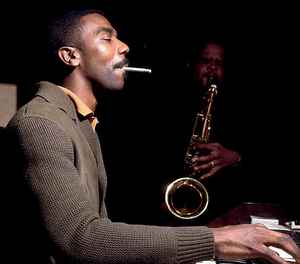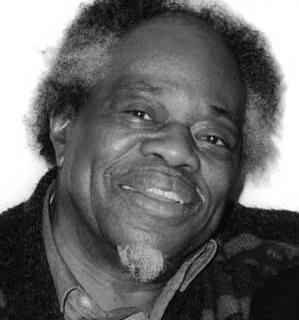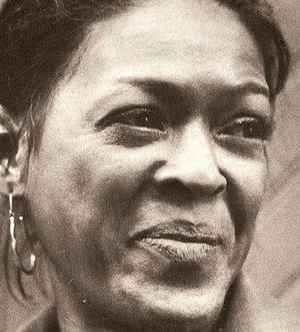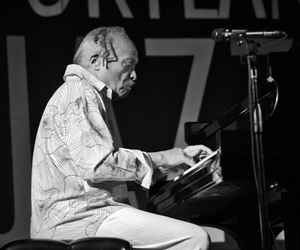
Group & Last Name Index to Full History:
A B C D E F G H I J K L M N O P Q R S T U V W X Y Z
Tracks are listed in chronological order by year, then alphabetically.
Listings do not reflect proper order by month or day: later oft precedes earlier.
Find on Page = F3. Not on this page? See history tree below.
Featured on this page loosely in order of first recording if not record release (as possible).
Names are alphabetical, not chronological, per year:
|
Caveats in the employment of this page: 1. It descends in chronological
order by the year the artist or band is first found on a commercial record
issue (ideally) by year only, alphabetical thereat. One musician above
another doesn't necessarily translate to earlier issue unless the year
changed. 2. Though release dates are the aim with links to YouTube, some are
recording dates and may not be everywhere clearly distinguished. 3. Reissues
are used to represent originals without much discussion. |
||
| Together with saxophone, piano is the main instrument
of modern and progressive jazz. This page is intended to list pianists releasing
their first recordings before 1960. Other early jazz pianists can be found
under Early Jazz and Swing Jazz. Pianists who played vibraphone are found in
Jazz Percussion. Sessions data this page per
Lord's Disco. A
good source for lyrics during this period in jazz is
Lyrics Playground.
Ditto composing credits at
Cafe Songbook,
Jazz Standards,
Songfacts and
Second Hand Songs.
|
||
|
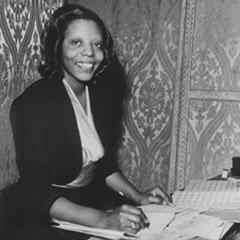
Mary Lou Williams Source: All About Jazz
|
Born Mary Elfrieda Scruggs in 1910 in Atlanta, Mary Lou Williams (aka First Lady of Jazz) married saxophonist John Williams in 1927. But she first made her debut recordings in January that year with the band in which John played, Jeanette James and the Synco Jazzers (Jeanette James was a vocalist.) Those tracks made for Paramount in Chicago were: 'Downhearted Mama', 'Midnight Stomp', 'The Bumps' and 'What's That Thing?' [Lord's]. Upon Jeanette vacating, John assumed leadership, Mary to attend sessions with that band from February to May. Williams next recorded with Andy Kirk's Twelve Clouds of Joy in Kansas City on November 7, 1929, titles like 'Mess-s-Stomp' and 'Cloudy' which she also arranged. John was also in on those titles, with whose Memphis Stompers she recorded 'Somepin' Slow and Low' and 'Lotta Sax Appeal' two days later, she also arranging those. Kirk' would be a huge figure in Williams' career, she contributing to countless titles in his band throughout the thirties. Her last recordings with Kirk are thought to have been on July 17, 1941, she again arranging titles like '47th Street Jive' and 'No Answer'. Another huge presence was clarinetist, Benny Goodman, she arranging her first title for his orchestra in Hollywood per a session on July 7, 1937, with Jess Stacy at piano: 'Roll 'Em', which she also composed. Williams would work for Goodman numerously in '41, '46, '48, '55 and, finally, a reunion on January 17, 1978, for 'Goodman's '40Th Anniversary Concert'. Williams was also known for her work with Mildred Bailey, first accompanying Bailey's Oxford Greys on March 16, 1939, for such as 'Barrelhouse Music' and 'Arkansas Blues'. She would join Bailey again in 1944 and '45 for numerous CBS Radio broadcasts of 'Music 'Til Midnight'. The first on November 24 of '44 wrought titles like 'Don't Fence Me In' and 'Roll 'Em'. Her last session with Bailey fell on February 9 of '45, also for 'Music 'Til Midnight', putting down such as 'Sleigh Ride in July' and 'Rockin' Chair'. Williams had long since made her first name recordings, those a couple piano solos in Chicago on April 24, 1930: 'Night Life' and 'Drag 'Em'. Her first session as a leader followed five years later in NYC on March 7 of 1936 with Booker Collins (bass) and Ben Thigpen (drums) for 'Corny Rhythm', 'Over Hand' and 'Isabelle'. 'Swingin' for Joy' and 'Clean Pickin' followed on the 11th. Of Williams' well above 200 sessions 87 of those were her own projects. Her last piano solos, issued as 'Solo Recital', were recorded at the Montreux Jazz Festival in Switzerland on July 16, 1978, such as 'Over the Rainbow' and 'Offertory Meditation'. Her final recordings are thought to have been on November 14 of 1979 for 'At Rick's Cafe Americain' with Milton Suggs (bass) and Drasheer Khalid (drums). She died on May 28, 1981. The two tracks below for year 1945 are from her album, 'Signs of the Zodiac'. The two tracks for 1964 are from the album, 'Mary Lou Williams'. References: 1, 2, 3, 4, 5, 6; Rutgers Exhibit; Rutgers Collections; Synopsis. Interview 1954. Sessionographies: DAHR, Lord's. Discos: 1, 2, 3. Chronological Classics 1927-1954: 1, 2, 3, 4, 5, 6. Further reading: 1, 2, 3. Mary Lou Williams 1927 Composition: Williams Mary Lou Williams 1930 Mary Lou Williams 1936 Composition: Williams Composition: Williams Mary Lou Williams 1944 Composition: Irving Berlin Mary Lou Williams 1945 Composition: Williams Composition: Williams Mary Lou Williams 1964 Composition: Williams Composition: Williams Mary Lou Williams 1974 Composition: Williams/Robert Ledogar Mary Lou Williams 1976 Composition: Williams Album: 'Free Spirits'
|
|
|
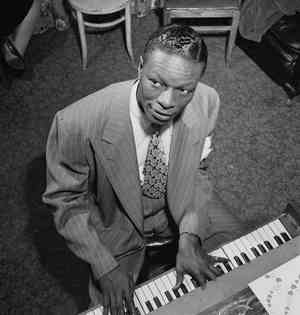
Nat King Cole was born in 1919 in Montgomery, Alabama. Removed by his family to Chicago when he was four, he and older brother, Eddie [1, 2], a bassist born in 1910, toured with Noble Sissle when Nat was fifteen [Wikipedia]. Nat made his first recordings on 28 July 1936 in Chicago with Eddie's Solid Swingers: 'Honey Hush'/'Thunder' (Decca 7210) and 'Bedtime'/'Stompin' at the Panama' (Decca 7215) [Lord]. Those also saw later issue in 1973 on the Cole compilation, 'From The Very Beginning', by MCA. The next year Nat formed the King Cole Trio with bassist, Wesley Prince, and guitarist, Oscar Moore. Lord's account of that trio begins with radio transcriptions in Los Angeles likely in October of '38 for such as 'Mutiny in the Nursery' (Standard X-76) and 'By the River Sainte Marie' (Standard Y-132). Those saw later issue in 1991 on the Cole compilation, 'The Complete Early Transcriptions Of The King Cole Trio: 1938-1941', by Vintage Jazz Classics. Numerous transcriptions followed to April 18 of 1940 when the trio was assisted by probable drummer, Lee Young, to lay out 'I Like to Riff'/'On the Sunny Side of the Street' (Ammor 108) and 'By the River Sainte Marie'/'Black Spider Stomp' (Ammor 109). Cole composed 'That Ain't Right w Irving Mills toward issue in 1941, also performed by Fats Waller and Ada Brown [1, 2] in the 20th Century Fox production of 'Stormy Weather'. Mills also wrote the lyrics for 'Straighten Up and Fly Right' which the King Cole Trio performed in the Republic release of 'Here Comes Elmer' in 1943. That got recorded for issue in 1944 on Capitol 154, Capitol a fledgling record company at the time. He released his first album on shellac that year titled 'The King Cole Trio' (Capitol A-8). That got issued again in 1950 on 33 rpm LP (Capitol H220). The majority of Cole's 225 sessions in Lord's are his own, others claiming his talents on occasion, such as several sessions in 1944 for Norman Granz' Jazz at the Philharmonic at the Philharmonic Auditorium in Los Angeles. Cole's most popular issues in the latter forties were '(I Love You) For Sentimental Reasons' in '46, 'Save the Bones for Henry Jones' w Johnny Mercer in '47 and 'Nature Boy' in '48. Cole issued his album, 'Nat King Cole at Piano' on 10" shellac in '49, on 10" vinyl in 1950. Early 1950 had witnessed his duet w Nellie Lutcher, 'For You My Love'. Come Cole's 'Mona Lisa' in May of 1950, his highest-selling release. Stan Kenton supported his issue of 'Orange Colored Sky' a few months later. Popular titles in the early fifties included 'Too Young' in '51 and couple backed by the orchestra of saxophonist, Billy May: 'Walkin' My Baby Back Home' in '52 and 'Can't I' in '53. Cole toured to Cuba in 1956. 'The Nat King Cole Show' debuted in November of 1956, which he pulled thirteen months later, unable to acquire sufficient sponsorship (he being black). 'Send for Me' was large the next year. A second tour to Cuba, then Venezuela, in 1958 resulted in a few albums in Spanish. In English Cole was a millionaire several times over by the time he released 'Ramblin' Rose' in 1962. He recorded his last album, 'L-O-V-E', in December 1964, that issued before his death of lung cancer (two packs a day) on February 15, 1965, in Santa Monica, CA. Cole was the father of vocalist, Natalie Cole (1950-2015) [1, 2, 3]. More Nat King Cole under Oscar Moore, at Modern Jazz Song and Birth of Rock & Roll. References encyclopedic: 1, 2, 3, 4; musical: 1, 2, 3, 4, 5. Sessions: DAHR 1936-41, Lord's Disco. Discographies: 1, 2, 3, 4. Compilations: 'Hit That Jive Jack' 1936-41 by GRP 1996: 1, 2; 'Riffin' 1936-44 by Verve 2010; 'Too Marvellous for Words' on LP 1975, on CD 1998; 'Love Is Here to Stay' by Capitol 1974; see also above. Charts at Music VF: 1, 2. Cole in film and television: 1, 2, 3. Archive. Other profiles: 1, 2, 3. Per 1936 below, tracks are by Eddie Cole and the Solid Swingers, Eddie the vocalist. Once more abundant on YouTube, titles below amount to but a footnote of the numerous recordings Cole made as fine pianist. He composed what titles not credited below. Nat King Cole 1936 Nat King Cole 1944 Jazz at the Philharmonic Composition: Traditional What Is This Thing Called Love Composition: Cole Porter Nat King Cole 1947 Music: Morgan Lewis 1940 Lyrics: Nancy Hamilton For the 1940 Broadway revue 'Two for the Show' Nat King Cole 1957 Music: Vincent Youmans 1925 Lyrics: Irving Caesar For the musical 'No, No, Nanette'
|
Nat King Cole Photo: William P. Gottlieb Source: Circulo de Estudios
|
|
|
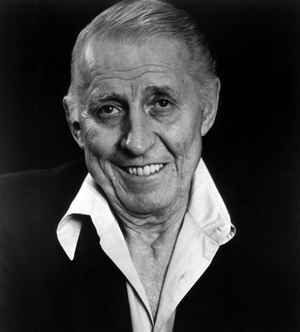
Stan Kenton Photo: Dave DeCaro Source: Duduki
|
Born in Wichita, Kansas, in 1911, pianist, composer and band leader Stan Kenton started his career playing with dance bands in the thirties. He is thought to have first popped up on disc as a pianist in the Gus Arnheim Orchestra per a session on May 15, 1937, bearing such as 'The Image of You' ansd ''I'm Happy, Darling' (Brunswick 7900) with Ray Foster at vocals. Sessions with Arnheim ensued into summer before he joined the Vido Musso Orchestra in 1938, that followed by the Manny Strand Orchestra in '39 and '40. Sessions with Strand would eventually see release in 1999 as 'Night at Earl Carroll's'. Kenton's name would come to be a household word while working largely as an orchestra leader whose highly prolific recording career saw above 530 sessions, nearly all of them his own. Tom Lord's Discography shows his first session as a leader circa September of 1940 likely in Hollywood, those unissued titles: 'Reed Rapture' and 'Body and Soul'. November 1 has him arranging a string of the titles with only 'Etude for Saxophones' issued in 1955 on 'The Kenton Era' [EP E0X 569/LP WDX 569/ Capitol sessions]. Most popular over the years for 'Artistry in Rhythm', Lord has Kenton first recording that unissued on 1 November 1944 in Hollywood. He recorded it next per his first big affair as a bandleader in 1941 upon getting booked at the Rendezvous Ballroom in Balboa, California. He began broadcasting from there on July 25 of '41 for the Mutual Broadcasting System: 'Artistry in Rhythm' (composed by Kenton) and 'Reed Rapture' both saw issue on 'The Kenton Era' in 1955 (Capitol EP E0X 569/LP WDX 569). Another MBS broadcast ensued on September 1 before a Decca session on the 11th yielding 'Taboo'/'Adios' (Decca 4038), et al. Putting the Boom! to Kenton's career that year were numerous transcriptions for McGregor beginning on the 20th with such as 'Artistry in Rhythm' and 'Two Guitars' getting issued on MacGregor LP 201 in 1941 [Wikiwand]. Kenton ran a nonstop dead-ahead operation in the decades to come, including international tours. Vosbein has archived radio broadcasts transcribed from 1942 through 1958 plus '73. Working with a variety of female vocalists from 1941 onward, his partnership w Anita O'Day rung Billboard's bell at #4 in 1944 w 'And Her Tears Flowed Like Wine'. Come June Christy in 1945 w 'Tampico' at #2, they to issue several popular titles together in the next few years. Working w numerous arrangers and composers. Among them was Pete Rugolo [1, 2, 3, 4] whom Kenton acquired upon moving from swing toward progressive jazz [1, 2]. Rugolo's initial recorded arrangement for Kenton was 'Opus a Dollar Three Eighty' on 20 April 1944 in Hollywood for the AFRS (Armed Forces Radio Service). Another important arranger entered Kenton's sphere in 1950 in the figure of Bill Russo [1, 2, 3, 4, 5, 6, 7]. Russo contributed trombone to 'Salute' on 30 Jan that year at the Philharmonic Auditorium in Los Angeles, that later issued on CD per Lighthouse LAJ1003 [Lord]. August of 1950 saw Kenton recording 'Orange Colored Sky' w Nat King Cole, that popping Billboard's #5 button in September [TsorT]. Kenton acquired another important arranger in Bill Holman [1, 2, 3, 4] in 1952. Lord initially finds Kenton w Holman at tenor sax on 25 Feb of that year for 'Yes'/'Mambo Rhapsody' (Capitol 2020). Notable in '53 was a summer tour of Europe w Russo and Holman part of an all-star entourage including June Christy. Russo and Holman both composed and arranged titles toward 'New Concepts of Artistry in Rhythm' recorded in September 1953 [Wikipedia]. Come the 1964 release of 'Kenton Showcase: The Music of Bill Russo'. Vosbein has archived Kenton leading his orchestras at the Newport Jazz Festival from 1957 to 1978. As Kenton became something of a surveyor over American orchestral jazz he also evolved into the go-to guy who knew everyone and all that was happening among prominent artists, the man to see for musicians who needed something like a job. Kenton directed his Mellophonium Orchestra from 1960-64 [1, 2]. Come his album, 'Kenton - Wagner' in 1964. Continuing as a big band leader into the seventies, Lord's disco has Kenton playing piano with his orchestra as late as 21 April 1978 at William Rainey Harper College. That was released posthumously as 'A Time for Love (The Final Chapter)' in 1994, as Kenton had passed away on August 25, 1979 [obit]. References encyclopedic: 1, 2, 3, 4; musical 1, 2, 3, 4, 5. Discographies: 1, 2, 3, 4. Compilations: 'The Kenton Era' 1940-53 by Capitol 1955, '1940 - 44' by Chronological Classics 1996, 'The Stan Kenton Story' 1941-47 by Proper 2006, 'Live Sessions 1942/1945' by Musidisc 1977 and Jazz Anthology 1991, 'Mellophonium Memoirs' 1961-64 by Tantara 2017: 1, 2. Video chronology 1942-78. Kenton in other visual media: 1, 2. Interviews: 1941-78, 1972-88. Awards. HMR Project. All titles per 1941 below were recorded in the summer of 1941 for MacGregor, eventually issued by 'The Uncollected' in 1978. Stan Kenton 1941 Composition: Ralph Yaw Vocal: Red Dorris Composition: Edmund Anderson/Theodor Grouya Composition: Ralph Yaw Vocal: Earl Collier Composition: Earl Collier Vocal: Red Dorris Composition: Frank Killduff/Matt Dennis Composition: Earl Collier Composition: Stephen Foster Composition: Joe Rizzo Composition: Joe Rizzo Composition: Chico Alvarez/Earl Collier/Frank Beach Stan Kenton 1942 Composition: Joe Primrose Film: 1944 Vocalist: Cyd Charisse Composition: Joe Primrose Henry Sanicola Jr./Sol Parker/Frank Sinatra Stan Kenton 1943 Composition: Stan Kenton Stan Kenton 1945 Film Vocalist: June Christy Music: Allan Roberts 1945 Lyrics: Doris Fisher Stan Kenton 1950 Live on 'Ed Sullivan' Trumpet: Maynard Ferguson Stan Kenton 1953 Composition: Earle Hagen Arrangement: Bill Russo LP: 'New Concepts' Music: Harold Arlen 1939 Lyrics: Yip Harburg Stan Kenton 1954 LP: 'Kenton Showcase: The Music of Bill Russo' Stan Kenton 1956 Composition: Gene Roland LP: 'Cuban Fire!' Composition: Johnny Richards LP: 'Cuban Fire!' Composition: Johnny Richards LP: 'Cuban Fire!' Composition: Moises Simons LP: 'Kenton in Hi Fi' Composition: Jimmy Van Heusen/Johnny Burke Arrangement: Bill Holman Composition: Johnny Richards LP: 'Cuban Fire!' Stan Kenton 1972 Concert Stan Kenton 1976 Composition: Stephen Sondheim 1973 For the musical 'A Little Night Music'
|
|
|
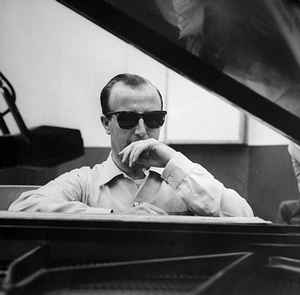
George Shearing Photo: Bettmann/Corbis Source: France Musique
|
Born in London in 1919, blind pianist, George Shearing, likely first recorded in 1937 in association with Leonard Feather, a radio broadcast for the BBC which wasn't his only. No record is found, though, of transcriptions or issues thereof. Shearing began recording en force in 1938 with Vic Lewis and Carlo Krahmer, laying tracks with their ensembles into 1939 [Lord]. Sessions with Lewis, beginning with 'Ja-Da' and 'In de Ruff' in June of '38, are well-documented but releases per Lincon [sic] Rhythm Style and Day's Rhythm Style aren't. Shearing's first certain issue therefore doesn't arrive until his own session with his trio on March 2, 1939, for Decca 7102 ('How Come You Do Me Like You Do?'/'Stomp in F') and 7038 ('Blue Boogie'/'Squeezin' the Blues'). Shearing had earlier recorded a couple of unissued piano solos for Decca on January 19: 'Blue Boogie' and 'Nagasuckle Rose'. Shearing's initial sessions in U.S. to where he would soon immigrate were in February in 1947 with his Trio in NYC, the first to yield 'Cozy's Bop' (Savoy 689 '49), 'Sweet and Lovely' (Savoy 708 '49) and 'Bop's Your Uncle'/'Sophisticated Lady' (Savoy 718 '49). Later that year saw him arranging 'A Nightingale Sang in Berkeley Square' (Sherwin-Maschwitz) for Ted Heath. Lord has him the next month in London on 26 November of '48 for such as 'The Nearness of You' and 'Consternation'. Those were issued on EP in 1954 and '55 [45 Worlds] per Volumes 1 (Decca DFE 6030 issued South Africa) and 2 (Decca DFE 6030 issued UK) of 'The George Shearing Trio' 1, 2]. Those were also issued in the UK on Decca DFE 6031 [1, 2]. Later forming his Quintet, Lord traces that ensemble to January 31 of '49 in NYC for such as 'Cherokee' and 'Four Bars Short' (Discovery FS-21 and 45-107). Such as 'September in the Rain'/'Bop Look and Listen' (MGM K10426) followed on February 17. Later that year he arranged another tune for Heath, Tadd Dameron's 'Lady Bird'. Shearing composed his most famous title, 'Lullaby of Birdland', in honor of Charlie "Bird" Parker in 1952. Shearing became a citizen of the U.S. in 1955. Approaching 260 sessions during his career, Lord has Shearing leading 181 of them. Two of those were in June and July of 1960 w Nancy Wilson toward 'The Swingin's Mutual' getting issued in '61 [*]. 1966 or '67 found Shearing contributing piano to 'Cuckoo in the Clock' on 'The Airmen of Note & Friends'. The Airmen of Note were a US Air Force band in the tradition of Glenn Miller. Shearing's later career saw vocalist, Mel Tormé, on a handful of sessions between 1982 and 1990. Their first on April 16 of '82 at the Hotel Mark Hopkins in San Francisco wrought 'An Evening with George Shearing and Mel Torme' w Brian Torff at bass. On June 29 of 1982 they played Carnegie Hall w baritone saxman, Gerry Mulligan, and a full band toward 'The Classic Concert Live' eventually issued by Concord Jazz in 2005. Several more sessions leading to albums followed until their last on November of 1990 at the Paul Masson Mountain Winery in Saratoga, CA, to bear 'Mel & George 'Do' World War II'. Backing up to 1983, January of that year saw Shearing w bassist, Don Thompson, making private recordings toward 'At Home' issued posthumously in 2013 [*]. March and October saw them recording w Tormé toward 'Top Drawer' ('83) and 'An Evening at Charlie's' ('84). Another album of duets went down in January of '84 toward 'Live at the Cafe Carlyle' released by Concord Jazz in '84. The majority of Shearing's latter twenty years were spent working intermittently between the U.K. and the U.S. November of 1987 found him in Japan recording 'Dexterity'. Shearing co-authored his autobiography, 'Lullaby of Birdland', w Alyn Shipton published by Bloomsbury Academic in April 2004. Lord's disco tracks Shearing to as recently as 27 and 28 of October 2004 in New York for 'Like Fine Wine'. Shearing died on February 14 of 2011 [obit]. References encyclopedic: 1, 2, 3; musical: 1, 2, 3, 4, 5. Sessions: henrybebop (select), Lord (258 sessions). Discographies: 1, 2, 3, 4. Shearing in visual media. Awards. Interviews 1966-84. Further reading: Cerra, Feather, Myers. George Shearing 1939 How Come You Do Me Like You Do Composition: Gene Austin/Roy Bergere 1924 George Shearing 1941 Composition: Shearing George Shearing 1948 Composition: Shearing George Shearing 1949 Composition: Chuck Wayne Composition: Shearing Originally 'Lady Bird' aka 'Ladybird' Composition: Tadd Dameron 1939 Composition: Alec Wilder 1942 Vibes: Don Elliott Guitar: Chuck Wayne Bass: John Levy Drums: Denzil Best Composition: Denzil Best Music: Harry Warren 1935 Lyrics: Al Dubin Composition: Barney Kessel George Shearing 1952 Composition: Shearing George Shearing 1954 Composition: Don Raye/Gene DePaul/Patricia Johnston Composition: Lester Young Composition: Walter Donaldson Composition: Fred Weatherly/Haydn Wood George Shearing 1956 Composition: Jacques Prévert/Joseph Kosma 1945 LP: 'Velvet Carpet' Album George Shearing 1958 Composition: Clifford Brown 1954 Music: Hoagy Carmichael 1938 Lyrics: Ned Washington First issue: Ray Eberle w Glenn Miller: Bluebird B-10745-A 1940 Composition: Arthur Herzog Jr./Irene Kitchings George Shearing 1960 Music: David Raksin 1944 Lyrics: Johnny Mercer George Shearing 1961 Music: Richard Rodgers Lyrics: Lorenz Hart LP: 'Mood Latino' Vocal: Nat King Cole Music: Lionel Rand 1940 Lyrics: Ian Grant Vocal: Nancy Wilson Music: Hoagy Carmichael 1938 Lyrics: Ned Washington LP: 'The Swingin's Mutual' George Shearing 1974 Composition: Galt MacDermot George Shearing 1989 Concert George Shearing 1997 Album
|
|
|
Born in Cleveland in 1917, composer, arranger and pianist Tadd Dameron is thought to have first appeared on disc via Harlan Leonard and his Rockets per a session on January 11, 1940, in Chicago, he a contributing arranger to unspecified titles. Lord's disco has him arranging 'Louisiana' for Count Basie on March 7, 1940, per a radio broadcast from the Southland Theater Restaurant in Boston. That would be included much later on 'Rock-A-Bye Basie: Live in '38 & '39' (VJC 1033) in 1991. He arranged 'Louisiana' again for Count Basie for Columbia on March 19 in NYC. A couple more interesting sessions were held with Harlan Leonard on on July 15 in Chicago and November 13 likewise. The first included Dameron's compositions, 'Rock and Ride' and '400 Swing'. He also arranged 'A la Bridges'. The second included his composition, 'Dameron Stomp'. Those were later released on 'Harlan Leonard and His Rockets 1940' in 1992 by Classics Records in France. Dameron would contribute to arrangements for Leonard once again circa 1943 for an AFRS 'Jubilee' broadcast from Hollywood. He began arranging for Jimmie Lunceford in latter '41, sticking with that operation in to summer of '43. December 5 of 1944 saw him arranging 'I Want to Talk About You' and 'Ill Wait and Pray' for Billy Eckstine with Sarah Vaughan on vocals for the latter. Dameron's career was largely that of an arranger and bandleader, periods in which he didn't record on piano. Lord's disco lists his first contribution on piano per a session for Vaughan on May 25, 1945: 'I'd Rather Have a Memory Than a Dream'. He doesn't show up on piano again until May 7, 1946, again for Vaughan. Vaughan sang Dameron's composition, 'If You Could See Me Now' on that date. He began recording on piano continuously in 1947 with Fats Navarro and his Thin Men, titles such as 'Fat Girl' and Eb Pob'. Later that year his first session as a leader arrived on which he contributed piano to 'I Think I'll Go Away' and 'Don't Mention Love to Me' with Kay Penton at vocals on both. His next name session soon ensued on September 27 with his sextet including Navarro. Titles for Blue Note would also be later issued on the LP, 'The Fabulous Fats Navarro Vol 1' in 1957, to include his composition, 'Our Delight'. A later session for Blue Note on September 13, 1948, with Navarro in Dameron's septet would also get issued on 'The Fabulous Fats Navarro Vol 2' in 1957, to include his composition, 'Lady Bird'. Dameron's composition, 'Hot House', first saw recording on September 29, 1947, at Carnegie Hall by Dizzy Gillespie and his Legendary Big Band. Dameron's first album as a leader was recorded October 28, 1947: 'The Dameron Band'. His composition and arrangement of 'Good Bait' was first recorded by Dizzy Gillespie on December 30 of '47 for Victor. He was a part of trumpeter, Clifford Brown's, circle to co-lead sessions in June of '53 that can be found on the 2009 CD 'Clifford Brown Lost Rehearsals 1953-56'. On June 11 of '57 they filled 'Clifford Brown Memorial' with Dameron's compositions such as 'Choose Now'. Other compositions by Dameron. Dameron tickled the keys from '47 through the fifties and into the early sixties before gradually focusing on only arranging and directing again. Lord's has his last recordings on piano in November and December of 1961, both unissued. The first was the piano solo suite, 'Improvisation 1-7', with 'Autumn in New York'. The second consisted of titles to be included on the LP by various artists, 'The Lost Sessions', in 1999. Dameron's last session as an arranger was for Chet Baker's quintet in May of 1964, putting together titles on the latter's confident 'The Most Important Jazz Album of 1964-65'. Dameron died relatively young at age 48 of cancer on March 8, 1965. A quarter century of recording had him contributing to above 120 sessions. Among those with whom he worked on multiple occasions were Georgie Auld, Milt Jackson, Miles Davis, Artie Shaw and Woody Herman, usually arranging with the exception of playing piano for Davis, who also backed Dameron for a couple sessions in '49, including titles to be included on 'Big Ten & Royal Roost Jam' per Beppo Records (503). References: 1, 2, 3, 4, 5. Discos: 1, 2, 3. Compositions. Compilations: 'The Complete Blue Note and Capitol Recordings of Fats Navarro and Tadd Dameron' 1947-48 by Bluenote 1995. Further reading: Dameron as a composer, YouTube chronology, 'Dameronia' by Paul Combs (U of Michigan Press 2012). Tadd Dameron 1940 Count Basie Orchestra Composition: Bob Schafer/Andy Razaf/J.C. Johnson Arrangement: Tadd Dameron Tadd Dameron 1947 Trumpet: Fats Navarro Composition: Dameron Trumpet: Fats Navarro Composition: Dameron Trumpet: Fats Navarro Composition: Dameron Tadd Dameron 1948 Composition: Dameron/Count Basie Trumpet: Fats Navarro Tadd Dameron 1955 Featuring Clifford Brown Compositions: Dameron Tadd Dameron 1957 Tenor Sax: John Coltrane Bass: John Simons Drums: Philly Joe Jones LP: 'Mating Call' Compositions: Dameron Tenor Sax: John Coltrane Bass: John Simons Drums: Philly Joe Jones LP: 'Mating Call' Compositions: Dameron Tadd Dameron 1962 Vocalist: Barbara Winfield LP: 'The Magic Touch' Compositions: Dameron
|
Tadd Dameron Photo: William P. Gottlieb Source: Keep Swinging
|
|
|
Thelonious Monk Photo: Herb Snitzer Source: World of Duke Ellington
|
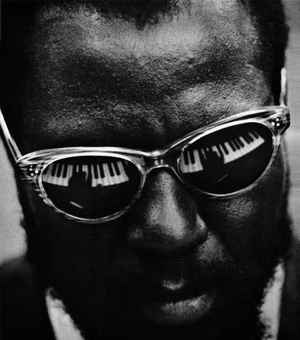
Thelonious Monk, composer, was born in 1917 in Rocky Mount, North Carolina. He began his piano career as a teenager touring with an evangelist. He first recordings were in 1941 for numerous sessions at Minton's Playhouse in NYC. As none of those sessions are dated we go by Tom Lord's expertise to hazard his first recordings with the Joe Guy Orchestra, titles like 'The Sheik of Araby', 'Mean to Me' and four renditions of 'Epistrophy' gone unissued. Monk is listed next with Don Byas, contributing to 'I Can't Give You Anything But Love' and 'Indiana' on 'Midnight at Minton's' issued that year. Next listed is Hot Lips Page for 'Sweet Georgia Brown'. Among others joining Monk at Minton's were guitarist, Charlie Christian, and trumpeter, Roy Eldridge. Nigh the whole of Monk's around 150 sessions were applied to his own catalogue. Monk was here to do his own thing as a composer and pianist, not hang out a shingle as a studio musician or board the train of some orchestra. Exceptions didn't happen randomly, but by Monk's particular criteria. Among them was saxophonist, Coleman Hawkins, with whom he first recorded on October 19, 1944, Monk joining Hawkins Quartet with Bass Robinson (bass) and Denzil Best (drums) to put out 'Recollections', 'Drifting on a Reed', et al. Hawkins would later join Monk's Septet on June 26, 1957, for 'Monk's Music' Another exception was Dizzy Gillespie whom Monk first joined at a performance at the Spotlight Club in NYC on June 18, 1946, for 'Live at the Spotlight'. The two reunited in 1950 in the Charlie Parker Orchestra for such as 'Bloomdido' and 'An Oscar for Treadwell'. Twenty some years later they would reunite in Europe in autumn of 1971 for sessions in Milan, Belgrade, Berlin and London which would find their way onto several Giants of Jazz LPs. Gillespie and Monk last reunited at the July 8, 1972, 'Newport Jazz Festival New York' as the Giants of Jazz, recording such as 'Blue 'n' Boogie' and 'I Can't Get Started'. Another exception was drummer, Art Blakey, who had joined Monk's Sextet on October 15, 1947, for Monk's first tracks as a leader such as 'Humph' and 'Evonce'. Blakey sided for Monk into 1948 and numerously from '51 to '58. The latter year saw the issue of their 'Art Blakey's Jazz Messengers with Thelonious Monk' recorded in May of '57. Blakey and monk reunited in a trio in London on June 28, 1971, with bassist, Al McKibbon, for titles like 'Chordially' and 'Trinkle Tinkle'. 1972 found them at the 'Newport Jazz Festival New York' per above, again at the Monterey Jazz Festival on October 16 for 'Art Blakey and the Giants of Jazz: Live at the 1972 Monterey Jazz Festival'. Drummer, Max Roach, also saw service siding Monk on several occasions in '52 and '56. Having already noted Charlie Parker above in 1950 with Gillespie, Monk had earlier been in Parker's Quintet on July 11 of '48 at the Onyx Club in NYC for titles like 'All the Things You Are' and 'Well You Needn't'. Another significant exception was saxophonist, Sonny Rollins, who had joined Monk's Quintet on November 13, 1953, for such as 'Let's Call This', 'Think of One' and 'Friday the 13th'. On October 25 of '54 Monk backed Rollins on 'I Want to Be Happy', 'The Way You Look Tonight' and 'More Than You Know'. Rollins backed Monk on 'Brilliant Corners' on October 9 of '56, after which Monk contributed to a few titles on Rollins' 'Sonny Rollins Vol 2' on April 15 of '57. Others Monk had had occasion to support during his career were Sarah Vaughan, Gigi Gryce and Clark Terry. As for Monk's own catalogue, he had recorded his first piano solos at the apartment of Timme Rosenkrantz in NYC on November 11, 1944. 'These Foolish Things' and his composition, ''Round Midnight', would be issued on a compilation of various sessions at Rosenkrantz' pad called 'Timme's Treasures' in 2015. Monk's first recordings as a band leader were for Blue Note Records in 1947 per above with Art Blakey, such as 'Humph' and 'Evonce'. 1954 and 1961 found him performing concerts in Europe. Monk's next to last concert tour and last studio recordings as a band leader were in 1971 per the Giants of Jazz European tour noted above with Gillespie. Aside from festivals already noted in 1972, Monk also returned to Europe for another Giants of Jazz performance in Switzerland on November 12 that year, recording such as 'Straight No Chaser' and 'Thelonious'. After another 'Newport Jazz Festival New York' on July 3, 1975, Monk began to drop away from the music business, not playing piano at all during the last six years of his life. Increasing mental illness is the general consensus as to his disappearance from the industry. But there seems no full consensus as to what his illness was. The 'New York Times' gives bipolar disorder. Howsoever, Monk died [1, 2] on February 17, 1982, buried in Hartsdale, New York. He was posthumously honored in 2006 with a Pulitzer Special Award. References: 1, 2, 3, 4. Compositions. Discographies: 1, 2, 3, 4. Compilations: 'Monk's Mood' 1947-1955 by Proper Records 2006. Sheet music. Official YouTube channel. In other visual media. Interviews: w Les Tomkins 1965; w Monk biographer, Robin Kelley, 2010: 1, 2. Further reading: Books: 'The Thelonious Monk Reader' edited by Rob van der Bliek, Oxford University Press, 2001; Monk's Music: Thelonious Monk and Jazz History' by Gabriel Solis, University of California Press, 2007; 'Thelonious Monk: The Life and Times of an American Original' by Robin Kelley, 2009; Magazines: 1, 2, 3, 4; Newspapers: Guardian; Other. Facebook tribute. Other profiles: 1, 2, 3. Per ''Round Midnight' below, Myers relates that Monk may have been written that as early as 1936. Cootie Williams recorded that in '44 a few years prior to Monk's own initial version in '47. Monk credited Williams as coauthor in exchange for a $300 loan. Thelonious Monk 1941 I Can't Give You Anything But Love Music: Jimmy McHugh Lyrics: Dorothy Fields Composition: Edgar Sampson Thelonious Monk 1944 Composition: Monk Thelonious Monk 1947 Music: Monk 1944 Lyrics: Bernie Hanighen Thelonious Monk 1947 Music: Monk 1944 Lyrics: Bernie Hanighen Thelonious Monk 1951 Composition: Monk Thelonious Monk 1952 With Max Roach Composition: Monk Thelonious Monk 1958 Composition: Monk Thelonious Monk 1963 Live at Monterey Jazz Festival Composition: Monk Thelonious Monk 1964 Composition: Monk 1944 Thelonious Monk 1966 Featuring Charlie Rouse Thelonious Monk 1967 Thelonious Monk 1969
|
|
|
Born Melvin Epstein in the Bronx in 1923, Mel Powell was both a great jazz pianist and a classical composer. Powell was working professionally by age 14 in New York City. At about age 16 (1939) he was playing with Bobby Hackett and arranging for Gene Krupa. He would later find himself in sessions with Krupa in '46 with Benny Goodman and '54 with Powell's All Stars at Carnegie Hall. It was 1941 when he changed his last name from Epstein to Powell. His earliest known recordings are thought to have been with Wingy Manone on March 19, 1941, for titles like 'Ochi Chornya' and 'Mama's Gone, Goodbye' with Manone at both trumpet and vocals. Come June 11 he was with the Benny Goodman Orchestra, recording such as 'Tuesday at Ten' and 'Soft as Spring', the latter with Helen Forrest at vocals. Powell hung with Goodman into 1942, his second Goodman period to arrive in 1945-47 with reunions in the fifties to as late as October 19, 1957, on the 'Perry Como TV Show' broadcast from NYC. The gap between Powell's first and second periods with Goodman were largely filled with service to Glenn Miller, he joining the latter's Army Air Force Band by virtue of having been drafted. That band's first recordings were a CBS radio broadcast on June 5 of '43 from Yale University in New Haven, Connecticut, such as 'I Sustain the Wings' and 'American Patrol'. Powell's final recordings with Miller were also Miller's last before his death on December 15, 1944, due to a plane with a failed engine returning from France to England over the English Channel. Those were 'Little Brown Jug' and 'Parachute Jump' on December 1 two weeks earlier for a 'Moonlight Serenade' broadcast from Bedford, England. His next association with the Glenn Miller Orchestra was its ghost band in Paris directed by Jerry Grey on .January 22 of 1945 for such as 'Here We Go Again' and ''I'll Be Seeing You'. It was Ray McKinley who directed the Glenn Miller All Stars three days later with Django Reinhardt on January 25 in Paris, putting down such as 'How High the Moon' and 'If Dreams Come True'. Powell performed with various formations of the Glenn Miller ghost operation until June 4, 1945, in Paris, broadcasting such as 'Song of the Volga Boatman' and 'Get Happy'. Powell had been released from military service by then, next to show up with Benny Goodman in NYC on August 29, 1945, to commence his second period with Goodman per 'Tiger Rag' and 'Shine'. That period would stretch to December 30, 1947, in Hollywood with both Goodman's Orchestra and Sextet for titles like 'Beyond the Sea' and 'The World Is Waiting'. Later reunions occurred per above in the fifties. Consequent to having joined Glenn Miller came an important associate in drummer/bandleader, Ray McKinley. McKinley had been present in Miller's Army Air Force Band on June 5 of '43 per above as well, having joined the Army. McKinley and Powell partnered in Millerr's band until the latter's death per above in '44, and afterword in Glenn Miller ghost enterprises. McKinley had earlier supported Powell during numerous recorded broadcasts with his Uptown Hall Gang from Co-Partners Hall in Bedford, England from July of '44 to February of '45. He would then join Powell in Paris on January 25 of '45 per above for a session with Django Reinhardt as the Glenn Miller All Stars resulting in 'How High the Moon', 'If Dreams Come True', 'Hallelujah' and 'Stompin' at the Savoy'. They then performed numerously at the Jazz Club Francais from January to May where Powell also recorded several piano solos on May 19: 'Hommage a Fats Waller', 'Hommage a DeBussey', 'Pour MMe Blanc' and 'Don't Blame Me'. He would join McKinley again for a couple sessions as an arranger in 1957, with the McKinley now directing the New Glenn Miller Orchestra. The first was 'In the Mood' for the 'Ed Sullivan Show' on May 19. The second was on May 20 and 21 for tracks that would get released on 'The New Glenn Miller Orchestra in Hi Fi' that year. 34 of Powell's 285 sessions were his own projects as a leader. His debut session as such had been on February 4, 1942, in NYC for such as 'Blue Skies' and 'Mood at Twilight'. That was a septet including Benny Goodman on clarinet as Shoeless John Jackson. He laid out his first piano solos while in the military on December 21, 1943, while in NYC with Glenn Miller's band: 'Jubilee', 'When a Woman Loves a Man' and two takes of 'Hallelujah'. After Powell's appearance on 'The Perry Como TV Show' with Goodman per above in 1957 he shifted from jazz to classical. As a classical composer Powell's early work had been in the neoclassical style, he eventually examining the atonal (or "non-tonal") and serial composing a la Arnold Schoenberg. It would be another thirty years before he recorded jazz again, that on the SS Norway in the Caribbean in '86 ('Avalon') and '87, the latter on October 21 to bear his final recordings per the album, 'The Return of Mel Powell'. In 1990 Powell acquired a Pulitzer Prize [1, 2] worth $3000 for 'Duplicates: A Concerto for Two Pianos and Orchestra' first performed at the Dorothy Chandler Pavilion on January 26, 1990, by Alan Feinberg and Robert Taub w the Los Angeles Philharmonic conducted by David Alan Miller. Powel died of liver cancer eight years later on April 24, 1998, in Sherman Oaks, California. References: 1, 2, 3, 4. Solography. Discographies: 1, 2, 3. Powell in visual media. Interviews: 1987, 1992. Collection at Yale. Mel Powell 1941 Composition: Niccolò Paganini 1817 Arrangement: Skip Martin Composition: James Campbell/Reginald Connelly/Ted Shapiro Composition: Ellis Larkins Mel Powell 1942 Composition: Irving Berlin Music: Richard A. Whiting Lyrics: Walter Bullock For the 1936 film 'Sing, Baby, Sing' Mel Powell 1945 Clarinet: Benny Goodman Vibes: Red Norvo Composition: George & Ira Gershwin 1930 Mel Powell 1948 'Stealin' Apples' Film: 'A Song Is Born' Clarinet: Benny Goodman Vibes: Lionel Hampton Composition: Fats Waller/Andy Razaf Mel Powell 1954 Music: Turner Layton Lyrics: Henry Creamer LP: 'Jam Session at Carnegie Hall' LP: 'Jam Session at Carnegie Hall' Mel Powell 1959 Filigree Settings for String Quartet Composition: Mel Powell Mel Powell 1987 Composition: George Duke/Ira Gershwin Composition: Edgar Sampson/Chick Webb Benny Goodman/Andy Razaf
|
Mel Powell Source: Barry Schrader
|
|
|
Sir Charles Thompson was born in Springfield, Ohio, in 1918 and played piano professionally since age ten. He is said to have been with Bennie Moten as early as age twelve in Colorado Springs. Gallagher commences his sessionography of Thompson in New York City on 23 Oct 1940 arranging 'Smooth Sailing' (Okeh 5900) for Horace Henderson [1, 2, 3]. He first recorded piano on December 19, 1940, with Lionel Hampton, such as 'Lost Love' (Victor 27278) and 'Fiddle Dee Dee' (Victor 27364). He stuck with Hampton for another year, 'Train Time' his last title with that orchestra at the Hotel Sherman on September 26, 1941. Present during that session were tenor saxophonists, Dexter Gordon and Illinois Jacquet. Gordon would support Thompson several years later on his first session as a leader on September 4, 1945, bearing such as 'Takin' Off' (Apollo 757) and 'The Street Beat' (Apollo 759). Alto player, Charlie Parker, was also in on that. Years later Thompson would contribute to Gordon's 'Landslide' on May 5, 1962. As for Jacquet, Thompson would later back a number of his projects, beginning with Jacquet's All Stars in Los Angeles in July of '45 for such as 'Flyin' Home' and 'Uptown Boogie'. Future sessions were held in '45, '47, '52, '62 and, finally, a reunion in Paris on March 27, 1978, for 'Midnight Slows Vol 8'. After Hampton Thompson picked up 'Sir" from tenor player, Lester Young, with whom he recorded 'The Great Lie' in NYC circa October of 1942 with Lester's younger brother, drummer, Lee Young, in Lee and Lester Young's Band. Come a session with Count Basie estimated in April of '44, with Thompson arranging 'Hey! Rube' (AFRS 'One Night Stand' broadcast #228). Thompson would arrange for Basie again for a session on November 2, 1946, that 'My, What a Fry' (AFRS 'One Night Stand' broadcast #1142). 1945 was a big year for Thompson, starting with saxophonist, Coleman Hawkins, on January 11 for such as 'Sportsman's Hop' and 'Bean Stalkin'. Numerous sessions followed that year. On August 16, 1954, Thompson would feature Hawkins on 'Sir Charles Thompson and His Band'. They reunited a decade later in autumn of 1964 for several sessions during a tour to Europe, their final at Wembley Town Hall in London on October 2 with trumpeter, Sweets Edison, for titles like 'Stoned' and 'Centerpiece'. Come Lucky Millinder on January 16 of '45 for an AFRS 'Jubilee' broadcast (#116) in Hollywood, to bear such as 'Bleep' and 'Caravan'. Thompson joined Millinder's orchestra again on February 26, 1946, for 'How Big Can You Get, little Man' and 'More More More', et al. Further Millinder projects ensued into 1946, Thompson last joining him in NYC on April 11, 1947, for 'You Can't Put Out a Fire' and 'The Spider and the Fly', et al. Come tenor saxophonist, Bull Moose Jackson, and his Buffalo Bearcats in August of '45 for such as 'Bull Moose Jackson Blues' and 'Honeydripper', et al. Jackson and Thompson hung together into 1946, supporting other bands when Thompson wasn't backing Jackson. Their last titles together are thought have been in December of 1947: 'All My Love Belongs to You' and 'I Can't Go On'. On September 4 of '45 veteran trumpeter, Buck Clayton, backed Thompson on his debut session as a leader per above with Dexter Gordon and Charlie Parker. Clayton would become a significant figure in Thompson's career, supporting him later on December 14 and 16, 1953, for tracks that would get issued in 1993 on 'Buck Clayton: The Complete CBS Jam Sessions'. August of 1955 found him with Clayton's orchestra for 'Cat Meets Chick: A Story In Jazz' featuring vocalists, Ada Moore and Jimmy Rushing. October saw Clayton's orchestra supporting Frankie Laine on 'Jazz Spectacular'. Thompson would be back with Clayton in 1960-61, 1963-64 and, finally, 1967 for a number of sessions during a tour to Europe to result in 'Jazz from a Swinging Era'. Those were followed by a last date on October 30, 1967, in Rushing's All Stars for 'Gee Baby, Ain't I Good to You' and 'Who Was It Sang That Song?'. Highlighting the fifties were titles in January of 1959 in Los Angeles for Earl Bostic's 'Plays Sweet Tunes of the Sentimental 40's' and 'Musical Pearls'. Highlighting the sixties were titles with Bobby Hackett circa 1965 in Cape Cod Massachusetts that would find issue on two volumes of 'Butterfly Airs', the first released in 1977. Lord's disco shows Thompson first recording in Japan in May of 1992, those sessions in Yokohama, the first with tenor saxophonist, Herbie Steward, for 'Magical L-I-V-E', the second with a trio of Dave Young on bass and Yukio Kimura on drums (both also present on the first). That came to 'Live In Yokohama'. Thompson visited Japan again in '93, '94 and '97 before moving there with his wife, Makiko, in 2002. His final sessions are thought to have been in Tokyo and Yokohama in 2011, the first on April 11 with Yoshimasa Kasai for 'Love Is Here to Stay' issued posthumously in 2012. Sessions later that year resulted in 'The Jazz Legend' issued in 2013. Thompson died in Tokyo on June 16, 2016 [obits: 1, 2, 3]. References: 1, 2, 3, 4, 5. Sessionographies: Gallagher w composers, multiple versions, personnel; Lord w issues. Discos: 1, 2, 3. Thompson in visual media. Sir Charles Thompson 1940 With Lionel Hampton Composition: Lionel Hampton/Irving Ashby With Lionel Hampton Composition: Lionel Hampton/Marshall Royal Sir Charles Thompson 1945 Alto sax: Charlie Parker Tenor sax: Dexter Gordon Trumpet: Buck Clayton Composition: Ted Shapiro/Reg Connelly/Jimmy Campbell Alto sax: Charlie Parker Tenor sax: Dexter Gordon Trumpet: Buck Clayton Composition: Thompson Alto sax: Charlie Parker Tenor sax: Dexter Gordon Trumpet: Buck Clayton Composition: Thompson Alto sax: Charlie Parker Tenor sax: Dexter Gordon Trumpet: Buck Clayton Composition: Thompson Sir Charles Thompson 1947 Composition: Thompson Sir Charles Thompson 1954 Music: Jack Strachey 1936 Lyrics: Holt Marvell (Eric Maschwitz) Sir Charles Thompson 1956 Composition: Thompson Sir Charles Thompson 1984 Composition: Thompson
|
Sir Charles Thompson Source: Notes on Jazz
|
|
|
Milt Buckner [1, 2] was born in 1915 in St. Louis, Missouri. He began his career with the Cotton Pickers before joining Cab Calloway's orchestra. Buttner has Buckner documented at piano on unissued acetates at an unknown location as early as 31 August of 1941 per several titles of which 'Twilght', 'Naivity' and 'Fantasy' were composed by himself. Buckner's first session on piano w Lionel Hampton and his orchestra was in December of '41 in NYC with Rubel Blakey at vocals: 'Just For You', 'Southern Echoes' (vocal by Hampton), 'My Wish' and 'Nola' with vocals out [Lord]. Hampton's band was Buckner's main wagon to 1952. During that time he appeared on 'Floor Show' in May of 1949 in a large ensemble with Sidney Bechet [IMDb]. Nigh ceaselessly touring w Hampton, his last of countless sessions with him in Lord were on August 3 of '52 in NYC backing Maxine Sullivan on 'I'll Remember April' and 'The Lady Is a Tramp'. Among other vocalists with whom Buckner worked while with Hampton was Dinah Washington to as late as 1946. Their earliest certain date in Lord was December 29 of '43 resulting in 'Evil Gal Blues', 'I Know How to Do It', 'Salty Papa Blues' and 'Homeward Bound'. Buckner would work with Hampton again in 1967 and the seventies, his last such occasions in Toulouse, France, on May 14 and 15, 1977, for 'Lionel Hampton and His Jazz Giants 77'. Another highly significant figure was saxophonist, Illinois Jacquet. Jacquet had attended a couple sessions with Hampton in '42. Buckner first recorded with Jacquet apart from Hampton per Jacquet's trio with Alan Dawson on drums at Lennie's on-the-Turnpike in West Peabody, MA, on March 15, 1966, toward 'Go Power!'. In 1968 Buckner issued 'Locked Hands'. Excepting 1970 when Buckner toured Europe with his own group, he stuck with Jacquet, recording numerously, to as late as the New Orleans Jazz Club in Scheveningen, Holland, on October 25, 1976, putting down such as 'I'll Remember April' and 'I Apologize'. Buckner's first session as a leader was at piano on October 28, 1946, with his Beale Street Gang that consisted of Stafford Pazzuza Simon (tenor sax), Curly Russell (bass) and Arthur Herbert (drums). That resulted in the Savoy titles: 'Tupelo Junction', 'Raisin' the Roof' and 'Lights Out' with 'Rockin' the Boogie' unissued. Buckner's Gang also issued as the Beale Street Boys (below), not to be confused w the Beale Street Boys. With around 250 sessions to his name, 70 of those were Buckner's. He played vibes and organ on his last session on July 4, 1977, in Paris with Andre Persiany (piano), Roland Lobligeois (bass) and Michael Silva (drums). He died 23 days later on the 27th back in Chicago. Sessions: Armin Büttner: 1, 2, 3; Tom Lord (leading 70 of 248). Discographies: 1, 2, 3. Archives: Crown Propeller, Internet Archive. Per below, Buckner plays piano on 'Milt's Boogie', vibraphone on 'Where or When' and organ on 'Limehouse Blues'. Milt Buckner 1942 With Lionel Hampton Music: Lionel Hampton/Benny Goodman 1939 Lyrics: Sid Robin Milt Buckner 1944 With Hampton backing Dinah Washington Composition: Leonard Feather Milt Buckner 1948 With the Beale Street Boys Milt Buckner 1949 Composition: Buckner Milt Buckner 1950 With the Beale Street Boys Also issued as the Beale Street Gang Composition: Adeline Brunner Milt Buckner 1976 Music: Richard Rodgers 1937 Lyrics: Lorenz Hart For the musical 'Babes in Arms' Milt Buckner 1977 Vibraphone: Lionel Hampton Music: Philip Braham 1922 Lyrics: Douglas Furber
|
Milt Buckner Source: All Music |
|
|
Born in 1922 in Newport, Massachusetts, arranger, composer, band leader and pianist Ralph Burns [1, 2, 3] first found himself on record in 1942 as the arranger for 'Flo Flo' (Bluebird 11479) recorded by Sam Donahue [1, 2, 3] on November 12, 1941 [Lord]. His next title was also as an arranger, that in July of '42 for Charlie Barnet: 'Caravan'. October found him contributing to the arrangement of 'The Moose' with Turk van Lake for Barnet. Burns arranged for Barnet sessions to as late as December 1947. Lord's disco doesn't have him contributing piano until V-Disc sessions on October 28, 1943, with Red Norvo and his Overseas Spotlight Band putting down such as 'Seven Come Eleven', 'The Sergeant on Furlough' and 'Something for the Boys'. Come arranging and performing piano for Woody Herman in 1944, of whose First Herd he would be a member. His first titles with Herman on January 8 which he arranged were 'Noah', 'I've Got You Under My Skin' and 'I Get a Kick Out of You'. Herman's outfits were Burns' main locomotion for another fourteen years. The first performance of the first three movements of his composition, 'Summer Sequence' [1, 2], with Herman was at Carnegie Hall on March 25, 1946. It's first movement got transcribed on the 'Wildroot Radio Show' (#32) in Chicago on 17 May 1946. On Sep 9 [Cerra] or 19 [Lord] all three movements went down for Columbia to see issue on 38365 and 38367. The fourth movement of 'Summer Sequence', 'Early Autumn' [1, 2], went down in Hollywood on December 27, 1947 [Lord/Myers]. Burns' last session of his long stretch with Herman was in September of '58 in NYC to arrange 'Midnight Sun'. There would be reunions in '60, '63 and, finally, on November 20, 1976, with Herman's New Thundering Herd toward the LP, 'The 40th Anniversary Carnegie Hall Concert', to which Burns contributed piano on 'Wrap Your Troubles in Dreams'. Among Burns' more freguent partners through the years was saxophonist, Al Cohn. They first collaborated per Burns' arrangement of 'Barefoot Boyd' for Boyd Raeburn at Liederkranz Hall in NYC on January 17, 1945. Their careers would interweave numerously for nigh another thirty years, backing other operations including Herman's as well as each other. Burns would contribute to such as Cohn's 'Mr. Music' (December '54) and 'That Old Feeling' (May 6, 1955). Cohn would participate in such as Burns' 'Perpetual Motion' (February 4, 1955), 'Porgy and Bess in Modern Jazz' (September 23, 1958), 'Where There's Burns There's Fire' (1962) and 'Lenny' (1974). Their last session was per above with Herman's New Thundering Herd, Cohn contributing tenor sax to 'Four Brothers' and 'Cousins'. Another fifties highlight was the Sauter-Finegan Orchestra to which Burns contributed piano on several sessions from '52 to '55. Recording with that operation on March 2, 1953, was the Ray Charles Singers per 'Now That I'm In Love'. Burns released his album, 'Spring Sequence', on 78 rpm in 1955, on 33 in '56. Burns would arrange and conduct/direct a number of titles for Ray Charles in '59 and '60, bearing fruit on the albums 'Genius', 'The Genius Hits the Road' and 'Genius + Soul = Jazz'. He would arrange for Charles again in 1988 per the album, 'Just Between Us'. Other highlights in the early sixties were sessions with Judy Holliday ('61) and Oscar Brown Jr. (1961-62). With Burns' career approaching perhaps 370 sessions, very little of that can see illumination here. Apt to mention is Burns' first session as a leader per his own orchestra in Los Angeles on October 15, 1946, for two takes of 'Introspection', one of which would be issued in 1949 on the Granz album, 'The Jazz Scene'. August 7 of 1951 found Burns recording 'Free Forms', issued in '52. Titles from that session would also see release in 1956 on an album shared with Billie Holiday on Side A: 'Jazz Recital'. 1954 saw the issue of Burns' album, 'Winter Sequence', followed in '55 by 'Spring Sequence', 'Bijou' and 'Perpetual Motion'. During the sixties Burns arranged and orchestrated for Broadway musicals. His first work on a soundtrack appeared in 1971 for the Woody Allen production, 'Bananas'. Burns died on November 21, 2001, in Los Angeles of pneumonia and complications following a stroke. He was buried in Newton, Massachusetts. Discographies: 1, 2, 3. Orchestrations on Broadway. Compositions for film: 1, 2. Criticism. Other profiles: 1, 2. Per 1946 below, Wikipedia has Woody Herman contributing to the composition of Part 4 ('Early Autumn') of 'Summer Sequence' w lyrics by Johnny Mercer added in 1952. Ralph Burns 1942 With Sam Donahue Arrangement: Ralph Burns Vocal: Frances Claire Music: Philip Braham 1922 Lyrics: Douglas Furber Ralph Burns 1946 Composition: Ralph Burns Recorded 1946 1st issue: 1949 See Norman Granz: 'The Jazz Scene' (Clef 4007): 1, 2, 3, 4 Recorded 1946 and 47 w Woody Herman This issue: 'Summer Sequence' 1958 Composition: Ralph Burns Ralph Burns 1951 Composition: Ralph Burns Album: 'Free Forms' Ralph Burns 1955 Composition: Ralph Burns Album: 'Bijou' Ralph Burns 1956 Composition: Ralph Burns Album: 'Spring Sequence' Ralph Burns 1961 Composition: Cole Porter 1930 Album: 'Where There's Burns There's Fire' (Warwick 5001)
|
Ralph Burns Photo: William P. Gottlieb Source: Wikiwand
|
|
|
Gil Evans Source: Jazz Labels
|
Canadian pianist, Gil Evans, born in Toronto, Ontario in
1912, was an arranger, composer and bandleader whose first recorded
arrangement, 'Strange Enchantment', was for vocalist, Skinnay Ennis,
on March 24, 1939, in Hollywood [Lord]. No issue, however, seems documented until
years later on albums by various artists such as 'Swingin' Uptown: Big Band
1923-1952' in 1998. Evans also arranged Ray Henderson's 'The Birth of the
Blues' performed by Ennis in the Warner Bothers film short, 'Skinnay Ennis
and His Orchestra', released in January 1941 {IMDb]. Evans first arrangements wouldn't see issue until 1942
for Claude Thornhill, the
first of numerous sessions in the forties on November 17, 1941, in NYC for
Columbia, such as 'I Hate You, Darling' and 'Rose O'Day'. Evans' last
contributions to Thornhill's operation were nine years later on April 10,
1950, in Hollywood, arranging 'Sweet and Lovely' and 'Honolulu'. Albeit Evans was a fine pianist,
his major work was
as an arranger and composer.
Lord's discography doesn't show him recording piano until January of '57 for
titles on Lucy Reed's 'This Is Lucy Reed'. Evans was particularly noted for "third stream" jazz or, fusion of classical
with jazz improvisation. His family had moved from Canada to Berkeley, then Stockton, California,
where Evans began plunking the keys in hotels while in high school. He
formed his first band, a dectet, with Ned Briggs in junior college, which
became the house band at the Rendezvous Ballroom in Balboa Beach for two
years. Retaining Evans at piano, vocalist, Skinnay Ennis, took over
leadership of that band in 1937, moving it to Hollywood to play on the Bob
Hope radio show. Thornhill
then hired Evans in 1941 per above as an arranger for his
orchestra. One of the bigger names in jazz, Evans contributed to well above
a couple hundred sessions, nigh half of those his own projects. This account
of his career can be but shallow relevant to far deep waters. We jump
ahead, then, to 1947 when Evans met Miles Davis,
Gerry Mulligan and pianist,
John Lewis, at salons he held at his apartment in New York City. Thus arose
their first session together with Davis' orchestra on September 4, 1948, per
a radio broadcast from the Royal Roost in NYC, recording such as 'Move' and
'Godchild'. That would lead to the
Miles Davis Nonet which recorded 'The Birth of the Cool' between '49 and '50
on which Evans arranged 'Moon Dreams' and 'Boplicity'. ('The Birth of the
Cool' wasn't released, however, until 1957.) Evans would see
occasions to record with both
Lewis and
Mulligan again per
Davis. Also during the
fifties Evans would arrange for such as Helen Merrill,
Tony Bennett,
Johnny Mathis and Billy
Butterfield. Working again with Davis in 1957, the result
was the 1957 issue of 'Miles Ahead'. The pair then collaborated on the
release of "Milestones' and 'Porgy and Bess' in 1958, followed by 'Sketches of Spain' in 1960
and 'Quiet Nights' in 1962. (Per above, 'Miles Ahead', 'Milestones'
and 'Sketches of Spain' are
good examples of "third stream" jazz.) Evans' first name issue as a bandleader was 'Gil
Evans & Ten' in 1957, featuring soprano saxophonist,
Steve Lacy with
Lee Konitz on alto.
Konitz and Evans
went back to Claude Thornhill's Orchestra on September 4, 1947 (: 'Thrivin'
On a Riff'), recording in that band together on multiple occasions until
Miles Davis, starting September 4, 1948, at the Royal Roost in NYC for such
as 'Move' and 'Godchild'. Multiple projects with
Davis followed until 'Gil
Evans & Ten' above. Among a couple more sessions with
Konitz in the sixties
was one with
Kenny Burrell in 1964 per below.
Evans and
Konitz would reunite on multiple occasions
in the eighties, including 'Heroes' and 'Anti-Heroes' co-led in 1980. They
last recorded together in June of 1986 per Ornella Vanoni's 'Ornella &'
(also called 'Ornella E'). As for
Steve Lacy per 'Gil Evans & Ten' in
'57 above, he, too, would be a significant figure into Evan's latter career
in the eighties.
Lacy would support Evans on 'Great Jazz Standards' in 1959.
A Couple sessions followed in '62 before Evans' 'The Individualism of Gil
Evans' on September 17, 1963. Reunions would occur in the seventies and
eighties, a number of them in Europe. Their last recording opportunity
arrived in latter 1987 in Paris to co-lead 'Paris Blues'. On April 9, 1958, Cannonball Adderley
contributed to titles on Evans' album, 'New Bottle, Old Wine', as did
bassist,
Paul Chambers, who also supported
Evans on 'The Individualism of Gil Evans' on September 17, 1963. Another
bassist with whom Evans recorded on multiple occasions was
Ron Carter, their first such
occasion with Carter supporting Evans on 'Out of the Cool' in 1960. Evans first
recorded with guitarist, Kenny Burrell,
at Webster Hall in NYC on April 6, 1964: 'Las Vegas Tango' and 'Hotel for
Me'. Burrell and Evans found multiple occasions to document titles, such as
Evans contributing to arrangements on
Burrell's 'Guitar Forms' in December
of '64 and Brazilian vocalist, Astrud Gilberto's, album, 'Look to the
Rainbow' in latter '65. In
1974 Evans released 'The Gil Evans Orchestra Plays the Music of Jimi Hendrix'
with electric guitarists,
John Abercrombie and Ryo Kawasaki. In 1983 Evans
began a five-year residency on Monday nights at the Sweet Basil jazz club in
Greenwich Village. Evans arranged the soundtracks for the films, 'Absolute
Beginners' and 'The Color of Money', each released in 1986. In 1987 he
recorded with Sting. He died on March 20 the following year of pneumonia in
Cuernavaca, Mexico. References: 1,
2,
3,
4,
5.
Discographies: 1,
2,
3,
4.
Works in visual media.
Arrangements.
1978 interview w Les Tomkins. Further
reading: NPR,
Washington Post,
Wilder Utopia.
Books: 'Gil Evans: Out of the Cool' by Stephanie Crease (Chicago Review
Press 2001). Other profiles: 1,
2.
See also Ryan Truesdell’s Gil Evans Project.
Evans is thought to have arranged all titles below. He plays keyboards on most not
otherwise indicated. Gil Evans 1939 Originally unissued This 2010 Vocal: Skinnay Ennis Music: Frederick Hollander Lyrics: Frank Loesser Gil Evans 1941 Piano: Claude Thornhill Vocal: Lillian Lane Composition: Seymour Miller Gil Evans 1942 Piano: Claude Thornhill Composition: Thornhill/Evans Piano: Claude Thornhill Composition: Thornhill/Evans Gil Evans 1946 Piano: Claude Thornhill Composition: Claude Thornhill Gil Evans 1947 Piano: Claude Thornhill Composition: Charlie Parker/Dizzy Gillespie Gil Evans 1956 Piano: Red Garland Trumpet: Miles Davis Composition: Thelonious Monk 1944 Lyrics: Bernie Hanighen Album: 'Around About Midnight' Gil Evans 1957 Album Side A Piano: Wynton Kelly Trumpet: Miles Davis Album Side B Piano: Wynton Kelly Trumpet: Miles Davis Gil Evans 1958 From the LP 'Gil Evans & Ten': Composition: Evans Composition: Cole Porter Composition: Richard Rodgers/Lorenz Hart Composition: Irving Berlin Gil Evans 1961 Piano: Evans Composition: Evans Album: 'Out of the Cool' Album Listed in Penguin Guide to Jazz Core Collection Gil Evans 1962 From 'Into the Hot' Gil Evans Orchestra All arrangements: Evans Guitar: Barry Galbraith Composition: John Carisi Piano: Cedar Walton Composition: Cecil Taylor Gil Evans 1964 Composition: Miles Davis/Evans Album: 'The Individualism of Gil Evans' Gil Evans 1966 Vocal: Astrud Gilberto Composition: Michel Legrand/Eddie Barclay Eddy Marnay/Johnny Mercer Album: 'Look to the Rainbow' Gil Evans 1972 Vocal: Kimiko Kasai Composition: Axel Stordahl/Paul Weston/Sammy Cahn Album: 'Satin Doll' Gil Evans 1974 Composition: Jimi Hendrix LP: 'Plays the Music of Jimi Hendrix' Composition: Jimi Hendrix LP: 'Plays the Music of Jimi Hendrix' Live in Perugia Composition: Billy Hart Album: 'Svengali' Gil Evans 1976 Concert Live in Warsaw Composition: Billy Hart Gil Evans 1981 Recorded: 1971 Composition: Billy Harper Album: 'Where Flamingos Fly' Gil Evans 1983 Filmed live in Lugano Composition: Thelonious Monk 'Here Come da Honey Man' Filmed live in Lugano Music: George Gershwin Lyrics: Ira Gershwin/DuBose Heyward Filmed live in Lugano Composition: Jimi Hendrix Gil Evans 1984 Live in Tokyo Bass: Jaco Pastorius Composition: Alfred James Ellis Live in Tokyo Bass: Jaco Pastorius Composition: Jaco Pastorius Gil Evans 1986 Composition: Evans Album: 'Bud and Bird' Composition: Miles Davis/Evans Live in Milano Composition: Jimi Hendrix Live in Milano Composition: Jimi Hendrix Gil Evans 1987 Live with Sting Composition: Jimi Hendrix
|
|
| Although
Wally Rose
[1,
2,
3]
recorded above a hundred records there is little to found of him at
YouTube with the exception of when he played with Lu Watter's Yerba Buena Jazz
Band. Born in Oakland in 1913, he shares the same name w the stuntman, Wally
Rose, born 1911, death 2000. Though this Rose was a modern jazz pianist chronologically
speaking, he specialized in retrospective ragtime [1,
2,
3]. Upon graduation from high school Rose found employment
as a pianist on cruise ships. In 1940 he joined Lu Watter's [1,
2,
3] band.
Watters, a trumpet player, also began his career on cruise ships. Lord
traces him to as early as 1929 w Jack Danford and his Ben Franklin Hotel
Orchestra on a couple titles later issued on LP by various as 'West Coast
Jazz Vol 2' (Arcadia 2002) on unknown date. Lord has Watters recording
tracks in Oakland, CA, sometime in the latter thirties w his Sweets Ballroom
Orchestra, those to see later issue in 2000 on 'Lu Watters' Yerba Buena Jazz Band Vol. 1 1937-1943'
(SFTJF CD 105). Kelsey at All Music has Watters forming his Yerba Buena Jazz Band
[1,
2,
3,
4,
5] in 1939. Lord's disco
first finds Rose w that orchestra sometime in 1941 at the Dawn Club
in San Francisco, those first several titles unissued: 'Careless Love',
'Dipper Mouth Blues', 'Muskrat Ramble', 'St. James Infirmary' (twice),
'Willie the Weeper' (twice), 'Skid-dat-de-dat' and 'Milenberg Joys'. Several
of those were included on SFTJF CD 105 per above. The remainder saw release
on 'Air Shots from the Dawn Club' (Merry Makers MMRC CD 16) in 1997. Rose's
first session to issue w a trio was the same date as w Watters' Yerba Buena Jazz Band,
also the latter's first session to issue, on
December 19. Lord has Rose recording 'Black and White Rag' w Clancy Hayes
(banjo) and Bill Dart (drums) for issue on Jazz Man Album 1 No. 1 in 1942 [Discogs].
All three recorded on the same date w Watters' Yerba Buena Jazz Band,
putting down such as 'Irish Black
Bottom'/'Memphis Blues' (Jazz Man Album 1 No. 2) and 'Muskrat Ramble'/'Smokey Blues' (Jazzman 3,
Melodisc 1125, Good Time Jazz 45058, et al). Alike
Ralph Sutton, Rose kept ragtime piano alive throughout the following
decades, long since its earlier demise. Of note while Rose was with Watters was the recording of
'Live From the Dawn Club' in San Francisco on August 27, 1947, that issued
in 1973. Rose's last numerous sessions with Watters appear to have been at
Hambone Kelly's in El Cerrito, CA, in the summer of 1950 bearing such as
'Come Back Sweet Papa', 'Canal Street Blues' and 'Strut Miss Lizzie'. A
reunion would occur in 1963 for 'Blues Over Bodega'. Other core members of Watter's band from its early days in 1941 were
Bob Scobey on trumpet and
Turk Murphy
at trombone. Robert Alexander Scobey [1,
2,
3] began leading his own group
called Alexander's Jazz Band while with Watters in 1947, Rose backing him
that December on such as 'Melancholy Blues' and 'Alexander's Ragtime Band'.
Scobey's band would eventually be renamed the Frisco Jazz Band, Rose backing
Scobey's enterprises to as late as 1957, supporting him at the Tin Angel in
San Francisco for titles like 'At the Devil's Ball' and '219 Blues'. As for
Murphy [1,
2,
3], Rose began backing his formations
per Lord on July 10, 1951, for such as
'Little John's Rag' and 'Bay City'. Those saw issue in '53 on Murphy's
album, 'Turk No. 4'. Murphy played washboard with Bob
Short on tuba on February 17, 1953, for Rose's 'Ragtime Classics'. Rose
backed Murphy to October 11 of 1954, putting down 'South' and 'Coney Island
Washboard' with Murphy at vocals on the latter. Lord's disco has Rose at 113
sessions, 21 his own as a leader. It would be ten years between his issue of
'Wally Rose Revisited' in 1982 and his last titles as a leader in 1992 per
'Rags-Blues-Joys'. Lord's disco has Rose's last recordings in August of '93
with the Down Home Jazz Band in Berkeley, CA, for 'Back to Bodega'. He died
on January 12, 1997, in Walnut Creek, California. Discos: Wally Rose: 1,
2;
Yerba Buena Jazz Band: 1,
2,
3.
Other profiles: 1,
2,
3. The
initial track per 1942 below is Rose w his trio of Clancy Hayes and Bill
Dart. The last four tracks under
1942 below are with Lu Watters' band. Wally Rose 1942 Composition: George Botsford 1908 Composition: Nick LaRocca/Larry Shields Recorded '42 Not issued until 1997: Merry Makers MMRC CD 16 Composition: Percy Venable Recorded '42 Not issued until 1997 Merry Makers MMRC CD 16 Composition: Scott Joplin 1899 Composition: Harry Lodge Wally Rose 1953 Vocal: Clancy Hayes Trumpet: Bob Skobey Trombone: Buck Hayes Composition: George Mitchell/James Dempsey Wally Rose 1995 Composition: George Botsford 1910
|
Wally Rose Source: San Francisco Museum
|
|
|
Jimmy Rowles Source: All Music
|
Born in 1918 in Spokane,
Jimmy Rowles
[1,
2]
studied at Gonzaga College (now University) before moving to Los
Angeles in 1941 where he connected with drummer, Lee Young, and his brother, sax man, Lester Young.
Joining Lee and Lester Young's Band, he made his debut recordings with the
same on December 2, 1941 [Lord]. Broadcast from Billy Berg's Club Capri in Culver
City were 'Benny's Bugle' and 'Skyline'. That would get included years later
on the Young compilation, 'Historical Prez 1940-1944' in 1984. Another
session at the Club Capri followed in 1942 before Rowles joined
Slim Gaillard's Flat Foot Floogie Boys on April 4 for such as 'Palm Springs Jump'
and 'Groove Juice Special'. Roweles was back with the L & L Young Band in
May of 1942 for a KHJ Radio broadcast from the Trouville Club in Los Angeles
for 'Frolic Sam'. His next session there on June 6 included
Billie Holiday on 'I Hear
Music'. That was a big deal because it was the first not only with
Holiday,
but serves as a marker for what Rowles' would become especially well-known,
collaboration with vocalists. (Actually both Les Young and Slim Gaillard sang as
well.) Another session with the Youngs for
Holiday followed before he would
see her again in 1949, later from 1955-57, he last with her orchestra that
year on January 9 for such as 'They Can't Take That Away From Me' and
'Embraceable You'. Rowles exchanged the Young Band for Benny Goodman's
operation for 'I Know That You Know' in September of 1942, that for the
film, 'The Powers Girl'. He next joined
Goodman for a few titles per a
couple radio broadcasts from the Hotel New Yorker. Rowles would join
Goodman
again in '47, '58 and '78. His first session with
Woody Herman was in June of 1943
per the 'Fitch Bandwagon Show' in Los Angeles bearing such as 'Down Under'
and 'Ten Day Furlough'. His final session as a civilian was an AFRS (Armed
Forces Radio Service)
broadcast ('Jubilee' #61) circa December 1943 with Timmie Rogers' Excelsior
Hep Cats: 'Bring Enough Clothes for Three Days'. Rowles then disappeared
into the military for a couple years per World War II. Upon release from
duty he popped up again in NYC early enough to record with Sonny Berman in,
perhaps, January of 1946 toward what would get issued in 2004 as
'Woodchopper's Holiday 1946'. He then joined
Herman's band again on April 14
for 'Pipe Dreaming' and 'Linger In My Arms a Little Longer'. Rowles
continued with
Herman into '47, joining him later in 1956-57 and, finally,
on November 20, 1976, in
Herman's New Thundering Herd for 'The 40th
Anniversary Carnegie Hall Concert'. Rowles would work as a studio musician,
that contributing to his highly prolific recording career of about 550
sessions, 57 of which were as a leader. As a history of jazz all by himself
this brief account can't but leave the greater majority of his career
missing. Apt to mention as we sink that direction is drummer,
Louie Bellson,
who was a member of Benny Goodman's project above per 'The Powers Girl' in
September 1942. Nigh eleven years later in July of '53 Rowles joined
Bellson's orchestra for 'Skin Deep'. Rowles would join
Bellson again in '57. They
supported
Ella Fitzgerald together in
'66, and backed
Carmen McRae and
Joe Williams in 1971-72. Rowles much later joined
Bellson on one title, 'The
Red Door', with the
Herb Geller Quartet in August of '93. Trumpeter, Billy May, was in Rowles' first session with
Herman above in June of '43. Rowles
would later sit in May's orchestras on several occasions from 1956 ('Jimmie Lunceford
In Hi-fi') to 1966 ('Today'). Guitarist,
Barney Kessel, had been
in on Rowles session with Timmie Rogers above in December of 1943.
Kessel
would be one of Rowles' more frequent longtime partners, both supporting
other bands and each other to 1959. In June of 1958
Kessel had backed Rowles
for 'El Tigre'. Later versions of that got released as 'Upper Classmen'
('59) and 'Let's Get Acquainted With Jazz . . . For People Who Hate Jazz!'
('85). Rowles and
Kessel would see each other again in '61, '63, '69 and,
finally, in 1971-72 per above with
McRae and JWilliams. Sax player,
Stan Getz, first entered Rowles' atmosphere on June 3, 1947, with the Benny Goodman Orchestra for such as 'Dizzy Fingers' and 'Chicago'. 1947 also found
them supporting both Wayne Francis and
Woody Herman together. Rowles joined
Getz' Quartet on January 23, 1954, with Bob Whitlock (bass) and
Max Roach
(drums) for such as 'Nobody Else But Me and 'I Hadn't Anyone 'Til You'.
Rowles saw later reunions with
Getz' in '75, '76 and, finally, July 16 of
1986 when they performed 'Peacocks' at the Hollywood Bowl. Another trumpeter Rowles saw a lot of was
Benny Carter. Their first
recordings together were in May 29, 1947, with the Hollywood Hucksters
including
Charlie Shavers on trumpet and
Benny Goodman clarinet/vocals for
'I Apologize', 'Them There Eyes' and 'Happy Blues'. The found themselves
together again with the
Louie Bellson Orchestra for 'Skin
Deep' in July of '53.
Carter and Rowles would then cross paths numerously for
more than a decade, both supporting other bands and Rowles supporting
Carter (: 'Sax A La Carter'
1960) to as late as February 1964 for
Billy Eckstine on such as 'Garden In the Rain' and 'Mister Kicks'. Reunions
occurred in 1972-73 and, finally, August 14, 1979, supporting
Zoot Sims'
'Passion Flower'. Rowles' first session with saxophonist,
Gerry Mulligan,
had been in the orchestra of Georgie Auld on January 17, 1949, for such as
'You've Got Me Jumpin' and 'They Didn't Believe Me',
Mulligan arranging the
latter. Rowles would contribute to 'Gerry Mulligan Meets Ben Webster' on
November 3 of 1959. They would reunite with
Mel Tormé at Carnegie Hall on
June 27, 1978 . Come Jerry Gray's orchestra from December 1949 to August
1952. The next year on September 12, 1953, Rowles held his first session as
a leader toward the very rare 'Jimmy Rowles Trio Plays Standards' issued by
Vantage (NLP 5015) on date unknown. That was with John Simmons (bass) and Frank
Capp (drums). One of the more frequent arranger/conductors with whom Rowles
worked was Marty Paich, their first such occasion in 1955 for vocalist,
Peggy Connelly: Trouble Is a Man', 'I Have Said Goodbye to Spring', et al. Paich and Rowles worked together numerously to 1961, either for other bands
or Paich's ensembles. Their last such occasions were for Ann Margret in
Hollywood in March of '61 for titles like 'Teach Me Tonight' and 'Love Joe'.
They would reunite in July 1966 in Los Angeles for
Ella Fitzgerald's
'Whisper Not'. Another arranger/conductor with whom Rowles worked on
multiple occasions was Pete Rugolo in '57, '59, '60 and '61. His first
opportunity to record with guitarist,
Laurindo Almeida, was July 16, 1957,
backing the
Four Freshmen. They would support
both
Harry Belafonte and Kitty
White together in 1958, and
Henry Mancini in 1961. Latter 1962 witnessed Rowles supporting
Almeida on 'Viva Bossa Nova!' and 'Ole! Bossa Nova!'.
Rowles worked with arranger/conductor, Skip Martin, from 1958 (: 'TV Jazz
Themes') to 1960 (: 'Perspectives In Percussion: Vol 1 '). Rowles recorded
his first tracks as a vocalist in Oct of 1962 for the album,
'Kinda Groovy'.
His piano showed up in
Henry Mancini's
'Pink Panther', the film directed by Blake Edwards premiering in Italy in
December 1963, spring of '64 in the United States. Others glimmering
from out of Rowles' galaxy were
Les Brown ('47), Georgie Auld ('49,
'53, '55, '57),
Chet Baker ('52 w
Mulligan, '53 w
Parker), Buddy Rich ('53, 1955-56). Charlie Parker
('53),
Bob Brookmeyer ('55,
'60, '78), Bill Holman ('56, 1958-60, '62),
Lee Konitz ('56, '77), Johnny Williams (1960-61),
Henry Mancini ('61, 1963-64,
'66),
Gerald Wilson ('68) and
Zoot Sims (1973-74,
1976-81, '83). As Rowles was a favorite among vocalists it's apt to list
some beyond
Billie Holiday
above:
Peggy Lee ('42, 1953-54, '58, '61),
Tony Bennett, the
Four Freshmen ('57, '59), Mark
Murphy (1958-60),
Mel Tormé (1958-61, '78), David Allyn
('58, '78, '81), Toni Harper ('60),
Jo Stafford ('60), Ann Margret
(1961-62),
Sarah Vaughan (1962-64, '74, '79)
and
Ella Fitzgerald ('66, '82).
Among Rowles' numerous compositions his best known is likely 'Peacocks', he
first recording that on April 7, 1974, to be found on 'The Special Magic of
Jimmy Rowles'. Come 'Profile' in 1981 in which Rowles interpreted the works
of Henri Renaud. 'A Timeless Place' was recorded in October 1993 by
Norma Winstone, in May of '94 by Jeri Brown. Other highlights in Rowles' career
include live recordings for Blue Angel Club Records at the University of
Pasadena on November 7, 1970, to be included the next year on 'The Complete
1971 Pasadena Jazz Party'. In 1983 he worked with
young pianist, Diana Krall, in Los Angeles, she said to have begun singing
with his encouragement. February of 1990 found him in Paris recording the
soundtrack for 'Daddy Nostalgia' with
Philip Catherine (guitar),
Ron Carter
(bass) and Jane Birkin (vocal). Also that month in Paris he participated in
Frank Melville's 'I'm Old Fashioned' and Elisabeth Caumont's 'Dix Chansons
D'Amour'. Rowles' final recordings are thought to have been in 1994: 'Lilac
Time' in April with bassist, Eric Von Essen, and 'A Timeless Place' with
Jeri Brown in May. Rowles died of cardiovascular disease on May 28, 1996, in Burbank,
California [obit].
Further reading: 1,
2,
3.
Discographies: 1,
2,
3.
Compilations: 'The Duo Sessions' w
Ray Brown 1978 and 1980 by Concord 2000. Rowles in visual media.
Other profiles: 1,
2. All tracks for year 1955 below are with
Billie Holiday.
Per 1976, all sources have 'Grandpaws' issued that year despite Lord's
session date of March 1978 for the same.
Jimmy Rowles 1942
With Lee & Lester Young Composition: Benny
Goodman
Jimmy Rowles 1953
Vocal: Peggy Lee Composition: Sonny Burke/Paul
Francis Webster With Louie Bellson Composition: Don
Redman/Tadd Dameron
Jimmy Rowles 1954
Composition: Gershwin
Brothers 1924 Music: Harry Warren
1942 Lyrics: Mack Gordon For the film
'Orchestra Wives' Composition: Eddie White/Jack
Lawrence/Jimmy Mundy Composition: Edgar
Battle/Eddie Durham Jimmy Rowles 1955
All backing Billie Holiday:
Music: Harold Arlen
1946 Lyrics: Johnny Mercer Music: Jerome Kern
1936 Lyrics: Dorothy
Fields Music: Matt Dennis
1940 Lyrics: Tom Adair Music: Allie Wrubel
1937 Lyrics: Herb Magidson
I Don't Stand a Ghost of a Chance with You Music: Victor Young
1932 Lyrics: Ned
Washington/Bing Crosby Composition: Victor
Schertzinger Composition: Cole
Porter 1934
I Gotta Right to Sing the Blues Music: Harold Arlen
1932 Lyrics: Ted Koehler For the Broadway show
'Earl Carroll's Vanities' Composition: Isham
Jones/Gus Kahn Composition: Gershwin
Brothers 1937 Music: Duke Ellington
1938 Lyrics: Irving
Gordon/Irving Mills Music: Bob Haggart
1939 Lyrics: Johnny Burke Composition: Einar
Aaron Swan 1931
Jimmy Rowles 1956
Jimmy Rowles Trio Bass: Ben Tucker
Drums: Mel Lewis
Jimmy Rowles 1957
Vocal: Billie Holiday Music: Sam H. Stept
1939 Lyrics: Lew
Brown/Charles Tobias For the Broadway
musical 'Yokel Boy' Vocal: Billie Holiday Composition: Cole
Porter 1935 For the musical
'Jubilee'
Jimmy Rowles 1958
Jimmy Rowles Sextet Composition: Jimmy
Rowles Trumpet: Benny Carter Composition: Will Marion Cook/Donald Heywood From the Benny Carter LP 'Jazz Giant' Jimmy Rowles 1974 Vocal: Sarah Vaughan Composition: Burt Bacharach/Hal David Composition: Johnny Burke/James Van Heusen Jimmy Rowles 1976 Jimmy Rowles Trio Bass: Buster Williams Drums: Billy Hart LP: 'Grandpaws' Reissue: 'Jam Face' 2014 All known sources have 'Grandpaws' issued in '76 Lord has it in session in March 1978 Composition: Alec Wilder/Morty Palitz/William Engvick Jimmy Rowles 1977 From the LP 'The Peacocks'
Recorded Oct 1975
Sax: Stan Getz Composition: 1932: Frank Signorelli/Gus
Kahn/Matty Malneck Sax: Stan Getz Composition: Jimmy
Rowles Jimmy Rowles 1978 Duet w bassist Ray Brown
Composition:
Bernice Petkere
Piano solo Composition: Billy
Strayhorn LP: Isfahan' Duet w bassist Ray
Brown Composition: Brook Benton/Belford
Hendricks/Clyde Otis Duet w bassist Ray Brown Composition: Newell Chase/Leo Robin/Richard Whiting Duet w bassist Ray Brown Composition: Alan Brandt/Bob Haymes
Jimmy Rowles 1981
Concert Vocal:
Ella Fitzgerald Guitar: Joe Pass Music: Hoagy
Carmichael 1927 Lyrics: Mitchell
Parish 1929 LP: 'Checkmate' Guitar: Joe Pass Composition: Henry
Nemo LP: 'Checkmate'
Jimmy Rowles 1990
Vocal: Jane Birkin
From soundtrack to 'Daddy
Nostalgie' Composition: Eric Maschwitz/Jack Strachey
|
|
|
Born in 1922 in Philadelphia, PA, composer Lou Stein is said to have worked with Buddy DeFranco as a teenager. At age 20 (1942) he began working on the road, notably with Ray McKinley. His initial recordings in Lord's sessionography were with McKinley's orchestra in June of 1942 in NYC: 'I'll Keep the Lovelight Burning', 'Who Wouldn't Love Toy?', et al. McKinley would be an important figure in Stein's career, they recording numerously that year, 1946-47, '51, 1953-54, '66 and, finally, May 25 and 26 of 1977 in NYC, McKinley contributing drums to tracks on Stein's 'Stompin' 'Em Down'. Stein's last session with McKinley in 1942 had been on July 16 in NYC for such as 'Big Boy' and 'Cheatin' On Me' with vocalist, Imogene Lynn. He then disappeared into the US military per World War II. He is said to have performed with Glenn Miller's Army Air Force Band while stationed Stateside. Lord's disco doesn't show Stein in another session until 1946, that with McKinley again in NYC on March 7 for such as 'We'll Gather Lilacs' and 'Have Ya Got Any Gum, Chum?'. Among Stein's numerous compositions was 'East of Suez', first recorded when he was with Charlie Ventura and His Combo in Chicago in August of 1947, that was live at the Hotel Sherman with Buddy Stewart on vocals. A studio version was recorded the next month on the 11th, again with Ventura and Stewart. Another important figure in Stein's recording career arrived in the person of trumpeter, Yank Lawson, on May 22, 1950, they members of Bob Crosby's Orchestra for such as 'Semper Fidelis' and 'El Capitan'. Stein began working in Lawson's band in '51, contributing tracks that June to 'Lawson-Haggart Band Play Jelly Roll's Jazz'. Stein stuck with Lawson through numerous recordings to 1956, later joining him in 1958-60, '79 and a few occasions in the eighties, their last titles together in Atlanta on March 14, 1988, for Lawson's 'Something Old, Something New, Something Borrowed, Something Blue'. Stein's first session with the Sauter-Finegan Orchestra was on November 3, 1952, for titles like 'Nina Never Knew' and 'Love Is a Simple Thing'. Further sessions ensued in '52, later in 1958. Stein also joined the Percy Faith Orchestra in 1952 to support Sarah Vaughan on March 22 for such as 'It's All in the Mind' and 'I Confess'. He saw Vaughan again on January 5, 1953, for the likes of 'Linger a While' and 'A Blues Serenade'. Stein's first session as a leader was held on June 8, 1953, to result in 'Lou Stein at Large'. Among trombonists with whom Stein worked on occasion in the fifties was Bobby Byrne, the latter's All Star Alumni Orchestra of especial note, recording 'The Great Song Hits of the Glenn Miller Orchestra' ('66) in 1958 in NYC. With Stein appearing on about 230 sessions, 37 of those his own, we leap ahead to the significant figure that was violinist, Joe Venuti, they first recording together in Toronto, Ontario, in early 1969 for 'The Joe Venuti Quartet'. Stein backed Venuti numerously to as late as April of 1972 in Milan, Italy, for 'Jazz Me Blues'. Highlighting the latter seventies was the World's Greatest Jazz Band in Australia in December of 1979 with Yank Lawson and Bob Haggart (bass) leading titles like 'It's Delovely' and 'Caravan'. Stein would join the World's Greatest Jazz Band again in Ludwigsburg, Germany, in October of 1985 for tracks like 'Diane' and '42nd Street'. Lord's disco shows Stein's last titles recorded in Stamford, Connecticut, in 1995 for the album, 'Go Daddy!'. He died on December 11, 2002. References: 1, 2. Discographies: 1, 2, 3. Compilations: 'The Lou Stein Trio' 1954 and 1955 by Collectables 2002. Lou Stein tribute site. Lou Stein 1942 With Ray McKinley Vocal: Imogene Lynn Composition: Milton Ager/Jack Yellen Lou Stein 1946 With Ray McKinley Composition: Ray McKinley Lou Stein 1952 With the Charlie Parker Big Band Composition: Richard Rodgers/Lorenz Hart With the Charlie Parker Big Band Composition: Victor Young/Ned Washington Lou Stein 1956 Lou Stein Trio Bass: Milt Hinton Drums: Jimmy Crawford Music: William Benton Overstreet Lyrics: Billy Higgins Lou Stein 1957 Almost Paradise Composition: Norman Petty Lou Stein 1958 Honky tonk piano Composition: Billy Mure/Richard Wolfe Composition: Dave Franklin/Eddie Beal
|
Lou Stein Source: Discogs
|
|
|
Born in Husum, Sweden, in 1919, pianist,
Reinhold Svensson,
is a more obscure figure in jazz as a Scandinavian musician. But he was an important
figure in the development of swing jazz culture in Stockholm, a rather
more remote region in Svensson's time than now. Scandinavian and Eastern
European musicians trail rather behind the rest of Europe in jazz. Great Britain,
for example, was producing jazz musicians in the second decade of the century
and going strong in the twenties. France was host to big names such as swing musicians,
Django Reinhardt and
Stephane Grappelli, in the thirties. But distance and world events
(: World War II) didn't hear
Scandinavian or Eastern European musicians making a lot of a noise in the world
of jazz until the sixties, some to found in Sixties
International Jazz. Albeit Svensson was a swing musician he ventured into
modern forms like bebop and cool as well. He occupies this page rather than
Big Band Swing by virtue of emphasis on piano, his
career spent performing largely w small ensembles. Svensson became blind of unknown causes some time after his birth. He graduated in
organ in 1941 from the Royal College of Music in Stockholm. It was December that year
that he first recorded to issue with the Sonora (Swing) label in Sweden, a
couple piano solos: 'Ain't
Misbehavin'' and 'Body And Soul'. Another discography shows those released
for the Tono label in Denmark as well, as recordings by Sonora often were.
'Rosetta'/'Tea for Two' was issued in 1942 on Sonora 569, recorded September 8th.
On November 11 Svensson set tracks with No Sisters(ville), also by Sonora: 'Jersey
Bounce' and 'Blues in the Night' (Sonora 571). Those were with the ensemble of violinist, Hasse Kahn, of immediate importance to Svensson's career, laying tracks with
Kahn on November 25 of 1943: 'At a Dixie Roadside Dinner' and 'A Nightingale
Sang in Berkeley Square' (Sonora 620). Svensson would back Kahn on numerous occasions into
the latter forties. On February 5, 1944, he recorded the organ solos, 'Jazz Me
Blues'/'That's a Plenty' (Sonora 623). In 1945 he
recorded 'Roses of Picardy' and 'Tango Illusion' with violinist, Ake Jelving,
also Sonora. Svensson put down some tunes with his Trio on April
2, 1947. With himself at piano, Kalle Lohr on guitar and Roland Bengtsson on
bass, they arrived to 'Begin the Beguine'/'Estrella' (Odeon D5303) and
Yesterdays'/'Sinbad the Sailor' (Odeon D5286). Lohr was replaced by Georg Oddner on drums
for 'What Is This Thing Called Love?' and 'I Can't Get Started' (Cupol 4089)
gone down on 1 June in Stockholm. Svensson would record numerously as a leader of smaller ensembles into the
latter fifties. The most important figure in his career was
Putte Wickman whose sextet he joined
in 1949, his initial tracks with Wickman:
'Liza' and 'Blue Skies' (Cupol 4089) on January 26. Svensson would stick with
Wickman the remainder of his career,
his last recordings to be with a Wickman
sextet in 1960 ('Low Some' among four to find issue on Bonniers Folkbibliotek
BFB 1035). Svensson also first recorded with alto
saxophonist,
Arne Domnérus and trumpeter, Gosta
Torner, in 1949, that on 19 February toward 'Sweet Sue, Just You' and 'Exactly Like You'
(Artist B3010). That was
followed by his organ solos, '12th Street Rag' and 'Tiger Rag' (Sonora 7426) on March 8th. On
May 24, of '49 Svensson's Kvartett recorded 'I'm Getting
Sentimental Over You'/'Memories Of Paris' and 'I Surrender, Dear'/'There's a
Small Hotel', again Sonora. Among the highlights of Svensson's career was
his trip to France with Wickman,
Domnérus and Torner in 1949 to record
at the Paris Jazz Festival in May, 'Indiana' among them. Lord's sessionography
has Svensson w
Domnérus' Mystery Orchestra on 17
December 1949 toward 'I Want to Be Happy' (Cupol 4284). Another big figure
entered Svensson's space in 1950, his first recordings with harmonica player,
Toots Thielemans, on
November 23 in the latter's Trio with Sven Stiberg at banjo: Jazz Me Blues' with
'Black Eyes'. More sessions with
Thielemans followed to
January of '51, then later in '59. By 1950 Svensson was among Sweden's main
talents on keys, having accomplished Sonora's purpose, to spread swing jazz in
Sweden. He and
Wickman were an especially powerful combination. They were among the
names who played at the Nalen nightclub with
Wickman's house band, the Nalen
being Stockholm's jazz hotbed where musicians from Europe and the United
States inevitably performed on tour. Thus Svensson's reputation began to grow
internationally, though less so with fans than musicians. By that time
Stockholm was producing musicians who could well hold their own with
those from the Continent, the U.K. and the U.S.. Svensson had also recorded
as Ralph Bell in the early fifties. In the latter fifties he expanded into film and
theatre.
During that period he also issued numerous duets with boogie woogie pianist,
Charlie Norman, as Ralph and Bert Berg
(Metronome) as well as the Olson Brothers (Metronome and Musica). Svensson died
on 23 November of 1968. References: 1,
2. Sessions:
JDP; Lord.
Discographies: 1,
2,
3,
4.
Svensson in visual media.
Per below, the list reflects Svensson's early career
and varietal repertoire apart from
Wickman, with the track in 1958
lending a taste of what
Wickman had been doing at the
Nalen. Reinhold Svensson 1944
Violin: Einar Groth
Composition: Reginald King Violin: Einar Groth Composition: Moya (Harold Vicars) Reinhold Svensson 1949 Composition: Irving Berlin 1932 I've Got My Love to Keep Me Warm Composition: Irving Berlin 1937 For the musical film 'On the Avenue' Reinhold Svensson 1951 Music: Benny Goodman/Lionel Hampton 1939 Lyrics: Sid Robin Music: Ralph Rainger 1935 Lyrics: Dorothy Parker Reinhold Svensson 1954 Composition: John Redland Composition: Gerhard Jacobzon Reinhold Svensson 1955 Composition: Karl Wehle Reinhold Svensson 1958 Softly as in a Morning Sunrise Clarinet: Putte Wickman Composition: Sigmund Romberg/Oscar Hammerstein II For the 1928 operetta 'The New Moon'
|
 Reinhold Svensson Source: Discogs |
|
|
Dodo Marmarosa Source: Organissimo
|
Born in 1925 in Pittsburgh, PA, bebop pianist
Dodo
Marmarosa began his professional career in 1941 by joining
the Johnny Scat Davis Orchestra at age 15, then got hired by Gene Krupa to play in his orchestra in 1942.
He would record with Krupa not much later in 1944 in both the
Tommy Dorsey Orchestra and
Krupa Jazz Trio. When Krupa dissolved the earlier band in 1943 Marmarosa began touring with
Charlie Barnet,
with whom he made his debut recordings [going by Lord] that same year on October 21 in NYC.
Along w two issued takes of 'The Moose' arrived 'Strollin''/'Sittin' Home
Waitin' for You' (Decca 18585) and 'Pow Wow' (Coral 60049).
He would have occasion to record with
Barnet again in '44, '45 and '47. Come Marmarosa's first session with
Tommy Dorsey on March 4, 1944, a radio
broadcast of 'Spotlight Bands' resulting in such as 'Shoo Shoo Baby' and 'I
Couldn't Sleep a Wink', the latter with Bob Allen at vocals. Marmarosa's
last dated tracks with
Dorsey in Lord arrived on 6
August of 1944 for one more of numerous AFRS radio broadcasts out of
Hollywood, one of those titles being 'Some of These Days' w
Sophie Tucker released on
V-Disc 358. Around that time he was w
Dorsey to record titles toward
the MGM May 1945 release of the film, 'Thrill of a Romance'. Soon after
working on that film
Dorsey relieved Marmorosa from
his band as
incompatible. According to Wikipedia his modernistic lean wasn't suitable to
Dorsey's swing. A few months later he was in the Artie
Shaw Orchestra in
Hollywood for a November session yielding such as 'Lady Day' and 'Jumpin' on
the Merry-Go-Round'. Marmarosa stuck with
Shaw into latter '46, his final
session thought to have been on November 9 that year in Los Angeles for
'It's the Same Old Dream, 'I Believe' and 'When You're Around'. In early '45 Marmarosa contributed to
Slim Gaillard's 'Laguna Oroonee' for the featurette,
'O'Voutie O'Rooney'. (Featurettes were short films perhaps half an hour
long.) He joined
Gaillard's band later that year into 1946 and would see a
couple sessions in '47 as well, his last on October 1 to bear such as
'Mama's in the Kitchen' and 'Ghost of a Chance'. His first sessions with
Boyd Raeburn were circa December of '45 in Los Angeles for Standard
transcriptions yielding such as 'Tonsilectomy' and 'Rip Van Winkle'. He
would stick with Raeburn into summer of '46, his last session with that
orchestra at Club Morocco in Hollywood in July to yield such as 'A Night in
Tunisia' and 'March of the Boyds'. His first session with
Bob Crosby had
been June 1 that year ('46) for an AFRS broadcast of 'One Night Stand'
(#1025) in Culver City (Los Angeles) for such as 'Blue Moon' and 'Baby, Baby,
All the Time'. Marmarosa hung with
Crosby into 1947. Lord's disco has Marmarosa down for 175 sessions, prolific for the not twenty years
that he recorded. Sixteen of those were his own projects, his first session
as leader having been January 11, 1946, for Atomic Records with
Ray Brown
(bass) and Jackie Mills (drums) for 'Mellow Mood' and 'Dodo's Blues'.
Lucky Thompson (tenor sax) joined them on 'How High the Moon' and 'I Surrender
Dear'. Maramarosa's first piano solos went down per an AFRS (Armed Forces
Radio Service) 'Jubilee' broadcast
(#169) in Hollywood circa February 1946: 'Deep Purple' and 'Tea For Two'.
Marmarosa went through a divorce in '53, then was drafted into the Army in
1954. He soon began experiencing symptoms
leading to VA hospitalization for several months, including electroshock therapy, and
was released from the military. He was back in Pittsburgh, his home town,
in 1956 where he pursued his profession locally. Marmarosa's last
recordings were in May of '61 for 'Dodo's Back!' ('62) and May 4 of 1962 for 'Jug and
Dodo', the latter with
Gene Ammons, though not issued until
1972 by Prestige. A final session on November 2 of '62 with
Bill Hardman (trumpet) Richard
Evans (bass) and Ben Dixon (drums) would find its way onto 'The Chicago
Sessions' released in 1989. It's thought that diabetes
forced Marmarosa's retirement thereafter, he dying forty years later of
heart attack on 17 September 2002
at the VA Medical Center in Pittsburgh
[obit].
References: 1,
2,
3,
4.
Discographies: 1,
2,
3,
4.
Compilations: '1945 - 1950' by Chronological Classics 2001.
Forum.
Further reading:
Jazz Profiles. Dodo Marmarosa 1943 With Charlie Barnet Composition: Ralph Burns Dodo Marmarosa 1944 With Charlie Barnet Composition: Charlie Barnet Dodo Marmarosa 1945 With Lester Young Composition: Lester Young With Lester Young Composition: Lester Young With Lester Young Composition: Lester Young With Lester Young Music: Jack Strachey 1936 Lyrics: Holt Marvell (Eric Maschwitz) Dodo Marmarosa 1946 Tenor sax: Lucky Thompson Music: Morgan Lewis 1940 Lyrics: Nancy Hamilton For the 1940 Broadway revue 'Two for the Show' Alto sax: Charlie Parker Composition: Charlie Parker 1946 Alto sax: Charlie Parker Composition: Charlie Parker/Benny Harris Dodo Marmarosa 1947 Alto sax: Charlie Parker Composition: Charlie Parker Written at the Camarillo State Hospital Probably latter 1946 *Dodo Marmarosa 1948 Aka 'Lover' Recorded Dec 1947 Dodo Marmarosa Trio Bass: Harry Babasin Drums: Jackie Mills Composition: Marmarosa Dodo Marmarosa 1950 Composition: Victor Young/Ned Washington Dodo Marmarosa 1958 Composition: Charlie Parker 1946 Composition: Edgar Battle/Eddie Durham Dodo Marmarosa 1961 Music: Matt Dennis 1940 Lyrics: Tom Adair Composition: Marmarosa Music: Bronisław Kaper 1947 Lyrics: Ned Washington
|
|
|
Victor Feldman Source: Jazz Wax
|
Born in London in 1934, drummer, vibraphonist and pianist
Victor Feldman was a prodigy whose
father owned a swing club. Feldman gave his first professional performance
at age seven at the No. 1 Rhythm Club in a trio with his brothers Monty
(accordion) and Robert (clarinet). He held his first recording session at
age ten on November 4 of 1944 in London with his brothers,
adding Bert Howard on bass and Vic Lewis on guitar toward
'Drumming Man'/'Sweet Georgia Brown' (Parlophone F 2050), 'Coolin' Off'/'Zanzibar'
(Parlophone F 2070) [1,
2,
3].
MusikTitelDB has those issued in '44 and '45
respectively [*]. He next recorded as a leader
per Lord on February 17, 1948, toward 'Mop-Mop'/'Lady Bird' (Esquire 10-004), 'Quaternity'
(Esquire 10-005), 'Moonlight in Vermont' (Esquire 10-092) and 'Gone With the Wind'
(Esquire 10-065). His first recordings on vibraphone
in Lord were in 1951 toward 'Ego'/'Jolly Squire' (Esquire 10-153). Feldman's
initial
name recordings as a pianist occurred in 1955 toward 'Stella By
Starlight', 'Sue Side Jump', 'Lullaby' and 'Groove For Two' released on
Esquire 20-046 as 'The Multiple Talents of Victor Feldman'. His initial
tracks toward his 1958 album, 'Suite Sixteen', went down in August of 1955.
Come 'Experiment in Time' (Esquire 20-064) on 8 Sep of '55 w Kenny Graham's
Afro-Cubists. That same month he recorded w his Modern Jazz Quartet (such as
'Deep in a Dream' Tempo LAP6) and his Big Band (such as 'Elegy' Tempo
EXA29). October of 1955 witnessed his arrangement of 'Bang' (Esquire 10-466)
for the
Ronnie Scott Orchestra.
Feldman first traveled to the United States in 1955. His first Stateside
recordings were on January 1, 1956, in NYC, such as 'Umf' and 'Fran'
unissued by Keynote. His next session in the States was with Woody Herman's band
on March 7 for such as 'For All We Know' (Capitol 14578) and 'To Love Again'
(Capitol 3488), the latter
with Herman at vocals. Numerous sessions ensued with
Herman, they to tour to
Chicago and Salt Lake City before Feldman's return to the United Kingdom in
time for sessions there in December of '56. In '57 Feldman immigrated to the
States. If not before then afterward he was with
Herman again, performing
for 'The Jerry Lewis Show' on January 17 of '57 at an unknown location.
Recording resumed in Los Angeles in May of '57 with
Buddy DeFranco, supporting
Helen Forrest on such as 'September Song' and 'Them There Eyes'. Feldman now
working as a session player for jazz artists and
the film industry, his career would well exceed a highly prolific four
hundred sessions, 76 his own projects. The breadth of such clearly can't be
approached here. Apt to mention, though, were notable
collaborations in the early sixties with industrial strength Cannonball Adderley and
hardcore
Miles
Davis. Feldman first joined Adderley in the summer of '60 to record
'Cannonball Adderley & The Poll Winners'. Feldman did another year with
Adderley, including a tour to Europe, until May 11, 1961, that to record
Adderley's 'Plus' in the latter's quintet. Feldman's two sessions with
Davis
in '63 were on April 16 and 17 to participate in 'Seven Steps to Heaven'.
Jump ahead a good gap to 1967 when Feldman's career as a studio player found
him supporting wide ventures such as
Frank Zappa's 'Lumpy Gravy' in 1967,
contributing percussion. 1975 found him performing electric piano on
Joni Mitchell's 'The Hissing
of Summer Lawns'. He played electric piano on Steely Dan's 'Aja' in 1977. Joe Walsh
employed him for percussion on 'There Goes the Neighborhood' in 1981. 1982
found Feldman drumming on a few tracks of Tom Waits' 'Swordfishtrombones'.
He released his final album, 'Smooth', in 1986. Lord's disco has his last
recordings in that year with Osamu Kitajima (piano on 'Heaven Sent') and
Tony Scott (percussion on 'One Night/One Day'). Feldman died of
heart attack at his home in Woodland Hills, California, on May 12, 1987. References:
1
2,
3,
4,
5,
6.
Sessions: JDP, Lord
(414 sessions),
Taylor. Discos: 1,
2,
3,
4.
Compilations:
Shelly Manne and his Men: 'Complete Live at the Black Hawk'
Sep 1959 by Jazz Dynamics 2013. Feldman
in visual media.
Les Tomkins interview 1971. Organissimo.
Further reading: Steven Cerra,
Barbara Feldman,
Davic Levine. Tracks below feature Feldman at piano.
See Feldman in
Modern Jazz Percussion for vibes.
Victor Feldman 1958
Bass: Scott LaFaro
Drums: Stan Levey
Composition:
Feldman
LP: 'The Arrival of Victor
Feldman' Bass: Scott LaFaro
Drums: Stan Levey
Composition:
Frederic Chopin
Arrangement: Feldman
LP: 'The Arrival of Victor
Feldman'
Victor Feldman 1959
With the Shelly Manne Trio
Bass: Monty Budwig
Drums: Shelly Manne
Composition:
Nicholas Brodszky/Sammy Cahn
Victor Feldman 1961
With Cannonball Adderley
Composition: Feldman/Torrie Zito
LP: 'Merry Olde Soul'
Victor Feldman 1965
Victor Feldman Trio
Tenor sax: Ronnie Scott Filmed live on BBC's 'Jazz
625' Filmed live
Composition:
James Van Heusen/Johnny Burke
Victor Feldman 1977
Vocal: Jack Sheldon
Composition: Feldman/Milo Adamo Album: 'Artful Dodger'
Victor Feldman 1984
Composition: Feldman
Album: 'Fiesta'
Victor Feldman 1986
Composition: Joseph Conlan
Album: 'Smooth' |
|
|
Born in 1922 in Newark, New Jersey, bebop pianist Al Haig [1, 2] got his start as a professional musician in 1944 upon meeting Charlie Parker and Dizzy Gillespie. Before recording with them in '45 he ended up on vocalist, Dick Merrick's, 'Two Heavens' in May of '44, either added or as a member of the Jerry Wald Orchestra in NYC [Lord]. He got down to business with Gillespie on May 11, 1945, in the latter's All Star Quintet consisting of Parker (alto sax), Curly Russell (bass) and Sidney Catlett (drums). In addition to 'Salt Peanuts', 'Shaw 'Nuff' and 'Hot House' they backed Sarah Vaughan on 'Lover Man'. He, Gillespie and Russell then backed Parker as members of the latter's sextet and quintet on a couple sessions before a joint Gillespie/Parker engagement that would find release years later on CD as 'Town Hall, New York City, June 22, 1945' in 2005. A number of sessions with Gillespie followed until May 15, 1946, recording 'One Bass Hit' in addition to titles with vocalists, Gil Fuller and Alice Roberts. Haig would likewise support Parker projects into '46, then later join him from '48 to '51, followed by a couple sessions in '53. Haig's first tracks with Charlie Barnet's swing orchestra were on August 2, 1945 per Decca/World radio transcriptions in NYC, performing 'Xango' along with titles by vocalists, Phil Barton, Redd Evans and Fran Warren. Haig hung with Barnet to December at Casino Gardens, Ocean Park, CA, whence he joined Gillespie and Parker again in Hollywood the next January. A session November 23, 1946, with Red Rodney's Be Boppers saw him backing vocalists, Dave Lambert and Buddy Stewart on such as 'Perdido' and 'Gussie 'G''. He would support Lambert and Stewart again in '48 and '49. Haig took up big band swing again in April of '47 with the Jimmy Dorsey Orchestra in NYC, backing vocalists, Dee Parker and Bob Carroll on such as 'Who Knows'. Haig stuck with Dorsey to December, backing vocalist, Bill Lawrence, on titles like 'My Guitar' and 'Lilette'. Titles with Stan Getz commenced in October of '48 per the latter's quintet consisting of Jimmy Raney (guitar), Clyde Lombardi (bass) and Charlie Perry (drums), putting down such as 'Pardon My Bop' and 'Interlude in Bebop'. Haig backed Getz numerously to October 28 of 1951, for titles that would end up on 'At Storyville Vol 1 & 2' in 1990'. The month after his first session with Getz Haig conducted his first session as a leader, that in November of '48 in NYC with Wardell Gray (tenor sax), Jimmy Raney (guitar), Tommy Potter (bass) and Charlie Perry (drums). In addition to 'In a Pinch' and 'It's the Talk of the Town' he backed vocalist, Terry Swope, on 'Five Stars' and 'Sugar Hill Bop'. Those would end up on an album called 'Highlights in Modern Jazz' on an unknown date in the fifties. Haig's first occasion to record with Miles Davis was in Charlie Parker's All Stars at the Royal Roost in NYC on December 11 of '48, laying out such as 'Groovin' High' and 'Big Foot'. They would support Parker on a couple more sessions before recording tracks toward Davis' 'Birth of the Cool' ('57) on January 21, 1949. IMDb has Davis and Haig appearing four days earlier on the 17th on the 'Jazz Concert' television series per WPIX TV. Their last title together was 'Blues' (also titled 'Farewell Blues'), recorded live at the Paris Jazz Festival on May 15, 1949. Haig's Trio on January 27, 1950, with Tommy Potter (bass) and Roy Haynes (drums) resulted in titles like 'Liza' and 'Opus Caprice'. Nigh all of Haig's projects during his career were for smaller ensembles like quartets and trios. On August 4, 1952, trumpeter, Chet Baker, backed him at the Tradewinds in Inglewood, CA, for what would get released in 1985 as 'Live in Hollywood'. Haig is thought to have recorded his first album with his Trio consisting of Bill Crow (bass) and Lee Abrams (drums) on March 13, 1954, that issued on August 25 as 'Al Haig Trio' by Esoteric. Among the unhappiest periods in Haig's life arrived w the death of his third wife, Bonnie Gallagher, on 9 Oct 1968 of whom he was accused of strangling. Though videotape evidence found him acquitted such is questioned in 'Death of a Bebop Wife' by Grange "Lady Haig" Rutan (Cadence Jazz Books 2007) [1, 2]. He was in London to record 'Invitation' on 7 Jan 1974 Gilbert Bibi Rovere (bass) and Kenny Clarke (drums). 'Round About Midnight' went down sometime in '74 in Sweden w Niels-Henning Ørsted Pedersen (bass) and Ed Thigpen (drums). He was back in New York for 'Special Brew' on 27 November that year in a quartet w Jimmy Raney (guitar), Wilbur Little (bass) and Frank Gant (drums). Recording several albums thereafter, Haig attended perhaps 150 sessions during his career, 40 of those his own. His final tracks are thought to have been in London on May 27, 1982, for two volumes of 'Bebop Live'. He died of heart attack on November 16, 1982. Further reading: Walter Bishop Jr., Steven Cerra, Bill Crow. Sessions: JDP, Lord. Discographies: 1, 2, 3, 4. Al Haig 1945 With Dizzy Gillespie Composition: Gillespie With Dizzy Gillespie Composition: Tadd Dameron With Dizzy Gillespie Composition: Jimmy Davis/Jimmy Sherman/Roger Ramirez A Night in Tunisia (Interlude) With Dizzy Gillespie Composition: Gillespie 1942 With Dizzy Gillespie Composition: Gillespie With Dizzy Gillespie Composition: Ray Brown Al Haig 1946 Vibes: Milt Jackson Composition: Floyd Wilson Al Haig 1954 Bass: Bill Crow Drums: Lee Abrams Composition: Vernon Duke 1934 Bass: Bill Crow Drums: Lee Abrams Composition: Fred E. Ahlert/Edgar Leslie Bass: Bill Crow Drums: Lee Abrams Composition: Clarence Williams/Spencer Williams Bass: Bill Crow Drums: Lee Abrams Composition: Gershwin Brothers Bass: Bill Crow Drums: Lee Abrams Composition: Charlie Parker 1946 Al Haig 1972 Bass: Jamil Nasser Drums: Frank Gant Music: Johnny Green 1930 Lyrics: Edward Heyman/Robert Sour/Frank Eyton Al Haig 1982 Composition: Milt Jackson Album: 'Bebop Live Part 1' Composition: Charlie Parker/Benny Harris Album: 'Bebop Live Part 2'
|
Al Haig Source: Jazz Wax |
|
|
Born in 1924 in Harlem, bebop pianist, Bud Powell, first recorded with Cootie Williams in January 1944. That first of several sessions with Williams that year produced 'You Talk a Little Trash'/'Floogie Boo (Sweet Lorraine)' (Hit 8089) and 'I Don't Know (Now I Know)'/'Gotta Do Some War Work' (Hit 8090) [JDP, Lord]. His appearance on Thelonious Monk's ''Round Midnight', below, is the first recording of that tune. Powell's first session as a leader on January 10, 1947, was his Trio for Roost Records with Curly Russell (bass) and Max Roach (drums) yielding such as 'I'll Remember April' and 'Indiana'. Titles from that session would get included on the later album, 'Bud', in 1958. Regrettably, Powell had emotional conditions, likely increased by alcohol and anger from racial persecution, that saw his first electroshock treatment in 1948. He nevertheless continued as a remarkable composer and pianist throughout most his career of above 130 sessions, 100 of those his own projects. Among his numerous compositions were 'Tempus Fugit', 'Celia', 'Strictly Confidential' and 'Bouncing with Bud', all first recorded in 1949. Such as 'Oblivion' followed in Feb 1951 and 'Un Poco Loco' in May, the latter again Russell and Roach. Powell spread along the first version of his composition, 'Parisian Thoroughfare', in Feb 1951 during the same piano solo session as 'Oblivion'. Several versions ensued into 1953. Powell continued his career as could through treatment for schizophrenia and several hospitalizations until 1959 when he actually moved to Paris w one Altevia "Buttercup" Edwards [1, 2]. A couple albums went down in 1961 titled 'A Portrait of Thelonious' and 'A Tribute to Cannonball'. He recorded 'Bud Powell in Paris' in Feb 1963. Returning to the States in 1964 minus Edwards, Lord picks him up in New York again at the Birdland nightclub on 27 September that year. Numerous live sessions went down at the Birdland until Powell recorded 'The Return of Bud Powell' (Roulette R52115)' on 22 October 1964 in a trio w John Ore (bass) and J.C. Moses (drums). His last recordings were issued as 'Ups 'n Downs' in 1972. Lord's disco has his first session for that at Carnegie Hall on March 27, 1965, for Powell's piano solo, ''Round Midnight'. The remaining tracks followed in late '65 and early '66. Powell died on July 31, 1966, age 42, of tuberculosis exaggerated by alcoholism and malnutrition. His funeral was in Harlem. References: 1, 2, 3, 4, 5, 6. Chronologies: Pullman. Discographies: 1, 2, 3, 4, Lord. Transcriptions: Iverson: 1, 2, 3, 4; Scribd; Sun. Powell in visual media. Further reading: albums: Chronological Classics: 1945-1947, 1949-1950, 1951-1953, 1953-54; 'The Complete Bud Powell on Verve' (compilation 1949-56): 1, 2; 'Birdland 1953': 1, 2, 3; 'Paris Sessions' (compilation of Paris recordings 1957-64): 1, 2; 'Live in Lausanne 1962': 1, 2; 'Live at the Blue Note Café, Paris 1961': 1, 2, 3; 'Eternity' (compilation of Paris recordings 1961-64): 1, 2, 3, 4; books: 'Glass Enclosure' by Alan Groves and Alyn Shipton (Bayou Press 1993); 'Bouncing with Bud: All the Recordings of Bud Powell' by Carl Smith (Biddle 1997); 'Dance of the Infidels' by Francis Paudras (De Capo Press 1998): 1, 2; 'The Amazing Bud Powell' by Guthrie Ramsey (U of California Press 2013): 1, 2; 'Wail' by Peter Pullman: 1, 2, 3, 4; criticism: Cerra, Priestley, Pullman-Rentner; other profiles: 1, 2, 3, 4, 5. Tribute site. Per 1944 below all tracks are with Cootie Williams. Bud Powell 1944 Composition: Big Joe Turner/Pete Johnson Composition: Duke Ellington Composition: Cootie Williams Composition: Thelonious Monk 1944 Lyrics: Bernie Hanighen Vocal: Eddie Cleanhead Vinson Composition: William Weldon Vocal: Pearl Bailey Composition: Harold Arlen/Ted Koehler Composition: Cootie Williams Bud Powell 1949 Composition: Powell/Gil Fuller Composition: Powell Composition: Ray Noble Bud Powell 1950 Music: Vincent Youmans 1925 Lyrics: Irving Caesar Bud Powell 1951 Music: Jerome Kern 1940 Lyrics: Oscar Hammerstein II Composition: Dizzy Gillespie Composition: Powell Composition: Benny Harris/Charlie Parker Music: Harold Arlen 1939 Lyrics: Yip Harburg Bud Powell 1954 Composition: Vernon Duke 1934 Bud Powell 1957 Composition: Charlie Parker 1946 Bass: George Duvivier Drums: Art Taylor Composition: George Shearing Composition: Charlie Parker 1946 Bud Powell 1958 Composition: Powell Composition: Victor Young/Edward Heyman Bud Powell 1959 Film Composition: Harry Babasin/Oscar Pettiford Live performance Composition: Harold Arlen/Ted Koehler Bud Powell 1960 Music: Vincent Youmans 1925 Lyrics: Irving Caesar Bud Powell 1962 Live performance Composition: Charlie Parker Perhaps w Dizzy Gillespie Composition: Harry Babasin/Oscar Pettiford Live performance Composition: Benny Golson Homage to Clifford Brown Bud Powell 1963 Composition: Powell Composition: Duke Ellington/Billy Strayhorn/Johnny Mercer Tenor sax: Dexter Gordon Composition: Matty Malneck/Frank Signorelli/Mitchell Parish Bud Powell 1964 Album
|
Bud Powell Source: Musical Value
|
|
|
Kerplunk . . . Born in 1921 in Greenville, North Carolina, Billy Taylor, (not to be confused with the earlier bassist) began his jazz career in New York City with the Ben Webster Quartet in 1944. He may have first recorded with the Eddie South Trio with, perhaps, bassist, Edgar Brown, in spring of 1944 [Lord]. That was at the Antler's Hotel, perhaps in NYC for unissued titles like 'Pardon Madame' and 'Hejre Kati'. 'Humoresque' would later find its way onto cassette per Fable. Sessions with South followed on June 14 ('Among My Souvenirs', 'Someday Sweetheart', et al) to perhaps October in Hollywood for an AFRS 'Jubilee' broadcast (#107) of 'Jersey Bounce'. Come the band of saxophonist, Walter Foots Thomas, on March 8 of 1945 for 'The Bottles' Empty' and 'For Lovers Only', et al. That was his fist recording session with saxophonist, Ben Webster, drummer, Cozy Cole, and trumpeter, Charlie Shavers. Taylor would see Webster again in NYC on January 23, 1953, with the Johnny Richards Orchestra for such as 'Hoot' and 'Poutin''. Webster would later appear for Taylor on 'The Subject Is Jazz' TV program in 1958, their final title together the next month on May 3 with Ben's Boys: 'Flying Home'. March 18 of 1945 saw Taylor backing Cole on such as 'Hallelujah' and 'Stompin' at the Savoy'. Shavers and Taylor would reunite on June 2, 1954 to support vocalist, Jackie Paris, for 'That Paris Mood'. Shavers and Taylor would see Cole again to support Billie Holiday for 'Stay With Me' on Valentine's Day 1955. Glub glub. Another of the bigger names that early came his way was that of tenor saxophonist, Don Byas, the latter present for the Cole session above on March 18 of '45. Byas and Taylor would back both Don Redman and Tyree Glenn in 1946. Their last sessions together were several in 1947 on a tour to Europe. Most of their titles went down in Paris, but their last session, with Glenn and Byas co-leading, was in Hilversum, Holland, on February 17, 1947, for such as 'Humoresque' and 'Always'. The day after Taylor's first session with Byas for Cole above, he recorded his first tracks as a leader on March 20, 1945. Those, with his Trio of Al Hall (bass) and Jimmy Crawford (drums), would eventually get released in 1991 on side B of an LP called 'Separate Keyboards' with Erroll Garner on side A. Included was his composition, 'Mad Monk'. He recorded his first piano solo, 'The Very Thought of You', in Paris on December 4, 1946, that during the same session with his trio consisting of Ted Sturgis (bass) and Buford Oliver (drums) to put down 'Stridin' Down Champs-Elysees'. His third date as a leader was about June of 1947 back in NYC for such as 'Well Taylored' and 'I Don't Ask Questions'. With perhaps 260 sessions to Taylor's name, 87 of those his own projects, the whole account of his rather spectacular career requires gladness that we drop inside a turtle's shell rather than as Wile E. Coyote [1, 2] as we fall away even deeper into these dark and eerie waters with only this dull flashlight to light our descent toward the early fifties when Dizzy Gillespie suddenly becomes a brief beacon in the historical murk. Taylor first joined Gillespie's Sextet on January 6, 1951, for live broadcasts from the Birdland: 'Congo Blues', 'Yesterdays', et al [Lord]. Several sessions were held with Gillespie at the Birdland until spring when they supported Charlie Parker for a VOA broadcast for such as 'Hot House' and 'Embraceable You'. Taylor joined Gillespie's Be Bop All Stars on March 27, 1965, for 'Charlie Parker Tenth Memorial Concert' at Carnegie Hall (Parker having died a decade earlier). Gillespie and Taylor would record 'Disorder at the Border, unissued, at the Newport Jazz Festival on July 4, 1966. Highlighting latter fifties was Taylor's album, 'Meets the Jazz Greats: Know Your Jazz' recorded in March of 1956. Those sessions featured a long list of all-star players from Gigi Gryce to Charlie Rouse. Following that was a triple take of 'Billie's Bounce' with the Metronome All Stars on June 18 of 1956. Glub glub. On March 14 of 1957 Taylor joined Lee Konitz and Warne Marsh for an NBC telecast of 'The Subject Is Jazz', performing titles like 'Godchild' and 'Lady Bird'. Taylor would became musical director of 'The Subject Is Jazz' in 1958, his band to record such as 'Blues in a Minor Key' (theme), 'For Dancers Only' and 'Sent for You Yesterday' on Program 5 ('Swing') and 6 ('The Blues'). Among highlights in the sixties was 'Right Here, Right Now!' gone down in Nov 1963 w Oliver Nelson's orchestra [*]. Come a concert with Duke Ellington and Earl Hines at the Civic Arena in Pittsburgh, PA, on June 20, 1965, for such as 'Sweet Lorraine', eventually getting issued on a CD by various in 2007 called 'The Jazz Piano'. The next that Taylor and Hines got packaged together included pianist, Dave Brubeck on April 29, 1969, at the East Room of the White House in Washington DC for a Duke Ellington Tribute, titles to go down like 'Take the 'A' Train' and 'I Got It Bad'. Taylor became musical director of the 'David Frost Show' in 1969. Such would affect an opportunity to string titles like 'Blueberry Hill' with jazz great, Louis Armstrong, on trumpet, on February 10, 1971, also with Tyree Glenn on trombone and Bing Crosby at vocals. We flounder ahead three decades to 2001 to witness the issue of 'Urban Griot', then 'Live at IAJE, New York' in 2002. Taylor's recording pace slowed into the new millennium. Lord's disco estimates a final title in 2010 per 'Consider Me Gone' on bassist, Christian McBride's, 'Conversations with Christian'. Performing nigh until his death, Taylor passed away of heart attack on December 28, 2010, with 23 honorary doctorates among numerous awards [obits:1, 2]. References: 1, 2, 3, 4, 5. Discographies: 1, 2, 3, 4. Compilations: Chronological Classics: 1945-1949, 1950-1952. Compositions: instrumental, orchestral, vocal. Taylor in visual media. Books published by Taylor. Interviews: Smithsonian Jazz 1993 (pdf), Marc Myers 2009, NAMM 2009. Official YouTube channel. Other profiles: 1, 2, 3 . . . Thud. Billy Taylor 1945 Bass: Al Hall Drums: Jimmy Crawford Composition: Irving Berlin Billy Taylor 1952 I Wish I Knew How It Would Feel to Be Free Composition: Irving Berlin Billy Taylor 1958 Live with Cannonball & Nat Adderly Composition: Thelonious Monk Live with Cannonball & Nat Adderly Composition: Charlie Parker 1946 Live with Cannonball & Nat Adderly Composition: Dizzy Gillespie Live with Cannonball & Nat Adderly Music: Thelonious Monk Lyrics: Bernie Hanighen Billy Taylor 1964 With Earl Coleman Billy Taylor 1996 Composition: Richard Rodgers/Lorenz Hart Music: Vincent Youmans 1925 Lyrics: Irving Caesar Billy Taylor 2001 Composition: Taylor Billy Taylor 2006 Live performance Composition: Taylor
|
Billy Taylor Photo: Tom Marcello Source: Wikipedia
|
|
|
Hadda Brooks Source: Lileks |
Born in 1916 and raised in Los Angeles, versatile pianist Hadda Brooks made a reputation for herself as the Queen of Boogie Woogie [1, 2, 3, 4, 5, 6]. Boogie woogie was the southern equivalent of ragtime, developing out of the barrelhouses (bars) of eastern Texas in the Marshall vicinity. Brooks came to reputation despite that she issued relatively few recordings during her career, attending only twenty something sessions to result during her more than fifty years as a professional pianist. Brooks' first single, 'Swingin' the Boogie', was in 1945. She recorded fairly steadily into the fifties. She appeared on the 10" album, 'Modern Records Volume 7' in 1950. 1957 saw the issue of 'Femme Fatale', the same year she hosted 'The Hadda Brooks Show' on KCOP TV in Los Angeles. 'Hadda' was issued in 1971, upon which Brooks spent the seventies touring to Europe and moving to Australia. She wouldn't show up on record again until 'Queen of the Boogie' in 1984, recorded in Netherlands. In 1986 she played Perino's in Los Angeles, then other venues on the East and West Coast. 'Anytime, Anyplace, Anywhere' arrived in 1994. Brooks died in Los Angeles on November 21 of 2002. She is thought to have last recorded in 1996 for 'Time Was When'. Songwriting credits for Brooks' titles at 1, 2, 3, 4. Other Brooks. Hadda Brooks 1945 Composition: Hadda Brooks Composition: George Gershwin Composition: Hadda Brooks Composition: Hadda Brooks Hadda Brooks 1948 Composition: Will Jason/Henry Nemo Hadda Brooks 1950 Composition: Ray Noble 1938 From the film 'In a Lonely Place' Hadda Brooks 1953 Composition: Irving Berlin Hadda Brooks 1957 Music: Lew Brown Lyrics: Ray Henderson
|
|
|
Born in 1995 in Glasgow, Missouri, Wild Bill Davis [1, 2, 3] began his career with the Milton Larkin Orchestra in 1939 as a guitar player. He had switched to piano by the time he performed with Buster Bennett in Chicago, thought to have possibly first recorded on February 24, 1945, with the Buster Bennett Trio with Duke Brenner at bass and drums: 'Leap Frog Blues'/'Reefer Head Woman' (Columbia 36873) and 'Don't Worry 'Bout a Thing'/'Broken Down Man' (Columbia 37560), etc. [Lord]. He then joined Louis Jordan's Tympany Five early enough for an AFRS session bearing 'Banana Joe' and 'Nobody But Me' per V-Disc 513 in NYC on July 12, 1945. Davis kept with Jordan into 1947, reupping in 1950-51. Between those periods Davis recorded his first organ solos in 1949, two of four issued on Mercury 8136 as 'Yes, You Know I Love You' and 'Oobie Yoobie Boogie'. Davis' first album, 'Here's Wild Bill Davis', is thought to have been released in 1954 by Epic from sessions in NYC mostly for Okeh stretching from December 20, 1951 to January 8, 1953, to include the Four Lads. 'On The Loose' saw session on May 16, 1954. The 'Goldmine 3rd Edition Jazz Album Price Guide' has 'Sweet and Hot' issued in 1956, the white label worth $250, the blue label of unknown issue worth $30. Davis also appeared on Bobby Troup's 'Stars of Jazz' in Oct 1956. With at least 175 sessions to his name, more than fifty of those his own, Davis grooved a path too long to follow in this space. It would be apt, however, to mention at least one of the heavy weights Davis supported for a brief though significant period, that being Duke Ellington with whom he first recorded in October of 1950, Ellington contributing piano to Davis' organ on 'Things Ain't What They Used to Be'. Davis would join Ellington's orchestra 19 years later in time to record 'In Dolce Vita' and 'Spanish Flea' on September 2, 1969, in NYC. Davis would tour with Ellington to Eastern Europe, Scandinavia, Europe and Las Vegas before returning to NYC toward his last tracks with Ellington in June of 1971 yielding such as 'Toga' and 'Toga Brava Suite'. Also notable was Ellington veteran, alto saxophonist, Johnny Hodges, with whom Davis recorded nine albums from 'Blue Hodge' in 1961 to 'In Atlantic City' in 1966 [*]. From 1972 throughout the remainder of his career, with but a couple exceptions all of Davis' numerous sessions were held in Europe, largely Paris, as was his final with the Paris Barcelona Swing Connection in June of 1992 toward 'Wild Cat 1992'. Davis died on August 17, 1995 [obit]. Discographies: 1, 2, 3, 4, Lord. Further reading: the Hammond organ: 1, 2, 3, 4, 5; 'The Jazz Organ' by Geoff Alexander *; 'The Organ in Jazz' by Steven Cerra: 1, 2. Wild Bill Davis 1945 Louis Jordan Tympany Five Composition: Campbell/Fleecie Moore Fleecie Moore: wife of Louis Jordan Buster Bennett Trio Composition: 1928: Jazz Gillum/Joe Bennett/Lester Melrose Wild Bill Davis 1950 With Louis Jordan Composition: Sid Robin With Louis Jordan Composition: Steve Crlenica/George Vaughn Wild Bill Davis 1954 Things Ain't What They Used to Be Composition: Mercer Ellington/Ted Persons Wild Bill Davis 1969 Composition: Vernon Duke/Yip Harburg Composition: Duke Ellington/Billy Strayhorn/Johnny Mercer Wild Bill Davis 1973 With Boogaloo Jones Composition: Boogaloo Jones Wild Bill Davis 1989 Composition: Billy Strayhorn
|
Wild Bill Davis Source: Discogs
|
|
|
Erroll Garner Source: New York Times
|
Born in 1923 in Pittsburgh, Pennsylvania,
Erroll Garner
was something of a prodigy, playing piano at three, though he never learned
to read music. He began appearing on radio (KDKA) at age seven with a group
called the Candy Kids. At age eleven he was playing riverboats along the
Alleghany. He would stand to only 5'2", preferring to play while sitting
atop telephone directories placed on the piano bench. In 1944 he went to New
York, where he made his debut recordings that year on October 20 with Inez
Cavanaugh singing 'I'm In the Mood For Love' and 'Somebody Loves Me'. He
held seven more sessions for numerous titles into December until one on the
14th netted 'All the Things You Are' and 'I Hear a Rhapsody' saw issue the
next year by Century and Selmer respectively. April of 1946 brought his
composition, 'Frantonality', issued by Mercury, that in reference to Fran
Kelly of Fran Tone Records. Garner
had been denied membership in the Pittsburgh musician's union because he
couldn't read music. He later recorded his composition, the jazz standard,
'Misty', on January 27, 1954, in Chicago. His album, 'Concert by the Sea',
ensued in 1955 [1,
2]. The
Pittsburgh musician's union relented in
1956, granting him membership. Of note in the sixties was a 1964 concert in
Netherlands eventually issued in 2018 by Mack Avenue Records as 'Nightconcert'
[1,
2].
The seventies brought Garner's albums, 'Gemini' ('72) 'Magician' ('74) and
'Play It Again Erroll' ('74). With perhaps 150 sessions to his name, the
majority were Garner's own projects. Garner died on January 2, 1977, of cardiac
arrest and was buried in Pittsburgh. References: 1,
2,
3,
4,
5.
Sessions: JDP, Lord;
solography.
Discos: 1,
2,
3,
4,
5.
Compilations: 'Ready Take One' 1967-71 by Legacy 2016
[1,
2].
Garner in visual media.
Criticism: Cerra at JazzProfiles,
Stryker
at WBGO Radio. Garner
Estate
website.
Erroll Garner 1945 Composition: Garner See Keyboard Composition: Cole Porter 1934 For the Broadway musical 'Anything Goes' Composition: Dick Gasparre/George Fragos/Jack Baker Composition: Cliff Burwell/Mitchell Parish Radio broadcast Music: Billy Strayhorn 1939 Lyrics: Joya Sherrill 1944Erroll Garner 1949 Composition: Dorcas Cochran/Lionel Newman Composition: Jerome Kern/Oscar Hammerstein II 1939 For the Broadway musical 'Very Warm for Me' Erroll Garner 1951 Music: Jimmy McHugh 1935 Lyrics: Dorothy Fields Music: David Raksin 1944 Lyrics: Johnny Mercer Erroll Garner 1954 Composition: Garner Erroll Garner 1955 Composition: Gene de Paul/Patricia Johnston/Don Raye Album: 'Concert by the Sea' Erroll Garner 1962 Music: Kurt Weill 1928 Lyrics: Bertolt Brecht Composition: 1931: Charles Daniels/Gus Arnheim/Harry Tobias Live performance Music: Richard Rodgers 1937 Lyrics: Lorenz Hart Erroll Garner 1964 Concert Erroll Garner 1972 'Earl's Tune' Live performance Filmed live in Italy Composition: Garner Garner owned an Eldorado Cadillac Erroll Garner 1974 Composition: Garner Album: 'Magician 'Composition: Garner Album: 'Magician '
|
|
|
Hank Jones Source: Jazz Wax |
Pianist, Hank Jones, was older brother to trumpeter, Thad Jones, and drummer, Elvin Jones [comparison]. Hank was playing professionally by age 13 in Michigan. Born in 1918 in Vicksburg, Mississippi, it was 1944 when he and saxophone player, Lucky Thompson, took off together for New York City. His first recordings are thought to have been for trumpeter, Hot Lips Page, on November 30, 1944, with Page on vocals as well for such as 'The Lady in Bed' and 'Gee Babe, Ain't I Good to You?' [Lord]. By spring of 1945 he was in the band of Andy Kirk, his first session with the latter thought per the AFRS 'Jubilee' (#133) broadcast in Hollywood bearing such as 'One O'Clock Jump' and 'Roll "Em'. Jones hung with Kirk for more than a year until December 2 of '46, backing Joe Williams on such as 'Now You Tell Me' and 'Louella'. Jones was one of the most prolific recording artists in jazz, his sessions numbering 1037 in Lord, right up there at alpine level with Jimmy Dorsey (1016) and Tommy Dorsey (1172). Among reasons for that was that he served as staff pianist to both the Savoy label and, later, CBS from '59 to '75. For fear of avalanche we better not root about too much and keep this account amputated to a few of Jones' important early associates. Preceding Jones' last titles with Kirk in 1946 he had joined Ray Brown's All Stars on November 28 for such as 'For Hecklers Only' and 'Smokey Hollow Jump'. Brown and Jones recorded together numerously into the fifties. Of note on 4 Sep of 1953 was a trio w guitarist, Johnny Smith, titles of which would see issue on 'Urbanity' [1, 2] in 1956 along w piano solos recorded by Jones in '47. Brown and Jones worked together from the latter fifties through the sixties, then occasions in the seventies and eighties until their last on April 6, 1994 at Carnegie Hall, recording 'Now's the Time' for the LP 'Carnegie Hall Salutes the Jazz Masters'. Present in Brown's All Stars above on November 28 was vibraphonist, Milt Jackson, who would also become a significant figure in Jones' career (: 'Opus de Jazz' 1956). Brown and Jones' next occasion to record together was in the Coleman Hawkins Orchestra in December of 1946, grooving such as 'Bean and the Boys'. They would pair numerously into '47, later in 1955-59, 1961-65 and finally the eighties, their last occasion in Paris with the Paris All-Stars on June 15 of 1989 for 'Homage to Charlie Parker'. As for Coleman Hawkins per above in December of '46, Hawkins, too, would be a major figure in Jones' career, they recording together numerously to 1950, 1956-58 and later in the sixties, their last occasion on April 15 of 1965 as members of Lionel Hampton's All Stars to put down Stardust', 'Midnight Blues' and 'As Long As We're Here'. Jones' first of nine dates with Norman Granz' Jazz at the Philharmonic was on May 24, 1947, at Carnegie Hall with Roy Eldridge on trumpet: 'Perdido', 'What Is This Thing Called Love' and 'Blues'. His last was in Paris with Lester Young at tenor sax on March 3, 1953, for such as 'These Foolish Things' and 'Blues in C'. Granz produced Jones' first album, 'Hank Jones' Piano' (Mercury MG 25022/ MG C-100), in 1950. Jones found himself a treasure chest in Ella Fitzgerald on December 23, 1947, backing her on such as 'I've Got a Feeling I'm Falling' and 'You Turned the Tables On Me'. Jones worked for Fitzgerald numerously to 1953, later in 1958-59 and, finally, a couple sessions on January 30 and 31 of 1962 in NYC for Verve, such as 'Broadway' from the first and 'Laughing On the Outside' from the letter. Other highlights along Jones' wake was an early trio in NYC w Wendell Marshall (bass) and Kenny Clarke (drums) on 4 August 1955 to result in the 1956 album, 'The Trio' (Savoy MG 12023). On 24 March of 1958 arrived a load of Joneses per the recording of 'Keepin' Up with the Joneses' [1, 2, 3] for release by MetroJazz, that including brothers Thad and Elvin w Eddie Jones (unrelated) on bass. Produced by Leonard Feather, that album included three compositions by Isham Jones (unrelated): 'It Had to Be You' (w Gus Kahn), 'On the Alamo' (w Gus Kahn) and 'There Is No Greater Love' (w Marty Symes). Come 19 May of 1962 when Hank backed Marilyn Monroe at Madison Square Garden singing 'Happy Birthday Mr. President' to John Kennedy (ten days before his actual birthday) [*]. (Monroe committed suicide via barbiturates not three months later on 5 August.) Moving toward Jones' latter career, 1979 saw his issue of duets with pianist, Tommy Flanagan, called 'Our Delights'. The same session date of 28 Jan 1978 also filled 'More Delights' for issue in 1985. They recorded 'I'm All Smiles' in West Germany on March 7 of 1983 for issue in '84. Come Jones' first 100 Gold Fingers [1, 2, 3] performance in Tokyo w nine other pianists on May 20 of 1990, an event in which he would participate for several years. Jones had been made an NEA Jazz Master in 1989 by the American National Endowment of the Arts [interview 2010]. Highlighting the nineties were gospel duets with bassist, Charlie Haden, in June of 1994 to see release on 'Steal Away' in '95. Continuing into the new millennium w small ensembles, Jones was awarded an honorary doctorate from Berklee College of Music in June of 2005 at the Umbria Jazz Festival in Perugia, Italy. More gospel duets w Haden arrived in Feb of 2010, issued posthumously in 2012 on 'Come Sunday'. He died in Bronx on 16 May 2010 on a Sunday [obits: 1, 2, 3]. References encyclopedic: 1, 2; musical: 3, 4, 5, 6, 7, 8. Sessions: JDP, Lord. Discographies: 1, 2, 3, 4, 5, 6. Jones in visual media. Reviews: 'Urbanity' (solo piano). Interviews: 1974 w Les Tomkins; 2004 (pdf) w Anthony Brown. Further reading: Whitney Balliett at the New Yorker; Steven Cerra at Jazz Profiles; Don Heckman at Jazz Times; Henry Rasmussen at ABC; Arnold Smith at Jazz; Durk Sutro at L.A. Times; WMOT Roots Radio. Other profiles: 1, 2, 3, 4. Hank Jones 1946 Saxophone: Coleman Hawkins Composition: Coleman Hawkins Issued by Hawkins on Sonora 3024 Hank Jones 1950 Bass: Ray Brown Drums: Buddy Rich Hank Jones 1958 Drums: Osie Johnson Originally 'Music from Beyond the Moon' Music: Guy Wood 1947 Lyrics: Jack Lawrence First issue: Vic Damone 1948 Second issue: Tony Martin 1949 New title & lyrics: Robert Mellin 1952 First issue: Frank Sinatra 1953 Hank Jones 1990 Music: George Gershwin 1935 Lyrics: DuBose Heyward/Ira Gershwin For the opera 'Porgy and Bess' Hank Jones 1995 Composition: Wallace Willis <1862 Gospel code hymn of the Underground Railroad: See 1 , 2, 3, 4, 5, 6Hank Jones 2009
|
|
|
Born in Brooklyn in 1922, Duke Jordan's [1, 2] first recordings are thought to have been in January or February of 1945 in Chicago with the Floyd Horsecollar Williams Septet for the Chicago label (102): 'You Ain't Nothin', Baby' and 'How Ya Like That' with a couple others unissued [JDP, Lord]. With a good 180 sessions to his name in Lord's sessionography, 69 of those his own, we'll here address only the first several. Jordans' next session was with Roy Eldridge in September of '46, including 'Lover Come Back to Me' and 'Rockin' Chair'. His third was with Allen Eager's Be-Bop Boys o July 15, 1947 for 'All Right, All Frantic' and 'Donald Jay' among others. Beside Eager on tenor sax, others in that quartet were Terry Gibbs (vibraphone), Curly Russell (bass) and Max Roach (drums). It was with Charlie Parker whom Jordan joined in 1947 that he began to shine as a great pianist. His initial session with Parker was on October 27 for takes of 'Dexterity', 'Bongo Pop', et al. Jordan kept with Parker through numerous sessions to spring of 1949 at the Pershing Hotel Ballroom in Chicago, starting a long stream of titles with "A Night in Tunisia' and 'My Old Flame'. There would be a reunion on September 20, 1952, recording 'Ornithology' and '52nd Street Theme' at the Birdland in NYC. It was around that time that he met and married x to become Sheila Jordan [1, 2, 3, 4, 5, 6, 7]. They would divorce in 1962. After Jordan's earlier brief stretch with Parker he signed up with Stan Getz' Boppers for a session in May of '49 in NYC yielding 'Stan Getz Along', 'Stan's Mood', 'Slow' and 'Fast'. Jordan would join Getz' again at the Birdland on May 31 of 1952 for 'Don't Get Scared', 'Just You, Just Me', et al. This time Jordan kept with Getz' to March 8, 1953, at the High Hat in Boston. That with an earlier session at the Hi Hat on December 8 of '52 resulted in two volumes of 'Getz in Boston - Live at The Hi-Hat'. After Jordon's brief time with Getz he held his first session as a leader with his Trio consisting of Gene Ramey (bass) and Lee Abrams (drums) resulting in his first album, 'Duke Jordan Trio', released in '54. Come a session for Blue Note in New Jersey on 8 August 1960 toward 'Flight to Jordan' [1, 2] recorded w his quintet of Dizzy Reece (trumpet), Stanley Turrentine (tenor sax), Reggie Workman (bass) and Art Taylor (drums). Jordan plied his trade in the United States for nigh the next quarter century before became a resident of Copenhagen in 1978, His last titles in the States were two takes of 'Foxie Cakes' on July 11 of '78, one which would find its way onto 'Thinking of You'' completed October 29, 1979, in Copenhagen. Jordan's first session upon moving to Denmark was live in Oslo, Norway, on November 10, 1978, resulting in 'Flight to Norway'. Trumpeter, Chet Baker, visited for a session in Copenhagen, Denmark, on October 2, 1979, toward Baker's 'No Problem'. Jordan would host Baker on another trip to Europe in November of '83: Dates in Paris came to Baker's albums 'September Song' and 'Live at New Morning'. A date in Belgium witnessed such as 'Barbados' and 'But Not For Me' with Baker at vocals on the latter. A final date at George's Jazz Cafe in Holland (Netherlands) resulted in Baker's album, 'Star Eyes'. The majority of Jordan's recordings in the eighties and nineties will have been made in Europe, particularly Copenhagen, with the exception of numerous tours to Japan. His first trip there had been with his Trio consisting of Wilbur Little (bass) and Roy Haynes (drums) in 1976. Eight sessions were held there resulting in such as two volumes of 'Live In Japan', two volumes of 'Osaka Concert' and 'Flight to Japan'. Jordan would tour to Japan again in '82, '85, '87 and each year of 1989-91 and 1993-95. His last such occasion on December 11 came to titles like 'My One and Only' and 'Cherokee' with Tomonao Hara at trumpet. Lord's disco shows Jordan's final titles on July 4, 1997, at the Drop Inn in Copenhagen with Bent Jaedig (tenor sax), Jesper Lundgaard (bass) and Ed Thigpen (drums), bearing 'But Not For Me' 'My One and Only'. Jordon's later albums, 'Flight to Denmark' ('02) and 'Flight to Jordan' ('04) had each been recorded decades earlier, the former in '73 in Copenhagen, the latter in 1960 in Englewood Cliffs, NJ. Jordon died in Copenhagen on August 8, 2006. Discographies: 1, 2. Duke Jordan 1947 Saxophone: Charlie Parker Composition: Charlie Parker Saxophone: Charlie Parker Composition: Charlie Parker Saxophone: Charlie Parker Composition: Charlie Parker Saxophone: Charlie Parker Composition: Charlie Parker Saxophone: Charlie Parker Composition: George Gershwin Saxophone: Charlie Parker Composition: Charlie Parker Duke Jordan 1954 Bass: Oscar Pettiford Tenor sax: Charlie Rouse French horn: Julius Watkins Drums: Ron Jefferson Composition: Quincy Jones Album: 'Oscar Pettiford' Bass: Gene Ramey Drums: Lee Abrams Composition: Duke Jordan Album: 'Duke Jordan Trio' Duke Jordan 1956 Tenor sax: Hank Mobley Trumpet: Donald Byrd Guitar: Kenny Burrell Bass: Doug Watkins Drums: Arthur Taylor Composition: Jones Album: 'Watkins at Large' Duke Jordan 1960 Composition: Duke Jordan Album: 'Flight to Jordan' Duke Jordan 1962 Composition: Duke Jordan Album: 'Les Liaisons Dangereuses' Baritone sax: Cecil Payne Composition: Joan Moskatel Duke Jordan 1973 Saxophone: Cecil Payne Composition: Duke Jordan Duke Jordan 1974 From the LP 'Flight to Denmark' Recorded 25 Nov & 2 Dec 1973 Music: Matt Dennis 1940 Lyrics: Tom Adair Composition: Duke Jordan Duke Jordan 1975 From the LP 'Two Loves' Recorded 25 Nov & 2 Dec 1973 Music: Jimmy Van Heusen 1953 Lyrics: Tom Adair Composition: Bronisław Kaper/Ned Washington Composition: Duke Jordan Duke Jordan 1979 Trumpet: Chet Baker Composition: Duke Jordan Chet Baker album: 'No Problem'
|
Duke Jordan Source: Verve Music Group
|
|
|
Oscar Peterson Photo: Associated Press Source: Circle Music |
Born in 1925 in Montreal, Quebec, Canadian piano virtuoso Oscar Peterson had immigrants from the West Indies for parents, his father working as a railroad porter. He began to play piano at about age five and studied classical. At age 14 [Wikipedia] he won $250 at a radio amateur contest which found him hosting his own fifteen-minute radio program at CKAC Radio in Montreal at age fifteen [1, 2, 3]. Lord has him recording transcriptions in Montreal in December of 1944 per the 'Bovril Show' (Bovril sold milk) bearing 'Flying Home' and 'If Could Be With You'. Those eventually saw issue in 1986 on 'Jazz and Hot Dance in Canada 1916-1949' by Harlequin HQ 2023 [Discogs]. April 30 of 1945 found him in Montreal with the Oscar Peterson Trio in session for Victor Canada. 'I Got Rhythm'/'Sheik of Araby' saw issue on Victor HMV 56 002 [SHS]. 'Louise'/'My Blue Heaven' saw issue on Victor HMV 56 003. Those also included on various compilations, Lord has an additional alt take of 'Louise' issued on obscure CDs per RCA/Bluebird 63900-2 and BMG/RCA 63990-2. Peterson first recorded in the United States at Carnegie Hall with bassist, Ray Brown, on September 18, 1949: 'Fine and Dandy', 'I Only Have Eyes for You' and 'Carnegie Blues'. With about 433 sessions to his name, well above half of those his own projects, Peterson's high-impact career can't see a lot of illumination in this small space. A few among his more important associates will need suffice. His closest musical comrade was Ray Brown who sided Peterson's ensembles throughout the fifties to 1965. The last session of that thirteen-year stretch was on December 6 of '65 with Louis Hayes on drums for 'Blues Etude'. They would reunite in Villingen, Germany, in July 1971 with Hayes and Milt Jackson for 'Reunion Blues'. That second period with Peterson stretched to 1978 with reunions in the early eighties and latter nineties. Brown's last of countless titles with Peterson arrived per the latter's Very Tall Band at the Blue Note in NYC in November 1998 toward 'Live at the Blue Note' and 'What's Up?'. Although Peterson's favored configurations were trios and quartets he occasionally supported big bands, one such being Count Basie's on July 6, 1952, for such as 'Cash Box' and 'Bootsie'. Other examples of Peterson in a big band setting were 'Swinging Brass!' recorded with the Russ Garcia Orchestra on November 9, 1959, and 'Bursting Out' with the All Star Band on June 14, 1962. On December 27, 1955, Peterson's Quartet of Herb Ellis (guitar), Ray Brown (bass) and Buddy Rich (drums) recorded (minus Basie) a string of Basie tunes toward 'Oscar Peterson Plays Count Basie'. Basie and Peterson would reunite on June 2, 1972, per Jazz at the Philharmonic at the Civic Auditorium in Santa Monica, CA, for such as 'In a Mellow Tone' and 'Loose Walk'. On December 2 of '74 Basie contributed piano to 'S & J Blues' on Peterson's album, 'Satch and Josh'. September 20 of '77 saw Basie contributing piano to Peterson's album, 'Satch and Josh . . . Again'. They would reunite again for a few sessions in February of '78 with John Heard (bass) and Louie Bellson (drums) toward the LPs 'Yes Sir, That's My Baby', 'Nightrider' and 'Count Basie Meets Oscar Peterson'. Performances with Jazz at the Philharmonic were generally highlights in any jazz career. The founder and impresario of the JATP, Norman Granz, would be Peterson's manager most of his career. Peterson joined his first JATP concert per above in 1952. Another ensued on September 13 that year at Carnegie Hall for such as 'Jam Session Blues' and 'The Trumpet Battle' (Roy Eldridge and Charlie Shavers). Peterson joined JATP again in May of '53 at Bushnell Memorial Auditorium in Hartford, CT, for such as 'Cotton Tail' and 'Air Mail Special'. Another JATP performance ensued on September 19 of '53 at Carnegie Hall for such as 'Cool Blues' and 'One O'Clock Jump'. November of '53 found Peterson with JATP in Tokyo at Yoyogi National Stadium for such as 'That Old Black Magic' and 'Perdido'. 1958 saw Granz producing 'Smooth Operator' [1, 2] for Dorothy Dandridge w Peterson's trio of Ellis, Brown and Alvin Stoller (drums). That didn't get issued, however, until 1999 by Verve. Peterson joined JATP again at the Civic Auditorium in Santa Monica per above on June 2 of 1972, later on October 17, 1983, at Yoyogi National Stadium in Tokyo, including the title, 'Flying Home', with Ella Fitzgerald. Another of Peterson's important associates was guitarist, Herb Ellis, who first recorded with Peterson in May of '53 per JATP above. They would record together numerously for the next five years, both backing other ensembles (like JATP) and Peterson's operation. Ellis first joined Peterson's Trio in Los Angeles on December 10, 1953, with Brown at bass, recording such as 'I Want to Be Happy' and 'Manhattan'. Among notable sessions consisting of Peterson, Brown and Ellis were those in 1955 and '56 to result in the Toni Harper [1, 2, 3, 4] album, 'Toni' [1, 2]. Lord has Peterson and Ellis last together at the Orpheum Theatre in Vancouver, BC, on August 8, 1958, again with Brown for such as 'Alone Together' and 'How About You'. They would reunite in '61, '65, '69, '72 and, finally, several times between 1990 and '94. Their last session together is thought to have been on October 1, 1996, at Town Hall in NYC with Niels-Henning Ørsted Pedersen (bass) and Lewis Nash (drums) for titles toward 'A Tribute to Oscar Peterson' ('67). Another of Peterson's more important associates was drummer, Ed Thigpen, who first joined Peterson's Trio in Paris on May 18, 1959, for 'A Jazz Portrait of Frank Sinatra' [1, 2], again with Brown. Thigpen sided Peterson to May 29, 1965, at Tivoli Gardens in Copenhagen, Denmark, for titles toward 'Eloquence', again with Brown. They reunited in November 1972 in Los Angeles with Brown to record 'Blues for Allan Felix' per the soundtrack to 'Play it again, Sam' ('72). Among the numberless highlights in Peterson's career were titles with saxophonist, Zoot Sims. Sims first recorded with Peterson per Lord in the summer of '67 at the Hollywood Bowl in Los Angeles toward the issue of 'The Greatest Jazz Concert in the World' in 1975. They would reunite that year on June 6 for Sims' 'Zoot Sims & The Gershwin Brothers'. Later that year in October in Europe Peterson, Niels-Henning Ørsted Pedersen (bass) and Louie Bellson (drums) would back Sims and Eddie Lockjaw Davis on 'The Tenor Giants'. They would reunite a last time in October of '83 per the JATP concert mentioned above in Tokyo. Peterson published his memoir, 'A Jazz Odyssey' [1, 2, 3], in 2002. Lord's Disco lists Peterson's final recordings with a quartet in Austria consisting of Ulf Wakenius (guitar), Niels-Henning Ørsted Pedersen (bass) and Martin Drew (drums) on November 21, 2003: 'A Night in Vienna'. He was, however, yet active and touring when he died of kidney failure on December 23, 2007 [1, 2, 3, 4, 5, 6]. Among notable issues of Peterson's piano solos is 'Solo' [1, 2] first issued in 2002, recorded in Lebanon and Netherlands thirty years earlier in 1972. References encyclopedic: 1, 2, 3, 4; musical 1, 2, 3, 4; archived: 1, 2. Sessions: JDP: 1, 2; Lord. Discographies: 1, 2, 3, 4. Compilations: 'I Got Rhythm' 1945-47 by Giants of Jazz 1999; 'The Oscar Peterson Collection' 1955/59 by Verve 1972. Notable compositions. Transcriptions. Peterson in visual media. Awards: 1, 2. Interviews: Les Tomkins 1962-76, Tom Wilmeth 1979. Further reading: Peterson and Herb Ellis. Facebook tribute site. Other profiles: *. Oscar Peterson 1945 Composition: Peterson Oscar Peterson 1951 Composition: Gershwin Brothers Oscar Peterson 1957 You'd Be So Nice to Come Home To With Ben Webster & Coleman Hawkins Composition: Cole Porter Oscar Peterson 1958 Live performance with Herb Ellis & Ray Brown Music: Arthur Schwartz 1946 Lyrics: Leo Robin For the film 'The Time, the Place and the Girl' Oscar Peterson 1961 Live performance Trumpet: Lee Morgan Composition: Bobby Timmons Oscar Peterson 1962 Album Oscar Peterson 1964 Live performance Bass: Ray Brown Composition: Duke Ellington 1941 Oscar Peterson 1972 Concert Oscar Peterson 1974 Live Guitar: Barney Kessel Composition: Peterson Oscar Peterson 1987 Concert Oscar Peterson 2004 Live performance Composition: Milt Jackson See also the LP 'Reunion Blues' 1971
|
|
|
Skitch Henderson Source: From the Vaults
|
The earliest recordings in which pianist,
Skitch Henderson, participated per
Lord were
on May 13, 1940, in Hollywood with the Artie
Shaw Orchestra, such as
'Dreaming Out Loud'/'Now We Know' (Victor 26642).
Born on a farm in 1918 near Holstad, Minnesota, he commenced his musical career as a traveling roadhouse performer in the Midwest,
his major break occurring in 1937 upon being asked to accompany Judy
Garland
and Mickey Rooney on an MGM promotional tour that landed him in Hollywood.
In July of '46 the Skitch Henderson Orchestra recorded 'Crazy Rhythm'
followed by 'Skitch's Boogie' in March of '47. Lord has those issued on an
unknown date on Capitol C 80133. Discogs has those released in 1948 on
Capitol 15331. Among the highlights of Henderson's career was becoming music director for NBC
television in 1951. He wrote the score to the film, 'Act One', toward its
premiere in 1963. He entered another reality upon six months of incarceration
for tax evasion in 1975. Eight years later he founded The New York Pops orchestra in 1983 based at
Carnegie Hall. Henderson, however, was one of those musicians for whom
making records wasn't a thing, Lord's disco listing him with not thirty
sessions to his whole career. Henderson's main claim to fame was as bandleader for
'The Tonight Show' from its inception in 1954 as 'Tonight' hosted by Steve Allen.
Other notable members of that orchestra have been guitarist, Bucky Pizzarelli,
drummer, Ed Shaughnessy, and trumpeter, Doc Severinsen who acquired Henderson's
position as bandleader in 1966. Albums issued in the sixties by the Tonight
Show Orchestra were 'Skitch . . . Tonight!', 'More Skitch Tonight!', 'Plays
Music From Sweet Charity' and 'Plays Music From Mame'. Henderson issued 'Swinging With
Strings' in 2001 and 'Legands' in 2003 with Bucky Pizzarelli. Henderson
directed the New York Pops until his death on
November 1, 2005 [1,
2].
References: 1,
2,
3,
4,
5,
6.
Discographies: 1,
2,
3.
Henderson in visual media.
Internet Archive.
Collection U of Wisconsin.
Skitch Henderson 1940 With Artie Shaw Composition: Alberto Domínguez Skitch Henderson 1946 Composition: Ben Oakland/George Jessel//Wolfe Gilbert With Ray Kellogg Composition: Jule Styne/Sammy Cahn With Ray Kellogg Composition: Berle/Kenny/Silver Composition: Pyotr Ilyich Tchaikovsky 1876 Skitch Henderson 1947 Composition: Robert Crawford With Andy Reed Composition: Ray Noble With Mancy Reed & Andy Roberts Composition: Allie Wrubel/Charles Newman With Eileen Wilson Composition: Carroll Gibbons/James Dyrenforth Composition: Donald Kahn With Eileen Wilson Composition: Donald Kahn Charles Tobias/Maurice Jerome/Ray Heindorf Skitch Henderson 1965 From the LP 'Skitch...Tonight!': Composition: Henderson Skitch Henderson 1968 Composition: Irving Berlin Composition: Pierre Barouh/Francis Lai
|
|
|
André Previn was a composer with a range from classical to jazz to popular. Born a Jew in Berlin, Germany, in 1929, he was brought to Los Angeles in 1939 by his parents. Six years later in 1945 he made first recordings as a composer, conductor and pianist at age sixteen. tug0jackson finds him transcribing 'I Surrender Dear' per the AFRS 'Jubilee' #126 radio broadcast on VE day May 8, 1945 (below). Lord's disco has him possibly putting down 'I Surrender Dear' per AFRS Jubilee #137 with his Trio of uncertain personnel as early as June 11, 1945, that issued years later in Australia by RST Records (JUBCD1010-2). Internet Archive prefers a date of 25 June w a bunch consisting of Effie Smith, Gary Moore, Joe Liggins and Jimmie Lunceford. Three titles recorded w John Simmons (bass) and Dave Barbour (guitar) on October 14 along with 'Something to Live For' (piano solo) from March 29 of '46 were issued on 'Previn at Sunset' (Black Lion BLP 30121 '72/ BLCD 760189 '93) in 1972. Those were 'Good Enough to Keep', 'Blue Skies' and 'Mulholland Drive' (alt). Two versions of 'California Clipper' and the first take of 'Mulholland Drive' were also variously issued in later years, all eventually on Black Lion. The next month on November 5 he was in the Willie Smith Six to put down two takes of 'I Never Knew You', three takes of 'All the Things You Are' and one 'I've Found a New Baby'. All saw eventual issue variously, 'I Never Knew You' w multiple new titles such as 'Glandular Activity' on 'Monarch All Star Jazz' (Monarch LP 202) in 1952. The others saw release on such as 'Jammin’ at Sunset Vol 1' (Black Lion BLP 30112) in '71 and 'Previn at Sunset' (Black Lion BLP 30121) [*]. Previn participated in a V-Disc session in Hollywood on May 29, 1946: 'I Cover the Waterfront', 'What Is This Thing Called Love', 'September In the Rain' and 'I've Found a New Baby'. 45worlds has 'I Cover the Waterfront' issued in September of '46 on 12" 78rpm V-Disc 681 shared with Edgar Hayes' 'Stardust' on side B. That looks like the first time Previn appeared on record, though as a V-Disc (Victory-Disc) it wasn't a commercial release [1, 2, 3, 4, 5, 6]. The V-Disc military operation was initiated in June of 1941 by Captain Howard Bronson to build troop morale prior to America's entrance into World War II per the Pearl Harbor attack in December that year. The program was run by Captain Robert Vincent hand in hand w transcribed AFRS (Armed Forces Radio Service) radio broadcasts until its termination in 1949. Though V-Discs weren't commercially sold they permitted artists a means of legal recording during the musicians strike of 1942-44. A session on May 31 of 1946 saw the issue of titles like 'That Old Blue Magic' later released on Previn at Sunset' (Black Lion BLP 30121 '72/ BLCD 760189 '93) in 1972. Among sessions not listed by Lord's disco, OAC (Online Archive of California) has Previn transcribing unknown tracks per a 'Ford Show' radio broadcast on July 28 of '46, fate unknown. On Nov 26 1946 it was Jimmy Durante and the Pied Pipers w Ann Marvin Miller and Frank Sinatra for a radio transcription of 'Hallelujah', that later issued in 1988 on 'Songs by Sinatra Starring Jimmy Durante Volume One' per P.J. International PJ 003. Honking Duck lends a date of 1 January for what Lord has undated for a Just Jazz Concert at the Civic Auditorium in Pasadena, CA, in 1947 yielding 'Indiana'/'Airmail Special' on Modern 20-651 and 'All the Things You Are'/'Lady Be Good' on Modern 20-652. A vendor at Popsike has those issued by Modern in 1949 on 'Gene Norman Presents Just Jazz Vol 3'. July 27 found him backing Peggy Lee and Woody Herman w the Dave Barbour Orchestra on tracks like 'The Lady from 29 Palms' and 'Cecilia'. Discogs has those five tracks released in 1993 on 'Peggy Lee Live 1947 & 1952' (Jazz Band EBCD2115-2). Come the Andre Previn Quartet on 20 October of 1947. Those and other tracks gone down on 3 November saw issue in 1947 on the shellac album of four 10" discs titled 'Previn at the Piano' (RCA Victor P 214). Six of eight tracks saw release in 1947 on the vinyl album of three 7" discs titled 'Previn at the Piano' (RCA Victor WP 214). Previn's quartet consisted of Al Viola (guitar), Charles Parnell (bass) and Jackie Mills (drums) w Lloyd Pratt replacing Parnell on 3 November date. Those appear to have been Previn's first commercial issues. Included on that were 'My Shining Hour'/'This Can't Be Love' issued on Victor 20-3041 in 1948 per Discogs and Victor 47-2765 in 1949 per 45Cat. 'Just One of Those Things'/'Mad About the Boy' saw release on RCA Victor 20-3042 in 1948 per 'Billboard' and Victor 47-2766 in 1949 per 45Cat. [See also 'Billboard' 1, 2 and Label Discographies per singles issues above.] Continuing w Victor in '49, among titles gone down that year were 'Bewitched, Bothered, and Bewildered'/'Anything Goes' with Bob Bain (guitar), Lloyd Pratt (double bass) and Ralph Collier (drums) issued in 1950 on Victor 20-3617. In the meantime the above discussion is absent of another major facet of Previn's career that was film. Going by IMDb, Previn supervised music in some uncredited capacity toward the premiere of 'Undercurrent' in Jan 1947, score for that by Herbert Stothart and Mario Castelnuovo-Tedesco [see also RYM]. Previn composed music uncredited toward the April 1947 premiere of 'It Happened in Brooklyn' followed by 'The Bride Goes Wild' and 'The Kissing Bandit'. He is credited as the conductor of an unidentified orchestra for 'Act of Violence' premiering in Feb 1949, score written by Bronislau Kaper. His filmography thereon was extensive as a composer, conductor and director. Among Previn's more frequent jazz partners were drummer, Shelly Manne, bassist, Red Mitchell and guitarist Barney Kessel. Manne first joined Previn per the latter's Trio with Buddy Clark at bass on June 24, 1953, for 'Andre Previn Plays Fats Waller'. They recorded severally in support of other bands until February 11 of '56 in Hollywood when Previn backed Manne toward 'Shelly Manne and His Friends'. Manne next supported Previn in March for Decca on such 'But Beautiful' and 'Moonlight Becomes You'. Manne and Previn stayed tight another four years, their last session of that seven-year stretch in support of Helen Humes in September 1960. A reunion on December 18, 1963, resulted in Previn's '4 to Go!'. Seventeen years later in May 1980 they joined Itzhak Perlman at Heinz Hall in Pittsburgh, PA, for 'It's a Different Kind of Blues' and 'It's a Breeze'. As for Red Mitchell, he and Previn recorded their first common titles for trombonist, Milt Bernhart, on March 8 of 1955. With Previn arranging, such affected 'Hillside', 'Looking for a Boy', et al. Mitchell next joined Previn in a quartet in Los Angeles on April 11 with Al Hendrickson (guitar) and Irv Cottler (drums) coming to such as 'Let's Get Away From It All' and 'It Happened in Sun Valley'. Mitchell remained a main hand throughout the fifties to as late as April 15, 1964, for Previn's 'My Fair Lady'. They would reunite 16 years later per above with Manne and Perlman in May 1980. Come Barney Kessel on October 6, 1955, they first recording together on that date supporting vocalist, Betty Bennett toward 'Nobody Else But Me'. Kessel and Previn wove a braid that saw them recording together numerously for another five years, both backing other operations and Previn appearing on projects by Kessel such as 'Music to Listen to Barney Kessel By' ('57) and 'Carmen' ('59). The last sessions of that stretch together appear to have been in September of 1960 supporting Helen Humes toward 'Songs I Like to Sing'. Lord's first mention of Previn conducting is his own orchestra on 1 April 1955 to back Ella Fitzgerald toward the album 'Sweet and Hot'. He he was pianist in Benny Goodman's operation to back Fitzgerald on 10 April 1959 for a television broadcast of 'Swing into Spring'. Previn and Fitzgerald later reunited in 1983 to record the album, 'Nice Work If You Can Get It', w bassist Niels-Henning Ørsted Pedersen. Lord's first mention of Previn as an arranger was for Goodman on 14 July 1958, 'The King and Me' to see issue on Playboy PB1958 in 1959 ['Billboard' Feb 1959]. 'Cherokee' and 'Macedonia Lullaby' eventually saw release on Music Masters CIJ60142Z. Lord has all three getting issued on 'Happy Session' Essential Jazz Classics EJC55472. Previn worked w Goodman numerously in smaller ensembles in '58. It was back to Goodman's big band on 10 April 1959 for a television broadcast of 'Swing into Spring' (above). Among others with whom Previn recorded jazz were Shorty Rogers ('54, '55), Georgie Auld ('54, '55), Pete Rugulo ('56, '57) and Buddy Bregman ('56). Previn was a contributing gear in the popularization of classical and jazz [1, 2] that had been ongoing since the first use of music in film in the latter twenties (: 'The Jazz Singer' '27, et al). In so doing he spent a major portion of his life in an orchestral atmosphere. Notable orchestras beyond his own with which Previn worked included the St. Louis Orchestra [1, 2] come 1962 [1, 2, 3] with which he released 'Sinfonia Da Requiem' in 1964 on Columbia Masterworks MS 6583 [Discogs]. 45Worlds has that issued in the UK on an unknown date per CBS Classics 61167. Come the Houston Symphony in 1966 [1, 2, 3]. Previn was appointed principal conductor of the London Symphony Orchestra in 1968 [1, 2, 3]. He became director of the Pittsburg Symphony Orchestra in 1976 [1, 2, 3]. He commenced his tour as principal conductor of the Royal Philharmonic Orchestra in 1985 [1, 2], the same year he began directing the Los Angeles Philharmonic [1, 2, 3, 4]. Highlighting the nineties was the publishing of his memoir 'No Minor Chords: My Days in Hollywood' by DoubleDay in 1991. Come 1995 he joined David Finck on double bass to back opera singer, Sylvia McNair, toward 'Come Rain or Come Shine: The Harold Arlen Songbook'. Moving into the new millennium, Norman Lebrecht writes in 2001 [1, 2] concerning Previn replacing Mariss Jansons as director of the Oslo Filharmonien [1, 2] the next summer of 2002. Previn remained active giving concerts until his death on 28 Feb 2019 [obits: 1, 2, 3, 4, 5]. Among Previn's classical compositions were a strong number of pieces for chamber, orchestra, piano and song [1, 2, 3]. Other credits at Discogs: composing/ arranging *, conducting/ directing *, instrumentals *, producing *, vocals (3) *; RYM. Discographies: 1, 2, 3, 4. References encyclopedic: 1, 2, 3, 4; musical: 1, 2, 3, 4. Awards. Criticism. Interviews: Bruce Duffie 2005, Emma Brockes 2008, Philip Clark 2019. Wives: Betty Bennett 1952-57: 1, 2, 3; Dory Langan 1959-69: 1, 2, 3; Mia Farrow 1970-79; Heather Sneddon 1982-99; Anne-Sophie Mutter 2002-06: 1, 2, 3. Further reading: 'The Jazz Years in California' by Steven Cerra, 'Maestro and Music' by Steven Cerra, Previn at age 75 by Stephen Moss; other profiles: 1, 2. André Previn 1945 AFRS radio transcription Commercial issue unknown Composition: Gordon Clifford/Harry Barris André Previn 1950 Music: Harry Warren 1934 Lyrics: Al Dubin For the film 'Daniels' Love Is Just Around the Corner Music: Lewis Gensler 1934 Lyrics: Leo Robin For the film 'Here is My Heart' Music: Harry Warren 1937 Lyrics: Al Dubin For the film 'Melody for Two' Music: Harry Warren 1944 Lyrics: Arthur Freed For the film 'Ziegfeld Follies' Composition: Bert Kalmar/Harry Ruby André Previn 1953 Music: Fats Waller Lyrics: Possibly Andy Razaf Credited to Clarence Williams Composition: Fats Waller Composition: Fats Waller André Previn 1959 Music: Previn Lyrics: Paul Francis Webster André Previn 1961 I Let a Song Go Out of My Heart Music: Duke Ellington Lyrics: Irving Mills/Henry Nemo/John Redmond André Previn 1962 With Doris Day Composition: Bernice Petkere 1933 Composition: Previn/Dory Langdon (Langan) With Doris Day Composition: Richard Rodgers/Lorenz Hart Music: Harold Arlen 1939 Lyrics: Yip Harburg Composition: Previn For the film 'Two for the Seesaw' André Previn 1963 Album André Previn 1964 Composition: Alan Jay Lerner/Frederick Loewe There Will Never Be Another You Composition: Harry Warren/Mack Gordon André Previn 1985 Composition: George Gershwin
|
André Previn Source: 1001 in 1000 Days
|
|
|
Sun Ra Source: Transparent Radiation
|
Born
Herman Poole Blount in 1914 in Birmingham, Alabama, pianist
Sun Ra was admired
for his work with electric keyboards and well-known for his exotic concerts
blending Egyptian and space age themes. He
first recorded per Lord in 1946 with Wynonie Harris:
'Dig This Boogie'/'Lightning Struck the Poorhouse' and 'My Baby's
Barrelhouse'/'Drinking By
Myself'. Among the more colorful figures in jazz, Sun Ra was a child prodigy composing and sight reading music before
he was a teenager. He first played professionally in 1934 when his high
school biology teacher, Ethel Harper, formed a band and went on tour. Harper
left the tour midway, bequeathing leadership of the band to Ra, who renamed
it the Sonny Blount Orchestra. In 1936 he won a music scholarship, but
dropped out after his first year in college. In 1942 he was arrested for not
complying with the draft, but won deferment in 1943 for a hernia. His
recordings in 1946 won him a place in
Fletcher Henderson's band the same year. In 1948 he formed a trio with
Coleman Hawkins and Stuff Smith.
He is thought to have made his first recording with Smith at his own
apartment in Chicago sometime between November '48 and mid '49: 'Deep
Purple'. He then formed the
Space Trio the year he changed his name from Blount to Sun Ra, considering
Blount a slave name. The Space Trio recorded 'Treasure Hunt', unissued,
circa 1951. A while later he began calling his orchestra the Arkestra
[prominent members to be]. He
recorded as the Nu Sounds in '54 or '55: 'A Foggy Day', thought to have been
issued at the time by Saturn. He then directed the vocal group, the Cosmic
Rays, in '55, for Daddy's Gonna Tell You No Lie', also thought issued by
Saturn. Another recording at his own apartment was held that year with Wilbur Ware
at bass: 'Can This Be Love?', that not released until much later per
'Standards' on CD. Jump ahead a good number of sessions with various duties
and formations, such as his Arkestra, to 'Angels and Demons at Play' in
February of '56, not released, however, until 1965. Robert Campber finds Ra
recording the tune, 'New Horizons', in Chicago on 13 April of 1956, that
believed to be the version issued on the compilation, 'We Travel the
Spaceways' [1,
2,
3,
4], issued in 1967. 'New Horizons' went down again 3 months later on
July 12, 1956 toward Ra's debut album, 'Jazz by Sun Ra' [*]. Ra's Arkestra toured the West Coast in 1968, Europe in 1970 and
Egypt in 1971. Come 1979 he began a residency at the Squat Theatre
[1,
2]
on 23rd Street in NYC for
the next couple years during which several albums were made. A live
performance on 14 August of '79 saw issue in 2012 on the bootleg 'Live at
the Squat Theatre' by Sinner Lady Gloria. 'Voice of the Eternal Tomorrow'
went down in 1980, also released as 'Rose Hued Mansions of the Sun'. 'Dance
of Innocent Passion' also went down in 1980, released in '81. 'Ra to the
Rescue' issued in '83 is universally given a 1982 recording date but is
possibly earlier since Squat Theatre is thought to have closed in May of
'81. Squat Theatre had been the hangout for Squat Theatre, the Hungarian
theatrical company originally called The Company [1,
2]. Ra's final albums were recorded in Europe in March of
'92 bearing 'Live In Ulm 1992' and 'Destination Unknown'. This brief
reflection can lend but minimal account of his 321 sessions, 303 of
those his own. Lord's disco lists a last certain recording date per
September 1992 with violinist, Billy Band, for the latter's 'Tribute to
Stuff Smith'. Ra played another rendition of his first recording, 'Deep
Purple', on that. Joining them were John Ore (bass) and Andrew Cyrille
(drums). Ra died of pneumonia in Birmingham on May 30, 1993, but later
versions of the Arkestra yet make highly popular concert tours
[current members].
References: 1,
2,
3,
4,
5.
Discos: Sun Ra: 1,
2,
3,
4,
5;
Sun Ra Arkestra: 1,
2,
3.
Issues chronology.
Compilations: 'Singles: The Definitive 45's Collection 1952–1991':
1,
2. Reviews:
1,
2.
Sun Ra in visual media.
Documentaries: 'A Joyful Noise' by Robert Mugge 1980,
'Brother from Another Planet' by BBC 2005.
Discussion. Further reading:
Andy Beta;
Irwin Chusid (catalog administrator);
Rodger Coleman blogs: 1,
2;
Brad Farberman;
Jim Knipfel;
Jez Nelson;
David Stubbs,
Scott Yanow.
Facebook: tribute sites: 1,
2,
3;
Sun Ra Arkestra. Sun Ra 1946 With Wynonie Harris Composition: Wynonie Harris With Wynonie Harris Composition: Wynonie Harris Lightning Struck the Poorhouse With Wynonie Harris Composition: Wynonie Harris Sun Ra 1956 Album Sun Ra 1959 Composition: Sun Ra From 'Jazz in Silhouette' Album Composition: Sun Ra From 'Jazz in Silhouette' Sun Ra 1961 Composition: Sun Ra LP: 'The Futuristic Sounds of Sun Ra' Sun Ra 1962 Album Sun Ra 1967 Composition: Sun Ra Recorded 13 April 1956 See text above and * Album: 'We Travel the Spaceways' Sun Ra 1976 LP: 'Cosmos' Sun Ra 1987 Concert Sun Ra 1988 Composition: Sun Ra Aurex Jazz Festival Sun Ra Arkestra 2009 Without Sun Ra Concert Sun Ra Arkestra 2014 Live at the Jazzhouse in Copenhagen Without Sun Ra Concert Without Sun Ra Live Composition: Sun Ra
|
|
|
John Lewis Source: Bio |
Born in 1920 in La Grange, Illinois, John Lewis met drummer Kenny Clarke while serving in the Army, having joined in 1942 per World War II. Upon release from military service they met up again in New York City in 1945, whence Lewis began, and Clarke continued, his professional career with composer/trumpeter, Dizzy Gillespie. Lord initiates his account of Lewis per a track transcribed in June of '46 to support Sarah Vaughan with the Eddie Davis Quartet on 'Don't Blame Me', that for a 'Spotlight Club' radio broadcast probably on 52nd Street. Discogs has that issued w backing by Gillespie's band on 'Live at the "Spotlite '46' per Hi-Fly H-01. Lord's disco qualifies that it may be Thelonious Monk rather than Lewis at piano with which Discogs agrees per Uptown Recods. Relatively speaking, neither Davis nor Vaughan had much affect on Lewis' career. He would back Vaughan per Lord only once more in 1971. But the other members of that quartet, Clarke and bassist, Ray Brown, would partner numerously in years to come. Both were present at Lewis' next session with the Dizzy Gillespie Orchestra on July 9 of 1946 to put down such as 'One Bass Hit' and 'He Beeped When He Shoulda Bopped'. Brown and Lewis would find themselves contributing to multiple operations in addition to Gillespie's into 1947 and later in '51, '56 and '67, their last occasion in Los Angeles on October 4 and 5 in the John Lewis Trio with Connie Kay [1, 2, 3, 4] at drums for unissued titles like 'Someday My Prince Will Come' and 'Yesterday'. Clarke and Lewis traveled much the same rail into 1953 and would reunite in '56 in Paris for a few titles applied to Lewis' album, 'Afternoon In Paris'. Lewis would back Gillespie into 1948, later in '56, '61, '75 and '78, their last such occasion on June 12 with alto saxophonist, Lee Konitz, in Nice, France, for titles like 'Bernie's Tune' and 'Blue and Boogie'. At 340 sessions during his career, 77 of those his own as a leader, this space is too limited to cover even the major names significant to Lewis' career. One, however, would have to be included in any account of Lewis, that being Milt Jackson, who was a member of Gillespie's orchestra on November 10 of '46 for the title, 'Emanon'. Jackson and Lewis would continue with Gillespie until Lewis joined Jackson's All Stars in April of 1948 in Detroit for 'Bobbin' with Robin', 'Autumn Breeze', et al. Three sessions with Jackson from August 24 of '51 to April of '52 resulted in Jackson's 'The Quartet' released in 1956. Come a session with Jackson's Quintet on April 7 of '52 for Blue Note with titles like 'Lillie' and 'What's New?'. November 1 of '52 saw Jackson's Quartet with Charlie Parker at the Birdland in NYC for 'How High the Moon', 'Embraceable You' (George/Ira Gershwin) and '52nd Street Theme' (Thelonious Monk). Their next session was the debut of the Modern Jazz Quartet (MJQ) with Percy Heath (bass) and Kenny Clarke (drums) on December 22 of '52 (though the birth of the MJQ is not uncommonly given per Jackson's Quartet above in August of '51). Those December titles for Prestige would get applied to the 1954 album, 'MJQ'. Connie Kat replaced Clarke at drums in 1955. Jackson, Lewis, Heath and Conway would run the MJQ until they disbanded in 1974. Wikipedia has Jackson dropping out for causes amounting to too much touring. The MJQ reformed in the early eighties to record numerously to its last manifestation thought to be at the Montreaux Jazz Festival in Switzerland on July 16, 1993, 'Darn That Dream' going down on that date. A couple other prestigious names are apt to mention per Lewis' incipient career in the latter forties, those being Miles Davis and Charlie Parker, both with whom he first recorded on August 24, 1947 with Davis' All Stars consisting of Nelson Boyd (bass) and Max Roach (drums). Those titles were 'Milestones', 'Little Willie Leaps', 'Half Nelson' and 'Sippin' at Bell's'. Lewis contributed piano to numerous sessions with Davis to 1951 (arranging 'Birth of the Cool' in '49), again in '53 and '56. Their last session is thought to have been that year on November 12 for SWF TV in Freiburg, Germany, putting out 'How High the Moon' with Lester Young (tenor sax), Milt Jackson (vibes), Percy Heath (bass) and Connie Kay (drums). Lewis and Parker continued with Davis to 1948. On September 29 of '47 they had joined Gillespie for a recorded performance at Carnegie Hall resulting in such as 'A Night In Tunisia' and 'Groovin' High'. Come Charlie Parker's All Stars with Curly Russell (bass) and Max Roach (drums) for a Savoy session on September 18, 1948, resulting in 'Barbados', 'Ah-Leu-Cha' and 'Constellation'. A couple more sessions were held with Parker that year, followed by multiple from '51 to '54, their last occasion the latter year at Carnegie Hall on September 25 for 'The Song Is You', 'My Funny Valentine' and 'Cool Blues'. Before leaving the forties another horn player is apt mention in JJ Johnson. After a session with Illinois Jacquet on April 6 of '49 Lewis joined a Miles Davis nonet on the 22nd that included Lee Konitz, Gerry Mulligan and Johnson, recording such as 'Rouge' (arranged by Lewis) and 'Boplicity'. Lewis joined Johnson's Boppers the next month for a couple sessions. Their paths would interweave on multiple occasions to as late as 1956. One such was a Blue Note session on April 26, 1953 in Johnson's Sextet with trumpeter, Clifford Brown, recording such as 'Isle of Capri', 'Turnpike' and 'Get Happy'. Lewis would later join Brown's sextet on August 28 for 'Clifford Brown Memorial Album'. Johnson and Lewis' last sessions were per the Brass Ensemble of the Jazz and Classical Music Society in 1956, a project in which Miles Davis was also involved. Highlighting the early fifties was Lester Young whose Quartet Lewis joined about June of 1950 with Joe Shulman (bass) and Bill Clark (drums) to record such as 'Count Every Star' and 'Neenah'. In January of '51 he joined Young's Quartet with Gene Ramey (bass) and Papa Jo Jones (drums) for a couple broadcasts from the Birdland in NYC coming to such as 'Up 'n' Adam' and ''Indiana'. A session for Blue Star the same month on the 16th saw 'Thou Swell' and 'Undercover Girl Blues'. Other Birdland broadcasts and studio sessions ensued that year, further titles following in '52, '53 and, finally, their last, on September 25 of '54 at Carnegie Hall, as commented above, with Kenny Clarke and Percy Heath. Lewis' first sessions as a leader were on February 10, 1956, issued the next year on 'Grand Encounter: 2 Degrees East / 3 Degrees West'. Lewis' composition, 'Two Bass Hit', was recorded by pianist, Red Garland, in latter 1957. Other of Lewis' numerous compositions were 'Django' ('53) and 'Na Dubrovacki Način' ('76). Highlighting the early sixties was Lewis' direction of Orchestra U.S.A. for which he also composed and performed piano. Its initial session on January 12 of '63 wrought 'Three Feelings' which would go toward the U.S.A.'s debut album aptly titled, 'Debut'. 'Jazz Journey' followed in '64, 'Sonorities' in '65. Lewis gave his first concert in Japan in 1966 with the MJQ, titles recorded on March 14 in Tokyo that year finding their way onto 'Concert In Japan '66' issued ten years later in '76. Lewis would tour to Japan on several more occasions apart from the MJQ, his first such session there on January 25 to result in 'Statements and Sketches for Development' that year. 'Live in Tokyo', a string of piano solos, was recorded two days later on the 27th, released in 1978 with piano solos by Hank Jones on back. Lewis' last of several visits to Japan was for a gathering of eleven statured pianists, such as Hank Jones, delivering piano solos when not accompanied by drummer, Alan Dawson. Though more like 110 fingers, that concert was issued as '100 Gold Fingers: Piano Playhouse '93' in 2003. Lewis laid out 'Evolution I' at Tarrytown Music Hall in NY in January 1999. His final three sessions were in 2000 at Masonic Hall in NYC and Tarrytown Music Hall toward the 2001 release of 'Evolution II' [1, 2]. Lewis passed away of prostate cancer on March 29, 2001 [obit]. Among his numerous compositions were such as for the MJQ like 'Vendome' ('53), 'Django' ('56) and 'Trieste' ('62). References: educational: *; encyclopedic: 1, 2, 3; musical: 1, 2, 3, 4, 5. Discographies: 1, 2, 3, 4. Chronology of compositions. Reviews. Lewis in visual media. Further reading: 'Neoclassicim in Jazz' by Steven Cerra. References for MJQ: 1, 2, 3. Sessions: JDP, Lord. Discographies: 1, 2, 3, 4, 5. Compilations: 'The Modern Jazz Quartet: Lost Tapes: Germany 1956-1958': 1, 2, 3, 4, 5, 6, YouTube. MJQ in visual media. Criticism: Steven Cerra at JazzProfiles, Carla Marie Rupp at CUNY. Further reading: Eric Levin at People. Other profiles: 1, 2. John Lewis 1946 Trumpet: Dizzy Gillespie Composition: Dizzy Gillespie/Milton Shaw Film with Dizzy Gillespie John Lewis 1947 Alto sax: Charlie Parker Trumpet: Dizzy Gillespie Bass: Al McKibbon Drums: Joe Harris Composition: Charlie Parker 1945 Modern Jazz Quartet 1955 Softly, as in a Morning Sunrise Music: Sigmund Romberg 1928 Lyrics: Oscar Hammerstein II For the operetta 'The New Moon' LP: 'Concorde' John Lewis 1956 Guitar: Sacha Distel Composition: Ann Ronell 1932 Modern Jazz Quartet 1956 Composition: Earl Brent/Matt DennisLP: 'Fontessa' Recorded 22 December 1952 Composition: John Lewis For the operetta 'The New Moon' LP: 'Modern Jazz Quartet/Milt Jackson Quintet' John Lewis 1957 Composition: John Lewis John Lewis 1959 Composition: John Lewis Modern Jazz Quartet 1960 AlbumModern Jazz Quartet 1966 Composition: Milt Jackson Modern Jazz Quartet 1982 Filmed in London: Composition: John LewisComposition: John Lewis Composition: Milt JacksonModern Jazz Quartet 1983 Composition: Milt Jackson 1952 Composition: Milt Jackson John Lewis 2001 Composition: John Lewis Album: 'Evolution II' Composition: John Lewis Album: 'Evolution II'
|
|
|
Lennie Tristano Source: BrOtz
|
Born in 1919 in Chicago, blind pianist Lennie Tristano was a major shadow figure who did a little early bopping before clearing his own path in early free jazz improvisation [1, 2] and multi track overdubbing [Jago] while making his name as a teacher [1, 2, 3]. Tristano played his first professional gigs as a clarinetist at a brothel at age eleven. He was working on his master's degree in music in Chicago before traveling to New York City in '45 or '46. During his early career he also played saxophone. His first recordings per Lord were in June 1945 in Chicago with the Emmett Carls Sextet [see also JDP]. Those wouldn't see issue until 1962 as 'The Lost Session: Earl Swope Sextet Featuring Lennie Tristano'. (Swope had been on trombone.) 'My Ideal' with Chubby Jackson in NYC in 1946 went unissued, as well as a suite of piano solos to be included on 'The Lost Session'. It was with his Trio of Billy Bauer (guitar) and Clyde Lombardi (bass) on October 8 of '46 that he first recorded to issue, such as 'Out On a Limb' and 'I Can't Get Started'. Tristano and Bauer had been with bassist, Chubby Jackson's, Trio above for 'My Ideal'. The guitarist would remain an important element in Tristano's career throughout the forties, recording numerously to January 10, 1950, with the Metronome All Stars to put out 'Double Date' and 'No Figs', the latter arranged by Tristano. Among the more highly regarded of Tristano's early musical associates were trumpeter, Dizzy Gillespie, and saxman, Charlie Parker, both with whom he first recorded on September 20, 1947, for a 'Back to Bonds' radio broadcast in NYC, those later finding issue on the album, 'Lullaby In Rhythm Featuring Charlie Parker' in 1972. Tristano would join Gillespie again in '49 and '50 with the Metronome All Stars. He saw Parker again in '49 with the Metronome All Stars, once more in August of 1951 at Tristano's apartment in NYC with Kenny Clarke drumming a phone book. Those titles eventually released on CD were 'All of Me' and 'I Can't Believe That You Love Me'. Tristano had begun teaching improvisation in the early forties. His students would number above 1000 during his career. Among the more significant were sax players Lee Konitz (alto) and Warne Marsh (tenor) he to first record with both of them in 1949. Konitz and Tristano first partnered on January 11 for such as 'Tautology' by the Lee Konitz Quintet and 'Progression' by the Lennie Tristano Quintet. Those included Billy Bauer (guitar), Arnold Fishkin (bass) and Shelly Manne (drums) to see issue on Tristano's first name issue on 10" vinyl, that shared with Konitz on 'Lee Konitz Quintet|Lennie Tristano Quintet' issued per Discogs in 1951 on Prestige PRLP 101. Those also saw release on the 1955 LP compilation, 'Lee Konitz with Tristano, Marsh & Bauer' on Prestige 7004. Konitz recorded w Tristano to 1952, later in '55 and, finally, in 1964 on June 6 for the telecast, 'Look Up and Live', from the Half Note in NYC to perform 'Subconscious-Lee' (Konitz) and '317 East 37th Street' (Tristano). Marsh first joined Tristano per the latter's Sextet on March 4 of '49 w Bauer at guitar and Konitz on alto for 'Wow!'/'Cross Current' (Capitol 57-60003). Filling that sextet were Arnold Fishkin (bass) and Harold Granowsky (drums). March 14 saw 'Yesterdays with Konitz and Marsh out. Come May 1949 w Denzel Best replacing Granowsky at drums for 'Intuition' (Tristano/ (Capitol 6F-1224 '50) and 'Digression' (Tristano). 'Digression' first saw release on the EP Capitol EAP 1-491 in 1954 [*]. All the improvisations above eventually saw issue on 'Crosscurrents' in 1972 [see also the 1996 compilation, 'Intuition']. Marsh supported Tristano on several occasions to 1952, later in '58 and, finally, 1964 per 'Look Up and Live' above with Konitz. We back up to a session circa June of 1953 for example of overdubbing on 'Descent into the Maelstrom'. That eventually got issued in Japan in 1976 on East Wind EW-8040 and in the States on Inner City IC 6002 in '78 on the 1952-66 compilation, 'Descent into the Maelstrom'. Tristano had issued his initial 33 rpm LP in 1956, 'Lennie Tristano', that containing overdubbed tracks like 'Turkish Mambo'. Tristano released his album of piano solos, 'The New Tristano', in 1962, that containing 'C Minor Complex' recorded the year before. Other piano solo releases include tracks recorded back in 1945 in Chicago to see later issue in 1979 on the compilation, 'Live at Birdland 1949' by Jazz Records on JR-1. Tristano toured to Europe in 1965 for 'Piano Summit' at the Berlin Philharmonic on October 30, he joining a few of the more spectacular names in piano on that: Earl Hines, Teddy Wilson, John Lewis, Bill Evans and Jaki Byard. Tristano held several sessions at various European venues before returning to the States to record 'Con Con' and 'Stretch' in 1966. Tristano would tire of traveling and performing concerts, delivering his last in the United States in 1968, thereafter privately teaching. Tristano was more the musical explorer and teacher than either businessman (didn't like marketing) or performer (attended only one festival: Newport 1954). His last recording is thought to have been with vocalist, Betty Scott, in January of '74: 'Like Someone In Love', that to be found on 'Betty Scott Sings with Lennie Tristano' in 2002, a collection of titles they recorded beginning in 1965. Tristano died of heart attack on November 18, 1978, at his home in Jamaica, New York. References: 1, 2, 3, 4, 5, 6. Discographies: 1, 2, 3, 4. Criticism: Ted Gioia, Robert Greenberg. Analysis: 'WOW' (original version recorded 4 March 1949 toward Capitol 57-60003 in 1949 and Jazz Records JR-9 in 1991). Interviews: Nat Hentoff 1956. Further reading: books: 'Lennie Tristano: His Life in Music' by Eunmi Shim (U of Michigan Press 2007); articles: Tristano w Charles Mingus by Ernest Horton, 'A Neglected Jazzman' by Robert Palmer, Tristano w Charlie Parker by Tom Reney, various. Synopses: 1, 2, 3, 4, 5. Per 1953 below, 'Descent into the Maelstrom' was inspired by Edgar Allan Poe's 1841 short story by the same title. Lennie Tristano 1946 Composition: Ira Gershwin/Vernon Duke Lennie Tristano 1949 Saxophone: Wayne Marsh Composition: Tristano Bass: Arnold Fishkin Drums: Shelly Manne Guitar: Billy Bauer Alto Sax: Lee Konitz Composition: Lee Konitz Lennie Tristano 1953 One piano overdubbed into two Recorded 1953 Issued Japan 1976 US 1978 Recorded 1953 Lennie Tristano 1955 With Lee Konitz & Warne Marsh Composition: Oscar Pettiford Composition: Tristano Album Warne Marsh 1964 Film With Lee Konitz & Warne Marsh Lennie Tristano 1965 Music: Victor Schertzinger Lyrics: Johnny Mercer Published 1941 Used in the 1942 film 'The Fleet's In' Music: Gene de Paul 1941 Lyrics: Don Raye
|
|
|
Red Garland Source: Belle Epoque
|
Born in 1923 in Dallas, Red Garland had studied piano five years before his first big job in 1945 with Hot Lips Page. His earliest determinable recording session was with Eddie Lockjaw Davis in 1947: 'Ravin' at the Haven' [JDP]. On March 10, 1953, Garland supported Charlie Parker on titles that would much later be included on 'At Storyville' in 1985. It was upon joining the Miles Davis Quintet in 1955 that Garland began making a name for himself. His first titles with Davis were on June 7 toward 'The Musings of Miles'. Garland hung with Davis for another four years, last backing him per Lord on January 3, 1959, for a radio broadcast from the Birdland in NYC resulting in 'Bag's Groove and 'All of You'. That was w Davis' sextet consisting of Cannonball Adderley (alto sax) John Coltrane (tenor sax), Paul Chambers (bass) and Jimmy Cobb (drums). Coltrane and Garland would partner numerously,backing Davis, other operations and each other. Their initial recordings together per Lord had been with the Miles Davis Quintet on October 7, 1955, with Paul Chambers (bass) and Philly Joe Jones (drums), recording multiple takes of such as 'Two Bass Hit' and 'Ah-Leu-Cha'. Come November they appeared w Davis' quintet on Steve Allen's late night 'Tonight!' show [IMDb], also w Chambers and Jones. Among Coltrane projects that Garland supported were 'John Coltrane with the Red Garland Trio' in '57 and several in 1958 toward: 'Soultrane', 'Settin' the Pace', 'Black Pearls', 'Standard Coltrane' and 'The Believer'. Their last recordings together are thought to have been with Davis per above at the Birdland in '59. While Garland was with Davis and Coltrane he issued his first album as a group leader in 1956, 'A Garland of Red'. Others who borrowed Garland's talents were JJ Johnson, Kai Winding and Zoot Sims during a tour to Europe in 1958. Among multiple trio albums by Garland was 'Halleloo-Y'-All' going down on 15 July 1960 with Sam Jones (bass) and Art Taylor (drums). Both JDP and Lord show a gap between 1962 and 1971 when he did no recording, dropping away from the music industry during those years. His last session of 1960 on 9 October yielded the album, 'When There Are Gray Skies', that w his Trio filled w Wendell Marshall (bass) and Charlie Persip (drums). After nine years come 3 May 1971 for 'The Quota' w his Trio filled by Peck Morrison (bass) and Lennie McBrowne (drums). 'Auf Wiedersehen' went down the same month w Sam Jones (bass) and Roy Brooks (drums). During the seventies Garland returned to live in Dallas to care for his aging mother. He himself died of heart attack on April 23, 1984. His final recordings had been live at Keystone Korner in San Francisco in February of 1983: 'The Last Recording I: My Funny Valentine' and 'The Last Recording II: Autumn Leaves'. References: 1, 2, 3, 4. Discographies: 1, 2, 3, 4, 5. Compilations: 'Four Classic Albums' on Avid Jazz EMSC1280 issued in 2018 consisting of 'A Garland of Red' ('56), 'All Mornin' Long' ('57), 'Groovy' ('58) and 'All Kinds of Weather' ('59). Criticism: 'Red's Bells' by Ethan Iverson. Further reading: archives: 'Texas Monthly' 1977, 'The Village Voice' 1978; Jazz Profiles: Cerra, Garland w Charlie Parker: Myers. Per 1955 below, all tracks were recorded in 1955 with Miles Davis. Red Garland 1947 With Eddie Lockjaw Davis Composition: Gene Ramey/Butch Ballard/John Acea Red Garland 1956 Composition: Gershwin Brothers LP: 'A Garland of Red' Composition: Arthur Schwartz 1946 For the film 'The Time, the Place and the Girl' Miles Davis LP 'The Musings of Miles' Composition: Miles Davis Miles Davis LP 'The Musings of Miles' Composition: Paul Denniker/Andy Razaf Miles Davis LP: 'Miles: The New Miles Davis Quintet' Composition: Benny Golson Music: Isham Jones 1936 Lyrics: Marty Symes Composition: Matt Dennis/Tom Adair Miles Davis LP 'The Musings of Miles' Red Garland 1957 Red Garland Trio Album Composition: Harry Warren/Mack Gordon Album: 'Red Garland's Piano' Red Garland 1958 Composition: Garland Composition: Garland Dizzy Gillespie/Chano Pozo/Gil Fuller LP: 'Manteca' Composition: Garland Al Feldman (Van Alexander)/Ella Fitzgerald Red Garland 1962 Recorded 1957/58 With John Coltrane Composition: Charlie Parker LP: 'Dig It!'
|
|
|
Hampton Hawes Source: Discogs
|
Hampton Hawes was born in Los Angeles in 1928. He found himself playing jazz with Dexter Gordon and Wardell Gray, to name a couple, while yet a teenager. Largely associated with bebop and West Coast jazz, Hawes was also yet a teenager when he first recorded with the Howard McGhee Quintet on March 1, 1947, at the Hi-De-Ho Club in Los Angeles, CA, titles like 'September In the Rain' and 'Rose Room' [JDP, Lord]. Hawes and McGhee tread the same turf in various capacities to July 6 when they recorded 'Bop After Hours Parts 1-7' at the Elk's Auditorium in Los Angeles. Hawes' second session was the day after his first at the same club, now for Charlie Parker who had had a spot in McGhee's Quintet the day before. It would appear by Lord's discography that Parker took over the house ensemble at the the Hi-De-Ho Club, McGhee now supporting. Parker's first session as leader at the the Hi-De-Ho yielded a long stream of titles commencing with 'Blues In F' and 'The Man I Love'. Hawes continued with McGhee and Parker at the Hi-De-Ho, recording numerously, to March 13 (still '47), which last session wrought a string of titles beginning with 'Groovin' High' and 'September In the Rain'. Titles like 'Dee Dee's Dance I' and 'Dee Dee's Dance II' had gone down the week before on March 7. Hawes contributed a few tracks to McGhee's 'California 'Boppin'' at McCormick General Hospital in Pasadena in June before the first of four sessions at the Elk's Auditorium in Los Angeles on July 6 for 'The Hunt Parts 1-8'. Sessions following wrought 'Bopera Parts 1-7' and 'Bopland 1-6' with 'Jeronimo 1-8'. The last session that day saw 'Bop After Hours Parts 1-7' mentioned above. Those taking part in one or more of those sessions at the Elk's with whom Hawes would have at least one more occasion to record in the future were Dexter Gordon, Sonny Criss, Wardell Gray, Barney Kessel, Roy Porter and Teddy Edwards. Highlighting the early fifties was Hawes' first session as a leader at the Haig Club in Los Angeles on September 22, 1951, with a trio consisting of Harper Crosby (bass) and Larance Marable (drums). Those titles would see issue in 1975 on side A of 'The East/West Controversy', the second side featuring Paul Chambers. In December of '52 he recorded titles that would be found on Side B of 'Piano: East/West' in '56, the first side featuring pianist, Freddie Redd (thought to be Redd's first issue). Also of note in the early fifties were performances recorded at the Lighthouse Cafe in Hermosa Beach, CA, with Howard Rumsey. His first such occasion was on August 31, 1952, with Shorty Rogers (trumpet), Milt Bernhart (trombone), Shelly Manne (drums) and Bob Cooper with Jimmy Giuffre on tenor sax to record such as 'Cherokee' and 'Dickie's Dream'. Hawes attended numerous sessions to June 21 of '53, that with with Maynard Ferguson on trumpet for 'What's New'. Rumsey's Lighthouse All Stars would play the same date (June 20 1955) at the Irvine Bowl in Laguna Beach, CA, as the Hampton Hawes Trio consisting of Red Mitchell (bass) and Shelly Manne (drums). Performances by both would see issue in 1956 on 'Lighthouse at Laguna'. It was Mitchell w an unknown drummer on 10 September for Bobby Troup's 'Stars of Jazz' television show. It was Mitchell w guitarist, Jim Hall, and drummer, Buzz Freeman, in sessions in Los Angeles in November 1956 for what would see issue in Japan in 1986 as 'All Night Session 1-3' [1, 2, 3]. Despite heroin addiction in the fifties (arrested Nov '58 on 30th birthday, pardoned '63: 1, 2), Hawes' recording career of thirty years came to above 130 sessions traced by Lord, more than fifty of those in a leading capacity. Hawes' last recordings in the fifties before being shuffled off to prison were on 24 and 25 November w Leroy Vinnegar (probably bass) and Stan Levey (drums) for his album of traditionals, 'The Sermon', issued in 1987, that also containing his own composition, 'Blues N/C'. Lord has Hawes' initial session after release from prison on 17 Feb of 1964 w Monk Montgomery (bass) and Steve Ellington (drums) for 'The Green Leaves of Summer', that followed by 'Here and Now' in May w Chuck Israels (bass) and Donald Bailey (drums). Hawes published his autobiography, 'Raise Up Off Me', in 1974 [1, 2]. Lord's disco shows last titles in Hollywood circa January of 1977 with John Heard (bass) and Earl Palmer (drums) for 'Love Is Here'. The prior track was the same title with vocalists, Noreen Jackson and Julie Osborne. Hawes died on May 22, 1977. Among notable compositions were 'Jackie' for Wardell Gray in '53, 'The Sermon' ('Everybody Likes Hampton Hawes' '56) and 'Duff' for Mitchell in '56. References: 1, 2, 3, 4, 5. Discographies: 1, 2, 3, 4. Compilations: 'Seven Classic Albums' on CD per Real Gone RGJCD408 in 2013 consisting of 'Hampton Hawes Trio' ('55), 'This Is Hampton Hawes' ('55), 'Everybody Likes Hampton Hawes' ('56), 'Curtis Fuller and Hampton Hawes with French Horns' ('57), 'Charles Mingus - Mingus Three' ('57), 'Four!' ('58) and 'For Real' ('58). Criticism: Ethan Iverson. Further reading: Hawes w Charlie Parker at Jazz Profiles, forum *. Hampton Hawes 1947 Trumpet: Howard McGhee Composition: Gershwin Brothers 1927 Originally 'The Girl I Love' 1924 Trumpet: Howard McGhee Composition: Charlie Parker/Benny Harris Hampton Hawes 1948 Bopera (Disorder at the Border) Tenor sax: Dexter Gordon Trumpet: Howard McGhee Recorded 1947 Issued on Bop! 107 thru 110 1948 Also issued on Gordon's 'The Hunt' 1977 Composition: Coleman Hawkins Bopland Boys at Elks Auditorium Tenor sax: Dexter Gordon Trumpet: Howard McGhee Recorded 1947 Issued on Bop! 111 thru 114 Issued presumably per above in 1948 Also issued on Gordon's 'The Hunt' 1977 Composition: Ray Noble Hampton Hawes 1952 Alto sax: Art Pepper Composition: Art Pepper Don't Get Around Much Any More Bass: Joe Mondragon Drums: Shelly Manne Composition: Duke Ellington Bass: Joe Mondragon Drums: Shelly Manne Composition: Hampton Hawes Hampton Hawes 1955 Music: Jerome Kern Lyrics: Oscar Hammerstein II LP: 'Hampton Hawes Trio' Composition: Hampton Hawes LP: 'Hampton Hawes Trio' Composition: Hampton Hawes LP: 'Hampton Hawes Trio' Music: Gene de Paul 1942 Lyrics: Patricia Johnston/Don Raye Debut in the film 'Ride 'Em Cowboy' Composition: Cole Porter LP: 'Hampton Hawes Trio' Hampton Hawes 1956 Composition: Jimmy Van Heusen/Johnny Burke LP: 'Everybody Likes Hampton Hawes' Composition: George Gershwin/Buddy DeSylva/Ballard MacDonald LP: 'Everybody Likes Hampton Hawes' Composition: Victor Young/Ned Washington LP: 'This Is Hampton Hawes' Recorded 20 June 1955 Hampton Hawes Trio Bass: Red Mitchell Drums: Shelly Manne Composition: Richard Carpenter LP: 'Howard Rumsey's Lighthouse All-Stars' Hampton Hawes 1958 Composition: Vernon Duke/Yip Harburg Recorded Nov 1956 LP: 'All Night Session! Vol 2' Composition: Jimmy Van Heusen/Johnny Burke LP: 'Four!' Composition: Hampton Hawes LP: 'Four!' Composition: Matt Dennis/Tom Adair Recorded Nov 1956 LP: 'All Night Session! Vol 2' Hampton Hawes 1961 From the LP: 'For Real' Recorded 17 March 1958 Composition: Benny Harris Composition: Harry Barris/Ted Koehler/Billy Moll Hampton Hawes 1964 Composition: Benny Harris LP: 'The Green Leaves of Summer' Hampton Hawes 1968 Composition: Hampton Hawes LP: 'Spanish Steps' Composition: Hampton Hawes LP: 'Spanish Steps' Recorded 10 March 1968 Composition: Hampton Hawes Album Hampton Hawes 1970 Filmed live at Memory Lane Vocals: Big Joe Turner Hampton Hawes 1972 Drums for Peace/Love Is Better Compositions: Hampton Hawes LP: 'Universe' Hampton Hawes 1974 Composition: Hampton Hawes LP: 'Northern Windows' Concert film Hampton Hawes 1978 Bass: Ray Brown Drums: Shelly Manne Composition: Charles Fox/Norman Gimbel Album: 'Killing Me Softly' Recorded 14 Aug 1976 Bass: Ray Brown Drums: Shelly Manne Album Hampton Hawes 1994 Recorded 10 June 1976 Composition: Bobby Hebb Album: 'Something Special'
|
|
|
Junior Mance |
Born in 1928 in Evanston, Illinois, Junior Mance played professionally as a teenager. He was a music major in college until the opportunity arrived to perform with Gene Ammons. Per Lord's Disco Mance first recorded to issue in Chicago with the Gene Ammons Quintet on September 23, 1947: 'Concentration', 'Jack's Town', 'Blowing Red's Top' and 'Bartee Meets Gene', the last unreleased. Several sessions with Ammons soon followed that year, after which Mance would spend time in Ammons's ensembles in 1949-51, to reunite more than twenty years later in 1973 for 'Together Again for the Last Time'. Saxophonist, Leo Parker, was in on Mance's first session, that leading to Mance's next with Parker's All Stars in Detroit on October 4 that year. With Mance attending about 230 sessions during his career, we need fast forward a touch to tenor saxophonist, Lester Young, before leaving the forties. Mance joined Young's band in time for a session on March 19, 1949, that for a broadcast by WMGM Radio from the Royal Roost in NYC, recording such as 'Bebop Boogie' and 'These Foolish Things'. Three more sessions ensued in '49, followed nine years later with another Young Quintet for an unissued radio broadcast in June of '58 bearing such as 'Three Little Words' and 'I Can't Get Started'. In March of '54 Mance recorded his first titles as a leader in NYC. Issues are undetermined but for 'Hot Springs' and '111 East Ontario' included on a compilation of various in 1984 as 'Mercury 40th Anniversary V.S.O.P.'. Yet another important saxophonist entered Mance's space on April 4, 1956, that Cannonball Adderley in the Hal Mooney Orchestra to back Dinah Washington for 'In the Land of Hi-Fi'. He then joined the Julian (Cannonball) Adderley Orchestra on June 8 for 'Cannonball Adderley in the Land of Hi-Fi'. Mance kept with Adderley for a couple years, their last sessions together in March of '58 for Adderley's 'Cannonball's Sharpshooters'. Working with Cannonball meant performing with Nat Adderley during those years as well. In 1963 Mance would contribute to Nat's 'Little Big Horn'. In 1965 he, Nat and trombonist, Kai Winding, supported Benny Carter on the soundtrack to 'A Man Called Adam'. With all the sax passing before it was time to get down to trumpet with Dizzy Gillespie for an NBC telecast of the 'Timex All Star Jazz Show' on January 7 of 1959, to perform 'St. Louis Blues'. Trumpeter, Louis Armstrong, also showed up for 'Umbrella Man'. Mance continued with Gillespie until the Newport Jazz Festival on July 1 of 1960, recording such as 'Norm's Norm' and 'Lorraine'. They would reunite in 1992 at the Birdland in NYC for live tracks toward 'To Diz With Love'. April 9 of 1959 saw Mance recording his debut album, Junior'. Other than Dinah Washington in '54 and '56, among other vocalists with whom Mance worked were Joe Williams (1962-64, '96), Little Jimmy Scott ('69, '94) and Marion Williams ('69). Mance began 1977 w an appearance on 1 Jan on Johnny Carson's 'Tonight Show'. He joined the faculty of The New School of Jazz [1, 2] in NYC in 1988 [*] for the next 23 years. From 1990 to 2009 Mance toured to Japan every other year for the annual 100 Gold Fingers concert generally featuring ten statured pianists performing solos. Mance played 'Blue Monk' and 'I Got It Bad' in Tokyo on May 20, 1990, on his first such tour. Mance and his wife, Gloria, founded the JunGlo record label in 2007, 'Live At Café Loup' its first release. As of this writing Mance is yet active. His latest album was 'For My Fans, It's All About You' in 2015. References: 1, 2. Discos: 1, 2, 3. Interviews: Act II Productions at Cafe Loup in NYC 2007, Marc Myers at Jazzwax 2010. Mance at Facebook. Further reading: Bill Milkowski on Mance w Cannonball Adderley. Many of the tracks below are live performances. Junior Mance 1947 Sax: Gene Ammons Composition: Charles Greenlee Sax: Gene Ammons Composition: Ahmad Kharab Salim Junior Mance 1949 With Lester Young Composition: Lester Young With Lester Young Composition: Lester Young Junior Mance 1950 Sax: Gene Ammons Composition: Earl Hines Junior Mance 1959 Television broadcast With Dizzy Gillespie & Louis Armstrong Composition: James Cavanaugh/Vincent Rose/Larry Stock Junior Mance 1957 Composition: Victor Young/Ned Washington Junior Mance 1961 Trumpet: Clark Terry Composition: Edgar Leslie/Horatio Nicholls Terry LP 'Everything's Mellow' Music: George Gershwin 1935 Lyrics: DuBose Heyward/Ira Gershwin For the opera 'Porgy and Bess' Composition: Mack Gordon/Harry Warren Terry LP 'Everything's Mellow' Music: Richard Rodgers Lyrics: Lorenz Hart LP 'At the Village Vanguard' Junior Mance 1964 Composition: Duke Ellington/Milt Gabler LP 'Straight Ahead' Junior Mance 1966 Composition: See Wikipedia Junior Mance 1969 From the LP 'Live at the Top': Composition: Traditional I Wish I Knew How It Would Feel to Be Free Composition: Billy Taylor/Dick Dallas Composition: Bob Haymes/Alan Brandt Junior Mance 1970 With Dexter Gordon Composition: Thelonious Monk LP: 'Dexter Gordon with Junior Mance at Montreux' Composition: Rudy Stevenson Album 'With a Lotta Help From My Friends' Composition: Percy Mayfield Album 'With a Lotta Help From My Friends' Junior Mance 1973 Composition: Chano Pozo/Gil Fuller Album 'The Junior Mance Touch' Composition: Martin Rivera Album 'The Junior Mance Touch' Junior Mance 2011 I Wish I Knew How It Would Feel to Be Free Bass: Hide Tanaka Drums: Kim Garey Composition: Billy Taylor/Dick Dallas Junior Mance 2015 Composition: Johnny Mandel Album: 'For My Fans' Lyrics: 1872: From 'My Western Home' by Brewster Higley Music added by Daniel Kelley <1905 Published 1925 by David Guion Album: 'For My Fans' Filmed in NYC
|
|
| Born in South Bronx in 1927, salsa
musician Charlie Palmieri
was older brother to Eddie Palmieri [1,
2,
3], also a talented pianist (leader
of the Conjunto La Perfecta and NEA Jazz Master), by nine years. Palmieri's
parents had arrived to New York City from Puerto Rico in 1926. His father enrolled
him in Julliard when he was seven. His first professional job was at age 16
with Osario Selasie at the Park Palace Ballroom where he kept seven months.
While yet in high school he played with the Orquestra Ritmo Tropical. Upon graduating
from high school Palmieri freelanced with various bands, including La Playa
Sextet. He is generally agreed to have made his first recording with Rafael
Muñoz, 'Se Va La Rumba'. That recording is thought to have occurred
before he replaced Joe Loco in the band of Fernando Alvarez at the Copacabana
nightclub in October 1947. With no documentation of such found, it is only
assumed that was issued in 1947. (For what little discussion of the matter exists
see Herencia Latina and 'Mambo King' by Max Salazar.) Palmieri formed his first band, Conjunto Pin Pin,
in 1948, his first recordings with that outfit the same year, eight tracks of
which can be found on the album, 'El Fantastico Charlie Palmieri', released
by Tropical Records in 1962. During the fifties Palmieri freelanced with various bands,
was a member of the house band for one of Jack Paar's daytime variety television
programs, and performed at the Palladium Ballroom as a bandleader. He split
to Chicago for several years, returning to NYC to form Charanga La Duboney.
It was with Palmieri that bandleader, Johnny Pacheco, came to fore,
performing flute on the Peanut Vendores' 'Swinging Latin Nights' in 1958, a
brief operation including
Eddie Costa on vibes and organ. During the seventies Palmieri was
musical director for Tito Puente's
'El Mundo de Tito Puente' television program, began teaching Latin culture and
music at various educational institutions, and began adding organ to his repertoire. Palmieri moved to Puerto Rico in 1980, commuting between there and New York.
What is thought to be his last of about twenty LPs was released in 1984: 'A
Giant Step'. His first appearance in the United Kingdom was in June of 1988. Palmieri gave
his last performance that year at La Fortaleza in San Juan, Puerto Rico, for
Governor Rafael Hernández Colón. He died four days later of heart attack on
September 12 in Bronx. He had contributed to
Mongo Santamaria's 'Soy Yo'
in April of 1987. Others with whom Palmieri had recorded were
Herbie Mann, Bill Potts,
Cal Tjader,
Tito Puente, Machito
and Mac Gollehon. References: 1,
2,
3.
Discos: 1,
2,
3,
4.
Further reading: Jazz Profiles:
Cerra.
Charlie Palmieri 1948 Conjunto Pin Pin Composition: Carlos Fernandez Conjunto Pin Pin Composition: Con Conrad Softly as in the Morning Sunrise Conjunto Pin Pin Composition: Sigmund Romberg/Oscar Hammerstein II For the operetta 'The New Moon' 1928 Conjunto Pin Pin Composition: Victor Young/Will Harris Charlie Palmieri 1966 With his Duboney Orchestra Charlie Palmieri 1967 Either You Have It or You Don't Composition: Alberto de Mercado LP: 'Hay Que Estar en Algo: Either You Have It or You Don't!' Charlie Palmieri 1968 Composition: Sol Lake Album: 'Latin Bugulu' Composition: Albert Demercado/Herbie Mann Album: 'Latin Bugulu' Charlie Palmieri 1972 Composition: Charlie Palmieri Charlie Palmieri 1973 Composition: Raul Marrero Filmed live Composition: Eddie Palmieri/Ismael Quintana Album: 'Sentido' Charlie Palmieri 1978 Composition: Ignacio Piñeiro/Rolando Valdés Album: 'The Heavyweight' Charlie Palmieri 1981 Filmed live Composition: Eddie Palmieri/Ismael Quintana Charlie Palmieri 1986 Filmed live
|
Charlie Palmieri Source: America Pink |
|
|
Born in 1923 in Cincinnati, arranger, composer and pianist George Russell got his first taste of big-time jazz at age seven, singing for Fats Waller. He began his professional career as a drummer for Benny Carter before switching to piano, after which he wrote his first composition for Dizzy Gillespie in 1947 ('Cubano Be, Cubano Bop'). That was included on his first recordings with Gillespie on September 29, 1947, he also arranging 'Relaxin' at Camarillo' with John Lewis at piano. Russell arranged titles for a couple more Gillespie sessions to the end of the year. To go by Lord's disco, Russell worked as an arranger for more than a decade until his first contributions at piano. His first session as a leader on March 31, 1956, toward 'The Jazz Workshop' ('57) put Bill Evans at piano. Not until September 1, 1960, did Russell record piano, those titles to be included on 'Things New: Unissued Concerts 1960 & 1964' in 2007. Despite being plagued with health problems (tuberculosis) which intermittently interfered with his career, Russell had published a book concerning music theory in 1953, 'Lydian Chromatic Concept of Tonal Organization' [1, 2, 3, 4, 5, 6]. In May of 1961 he recorded his highly notable 'Ezz-thetics' [1, 2] w Don Ellis at trumpet. Joining them were Dave Baker (trombone), Eric Dolphy (sax/ clarinet), Steve Swallow (bass) and Joe Hunt (drums). Russell's first tour to Europe in 1964 resulted in him living in Scandinavia for five years. From 1966 to 1971 his work would be in Norway and Sweden. Russell passed away on July 27, 2009 [obits: 1, 2, 3, 4, 5]. Lord's disco has his final recordings several years earlier in June of 2003 per 'The 80Th Birthday Concert'. References: 1, 2, 3, 4. Discographies: 1, 2, 3, 4. Reviews. Interviews: 1958 w Don Cerulli, 2003 w Jason Gross, 2004 (pdf) w Bob Daughtry. Further reading: articles: 'George Russell Finds Music's Missing Link' by Bob Blumenthal at Jazz Profiles; 'Rational Anthems' by Max Harrison Phase 1, Phase 2; Robert Moore on composition at U of Massachusetts; books: 'The Story of an American Composer' 2009 by Duncan Heining. Other profiles: 1, 2. George Russell 1947 With Dizzy Gillespie Composition: George Russell/Dizzy Gillespie Arrangement: George Russell Piano: John Lewis George Russell 1957 From the album 'The Jazz Workshop' Recorded 1956 All compositions Russell George Russell 1958 Composition: Burton Lane/Ralph Freed/Vernon Duke George Russell 1959 Composition: George Russell Album: 'New York N.Y.' George Russell 1960 From the album 'Stratusphunk' Recorded Oct 1960 Composition: Carla Bley Composition: George Russell George Russell 1961 From the album 'Ezz-thetics': Recorded May 1961 Composition: George Russell George Russell 1962 Composition: Jimmie Davis/Charles Mitchell 1939 George Russell 1967 George Russell 1971 From 'The Essence of George Russell' All compositions Russell George Russell 1978 Composition: George Russell/Dizzy Gillespie George Russell 1982 Album recorded March 1970
|
George Russell Source: George Russell |
|
|
Ralph Sutton [1, 2, 3] began his professional career in 1941 with trombonist, Jack Teagarden, before joining the Army, after which he played local venues in Missouri. He would become largely known for maintaining traditional jazz into the modern era. Born in Hamburg, Missouri, in 1922, Sutton is traced in Lord's sessionography to as early as June of 1947 for a WOR Studios 'This Is Jazz' radio broadcast. Those were with cornetist, Wild Bill Davison's, All Star Stompers in NYC for such as 'Shine' and 'I Found a New Baby'. Those saw later issue on Storyville SLP 4067 and 4068, Oldies Blues OL 2815, Document 5053 and CDs by Jazzology. Davison would be highly significant to Sutton's career for the next five years, first for 'This Is Jazz' radio broadcasts, then with Eddie Condon. His last session with Davison for 'This Is Jazz' was October 4, 1947, for such as 'Sensation Rag' and 'Ja-Da'. Davison's 'Showcase' with His Six followed on December 27, 1947, with such as 'Just a Gigolo' and 'She's Funny That Way'. Their first session together with Condon was for television in NYC on March 12, 1949, performing such as 'Just One of Those Things' and 'Dardanella', et al. Sutton's last session of his first period with Davison was also with Condon on April 7, 1952, at Condon's jazz club in NYC, broadcasting such as 'At the Jazz Band Ball' with Sutton delivering a solo of 'Jitterbug Waltz'. Davison and Sutton would reunite in July of 1974 for a tribute to Condon and Ben Webster at Carnegie Hall, though Davison doesn't seem to appear on the tunes featuring Sutton: 'I Gotta Right to Sing the Blues' and 'You're Driving Me Crazy'. Come tours to Europe in '75, '76 and '77, their last date together in Copenhagen, Denmark, on May 24 that year, recording such as 'Time After Time' and 'Exactly as You Like' per Storyville. As for Condon, Sutton remained with his operation after Davison's departure to summer of '52, last recording with Condon on June 2 that year, again at Condon's jazz club in NYC broadcasting such as 'My Monday Date' and 'Hindustan'. We need loop back to September of 1947 for some historic titles with veteran trumpeter, Bunk Johnson, and blues guitarist, Leadbelly, which would get issued in 2005 on 'Bunk & Leadbelly at New York Town Hall 1947'. Sutton's first session as a leader was on January 20, 1949, resulting in titles that would get compiled onto 'Piano Solos in the Classic Jazz Tradition' in 1956. Both Teddy Wilson and multi-instrumentalist, Dick Cary, had shared piano during the Condon television performance per above on March 12, 1949. Sutton would see Cary again on a couple occasions with Condon, Cary contributing alto sax, harmonica, and trumpet. He and Sutton would co-lead 'Rendezvous At Sunnie's 1969', recorded that February in Aspen, Colorado. In 1975 they toured to Netherlands (Holland) to record 'The Amazing Dick Cary' in October. Leaving the above abbreviated account of the forties for the fifties, Sutton finally put down tracks with whom he'd begun his career twelve earlier, Jack Teagarden, on March 19, 1953, at the Hangover Club for titles to 'In San Francisco'. Teagarden's younger brother, trumpeter, Charlie Teagarden, was in on that. Another trumpeter of greater significance during his residence at the Hangover Club that year was Lee Collins, they holding several live sessions from August 1 to September 5 which would get issued variously, including 'Lee Collins: Club Hangover Airshots Vol 1 & 2'. Highlighting the latter fifties was trumpeter, Bob Scobey, from the summer of 1956 to February of 1957. During that time Sutton supported Scobey on 'The Great Bob Scobey Volume 1 & 2', 'Beauty & the Beat', 'Swingin' on the Golden Gate' and 'Music from Bourbon Street'. Their final session together on February '57 found them backing Bing Crosby in Los Angeles on such as 'Dream a Little Dream of Me' and 'Some Sunny Day'. Highlighting the early sixties was cornetist, Ruby Braff, appearing at Condon's jazz club with the Ralph Sutton Trio in January of 1961 for what would be found on 'Recovered Treasures' in 2006. Braff and Sutton would reunite at Sunnie's Rendezvous in Aspen, Colorado, in 1968 for 'On Sunnie's Side Of The Street' and three volumes of 'Ralph Sutton Quartet with Ruby Braff' (Sutton's trio with Braff). They would reunite in October of 1979 for duets and another quartet. In February of 1981 they performed live titles at the Lafayette Club in Lake Minnetonka, Minnesota, coming to such as 'Struttin' with Some Barbecue' and 'Keepin' Out of Mischief Now'. Braff and Sutton held their final session together at the Wee Burn Country Club in Darien, Connecticut, on July 8, 1981, with Braff's Changing Times All Stars to record such as 'When You're Smiling' and 'Mean to Me'. Highlighting the latter sixties were Sutton's initial sessions with the World's Greatest Jazz Band in December of 1968, run by trumpeter, Yank Lawson and bassist, Bob Haggart. Those resulted in 'The World's Greatest Jazz Band' and 'Extra!'. Sessions in April and December of 1970 bore 'Live at Roosevelt Grill' and 'What's New?'. A session in England in December of 1971 would come to 'At Manchester's Free Trade Hall 1971' in 2006. Sessions in January, September and December of 1972 would see 'Century Plaza', 'Hark the Herald Angels Swing' and 'At Massey Hall Vol 1'. A concert in NYC on January 17, 1973, would come to 'At Carnegie Hall Vol 2'. Sessions in February and March came to 'Banu Gibson Meets The World's Greatest Jazz Band' and 'Good News'. Again touring, recordings were made in 1975 resulting in several albums, their last two in Stockholm, Sweden, on October 21 to arrive to 'On Tour Vol 1 & 2'. Highlighting the seventies was a session in NYC in 1972 with pianists, Dick Hyman, Stan Freeman and Lee Evans for 'Grand Slam'. Pianist, Derek Smith would join Hyman and Sutton for 'Nagasaki' on July 20, 1988. Multiple keyboards would again come into play on 'Stride Piano Summit' on June 15, 1990, in San Francisco with Hyman and pianists, Mike Lipskin and Jay McShann. Duets with Hyman followed at the Maybeck Recital Hall in Berkeley, CA, on November 12, 1993, yielding such as 'I Found a New Baby' and 'Always'. They recorded the duet, 'Somebody Stole My Gal', at the Hilton in St. Petersburg, FL, in March of 1994. That was followed on August 9 in London by Sutton's suite of piano solos, 'The Bedroom Sessions'. Hyman and Sutton's final duets were at the Montreal Bistro in Toronto, Ontario, in June of 1996, coming to 'Just You, Just Me'. Highlighting the eighties was cornetist, Bob Bernard, on August 25, 1983, for 'Partners in Crime'. Come drummer, Trevor Richards, in the nineties on April 18, 1995, in Schloss Welkersheim, Germany, for 'The International Trio' with clarinetist, Reimer von Essen. Sutton and Richards would record again in Germany in 1996 before another trio with Essen that would arrive to 'The International Trio & Rene Franc'. Sutton's last sessions with the International Trio were in April of 2001 in Germany. His recordings with that ensemble can also be found on the box set of 3 CDs called 'The International Trio - 25 Years'. Sutton's final recordings were in 2001 as well. June 9, 2001, saw duets with pianist, Peter O'Brien, in Dublin, Ireland. He was in Montreal on December 14 for titles with Susie Arioli on snare: 'Don't Explain' and 'Walter's Flat'. Sutton died two weeks later of stroke in Evergreen, Colorado, on December 30, 2001 [obits: 1, 2]. Discos: 1, 2, 3. Compilations: 'Oh Baby: Solo Piano' 1949 and 1952 by Sackville 2004. Sutton in visual media. NAMM interview 1994. Further reading: 1, 2. Ralph Sutton 1949 With Henry Red Allen WPIX radio transcription Later issue unidentified Composition: Jelly Roll Morton Composition: Charles Johnson Composition: Ben Oakland/Herb Magidson Composition: Gershwin Brothers With Max Kaminsky Composition: Kid Ory First issue: Louis Armstrong 1926 Composition: Jean Schwartz Ralph Sutton 1951 Composition: Fats Waller/Joe Davis/Andy Razaf Ralph Sutton 1953 Composition: Willie the Lion Smith Tain't Nobody's Biz-Ness If I Do Composition: Porter Grainger/Everett Robbins Ralph Sutton 1960 Composition: Scott Joplin Ralph Sutton 1963 With Henry Red Allen Composition: WC Handy Ralph Sutton 1988 With Ruby Braff Composition: Sam Lewis/Harry Akst/Joe Young Ralph Sutton 1998 Composition: Willie the Lion Smith/Clarence Williams Composition: Bob Zurke/Julian Matlock
|
Ralph Sutton Source: Riverwalk Jazz
|
|
|
George Wallington Source: Sheet Music Direct |
George Wallington [1, 2] was born in Sicily in 1924, but was raised in New York City since age one. He gained big momentum right off the bat at age 19 when he began playing bop with Dizzy Gillespie at a nightclub in New York City in 1943. In January of 1944 he contributed to an unissued version of 'A Night n Tunisia' with Gillespie and Oscar Pettiford [Lord]. His first issued titles would appear to have been with the Serge Chaloff Sextette on March 5 of 1947 for such as 'Pumpernickel' and 'Serge's Urge'. Later that year found him with the Allen Eager Quintet on September 5 for 'Nightmare Allen', 'Church Mouse', et al. He would see Eager again on September 21 of 1951 to support Gerry Mulligan's 'Mulligan Plays Mulligan'. Wallington's first session as a leader was on May 9 of 1949 for two unissued titles in his trio with Curly Russell (bass) and Charlie Perry (drums) ('Racing' and 'Fairyland'), and two issued titles with his octet, 'Knock Out' and 'Igloo', with vocalist, Buddy Stewart, on the former. Come a couple sessions on 4 September 1952 toward 'George Wallington Trio' (Prestige PRLP136). The first featured Charles Mingus as Baron Fingus on bass w Max Roach on drums. The second paired Roach w Oscar Pettiford at bass. Tracks on that album also saw later issue on the compilation, 'George Wallington Trio: Complete Sessions 1949-1956' by Fresh Sound 2010 [1, 2]. Wallington packed nearly nearly forty sessions into his brief career of about a decade to come, half of those his own. Yet in 1960 he suddenly quit the field of music, tired of touring, and joined his family's air conditioning business in Florida. Lord's disco shows his last session on August 7, 1958, for clarinetist, Tony Scott, on titles like 'Lover Man' and 'Lester Leaps In'. His final album had been 'Jazz at Hotchkiss' recorded the prior year on November 14. More than thirty years later Wallington got ants in his pants and recorded three sessions worth of piano solos in 1984 and '85 toward 'The Symphony of a Jazz Piano', 'Virtuoso' and 'The Pleasure of a Jazz Inspiration'. He died in Miami on February 15, 1993 [obit]. Sessions: all: Lord; name: Fitzgerald (w songwriting credits), JDP. Discos: 1, 2, 3. Reviews: London Jazz Collector. George Wallington 1947 Allen Eager Quintet Composition: William Finegan George Wallington 1951 Drums: Max Roach Composition: Kay Swift/Paul James Composition: Wallington Composition: Wallington Composition: Wallington George Wallington 1952 Composition: Wallington/Irving Mills George Wallington 1953 Composition: Richard Rodgers/Lorenz Hart Composition: Wallington Composition: Walter Gross/Jack Lawrence George Wallington 1954 Composition: Wallington George Wallington 1956 Composition: Wallington Composition: Victor Schertzinger/Gus Kahn Composition: Bob Haggart/Johnny Burke George Wallington 1957 Tenor sax: Bobby Jaspar Composition: Donald Byrd Composition: J.R. Monterose George Wallington 1960 Composition: Wallington Composition: Cole Porter George Wallington 1973 Album recorded 9 Sep 1955 Alto Sax: Jackie McLean Trumpet: Donald Byrd Bass: Paul Chambers Drums: Art Taylor
|
|
| Born in 1922 in Brattleboro,
Vermont, Claude Williamson
[1,
2,
3]
graduated from the New England Conservatory
in Boston. His younger brother, was trumpeter, Stu Williamson. In 1947 he
headed for California where he began his professional
career in 1947 playing with
Teddy Edwards, then Red Norvo, in San Francisco.
He would later record numerously with Norvo
in 1955. Williamson first
recorded on September 20, 1947, with saxophonist,
Charlie Barnet, in Hollywood,
titles like 'Blue Lou' and 'My Old Flame', the latter with Bunny Briggs at
vocals. Williamson kept with
Barnet's orchestra into 1949,
they performing at the Rendezvous Ballroom in Balboa Beach that year in
addition to other engagements. The last session of Williamson's run with
Barnet was at the Rendezvous
on July 30, 1949, for the first recording of Manny Albam's composition,
'Claude Reigns', among other titles. Williams filled a spot in
Barnet's orchestra in '51 for
such as 'Cherokee' and 'Skyliner', then joined
Barnet's orchestra, with
Barnet out, in 1958 for
'Tribute to Charlie Barnet'. While with
Barnet on December 5, 1947,
for a soundtrack to the short film, 'Thrills of Music' he recorded with
tenor saxophonist,
Bud Shank, for the first time. The two
would form a friendship that would last professionally to as late as 1958.
They traveled through the same bands together until April 3 of 1954 when
Williamson joined
Shank's band for 'Bud Shank and Three
Trombones'. Williamson's last titles with
Shank were on a tour to South Africa in
1958, recording 'Bud Shank In Africa' on April 23. They traveled through
Pete Rugulo's operation together into the latter part of the year, to
reunite in Hollywood in September of 1965 for
Stan Kenton's 'Conducts the Los Angeles
Neophonic Orchestra'. Nigh a quarter century later they would join bassist,
Howard Rumsey's Lighthouse All Stars
once again on February 12, 1989 at the Hermosa
Beach Civic Auditorium for 'Jazz Invention'. Yet with
Barnet on March 16, 1949, he
first found himself with Pete Rugulo, the latter arranging 'Overtime'.
Rugolo swung with Barnet into latter '49, they to reunite on March 18, 1950
for vocalist, Robert Clay: 'Louise', 'Pigalle', et al. Williamson then
joined Rugolo's orchestra on February 8, 1954, for 'Introducing Pete Rugolo
and His Orchestra'. That, per above, would include
Bud Shank. Williamson remained with
Rugolo to 1946, joined him again in '58 and, finally, June 12 of 1960 for
titles like 'Love Is Here to Stay' and 'Marie'. Lucky Williamson when on
September 11, 1950, he was with
Shorty Rogers and His Giants to
record titles with vocalist,
June Christy: 'A Mile Down the
Highway', 'Do It Again' and 'He Can Come Back Anytime'. Again per above,
that would include
Bud Shank. Also in 1950 Williamson backed
Christy with the Ernie Felice Quartet
for titles that get released in 1963 on side B of 'The Swinging Chicks' with
Fran Warren on side A. Working together
well, Williamson would support her again in 1954-56 and, finally, 1962, on
'The Stan Kenton Show' for a telecast of 'Meet the Bandleaders', eventually
issued by the same title per Swingtime Video in 1985 (Library of Congress).
Bassist,
Howard Rumsey, is requisite to
mention per Williamson's early career. Williamson's first recorded date at
the famous Lighthouse Cafe in Hermosa Beach, CA, was on September 13, 1953,
with
Rumsey's Lighthouse All Stars to
support Chet Baker toward 'Witch
Doctor'. Again per above
Bud Shank would be in on that. Williamson
would join
Rumsey on multiple occasions both at
the Lighthouse and in Los Angeles to August 2 of '55 for 'Mexican Passport',
'The Song Is for You' and 'Snap the Whip'. A reunion per above was held in
'89 for 'Jazz Invention'. After his last performance with
Rumsey in '55 Williamson backed the
Four Freshmen on multiple sessions,
their first on August 17 to yield 'Love Is Just Around the Corner' and 'I
Remember You' (that unissued) with Rugolo arranging and conducting. We need
back up, however, to March 9 and 10, 1954, at the Lighthouse for sessions
with
Zoot Sims to include trombonist,
Frank Rosolino, for such as
'Lighthouse Days' and 'Goofy Eyes'. Two days later Williamson would back
Rosolino for titles toward
'Kenton Presents Jazz: Frank Rosolino'.
Rosolino and Williamson
traveled much the same path from band to band for the next four years, their
last sessions together in October of '58 for 'Pete Rugolo Plays Kenton'. We
back up once again to June 26, 1954, for Williamson's first titles as a
leader with his trio of
Curtis Counce (bass) and
Stan Levey (drums), 'Obsession'
to get issued on 'Kenton Jazz Presents Claude Williamson' with titles from a
second session on the 29th. Another highlight in the fifties was Jack
Millman's 'Jazz Studio 4' recorded June 1, 1955. Others with whom Williamson
shared sessions in the fifties were Charlie Mariano
('54, '55, '56) and
Oscar Pettiford ('56). In 1968
Williamson became pianist for the 'Andy Williams Show', followed by the 'Sonny and Cher'
television series. In the latter seventies and eighties Williamson toured
and recorded in Japan on Japanese labels. Williamson died July 16, 2016
[obit].
Sessions: JDP, Lord.
Discos: 1,
2,
3.
Forum.
Further reading: Cerra,
Myers. Claude Williamson 1949 Composition: Manny Albam Claude Williamson 1950 Vocal: June Christy Composition: David Mann/Bob Hilliard Claude Williamson 1953 Composition: Shorty Rogers Claude Williamson 1954 With the Lighthouse All-Stars Composition: Claude Williamson Claude Williamson 1955 Music: Duke Ellington 1940 Lyrics: Bob Russell 1942 Claude Williamson 1977 From the LP 'Holography': Music: Jerome Kern 1939 Lyrics: Oscar Hammerstein II For the musical 'Very Warm for May' Composition: Cole Porter Music: Richard Rodgers Lyrics: Lorenz Hart Claude Williamson 1992 From 'South of the Border West of the Sun': Composition: Herman Hupfeld Composition: Gershwin Brothers Composition: Charlie LaVere Composition: Illinois Jacquet/Sir Charles Thompson Composition: Duke Ellington/Billy Strayhorn Claude Williamson 1993 From 'Song for My Father' Recorded 15 May 1993 Issued 2002 [All Music] There Will Never Be Another You Composition: Harry Warren Composition: Nat Adderley/Oscar Brown Jr. Claude Williamson 1995 From 'Autumn in New York' Recorded April 1995 Issued 2007 [Discogs] Bass: Bill Crow Drums: David Jones Music: Richard Rodgers Lyrics: Lorenz Hart
|
Claude Williamson Source: Jazz Wax
|
|
|
Walter Bishop Jr
[1,
2,
3]
was a bop pianist born in New York City in 1927 to Jamaican composer, Walter
Bishop Sr. Raised in Harlem, he was in the US Army from '45 to '47,
stationed near St. Louis where he involved himself in its jazz scene. He
returned to NYC upon the end of his military tour and hooked up
with drummer,
Art Blakey, first recording with
Blakey to back Ida James
with the John Hunt Orchestra on an unknown date in 1947. A release date,
however, of January 3, 1948, is known for
'Try a Little Tenderness'/'Yesterdays' (Manor 1107). One assumes 'You're a Fool If You
Don't'/'Let's Do It' (Manor 1108), per the same session, was issued the same
year. Bishop's second session was with Blakey's
Messengers for Blue Note on December 22, 1947, recording 'The Thin
Man'/'Musa's Vision' and 'Groove Street'/'The Bop Alley'. Bishop recorded
with Blakey on several more occasions, a couple with Miles
Davis, in '50,
'51, '54 and '57, that last occasion in NYC in December for multiple takes
of such as 'Ain't Life Grand?' and ''El Toro Valiente'. Present in that session with Blakey in December of '47 was
Kenny Dorham on trumpet. Bishop would lay tracks with
Dorham on December 15, 1953 for the album, 'Kenny Dorham Quintet'.
Several sessions would follow in '56, '61 (: 'Inta Somethin'') and '62 ('K.D.
Is Here'). After a couple sessions with Blakey, Bishop
held his third with vibraphonist, Milt Jackson,
on February 23, 1949, putting down 'Hearing Bells', 'Junior', 'Bluesology'
and 'Babu'. His fourth session on April 8 was with the
Stan Getz Bop Tenor Sax Stars:
'Battleground', 'Four and One Moore', 'Five Brothers' and 'Battle of the
Saxes'. Joining
Getz on tenor sax in that session were
Zoot Sims,
Al Cohn,
Allen Eager and Brew Moore with Gene
Ramey on bass and Charlie Perry on drums. Bishop would join
Cohn in
Blakey's band eight years later in December of '57 for tracks to 'Art
Blakey Big Band' issued in January of '59. He joined Moore again the next
year as one of Miles
Davis' Birdland All Stars on June 30, 1950, for titles like 'Max Is
Making Wax' and 'Wee'. Bishop wouldn't session with
Sims again until February 13, 1965,
backing saxophonist,
Sonny Stitt, on 'Broadway Soul'. Bishop
had opportunity to record with Miles
Davis on several occasions, his first with saxophonist,
Charlie Parker, and trumpeter,
Fats Navarro, on June 30, 1950,
per Davis' Birdland All Stars
above. 1951 saw a couple sessions with
Davis to back
Parker, twice more in '51 and '53 as
one of Davis' sextet. Bishop's
first occasion to support
Parker was on January 17, 1951, with
Davis, setting down such as 'Au Privave' and 'She Rote'. Dizzy
Gillespie would join
Parker's outfit on November 15,
1952, for a radio broadcast from Carnegie Hall yielding 'Night In Tunisia'
and '52nd Street Theme'. Bishop's last session with
Parker was with the latter's quintet
on December 10, 1954, for 'Love For Sale' and 'I Love Paris'. Bishop
wouldn't record again until June 6, 1956, with
Hank Mobley, due to a drug
conviction resulting in the loss of his cabaret card (requisite since
Prohibition in the twenties to play clubs in NYC) and jail time.
Saxophonists,
Jackie McLean and
Sonny Rollins, were members of
Davis' sextet on October 5, 1951, to record 'Conception', 'Out of the
Blue', et al. They were also members of
Davis' sextet on January 30, 1953, to contribute tracks to 'Collector's
Items'. The first that Bishop supported
McLean's band was October 20, 1959,
for 'Swing, Swang, Swingin''. He would also
contribute to
McLean's 'Capuchin Swing' on April
17, 1960. Blue Mitchell
blew trumpet on that, as well as his next session on May 11 for
Charlie Rouse's 'Takin' Care of
Business!'. Bishop would later back Mitchell in March of '71 for the
latter's album, 'Blue Mitchell'. He finished 1960 in December in trombonist,
Curtis Fuller's, band, participating in 'Boss of the Soul-Stream Trombone'. More
titles followed in February the next year, a reunion much later on December
6, 1978, for
Fuller's 'Fire and Filigree'.
Bishop's first tracks as a leader were on March 14, 1961, resulting in the
album, 'Speak Low' [1,
2,
3]. Tracks from that session would also end up on 'Milestones'
in '89. From '64 to '68 Bishop
recorded tracks that would eventually emerge on 'Bish Bash' in 1975. In 1965
he recorded 'The Walter Bishop Jr. Trio/1965', not issued until 1970. 'Coral
Keys' in 1971 was the first of a flood of albums released in the seventies. Having attended Juilliard in the latter sixties, Bishop began teaching music
theory at colleges in Los Angeles in the seventies, also publishing 'A Study
in Fourths', concerning improvisation, in 1976. Bishop instructed at the
University of Hartford in the eighties. He died of heart attack in January
of 1998. He had issued nearly twenty albums as a leader or co-leader, his
last, 'Speak Low Again', put down on June 14, 1993 Sessions:
JDP, Lord.
Discos: 1,
2,
3. Walter Bishop 1948 Recorded 22 Dec 1947 [J-Disc, Lord, ODP, WorldCat] Issued 1948 [WorldCat] With Art Blakey's Messengers Issued on Blue Note 546 Composition: Talib Dawud With Art Blakey's Messengers Issued on Blue Note 546 Composition: Musa Kaleem With Art Blakey's Messengers Issued on Blue Note 545 Composition: Musa Kaleem With Art Blakey's Messengers Issued on Blue Note 545 Composition: Kenny Dorham Walter Bishop 1954 Music: Jimmy Van Heusen 1939 Lyrics: Eddie DeLange LP: 'Kenny Dorham Quintet' Walter Bishop 1956 Composition: Jackie McLean Miles Davis LP: 'Dig' Composition: Harold Arlen/Yip Harburg/Billy Rose Miles Davis LP: 'Dig' Walter Bishop 1960 Composition: Dizzy Reece Dizzy Reece LP: 'Soundin' Off' Composition: Victor Young/Bing Crosby/Ned Washington Dizzy Reece LP: 'Soundin' Off' Album by Ken McIntyre Walter Bishop 1961 Composition: Paul Chambers Rocky Boyd LP: 'Ease It' Composition: Kurt Weill/Ogden Nash LP: 'Speak Low' Walter Bishop 1971 Composition: Bishop LP: 'Coral Keys' Composition: Bishop LP: 'Coral Keys' Walter Bishop 1977 Composition: Bishop LP: 'Soul Village' Composition: Bishop/Mitch Farber LP: 'Soul Village' Walter Bishop 1994 Composition: Kenny Dorham LP: What's New' Walter Bishop 2013 Composition: Bishop Theo Parrish LP: 'Black Jazz Signature' Recorded sometime between 1971 & 75
|
 Walter Bishop Jr Source: Walter Bishop Jr |
|
|
Ray Bryant Source: Stomp Off
|
Ray Bryant [1, 2] was born in Philadelphia in 1931. He started playing piano at age six. He first recorded unknown and unissued titles in 1945 at age 14 with the Jimmy Johnson Big Band [JDP]. Bryant began touring with guitarist, Tiny Grimes, in 1948, he first recording with Grimes' orchestra on October 30, 1949, for 'Drinkin' Beer'/'Hey Now' (Gotham 203) and 'My Baby Left Me' (Gotham 209). 'Hey Mr. J.B.' and other alt takes saw later issue variously by Krazy Kat and Blue Moon. Bryant would see Grimes again in '53 (w Screaming Jay Hawkins) and 1958-59, their last session per Grimes' quintet on August 13, 1959, for 'Tiny in Swingville'. After Bryant's session in 1953 with Grimes for Hawkins he joined mouth harp player, Toots Thielemans's quartet in April of 1955, for such as 'Don't Be That Way' and 'Diga Diga Doo'. Squaring that group were Wendell Marshall (bass) and Bill Clark (drums). Bryant's next and last appointment with Thielemans was in latter '89 for 'The Soul of Toots Thielemans'. Bryant recorded his first name releases in May of '55 per his trio with Wendell Marshall (bass) and Philly Joe Jones (drums). Among those of unknown date were 'Temptation' and 'Flat Foot Floogie' issued by Gotham (310). On May 13 and 16 that trio backed Betty Carter with Jerome Richardson on flute and Quincy Jones arranging, Epic to issue 'Meet Betty Carter and Ray Bryant' of that. Smaller ensembles like quartets and trios were in general Bryant's favored configurations through the years. He led his last trio session forty some years later in June of 1997 with Ray Drummond (bass) and Winard Harper (drums) for 'Ray's Tribute to His Jazz Piano Friends'. After Carter, a session for Prestige on August 5 of '55 placed him in the Miles Davis Sextet (either/or Quintet with Milt Jackson), that good for 'Milt and Miles'. Bryant rounded out '55 on December 2 with tenor saxophonist, Sonny Rollins, for 'Worktime'. He would join Rollins again a year later on September 17, 1957, they members of Max Roach's quintet for 'Max Roach + 4'. The next month they joined Dizzy Gillespie on 'Dizzy Gillespie Duets' and 'Sonny Side Up', both pairing Rollins with tenor saxophonist, Sonny Stitt. Bryant joined Gillespie between those sessions for 'The Greatest Trumpet of Them All', that with saxophones out. Bryant would reunite with Rollins a decade later on July 8, 1965, for Rollins' 'Sonny Rollins On Impulse!'. Bryant's wasn't a casual career with at least 220 sessions to his name, nigh a hundred of those his own. As the above sparse account spins off his recording career to only 1955, we'll abstain from '56 and years thereafter, only mentioning that in addition to sessions he supported he released at least one album nigh every year through 1997. 1999 saw him recording 'Play the Blues'. In the new millennium he put down 'Godfather' in 2002. 'In the Back Room' was recorded in 2004 and 2008. He died on June 2 of 2011 [obit]. Discographies: 1 (strike Johnnie w Boudleaux), 2, 3, 4. Further reading: Berger, Cerra. Bryant also under Toots Thielemans in Jazz Guitar. Ray Bryant 1949 Tiny Grimes Orchestra w J.B. Summers Composition: Doc Bagby/Harry Crafton/J.B. Summers Tiny Grimes Orchestra w J.B. Summers Composition: Grimes Ray Bryant 1955 Meet Betty Carter and Ray Bryant Album w Betty Carter Ray Bryant 1957 From the LP 'Ray Bryant Trio' Bass: Ike Isaacs Drums: Charles Wright Composition: Bryant Composition: Victor Young/Ray Evans/Jay Livingston Bass: Ike Isaacs Drums: Charles Wright Composition: Kenny Clarke/Gerald Wiggins Ray Bryant 1959 Until the Real Thing Comes Along Saxophone: Coleman Hawkins Composition: Sammy Cahn/Saul Chaplin/L.E. Freeman Mann Holiner/Alberta Nichols Hawkins album 'Soul' Ray Bryant 1967 Composition: Bryant LP 'Slow Freight' Composition: Jimmy Webb LP 'Take a Bryant Step' Composition: Bryant LP 'Slow Freight' Ray Bryant 1968 Composition: Bryant LP 'Above the Rock' Ray Bryant 1973 Filmed live Ray Bryant 1976 Composition: Bryant Dan Fisher/Ervin Drake/Irene Higginbotham LP 'Here's Ray Bryant' Ray Bryant 1989 Composition: Bryant Ray Bryant 1996 Recorded Oct 1995 Composition: Bryant LP 'Solo Live in Tokyo'
|
|
|
Elmo Hope [1, 2] was born in 1923 in NYC. He began his career with the Joe Morris band. 'The Applejack', below, was recorded in NYC on September 19, 1948, among other titles with Morris [Cohen, Lord]. The Jazz Discography Project begins its name sessionography on 18 June 1953 toward Hope's first album as a leader released in 1953: 'Introducing the Elmo Hope Trio: New Faces New Sounds' (Blue Note 5029). Filling that trio were Percy Heath (bass) and Philly Joe Jones (drums). Jones later joined Hope on 7 May of '56 toward 'Informal Jazz' w Hope's sextet consisting of Donald Byrd (trumpet) Paul Chambers (bass) and tenor sax by Hank Mobley and John Coltrane. Both Heath and Jones would be members of Hope's sextet eight years later for the June 1961 recording of 'Homecoming!' [1, 2, 3] w Blue Mitchell on trumpet and tenor sax by Frank Foster and Jimmy Heath (younger brother to Percy). Among those Hope backed during his career were Wynonie Harris, Lou Donaldson, Jackie McLean, Curtis Counce and Harold Land. Hope's final recordings took place in March and May of 1966, the same year as his last concert. Those would be issued in 1996 in a package of two CDs titled 'The Final Sessions'. He died of pneumonia and heart failure the next year on May 19, only 44 years old. Sessionographies: all: Cohen w songwriting credits, Lord; name: JDP. Discographies: 1, 2, 3. Compositions. Further reading: Dennis Harrison at JazzScripts, David Johnson at NightLights. Facebook tribute. Elmo Hope 1948 Trumpet: Joe Morris Composition: Bill McLemore Elmo Hope 1953 Composition: Hope Composition: Victor Schertzinger/Johnny Mercer/Mark Fisher Elmo Hope 1954 Composition: Hope Elmo Hope 1955 Composition: Irving Berlin Elmo Hope 1956 Tenor sax: John Coltrane & Hank Mobley Composition: Hope LP: 'Informal Jazz' Elmo Hope 1957 Composition: Hope Composition: Hope Elmo Hope 1963 It Shouldn't Happen to a Dream Composition: Hope Duke Ellington/Johnny Hodges/Don George
|
Elmo Hope Source: All About Jazz
|
|
|
Wynton Kelly Source: Discogs
|
Born in 1931 in Brooklyn to Jamaican immigrants, pianist Wynton Kelly's is thought to have recorded as early as 1948, circa June, in NYC with the Hal Singer Sextette for Savoy: 'Swanee River', 'Jumpin' in Jack's House' (unissued), 'A Plug for Cliff' and 'Corn Bread' [JDP, Lord]. His first solo recordings followed the next year along with tracks for both Billie Stewart and Babs Gonzales. He recorded his debut album, 'Piano Interpretations', on July 15, 1951, also recording with Dinah Washington that year. His first of numerous occasions had been in January at the Birdland for titles like 'I'll Never Be Free' and 'I Wanna Be Loved'. Kelly was drafted into the military in September of 1952 for two years. Nevertheless, serving Stateside, he must have taken leave a few times to record with both Dizzy Gillespie and Washington during that period, Gillespie thrice in latter '52, Washington twice in June of both '53 and '54. Kelly ended his military service as director of the First Army traveling show, giving a performance before an audience of 10,000 at Chastain Memorial Park in Atlanta. He is thought to have completed his military tour by the time he recorded with Gillespie again on September 16, 1954, finding him on titles like 'Roses of Picardy' and 'Silhouette'. Kelly would see Gillespie again in '56 and '57. Following Gillespie in '54 Kelly supported both trombonist, JJ Johnson, and trumpeter, Art Farmer, before reassuming his spot with Washington in January of 1955 per the Hal Mooney Orchestra, backing her on titles like 'That's All I Want From You' and 'A Cottage For Sale'. Multiple sessions ensued with Washington that year and later in 1958, his last occasion to support her being with the Terry Gibbs Band at the Newport Jazz Festival on July 6 of '58 for 'All of Me'. Kelly had recorded his second album, 'Piano', in January 1958. Several albums down the road came 'Autumn Leaves' in July of 1961 with his Trio of Paul Chambers (bass) and Jimmy Cobb (drums). He would by that time have only another decade to live, yet will have accomplished a prolific recording career of 260 sessions, 31 as a leader. Among others with whom he recorded in the fifties and/or sixties were Sonny Rollins, Charles Mingus, Milt Jackson and Wes Montgomery. Fatefully, Kelly had been plagued with epilepsy. He died in Toronto, Ontario, at only age forty upon an epileptic seizure on April 12, 1971. References: 1, 2, 3. Sessionographies: JDP, Lord, Ueda. Discos: 1, 2, 3, 4. Further reading: Steven Cerra, Gene Lees. More Kelly under Donald Byrd, Johnny Griffin and Hank Mobley. Wynton Kelly 1951 Composition: Ray Noble LP: 'Piano Interpretations' With Dinah Washington at Birdland Bass: Percy Heath Drums: Art Blakey Composition: Bennie Benjamin/George Weiss With Dinah Washington at Birdland Bass: Percy Heath Drums: Art Blakey Music: Johnny Green 1933 Lyrics: Edward Heyman/Billy Rose Congas: Lee Abrams Music: George Gershwin 1935 Lyrics: DuBose Heyward/Ira Gershwin For the opera 'Porgy and Bess' LP: 'Piano Interpretations' Wynton Kelly 1959 Music: Bronisław Kaper 1947 Lyrics: Ned Washington Softly, as in a Morning's Sunrise Bass: Paul Chambers Drums: Jimmy Cobb Music: Sigmund Romberg 1928 Lyrics: Oscar Hammerstein II For the operetta 'The New Moon' Wynton Kelly 1961 Bass: Paul Chambers Drums: Jimmy Cobb Music: Joseph Kosma 1945 Lyrics French: Jacques Prévert Lyrics English: Johnny Mercer Wynton Kelly 1964 Album Wynton Kelly 1965 Album Guitar: Wes Montgomery Wynton Kelly 1966 Bass: Ron McClure Drums: Jimmy Cobb Music: Joseph Kosma 1945 Lyrics French: Jacques Prévert Lyrics English: Johnny Mercer
|
|
|
Marian McPartland first recorded piano in London on January 6, 1946, with her husband, celebrated early jazz cornetist, Jimmy McPartland. Born in England in 1918, McPartland began her career in 1938 as a vaudeville pianist by the stage name of Marian Page. Born in Great Britain, McPartland met her husband, Jimmy, in Europe during World War II upon his being drafted into the army. They married in 1944, after which Jimmy returned to the States with his bride to resume his musical career. Marian's first recordings were with Jimmy in London on January 6, 1946, with Harlequin. Featuring guitarist, Vic Lewis, with vocals by Grace Scott, those tracks were 'I've Found a New Baby', 'The World Is Waiting for the Sunrise', 'Sweet Lorraine' and, possibly, 'Rose Room' and 'Blues'. Those would see issue in 1986 on 'Vic Lewis Jam Sessions Vol 3: 1945-1946'. Marian's initial session as a leader on December 7, 1949, in Chicago went unissued: 'Flamingo', 'Softly, As in a Morning Sunrise', 'I Wished on the Moon' and 'Yesterdays'. Her next, however, on March 15, 1951, were issued by Federal and King, among others. Those titles were 'Flamingo', 'It's Delovely', 'Liebestraum No 3' and 'Four Brothers'. Some time later, 1952, Marian formed a trio to play at the Hickory House in New York City for the next eight years. In 1969 Marian founded her own record label, Halcyon Records, her last release with that label in 1979. McPartland recorded prolifically into the new millennium, contributing as late as 2008 to 'Twilight World' on Daryl Sherman's album, 'Johnny Mercer: A Centennial Tribute'. Having been named an NEA Jazz Master in 2000, she died on August 20, 2013, in Port Washington, New York, with about 180 sessions to her name in Lord's Disco, the greater majority as a leader [obits: 1, 2, 3, 4]. References encyclopedic: 1, 2, 3; musical: 1, 2, 3; Jimmy McPartland and: Collection University of Chicago; Washington Post. Sessions: DAHR, Lord's. Discos: 1, 2, 3. McPartland in visual media. Documentaries: 'In Good Time' directed by Huey (James R. Coleman Jr.) 2011: 1, 2. Interviews: James Williams 1997/98 (pdf), Maxwell Chandler 2009, Marc Myers 2009. Books authored by McPartland including her 1987 memoir, 'Jazz World: All in Good Time'. Further reading: David Zych at JazzTimes. Other profiles: NPR. Bill Crow plays bass on all selections below for year 1955. Per 1956, 'Dark Eyes' is a cabaret song taken from the 1843 Russian poem, 'Ochi Chernye' ('Black Eyes') by Yevhen Hrebinka. Music was first published in 1897 by A. Gutheil, based on Florian Hermann's 'Valse Hommage' of 1884. Jimmy and Marian play together on a couple of later dates. Marian McPartland 1955 Composition: Billy Strayhorn Composition: Richard Rodgers/Lorenz Hart Composition: Noel Coward Composition: Frank Loesser/Victor Schertzinger Music: Lil Hardin Armstrong Lyrics: Don Raye Marian McPartland 1956 Saxophone: Stan Getz Trumpet: Dizzy Gillespie Marian McPartland 1960 Cornet: Jimmy McPartland Composition: Henry Mancini Marian McPartland 1964 Things Ain't What They Used to Be Filmed live Composition: Mercer Ellington/Ted Persons Marian McPartland 1974 Composition: Bix Beiderbecke Marian McPartland 1975 Composition: Marian McPartland Film Cornet: Jimmy McPartland
|
Marian McPartland Source: Marian McPartland
|
|
|
Terry Gibbs & Terry Pollard Source: Women in Jazz
|
Born in 1923, pianist Terry Pollard [1, 2] is (tentatively) thought per multiple sources to have first recorded with trumpeter, Thad Jones, backing tenor saxophonist, Billy Mitchell, in 1948: Dee Gee 4000 and 4001 consisting of 'Rockaway Rock', 'Rainy Day Blues', 'Danny Boy' and 'The Bulldozer'. JDP lists those in 1948 as well. Other sources dispute that date, including Tom Lord's discography, giving no more specific date than the early fifties. A discussion at Organissimo would have them recorded between autumn of '52 and autumn of '53. Ditto Pollard's next session with Jones and Mitchell coming to 'Compulsory', 'The Blue Room', 'The Zec' and 'Alone Together'. JDP says '48 while some that ain't so. Howsoever, those titles would appear on the album, 'Swing . . . Not Spring' (Savoy 0188), in 1953 according to 'A History of Jazz In Detroit' by Lars Bjorn. Pollard's next known sessions aren't so occult, those with Sax Kari on February 23, 1953 ('Daughter'/'Down for Debbie') and March 31 in Chicago, those issued being 'Henry' and 'You Let My Love Grow Cold'. Her next session was with vibraphonist, Terry Gibbs, in NYC in September of '53 for such as 'Wednesday at Two' and 'I've Found a New Baby'. It was Pollard's partnership with Gibbs for which she was and remains best known. They would get together again in '54 to hold numerous sessions to October of '56 for Gibbs' 'Swingin''. Gibbs' 'Mallets-a-Plenty' had gone down on 15 June of '56. Pollard's first and only album, 'Terry Pollard', had appeared in 1955. After 'Swingin' in '56 Pollard retired to Detroit to raise her family, though she continued to play locally. On April 8 of 1958 she supported Yusef Lateef on 'Yusef Lafeef at Cranbook'. June 11 of '59 found her participating in Lateef's 'The Dreamer' and 'The Fabric of Jazz'. Lord's Disco has final recordings in August of 1961 for Dorothy Ashby's 'Soft Winds'. Pollard died on December 16, 2009 [obits: 1, 2]. Pollard at Discogs. Compilations: 'A Detroit Jazz Legend' 1953-56 by Fresh Sound 2018. Further reading: Myers at JazzWax. Terry Pollard 1955 Composition: Peter de Rose/Sammy Gallop Album: 'Terry Pollard' Bethlehem BCP 1015 Vibes: Terry Gibbs Composition: Con Conrad/Herbert Magidson Album: 'Terry Gibbs' EmArcy MG 36047 Terry Pollard 1956 Live performance Vibes: Terry Gibbs Composition: Terry Gibbs Live performance Vibes: Terry Gibbs Composition: Charlie Parker
|
|
|
Born in 1920 in Concord, California, pianist Dave Brubeck is thought to have made his first recording per a piano solo in 1942: 'I've Found A New Baby' [JDP, Lord]. That first saw release in 2002 w titles later recorded on 14 December 1953: 'Jazz at the College of the Pacific Vol 2' (OJCD-1076-2) [1, 2]. That gone down on an unknown date in '42, Brubeck married jazz lyricist, Iola Whitlock [1, 2], in September, with whom he remained for another seventy years until his death. Iola would write and narrate the text for 'The Real Ambassadors' [1, 2] performed at the Monterey Jazz Festival in 1962. After marriage in '42 Brubeck disappeared into the military for another four years. Sources have him meeting his major partner to come, alto saxophonist, Paul Desmond, in 1944 while both were stationed in San Francisco playing in the military band. Brubeck had also seen duty in Europe during World War II. Upon discharge from the military in 1946 he studied at Mills College in Oakland, CA. CJO and Lord list Brubeck's next session in San Francisco some time in 1946 toward issue in 1950 on 'Dave Brubeck Octet'. Compiled into that were his first sessions with Desmond in 1946-48: 'Serenade Suite', 'Schizophrenic Scherzo', 'How High the Moon' and 'Playland-At-The-Beach'. Cal Tjader played drums up on those. While Desmond left for NYC to play with Jack Fina, Brubeck put together a trio with Ron Crotty on bass and Tjader on drums which first four recordings were made in September 1949: 'Blue Moon', 'Tea For Two', 'Indiana' and 'Laura', those released that year. Upon Desmond's return to California in 1950 Brubeck formed a quartet w Fred Dutton (bass) and Herb Barman (drums). That quartet sessioned sometime in August 1951 toward 'A Foggy Day', 'Lyons Busy', 'Somebody Loves Me' and 'Crazy Chris (Crazy Time)'. Dutton was soon replaced by Wyatt Ruther into 1952, then Ron Crotty. Barman had also been replaced by Lloyd Davis in '52. Brubeck's quartet formula found his portrait appearing on 'Time' magazine's cover in 1954. Rotating personnel found him w Desmond, Norman Bates (bass) and Joe Morello (drums) on tracks gone down in 1957 for 'Dave Love Disney' [1, 2]. The title for which Brubeck is best known was composed by Desmond, 'Take Five', which Lord has going down for the first time at the Monterey Jazz Festival in September 1958, later issued in 2008 on '50 Years of Dave Brubeck: Live at Monterey Jazz Festival 1958-2007' (MJFR-30680). Brubeck's album, 'Time Out' [1, 2, 3], was sessioned in June and August of 1959 w Desmond, Morello and Gene Wright at bass. Slipped in between on 1 July [Lord] came 'Take Five' issued on Columbia 4-41479, also included on 'Time Out'. 'Time Out' was the first jazz album to sell platinum (one million copies). Brubeck and Desmond played together in Brubeck's quartets until 1967 per 'Their Last Time Out'. Along the way came live recordings from a trip to Europe, 'Zurich 1964' [1, 2], issued in 2016 on TCB Records 02422. Multiple reunions were made in the seventies. Their last such occasion was at the Interlochen Arts Academy in Michigan on March 10, 1976, for '25th Anniversary Reunion'. After the dissolution of Brubeck's quartet he began composing orchestral and choral pieces with Christian themes. (He would become a Catholic in 1980.) A recipient of several prestigious awards, Brubeck died of heart failure in Norwalk, Connecticut, on December 5, 2012 [obits: 1, 2]. Lord's disco has his last of around 330 sessions on June 10, 2011, supporting his son, multi-instrumentalist, Chris Brubeck [1, 2, 3, 4], on 'Live at Arthur Zankel Music Center'. References for Brubeck encyclopedic: 1, 2, 3, 4; musical: 1, 2, 3, 4, 5; other: 1, 2. Major events timeline. Compositions: jazz, choral & orchestral. Sessions: JDP, Lord. Discographies: 1, 2, 3, 4. Reviews. Brubeck in visual media. Documentaries: 'In His Own Sweet Way' directed by Bruce Ricker, produced by Ricker and Clint Eastwood 2010. Interviews: 1963-89, 2006, 2007 (pdf), 2008, 2009, 2010. Facebook tribute site. Further reading: Cerra, Ramsey. Other profiles: 1, 2, 3. Dave Brubeck also under Paul Desmond. References for the Dave Brubeck Quartet: 1, 2. Chronology of members. Discos: 1, 2, 3. In visual media. Per 1949 below, all tracks are with the Dave Brubeck Trio. Dave Brubeck 1949 Music: Richard Rodgers Lyrics: Lorenz Hart Composition: James Hanley Music: David Raksin 1944 Lyrics: Johnny Mercer Music: Vincent Youmans 1925 Lyrics: Irving Caesar Dave Brubeck 1950 Alto sax: Paul Desmond Composition: David Van Kriedt Dave Brubeck Trio Composition: Harold Arlen/Ted Koehler Dave Brubeck 1951 Alto sax: Paul Desmond Composition: Alberto Domínguez Alto sax: Paul Desmond Composition: Brubeck Dave Brubeck 1953 Alto sax: Paul Desmond Music: Morgan Lewis 1940 Lyrics: Nancy Hamilton For the 1940 Broadway revue 'Two for the Show' Music: David Raksin 1944 Lyrics: Johnny Mercer Alto sax: Paul Desmond Music: Harold Arlen 1939 Lyrics: Yip Harburg Alto sax: Paul Desmond Music: Vincent Youmans 1925 Lyrics: Irving Caesar Alto sax: Paul Desmond Music: Jerome Kern 1936 Lyrics: Dorothy Fields Dave Brubeck 1954 Alto sax: Paul Desmond Composition: Brubeck/Paul Desmond Dave Brubeck 1958 Album Alto sax: Paul Desmond Dave Brubeck 1959 Alto sax: Paul Desmond Bass: Eugene Wright Drums: Joe Morello Composition: Brubeck Album: 'Time Out' Dave Brubeck 1961 Live on 'Jazz Casual' Saxophone: Paul Desmond Composition: Brubeck Dave Brubeck 1962 Countdown: Time in Outer Space Album Saxophone: Paul Desmond Dave Brubeck 1963 Live at Carnegie Hall Saxophone: Paul Desmond Composition: Brubeck Dave Brubeck 1964 Live on 'Jazz 625' Alto sax: Paul Desmond Album Alto sax: Paul Desmond Alto sax: Paul Desmond Composition: Brubeck Album Alto sax: Paul Desmond Dave Brubeck 1966 From the LP 'Time In' recorded Oct 1965: Composition: Brubeck Composition: Brubeck Dave Brubeck 1971 Live with Paul Desmond & Gerry Mulligan Music: Jerome Kern 1939 Lyrics: Oscar Hammerstein II For the musical 'Very Warm for May' Dave Brubeck 1972 Live performance Saxophone: Paul Desmond Composition: Paul Desmond Dave Brubeck 1975 Album Alto sax: Paul Desmond Dave Brubeck 2001 Concert Dave Brubeck 2004 Concert
|
Dave Brubeck Source: ED2000 |
|
 Jaki Byard |
Born in 1922 in Worcester, Massachusetts,
multi-instrumentalist Jaki Byard
first played piano in bands professionally at age sixteen. He served in the
military from 1941 to 1946. Upon discharge he went to Boston where he joined
the band of Earl Bostic to tour in 1947. Byard's first vinyl would be with
Bostic for King Records in Cincinnati, OH, on January 12, 1949, for 'Watch
Where You Walk Boy', 'Blip Boogie', etc.. His next session with Bostic on
the 13th yielded such as 'Earl's Imagination' and 'Earl's Blues'. He then
formed a group in Boston to include Joe Gordon
and
Sam Rivers. He then worked in
Lynn at a club with
Charlie Mariano. Byard is thought
to have made his debut recordings with
Mariano in 1950, appearing on the
first release of the
Mariano album, 'Charlie Mariano
With His Jazz Group'. 'Boston Days', again with
Mariano, followed in 1953. 'Modern
Saxophone Stylings of Charlie Mariano' arrived in 1955. 1957 found Byard on
Herb Pomeroy's album, 'Life is a Many Splendored Gig'. Byard first recorded
with
Charles Mingus in July 1959 at the
Newport Jazz Festival in Rhode Island. A session with
Maynard Ferguson that
October yielded several tracks with vocalist, Ann Marie Moss. Those issued
were 'Let's Fall In Love', 'Where's Teddy' and 'Hey There'. A couple
of studio sessions with
Mingus followed in November that
year in NYC. Byard recorded his debut album in 1960, 'Blues for Smoke', but
it wasn't released until 1988. So the album, 'Here's Jaki', was Byard's
initial LP release in 1961. April 15 of 1965 saw 'Spanish Tinge' recorded w
George Tucker (bass) and
Alan Dawson (drums) at Lennie's-on-the-Turnpike,
West Peabody, MA. That saw release on 'On The Spot!' (Prestige PR 7524)
[1,
2] along w titles recorded on 16 Feb 1967 in studio in Inglewood, NJ, w Paul Chambers (bass),
Billy Higgins (drums) and Jimmy Owens at trumpet and
flugelhorn. Between 1962 and 1970 Byard appeared on above
ten
Mingus LPs. 1969 found Byard
recording three albums with Eric Kloss, the year he began teaching at the
New England Conservatory of Music in Boston for the next fifteen years. He spent the next two decades
teaching while performing in New York City. In 1972 he issued an album of
duets w pianist,
Earl Hines, titled 'Duet!'.
Ten years later on 7 Feb 1982 it was duets w pianist,
Tommy Flanagan, at Keystone Korner
in San Francisco, CA, toward 'The Magic of 2'
[1,
2,
3] released in 2013.
Byard served on the faculty of the
Manhattan School of Music from '89 to '99. Byard issued his last of above 35
albums as a leader, 'My Mother's Eyes', in 1998. On February 11, 1999, Byard
was found dead of a gunshot to his face through his nose in his home in
Queens. Such remains one of the greater mysteries in jazz. It was clearly a
homicide, no weapon found, but neither motive, such as robbery, nor any
suspects either. References encyclopedic: 1,
2;
musical: 1,
2,
3,
4.
Discographies: 1,
2,
3.
Documentaries: 'Anything for Jazz' 1980.
Interviews: 1985.
Further reading: Steven Cerra;
Richard Duckett;
Jazz House;
Tom Reney: 1,
2,
3.
Other Profiles: NPR.
See also the Jaki Byard Project. Jaki Byard 1949 With Earl Bostic Composition: Earl Bostic Jaki Byard 1953 Album: 'Modern Saxophone Stylings of Charlie Mariano' Composition: Charlie Mariano/Herb Pomeroy Jaki Byard 1960 Album Not released until 1988 Jaki Byard 1961 Composition: John Coltrane Album: 'Here's Jaki' Jaki Byard 1964 Composition: Jaki Byard Album: 'Out Front!' Filmed live with Eric Dolphy & Charles Mingus Composition: Charles Mingusd Filmed live with Eric Dolphy & Charles Mingus Composition: Charles Mingus Addressing the departure of Eric Dolphy from Mingus' band Jaki Byard 1965 Filmed live Jaki Byard 1967 From the LP: 'Sunshine of My Soul': Composition: Jaki Byard Composition: WC Handy Composition: Jaki Byard Jaki Byard 1968 Composition: Eubie Blake/Andy Razaf Album: 'The Jaki Byard Experience' Jaki Byard 1971 Composition: Sunny Skylar/Consuelo Velázquez Album: 'Parisian Solos' Jaki Byard 1979 From 'The Late Show': Composition: Duke Ellington/Juan Tizol 1936 Composition: Duke Ellington/Billy Strayhorn 1940 Jaki Byard 1981 Album Jaki Byard 1998 From 'My Mother's Eyes' With the Apollo Stompers Composition: Herman Hupfeld Composition: Erroll Garner 1950
|
|
|
Barry Harris Source: Wikipedia
|
Barry Harris was born in Detroit in 1929. Harris may have seen issue on record as early as 1949, but to get there we start with his initial session in Lord's Disco on an unidentified date in 1950 for the New Song label with vocalist, Christine Harris, and saxophonist, Frank Foster, on 'Sante Fe Shuffle' with an instrumental called 'Hopper Topper', those to issue unknown [Fitzgerald, Lord]. He joined the Frank Rosolino Quartet in September of '52 in Detroit for such as 'Rubberneck' and 'Mean to Me' (Dee Gee XP 4012). 1954 found Harris with Wild Bill Moore on such as 'Football Boogie' and 'Blue Journey'. Those were issued in 2004 on ''The Complete Recordings Vol 2 1948-1955' (Blue Moon BMCD 6043)' [1, 2], unless in 1949 on Sensation 17, which need be earlier versions by Moore of the same titles [1, 2, 3] if the Blue Moon date of '54 be correct, which BeBopWino thinks not, leaving us w 1949 as the earliest year that a recording by Harris saw a record shop. Come trumpeter, Donald Byrd, on August 23, 1955, toward 'Byrd Jazz'. Yusef Lateef contributed tenor sax to that, a figure with whom he would have a few occasions to record again during his career. Harris would see Byrd again with Hank Mobley ('Jazz Message 1 & 2' 1956), later with Art Farmer on 'Two Trumpets' ('56). Come titles for 'The Magnificent Thad Jones' in July of '56. Harris would visit Jones again with the Basie-Ites in 1960 in Detroit for what would get issued in 1981 as 'How High the Moon'. Along with Harris on piano and Jones on trumpet that configuration consisted of Joe Newman (trumpet), Al Grey (trombone), Billy Mitchell (tenor sax), Frank Foster (tenor sax), Frank Wess (ternor sax/flute), Freddie Green (guitar), Eddie Jones (bass) and Sonny Payne (drums). After Jones came Hank Mobley in July of '56 for 'Jazz Message 1 & 2' per above, after which Harris would visit Mobley again on February 5, 1965, for 'Turnaround'. Also that February he joined Coleman Hawkins for tracks toward 'Wrapped Tight'. Other highlights in the sixties were Dexter Gordon's 'Clubhouse' and 'Gettin' Around' in May of '65. Harris had released his first album as a leader in 1958, 'Breakin' It Up'. Of Harris' album catalog, Cerra highlights 'Luminescence!' [1, 2] released in 1967. One of the larger slices in Harris' career was instruction. Already a natural teacher for several years by the seventies, he has instructed in various capacities and mediums to this present writing. Among better known venues, the 'New York Times' traces Harris to as early as 1974 w Jazz Interactions [1, 2], the Manhattan organization w which he began his formal career as a teacher by being tardy to school [1, 2]. Sticking w Jazz Interactions to '78, he taught on his own until founding the Jazz Cultural Theatre in 1982, running that until 1987 [1, 2, 3]. In the meantime he presented his first master class at the Manhattan School of Music on Claremont Ave in NYC in 1986, revisiting on multiple occasions to the present day [1, 2, 3]. Performing often at Symphony Space on Broadway and 95th into the new millennium, Harris' website and the 'New York Times' have him performing there as early as June of 1986 [on different dates: 1, 2]. Of note in the nineties was his 1992 joint release of piano duets w Kenny Barron, 'Confirmation', backed by Ray Drummond (bass) and Ben Riley (drums). With about 200 sessions to his name in Lord's Disco, nigh 40 of those his own, Harris is yet active conducting his Jazz Workshop [1, 2, 3, 4] in New York City. References: 1, 2, 3, 4. Sessions: Fitzgerald, JDP, Lord. Musicians supported. Discographies: 1, 2, 3. Awards: 1, 2. Aaron Graves interview 2010 (pdf). Further reading: Gilbert, Milkowski. Barry Harris 1959 From the album 'Breakin' It Up' Bass: William Austin Drums: Frank Gant Composition: Denzil Best Composition: Charlie Parker Composition: Charlie Parker Barry Harris 1959 Music: Jerome Kern 1939 Lyrics: Oscar Hammerstein II For the musical 'Very Warm for May' Composition: Robert Wright/George Forrest From 'Gliding Dance of the Maidens': Alexander Borodin 1890 For the musical 'Kismet' 1953 Barry Harris 1965 With Dexter Gordon Composition: Frank Foster Barry Harris 1967 Composition: Barry Harris Album: 'Luminescence' Barry Harris 1972 With Sonny Stitt Composition: Miles Davis Stitt album: 'Tune-Up!' Barry Harris 1976 Live in Tokyo Music: Gene de Paul 1942 Lyrics: Patricia Johnston/Don Raye Tenor sax: Dexter Gordon Album: 'Biting the Apple'
|
|
|
Dave McKenna Photo: Brian O'Connor Source: All About Jazz
|
Dave McKenna [1, 2] was born in 1930 in Woonsocket, Rhode Island. He played professionally as a teenager with the Boots Mussulli band. At 19 he left home to join the Charlie Ventura Orchestra. His first known recordings were with Ventura in NYC on September 30, 1949, for Victor: 'Pavanne' (unissued), 'High on an Open Mike' (Victor 20-3594), 'Too Marvelous for Words' (Victor EPA 658), et al. McKenna's next session was with Woody Herman's Second Herd on May 5, 1950, titles for Capitol like 'Spain' (Capitol F15848)and 'Pennies from Heaven' (Capitol 1170). McKenna stayed with Herman until getting drafted into the Army to work as a cook during the Korean War. His last session with Herman was a radio broadcast at Municipal Arena in Kansas City, MO on July 22, 1951, toward 'Bird with the Word'. Nigh 30 years later he would reunite with Herman at the Concord Pavilion in California in August, 1980, for what would released as 'Presents a Concord Jam Vol 1' the next year. Upon completing his military tour McKenna joined Ventura again, his first certain session date on January 30, 1954, in NYC for such as 'How Deep Is the Ocean?' and 'Over the Rainbow'. He stuck with Ventura into summer, including a trip to Los Angeles and back to NYC. The summer of '55 found him with the Stan Kenton Octet, followed by the Benny Goodman Septet and Urbie Green Quintet ('Blues and Other Shades of Green') before his first session as a leader on Holloween, 1955, toward the album, 'Solo Piano'. Among the more significant of his musical associates was cornetist, Bobby Hackett, whose band he joined in time to record 'Blues with a Kick' in November of '58. His first period with Hackett stretched to 'That Midnight Touch' about March of 1967, picking up again in 1970 for 'Live at the Roosevelt Grill'. McKenna spread titles with Hackett on a few more occasions until their last, a concert at Avery Fisher Hall in NYC on July 3, 1974, resulting in such as ''Alexander's Ragtime Band' and 'What'll I Do'. McKenna performed in the Hanna-Fontana Band per tracks recorded in July of 1975 toward 'Live at Concord' (Concord CJ-11) w Jake Hanna at drums and Carl Fontana on trombone. Another highlight in the seventies was sessions at the Inn of the Golden West in Odessa, TX, in May 1977 toward 'Odessa Sound of Jazz Vol 1' released that year. McKenna's career with the Concord record label began in March 1979 per the recording of 'No Bass Hit' w Hanna and tenor saxophonist, Scott Hamilton. 'Giant Strides', a suite of piano solos, went down in May 1979. More solos followed in December for issue on 'Left Handed Complement'. McKenna recorded for Concord for another twenty years. Along the way he strung out 'Dave McKenna in Madison' in 1991 [*]. McKenna toured to Japan in June of 1993 as one of ten pianists making up Takao Ishizuka's annual all-star 100 Gold Fingers concerts. McKenna's performances saw issue on '100 Gold Fingers: Piano Playhouse '93 Vol 1' (Absord Music ABCJ-25) and '100 Gold Fingers: Piano Playhouse '93 Vol 2' (Absord Music ABCJ-26). Fast forward to McKena's last name session at the Sarasota Opera House in Florida on November 19, 1999, for 'An Intimate Evening With Dave McKenna' released on Arbors Records in 2002. In March of 2000 McKenna supported Donna Byrne on her album 'Don't Dream of Anybody But Me'. Lord finds McKenna holding 221 sessions, 49 as a leader. He died on October 18, 2008, in his birthplace, Woonsocket, Rhode Island [obit]. A humble man, McKenna once remarked that he wasn't a "bona fide jazz guy" but "just a saloon piano player." Discos: 1, 2, 3. Interviews: Monk Rowe 1997, Ted Panken 1999. Tribute site. Further reading at Jazz Times: Mick Carlon, Hod O'Brien. Dave McKenna 1950 With Woody Herman Composition: Ted Shapiro Dave McKenna 1957 Tenor sax: Charlie Ventura Music: Victor Young 1928 Lyrics: Will J. Harris Dave McKenna 1962 Television broadcast w Bobby Hackett Composition: Hughie Cannon 1902 First issue: Arthur Collins 1902 Dave McKenna 1979 Music: Richard Rodgers Lyrics: Lorenz Hart Dave McKenna 1982 Vocal: Tony Bennett Dave McKenna 1983 Composition: Hoagy Carmichael/Sidney Arodin 1931 Album: 'A Celebration of Hoagy Carmichael' Dave McKenna 1989 Composition: Cole Porter 1941 For the film 'You'll Never Get Rich' Dave McKenna 1993 Composition: Harry Warren/Al Dubin 1932 First issue: Hal Kemp 1932
|
|
|
Pianist Phineas Newborn Jr. was born in Whiteville, Tennessee, in 1931 to Newborn Sr. [1, 2], a blues and jazz drummer. Junior first recorded in Memphis with his brother, guitarist, Calvin Newborn, in 1949, backing what were BB King's first recordings as well (Bullet Records 309: 'Miss Martha King'/'When Your Baby Packs Up and Goes'). Recording dates seem unknown but Be Bop Wino states that was issued by July of '49. Bullet Records then issued 312 on which Newborn contributed to such as 'I Love My Baby' and 'Let's Go to the Liquor Store' with the Tuff Green Orchestra. Bullett 315 followed with BB King and Calvin again on 'Take a Swing with Me'/'Got the Blues'. Come Bullett 338 with the Tuff Green Orchestra again: 'She Ain't No Good' and 'Bounce with Benny'. In May of 1950 Calvin and Phineas joined the Lou Sargent Orchestra for 'Ridin' Boogie' and 'She Really Treats Me Wrong'. Sometime in '50 or '51 Phineas accompanied his father, Newborn Sr., on 'Phineas Boogie' and 'The Joint Is Jumpin'. Phineas and Calvin joined King again in May of 1951. Released on RPM 323 was 'She's Dynamite'. Come Big Walter Horton in June or July with whom Phineas and Calvin recorded RPM 338: 'Black Gal'/'Jumpin' Blues'. They were back again with King in September for RPM 339: 'Three O'Clock Blues'/'That Ain't the Way to Do It'. Phineas contributed to several titles with Bonnie Turner in April 1952 before his first name session was held as the Phineas Newborn Quartet in 1953 in Houston: 'How High The Moon' and ''Round Midnight' (Peacock's Progressive Jazz 500), his brother on guitar, bass and drums. Newborn's initial album release as a leader was 'Here Is Phineas' recorded in May 1956 in NYC for Atlantic, that with Calvin, Oscar Pettiford (bass) and Kenny Clarke (drums). Come a session in August with Charles Mingus at Cafe Bohemia in NYC for 'Confirmation', 'Just Bohemia' and 'What Is This Thing Called Love'. His second album went down on October 2 of 56, 'Pnineas' Rainbow', with Calvin, George Joyner (bass) and Philly Joe Jones (drums). Calvin and Phineas remained tight into 1958 until Phineas took off to Europe in autumn with the All Stars consisting of JJ Johnson and Kai Winding on trombone, Lee Konitz (alto sax), Zoot Sims (tenor sax), Red Garland (piano), Oscar Pettiford (bass) and Kenny Clarke (drums). Along with All Star sessions both Newborn and Sims recorded albums during that tour. Calvin and Phineas got together again on January 30, 1959, for "Down Home Reunion' before they parted to pursue each his own career. They would reunite in December 1976 for Cybill Shepherd's 'Vanilla'. Lord's discography shows Phineas' final recordings in November of 1987 for 'I've Something to Say'. Phineas died on May 26, 1989, of lung issues. References: 1, 2, 3, 4. Sessions: JDP, Lord. Discographies: 1, 2, 3, 4. Tribute site. Further reading: Cerra, Gallo. Other profiles: 1, 2. Phineas Newborn 1949 Backing BB King's debut issue Composition: Riley (BB) King Backing BB King Composition: Riley (BB) King Phineas Newborn 1951 Mouth harp: Big Walter Horton Composition: Horton Phineas Newborn 1959 Composition: Victor Young/Jay Livingston/Jay Evans Album: 'Piano Portraits' Phineas Newborn 1960 Recorded Oct 1959 Composition: Rube Bloom/Harry Ruby Album: 'I Love a Piano' Phineas Newborn 1961 From 'A World of Piano!' Recorded Oct 1961 Issued 1962 Composition: Leroy Vinnegar Composition: Horace Silver Composition: Sonny Rollins Phineas Newborn 1962 Television show Phineas Newborn 1966 From 'The Newborn Touch' Recorded 1 April 1964 Composition: Barney Kessel Composition: Marvin Jenkins Composition: Carl Perkins
|
Phineas Newborn Source: Phineas Newborn Jr
|
|
|
Randy Weston Source: Washington City Paper |
Born in Brooklyn in 1926, pianist Randy Weston
ran a restaurant in the latter forties frequented by name jazz musicians,
whence he began playing gigs with Bull Moose Jackson and
Eddie Cleanhead Vinson. In 1953 he began playing with
Kenny Dorham, then with
Cecil Payne
beginning in 1954.
Dorham would later back Weston on
'Live at The Five Spot' in 1959.
Payne would accompany Weston on
albums in '56 ('With These Hands', 'Jazz a La Bohemia' and 'The Modern Art
of Jazz'), '60 ('Uhuru Afrika') and '66 ('Monterey '66'). Weston's first
certain recording sessions had been with tenor saxophonist, Frank Culley, on
January 17 of 1949 and February 27 of 1951. The first saw titles like 'The
Snao' and 'Floor Show', the second such as 'Culley Flower' and 'Leap Frog'.
On April 27 of 1954,
Weston held his initial session as a leader with bassist Sam Gill, for the Riverside label. Those eight
tracks made their way onto the 10-inch album, 'Randy Weston Plays Cole
Porter in a Modern Mood', released the same year. In 1955 he added drummer
Art Blakey to his duo with Gill, releasing those six tracks on
Trio and Solo', again for Riverside. That same year he
exchanged Blakey for drummer, Wilbert Hogan, recording ten tracks, again for
Riverside, to be issued as 'Get Happy'. Hogan would appear on several Weston
projects to 1960. Among Weston's favored musical associates through the
years was trombonist
Melba Liston who first joined him
in October of '58 for 'Little Niles'.
Liston stuck with Weston to 1960,
later dates in '63, '73, '75, '93, '95 and, finally, April 8 of 2012, at the
NYU Skirball Center for the Performing Arts in NYC to participate in 'The
African Nubian Suite'. In
the early sixties Weston began experimenting with African elements in jazz,
releasing the album, 'Uhuru Afrika' ('Freedom Africa'), in 1960 (banned in
South Africa in 1964). Weston moved to Morocco in 1968 where he worked with
Gnawa musicians for the next five years at his jazz club, African Rhythms,
in Tangiers. His ensembles would be called the African Rhythms. He recorded
'African Cookbook' in Paris in June of 1969. Years later in 1992 he would
would record a couple sessions in Morocco with his orchestra of Gnawa
musicians issued as 'The Splendid Master Gnawa Musicians of Morocco' and
'Marrakech in the Cool of the Evening'. Seven years later he brought that
orchestra to the Lafayette Presbyterian Church in Brooklyn for a session on
September 24, 1999, to result in 'Spirit! The Power of Music'. In 2010 Weston published his autobiography,
'African Rhythms' [1,
2], w assistance from co-author, Willard Jenkins. The high majority of Weston's minimum of 87
sessions [in Lord] were his own projects, he releasing a prolific number of
albums during a
career which remained active with international tours until his passing on 1
Sep 2018 [obits: 1,
2,
3].
References: 1,
2,
3,
4.
Sessions: JDP, Lord.
Discos: 1,
2,
3. Compositions for
ensemble, for
orchestra.
Reviews: Cerra,
Myers. Interviews:
1983; underyourskin 2002:
1,
2;
2003;
2009
(pdf),
2012;
2016.
Further reading: Weston = jazz + African culture: 1,
2;
other: HuffPost,
Jazz,
JazzTimes,
JazzProfiles,
NEPR. Weston plays with saxophonist Cecil Payne on all tracks
below for year 1956. Randy Weston 1956 Composition: George Duke/Ira Gershwin Album: 'With These Hands' Composition: Randy Weston Album: 'With These Hands' Composition: Randy Weston Album: 'With These Hands' Composition: Cole Porter Album: 'Jazz a La Bohemia' Composition: Gershwin Brothers Album: 'With These Hands' Composition: Michael Edwards/Bud Green Album: 'Jazz a la Bohemia' Randy Weston 1957 Music: Jimmy McHugh Lyrics: Dorothy Fields Album: 'Modern Art of Jazz' Music: Morgan Lewis 1940 Lyrics: Nancy Hamilton For the 1940 Broadway revue 'Two for the Show' Album: 'Modern Art of Jazz' Composition: Louis Jordan/Walter Merrick/Joe Willoughby Album: 'Modern Art of Jazz' Composition: Thelonious Monk Album: 'Modern Art of Jazz' Randy Weston 1958 Newport Jazz Festival Composition: Randy Weston Randy Weston 1959 Live at the Five Spot in NYC Composition: Randy Weston Randy Weston 1963 Composition: Bobby Benson Album: 'Highlife' Randy Weston 1972 Composition: Randy Weston Album: 'African Cookbook' Composition: Randy Weston Album: 'Blue Moses' Randy Weston 1973 Composition: Randy Weston Album: 'Tanjah' Randy Weston 1974 Composition: Randy Weston Album: 'Blues to Africa'
|
|
|
Kenny Drew Source: Jazz Wax |
Kenny Drew [1, 2] was born in August of 1928 in New York City. He was the father of his now more famous son, Kenny Drew Jr. [b '58/d '14: 1, 2, 3, 4], though in his own day his was a pretty solid recording career, attending around 300 sessions [Lord], 69 of those his own. Drew was in the right place at the right time to quickly find himself working in the more elite circles of the NYC jazz scene. He first recorded piano with Howard McGhee on January 23, 1950, titles like 'Lo-Flame' and 'Fuguetta' for Blue Note [Lord]. Other members of McGhee's All Stars were JJ Johnson (trombone), Brew Moore (tenor sax), Curly Russell (bass) and Max Roach (drums). Drew's second session on February 17 was for tenor saxophonist, Sonny Stitt, recording such as 'Avalon Song' and 'Later' with Tommy Potter (bass) Art Blakey (drums). Come his third session with Lester Young at the Savoy Ballroom on perhaps February 22, for a long stream of titles like 'Jumpin' With Symphony Sid' and 'Neenah'. A couple more sessions were held with Young in Chicago and Boston before he joined the Charlie Parker Quintet consisting of Parker on alto, Red Rodney (trumpet), Curly Russell (bass) and Art Blakey (drums) to record such as 'Jumpin' With Symphony Sid' and 'Anthropology'. That was a WJZ broadcast from the Birdland in NYC. The fifth and last ensemble Drew recorded with in 1950 was Leo Parker's Mad Lads (no relation between Charlie and Leo). That resulted in 'Woody' and multiple takes of such as 'Rolling With Parker' and 'Solitude'. 1951 found Drew in sessions with Coleman Hawkins, Miles Davis, Oscar Pettiford, Budd Johnson, Paul Quinichette and Sonny Rollins. Drew joined the Buddy DeFranco Quartet on February 27, 1952, with Jimmy Raney (guitar), Teddy Kotick (bass) and Art Taylor (drums) to record titles that would be found on 'Mr. Clarinet' in 1957. Drew stuck with DeFranco, also touring to California, to June 5, 1953, his last of numerous sessions with DeFranco. That was held in Los Angeles with the Herman McCoy Swing Choir toward the issue of 'Takes You to the Stars' in '54. Drew released his first album in 1953: 'New Faces, New Sounds', that with Curly Russell and Art Blakey. On September 18, 1955, he put down his first tracks with whom would later become one of his more significant associates, that Dexter Gordon with the latter's quartet consisting of Leroy Vinnegar (bass) and Larance Marable (drums) toward 'Daddy Plays the Horn'. His next session with a Gordon quartet would be on May 9, 1961, with Paul Chambers (bass) and Philly Joe Jones (drums) for 'Dexter Calling'. On June 2, 1964, Drew joined Gordon's quintet for 'One Flight Up' in Paris. That would be the first of numerous recordings together to as late as the Zurich Jazz Festival in August of 1975 resulting in three volumes of 'Swiss Nights'. Drew had moved to Paris in 1961, then Copenhagen three years later. Gordon had likewise moved to Europe in the early sixties, first Paris, then Copenhagen, returning to the States fourteen years later. The majority of Drew's recording career from '63 onward would be in Europe, beginning in October with the Johnny Griffin Quartet in Warsaw for titles issued in Poland by Muza like 'Sophisticated Lady' and 'Body and Soul'. Another highlight in the sixties was 'Violin Summit' recorded live in Basel, Switzerland, in 1966. In addition to Niels-Henning Ørsted Pedersen (bass) and Alex Riel (drums) Drew accompanied violinists Svend Asmussen, Stephane Grappelli, Jean-Luc Ponty and Stuff Smith. In 1971 Drew collaborated with Dexter Gordon on the soundtrack for the film, 'Pornografi: En Musical'. He died on August 4, 1993, in Copenhagen. His final recordings had been live in Osaka, Japan, in October of '92, some to be found on 'Kenny Plays Standards Live at the Blue Note Osaka'. Sessions: JDP, Lord. Discos: 1, 2, 3. Per below, tenor sax by Lester Young is featured on all tracks for 1950. Kenny Drew 1950 With Sonny Stitt Composition: Buddy DeSylva/Billy Rose/Al Jolson Kenny Drew 1953 With Howard McGhee's All-Stars Composition: Kenny Drew Composition: Jerome Kern/Otto Harbach Album: 'New Faces - New Sounds' Kenny Drew 1956 From 'Talkin' & Walkin'': 'Minor Blues' Composition: Kenny Drew Composition: Kenny Drew Kenny Drew 1956 Album Bass: Paul Chambers Drums: Philly Jo Jones Kenny Drew 1961 From 'Undercurrent': Sax: Hank Mobley Trumpet: Freddie Hubbard Bass: Sam Jones Drums: Louis Hayes Compositions: Drew Kenny Drew 1961 Tenor sax: Tina Brooks Composition: Robert Wright/George Forrest From 'Gliding Dance of the Maidens': Alexander Borodin 1890 For the musical 'Kismet' 1953 Kenny Drew 1971 With Dexter Gordon Composition: Probably Dexter Gordon Film: 'Pornografi: En Musical' Music this film also credited to H. C. Lumbye Kenny Drew 1974 Bass: Niels-Henning Pedersen Drums: Albert Heath Composition: Dave Brubeck Album: 'If You Could See Me Now' Composition: See above Album: 'Dark Beauty' Kenny Drew 1980 Tenor Sax: Warne Marsh Bass: Bo Stief Drums: Aage Tanggaaard Composition: Charlie Parker/Benny Harris
|
|
|
Tommy Flanagan Source: Sheet Music Direct |
Be-bop pianist Tommy Flanagan was born in Detroit in 1930. His father was a postman. His mother worked in the garment industry. He was yet in his teens when he was playing with Frank Rosolino, Lucky Thompson, Pepper Adams and Kenny Burrell. His first residency was at the Blue Bird Inn in Detroit at age nineteen. He is thought to have recorded as early as 1950 with Kenny Burrell and the Four Sharps, Yusef Lateef also in that band to down 'Kenny's Sound' and 'My Funny Valentine' (JVB 58). He also played with saxophonist (not the guitarist) George Benson in Toledo before getting drafted into the Army. Flanagan left the military for New York City in 1956 where he worked in clubs, first as a study to sub for Bud Powell at the Birdland, and did session work, recording with the Kenny Burrell Quintet, the Thad Jones Sextet, the Miles Davis Quintet, the Kenny Clarke Quintet, the Sahib Shihab Sextet, the Oscar Pettiford Orchestra, the Phil Woods Septet, the Sonny Rollins Quartet, the JJ Johnson Quintet and the Bobby Jaspar Quartet, all that year. He also accompanied Ella Fitzgerald for the first time in 1956 at the Newport Jazz Festival. Flanagan released his first album in his own name, 'Overseas', in 1957 as the Tommy Flanagan Trio with bassist Wilbur Little and drummer Elvin Jones. His second album, 'The Cats', followed that year with a sextet. During the sixties Flanagan accompanied Ella Fitzgerald, Art Farmer and Tony Bennett. From 1968 to '78 he worked with Fitzgerald. He recorded a couple albums of duets w pianist, Hank Jones, on 28 Jan 1978 to see release on 'Our Delights' in '79 and 'More Delights' in '85. In 1980 he played in a trio with Red Mitchell and Tal Farlow. He joined Mitchell w Phil Woods at clarinet and alto sax in Jan of 1981 toward 'Three for All'. On 7 Feb 1982 it was duets w pianist, Jaki Byard, at Keystone Korner in San Francisco, CA, toward 'The Magic of 2' [1, 2, 3] released in 2013. Come more duets w Hank Jones on 7 May of '83 for 'I'm All Smiles' released in '84. Flanagan filled out the eighties with his own trio including bassist, George Mraz. He toured Japan for the annual 100 Golden Fingers in '90, '93 and '97. He died with 50 name sessions out of above 403 [Lord's Disco] on November 16, 2001, in Manhattan [obit]. References encyclopedic 1, 2, 3; musical: 1, 2. Sessions: JDP, Lord. Discographies: 1, 2, 3. Further reading: Jazz House; Jazz Times: Jacques Lowe, Bret Primack. Other profiles: AAJ. More Flanagan under Kenny Burrell. Tommy Flanagan 1956 Kenny Clarke Quintet Composition: Pepper Adams Album: 'Jazz Men: Detroit' Miles Davis Quintet Composition: Dave Brubeck Album: 'Collectors' Items' Album by Sonny Rollins Thad Jones Sextett Composition: Thad Jones Jones album: 'Detroit-New York Junction' Miles Davis Quintet Composition: Miles Davis Album: 'Collectors' Items' Kenny Clarke Quintet Composition: Kenny Burrell Album: 'Jazz Men: Detroit' Tommy Flanagan 1957 Album Bass: Wilbur Little Drums: Elvin Jones Composition: Tommy Flanagan Album: 'Overseas' Composition: Charlie Parker Album: 'Overseas' Composition: Tommy Flanagan Album: 'Overseas' Tommy Flanagan 1960 Sax: Coleman Hawkins Hawkins album Tommy Flanagan 1989 Bass: George Mraz Drums: Kenny Washington Album Tommy Flanagan 1990 Guitar: Kenny Burrell Composition: Barry Harris Album: 'Beyond the Bluebird'
|
|
|
Dick Hyman
was a classically trained pianist born in
NYC in 1927. A prolific recording artist approaching 500 sessions in Lord's
Disco,
120 of those his own, he attended Columbia University before joining the
Navy in June of 1945 w World War II yet depopulating the globe. Returning to
Columbia after his military tour during which he played in a Navy band,
Hyman won a piano competition that got him twelve free lessons from Teddy Wilson.
Hyman's first session in Lord's disco was on July 18, 1949, with the Alvy West Sextette for vocalist, Bill Darnell, on titles like 'So Much' and
'Sleeping' released by Coral. November 12 of '49 found him with vocalist,
Jackie Paris. Among other titles was ''Round Midnight' (composed by
Thelonious Monk) but
not released by Paris until 1955. On January 30, 1950, Hyman recorded his
first piano solos: 'The Lady Is a Tramp' and 'The Gentleman Is a Dope' among
others. On February 18, 1950, the Dick Hyman Trio
consisting of Gene Ramey (bass) and
Art Blakey (drums) was recorded at the Birdland in NYC. Those four tracks
including 'Honeysuckle Rose' were added that year to a Miles
Davis'
album titled 'A Very Special Concert' featuring
Stan Getz. The next month in March he
backed
Charlie Parker during a session at
Cafe Society in NYC on 'Lover Come Back to Me' and '52nd Street Theme'. He
then joined the
Benny Goodman operation for a
tour to Europe. Their first session there is thought to have been on April
24, 1950 for Swedish Radio in Stockholm, Sweden, a Goodman's septet and
quartet. Among other titles they backed Nancy Reed on such as 'I Would Do
Anything For You' and 'I Can't Give You Anything But Love'. Other members of
Goodman's entourage were Roy
Eldridge (trumpet/vocal),
Zoot Sims (tenor sax),
Toots Thielemans
(guitar/harmonica), Charlie Short (bass) and Ed Shaughnessy (drums). With
the exception of Short, Hyman would record with all of them again at one
time or another after
Goodman. Hyman would join
Goodman's bands on multiple
occasions in '55, '60 and 1965-66, their last such occasion for 'The Bell
Television Hour' on March 25 ('66) with the
Benny Goodman Quintet
consisting of
Charlie Byrd (guitar), Bob
Haggart (bass) and Ed Shaughnessy (drums). Those titles were 'Great Day',
'The Shadow of Your Smile' and 'Air Mail Special'. There would be a reunion
nigh twenty years later on October 5, 1985, from Marriott Marquis Hotel in
NYC, that finding issue the next year as 'Benny Goodman: Let's Dance - A
Musical Tribute'. In 1952 Hyman found himself on
television with
Charlie Parker in the latter's only television appearance.
Hyman's first occasion to record with trombonist,
Urbie Green, was with the
Benny Goodman Sextet in NYC on
November 14, 1955, to back
Rosemary Clooney on such as ''It's
Bad For Me'.
Green and Hyman found numerous
occasions to record together over the decades to come. After their mutual
spell with
Goodman they would back other
operations as well as each other to as late as May of 1994 for Hyman's 'From
the Age of Swing'. Hyman recorded 'New Orleans Rag' circa 1955, included on
a compilation of
Scott Joplin compositions
by various on an unknown date called 'Searchlight Rag: Piano Ragtime of the
Fifties'. 1956 found Hyman on tracks with Morgana King, the same
year he released his debut album, 'The Unforgettable Sound Of the Dick Hyman
Trio'. Another horn player whom Hyman would join on frequent occasions was
cornetist, Bobby
Hackett, a session on November 27, 1957, resulting in the latter's
album, 'Don't Take Your Love From Me'. More titles followed in December,
then a stream from February to November of 1963, their last session toward
Hackett's 'Plays the Music of Bert Kaempfert'. If anyone knew ragtime it was Hyman, releasing 'Knuckles O'Toole
Plays the Greatest All Time Ragtime Hits' in 1958. During the sixties he oft
performed on the 'Sing Along With Mitch' television show. 1969 saw the
release of a couple LPs on which he ventured into the Moog synthesizer.
From 1969 to 1974 Hyman was organist on the television game show, 'Beat the
Clock'. Amidst other album releases and demand as a studio musician Hyman continued
his examination of ragtime with his 1976 release of 'Scott Joplin: 16
Classic Rags'. He explored Duke
Ellington on the 1990 issue of 'Dick Hyman
Plays Duke Ellington'. March of 1994 found him recording at the Hilton in
St. Petersburg, Florida, for Bob Haggart's 80th birthday party, getting
released in 2003 on 'The Piano Giants'. Also in on that were Derek Smith,
Ralph Sutton, Bob Haggart,
Milt Hinton and Bobby Rosengarden. Hyman was inducted into the Jazz Hall of Fame in
1995. He supported his daughter, well-reputed bluegrass fiddler, Judy Hyman,
on her album of waltzes, 'Late Last Summer', in 2012. The next year it was
vocalist, Heather Masse, on her album,
'Lock My Heart'. Yet active
as of this writing, Hyman's most recent album
was issued in 2015, 'House of Pianos', recorded in Madison, Wisconsin, on
June 1, 2014. References: 1,
2,
3,
4,
5.
Synopsis.
Sessions: JDP, Lord. Discographies:
1,
2,
3,
4.
Hyman in visual media.
Interviews: NAMM 2006,
Myers 2010.
Further reading: Kington,
Pick. Dick Hyman 1952 Television program with Charlie Parker Composition: Tadd Dameron 1945 Dick Hyman 1956 Moritat (Theme from Threepenny Opera) 'The Ballad of Mack the Knife' Composition: Kurt Weill/Bert Brecht For 'Threepenny Opera' Berlin premiere 1928 Dick Hyman 1958 Composition: Hyman as J. Gaines Album: 'Knuckles O'Toole Plays the Greatest All Time Ragtime Hits' Dick Hyman 1965 Composition: Jerry Goldsmith Album: 'The Man from O.R.G.A.N' Dick Hyman 1969 Hyman on Moog synth Composition: Jerry Goldsmith Galt MacDermot/Gerome Ragni/James Rado Album: 'The Age of Electronicus'' The Electric Eclectics of Dick Hyman Album w Hyman on Moog synth Dick Hyman 1971 Composition: Jerry Goldsmith Album: 'fantomfingers' Dick Hyman 1985 Filmed live Composition: Jelly Roll Morton Dick Hyman 1992 Filmed live Music: Johnny Green 1930 Lyrics: Edward Heyman/Robert Sour/Frank Eyton Dick Hyman 2012 Fiddle: Judy Hyman Composition: Judy Hyman Album: 'Late Last Summer' Fiddle: Judy Hyman Composition: Judy Hyman Album: 'Late Last Summer' Dick Hyman 2013 Backing Heather Masse Composition: Heather Masse Duet with Stephanie Trick Filmed live Dick Hyman 2015 Album: 'House of Pianos' Composition: Stephen Sondheim 1973 For the musical 'A Little Night Music'
|
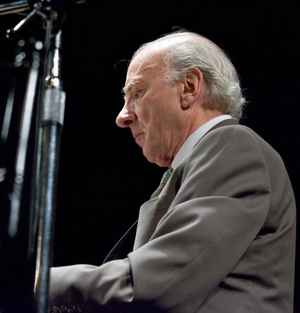 Dick Hyman Source: All About Jazz |
|
|
Freddie Redd Source: Washington DC Jazz Network |
Born in 1928 in Harlem, hard bop pianist
Freddie Redd
[1,
2]
was released from active duty in the military in 1949, whence upon he took
his first professional gigs in Syracuse, New York. Lord's disco has him
recording in Philadelphia in September of 1950 with
Tiny Grimes' Rockin' Highlanders for
tracks like several takes of 'Freddie and Johnny Boogie' (Gotham 249/ 3 alt
takes Krazy Kat 804/807) and 'Riverside Jump' (Gotham 249). Via touring with
Grimes he ended up in
NYC where he played with other ensembles in addition
Grimes' to 1954. He last recorded with
Grimes with the latter's Quintet on May
24, 1954: 'Frivolous Sal'/'Showboat Mambo' (Apollo 823) [Lord]. On February 28, 1955 Redd
recorded his debut name recordings ('Piano - East/West', sharing half an
album with recordings made by Hampton Hawes
on side A in 1952). Among others whom he backed later that year were
Art Farmer,
Gigi Gryce and
Gene Ammons. In 1956 he toured to Sweden
where he recorded live titles like 'Looking for a Boy' and 'Lover Man' at
Varnamo Folkets Park in Jönköping, Sweden, on July 30 with Rolf Ericson
(trumpet),
Lars Gullin (baritone), Tommy Potter
(bass), Joe Harris (drums) and
Ernestine Anderson at
vocals. His next sessions in Sweden were in September of '56 in Stockholm. Redd
wrote the score to the 1961 film, 'The Connection' [1,
2,
3], in which he also
appeared both as an actor and musician. Also featured were such as Jackie
McLean. Redd's album, 'The Music from The Connection', was issued in April
1960 nigh a year prior to the film's premiere in May of '61. Having been
recorded on 15 February 1960, later that year on
13 August he laid out tracks toward the album, 'Shades of Redd' [1,
2], issued in May 1961. Briefly afterward he moved to Denmark, then France,
recording 'Under Paris Skies' in Paris on July 28/29, 1971, w Didier Levallet (bass) and Didier Carlier (drums) toward
a not so good review. Returning to
the States in 1974 to live in San Francisco, 'Straight
Ahead' saw recording in Hollywood on December 3, 1977, w Henry Franklin (bass) and Carl Burnett (drums).
Come 'Lonely City' in
1989. Redd visited Europe again
1991 when he recorded such as 'Don't Lose the Blues' and 'Waltzin' In' in
Stockholm in July. Redd moved to Baltimore in
2011 where, as of this writing, he yet resides. He released 'Music for You' in November 2014 and 'With Due Respect'
in 2016. Discographies: Discogs,
RYM.
Compilations: 'The Complete Blue Note Recordings of Freddie Redd' 1960-61 by Mosaic Records 1989: 1,
2,
3.
Album reviews. Freddie Redd 1950 With Tiny Grimes Composition: Tiny Grimes
Freddie Redd 1955
With Art Farmer & Gigi Gryce
Composition: Gigi Gryce
Album: "When Farmer Met Gryce'
Composition: Redd Album: "Introducing Freddie Redd'
Freddie Redd 1956
Composition: Redd Freddie Redd 1960 From 'The Music from The Connection' Recorded 15 Feb 1960 All compositions by Redd Freddie Redd 1961 From 'Shades of Redd' Recorded 13 Aug 1960
All compositions by Redd
Recorded 17 Jan 1961
Not issued until 'Redd's Blues' 1988
Composition: Redd
Freddie Redd 1977
Composition: Redd Album: 'Straight Ahead'
Freddie Redd 2013
Filmed live with the Colours Quartet Composition: Bill Hardman
|
|
|
Born Frederick (Fritz) Russell Jones in 1930 in Pittsburg, pianist Ahmad Jamal ('highly praised beauty" in Arabic) began his career with the George Hudson Orchestra in 1948. Conceived to Baptist parents, Jamal converted to Islam in 1950. His first recordings were in Chicago on October 5, 1951, for the Okeh label with a group called the Three Strings: 'The Surrey with the Fringe On Top', 'Will You Still Be Mine?', 'Rica Pulpa' and 'Perfidia'. His next session on May 5 of '52 in Chicago saw 'Aki and Ukthay (Brother and Sister)', 'Billy Boy', 'Ahmad's Blues' and 'A Gal in Calico', later released in 1959 on the album, 'The Piano Scene' (Epic LN 3631). Jamal's trio consisted of Ray Crawford (guitar) and Israel Crosby (bass) when his initial version of 'Poinciana' went down on 25 Oct 1955, also later released in '59 on 'The Piano Scene'. Jamal's first issue of 'Poinciana' had been recorded and released before that. Taking place live at the Pershing Lounge in Chicago, his trio was filed w Israel Crosby (bass) and Vernell Fournier (drums) toward issue in '58 on Argo 7" 5306 ('Soft Winds' flip), Argo EP 1076 ('Music, Music, Music') and Argo LP 628 ('Ahmad Jamal at the Pershing: But Not For Me'). After a tour of Africa Jamal disbanded the Three Strings and opened a club and restaurant in Chicago called The Alhambra. Jamal then put together a new ensemble in '64 to tour and record the album, 'Extensions', released in 1965. In 1986 Jamal sued Jewish critic, composer and musician, Leonard Feather, for using Jamal's non-Muslim name in a publication, greater circumstance, if any, unknown. (It seems Feather, now deceased, had written at least one dismissive review of Jamal, perhaps at that period. To this day another Jewish critic Jamal bans from mention, along with religion, during interviews is Ira Gitler. Knowing nothing about such, we leave it at coincidence. Knowing not what relevance, but relatively, Jamal produced 'The Fundamental Question' for Channel 4 in England in 1996, a documentary film concerning the rise of fundamentalist versus secularist Islam.) As of this writing Jamal is yet active. With around a hundred sessions to his name in Lord, nearly all of those have been as a leader. Recent releases have been 'Saturday Morning' (Jazz Village '13) [1, 2, 3], 'Live at the Olympia' (Jazz Village '14) [1, 2], 'Live in Marciac August 5th 2014' (Jazz Village '15) [1, 2] and 'Marseille' (Jazz Village '17) [1, 2, 3, 4]. References encyclopedic: 1, 2, 3; musical: 1, 2, 3. Synopsis. Sessions: Ahmad Jamal website, Lord. Discos: 1, 2, 3, 4. Compilations: 'The Classic 1958-1962 Recordings' by Jazz Dynamics 2013. Jamal in visual media. Interviews: Les Tomkins 1979, AAJ 2003, WaxPoetics 2008, Guardian 2015, JazzTimes 2017. Further reading: Karen Michel at NPR. Per 1958 below, 'Poinciana' w music by Nat Simon and lyrics by Buddy Bernier was picked up from the Cuban folk tune 'La Canción del Arbol' ('The Song of the Tree'). Ahmad Jamal 1952 Composition: Jamal Composition: Leo Robin/Arthur Schwartz Aki & Ukthay (Brother & Sister) Composition: Jamal Ahmad Jamal 1956 Composition: Jamal Guitar: Ray Crawford Bass: Israel Crosby Composition: Alberto Domínguez Album: 'The Ahmad Jamal Trio' They Can't Take That Away from Me Guitar: Ray Crawford Bass: Israel Crosby Composition: Gershwin Brothers Album: 'The Ahmad Jamal Trio' Ahmad Jamal 1958 Composition: American folk traditional Roud 326 1904 Music: Gene de Paul 1942 Lyrics: Patricia Johnston/Don Raye Music: Nat Simon 1936 Lyrics: Buddy Bernier Music: Richard Rodgers Lyrics: Oscar Hammerstein II Composition: Dizzy Gillespie Ahmad Jamal 1959 Film Music: Jimmy Van Heusen 1939 Lyrics: Eddie DeLange Ahmad Jamal 1961 Music: Richard Rodgers Lyrics: Lorenz Hart Ahmad Jamal 1970 Album Ahmad Jamal 1971 Album Ahmad Jamal 1992 Bass: James Cammack Drums: David Bowler Composition: Jamal Ahmad Jamal 2008 Bass: James Cammack Drums: Idris Muhammad Composition: Jamal Ahmad Jamal 2012 Concert film with Yusef Lateef Ahmad Jamal 2014 Live in Marciac Double Bass: Reginald Veal Drums: Herlin Riley Percussion: Manolo Badrena Music: Richard Rodgers 1934 Lyrics: Lorenz Hart
|
Ahmad Jamal Photo: Chuck Stewart Source: Village Voice |
|
|
Born in
1922 to Jewish parents in Buenos Aires, Argentina,
Lalo Schifrin
was largely an arranger and composer for film and television scores as well
as a conductor and pianist. Though a major name in popular music he has
always had his hands in jazz. His most famous work is likely the theme to the
television series, 'Mission Impossible', premiering in 1966 to win a Grammy
50 years later in 2016. Schifrin didn't
begin to study piano until age sixteen, then pursued sociology and law at
the University of Buenos Aires. He quickly changed his major to music and
enrolled at the Paris Conservatoire at age twenty. Schifrin played piano in
Paris clubs before returning to Argentina to form an orchestra. His first
arrangement to see vinyl was in 1951 per 'The Continental', performed by the
All Stars Argentinos. His first piano recordings are thought to have been
released in 1953 from a December 1952 session of 'Nunca Supe'/'Enigma Para
Boppers', the latter 'Enigma Para Boppers' also his
first recorded composition. His first performance on an album was as a
pianist in 1955 on 'Piazzolla et Son Orchestre' released by Festival
Records. 1955 found Schifrin traveling to the International Jazz Festival in
Paris to record titles for Vogue toward 'Rendez-Vous Dansant a Copacabana'.
Due collaborations with Dizzy
Gillespie in Argentina, then NYC, Schifrin took his wife to live in
the United States in 1960. (Thanks to Douglas Payne for recording
information above.) That November he backed
Gillespie on 'Gillespiana'. A week later he was
with
Jazz at the Philharmonic in
Europe with Gillespie, for the
first of two sessions on November 21 in Stockholm, Sweden, for titles like
'Take the 'A' Train' and 'Indiana', the second on the 25th in Paris for such
as 'Gillespiana Suite' and 'Caravan'.
Schifrin supported
Gillespie numerously to 1963 in Chicago with the Double Six of Paris
for 'Con Alma' and 'Oo-shoo-bee-doo-bee'. There would be a reunion in winter
of '77 for 'Free Ride'. Schfrin's initial film score was for 'Rhino!' released in 1963, followed
by his first score for television in 1964, a movie titled 'See How They
Run'. Themes for television shows rapidly followed, such as 'The Man From U.N.C.L.E.' and 'The Big Valley'. From that point onward Schifrin's career
largely consisted of a prolific number of film scores and album releases.
Scarecrow Press published his memoir, 'Mission Impossible: My Life in
Music', in 2008. Schifrin is yet active as of this writing, touring internationally.
References encyclopedic: 1,
2,
3,
4; musical:
1,
2,
3. Compositions:
film scores,
television scores.
Sessions: Lord, Payne.
Discos: 1,
2,
3; albums:
name,
soundtracks,
supporting.
Filmographies:
1,
2.
Reviews.
Interviews: various 1967-94, Duffie 1988,
Burlingame 2008,
Myers 2012,
NAMM 2014.
Schifrin at Facebook.
Further reading: Cerra. Per
below, arrangements and compositions are represented in addition to piano
performances. He composed all not otherwise credited. Lalo Schifrin 1958 Film theme Lalo Schifrin 1959 Conductor: Xavier Cugat Composition: Barclay Allen 'Voice of Firestone' television program Composition: Alberto Domínguez Lalo Schifrin 1960 With Jazz at the Philharmonic Live in Paris Music: Jerome Kern 1939 Lyrics: Oscar Hammerstein II For the musical 'Very Warm for May' With Jazz at the Philharmonic Filmed live in Paris Composition: James Hanley With Jazz at the Philharmonic Filmed live in Paris Music: Billy Strayhorn 1939 Lyrics: Joya Sherrill 1944Lalo Schifrin 1961 Filmed live with Dizzy Gillespie Trumpet: Dizzy Gillespie Composition: Dizzy Gillespie/Kenny Clarke [LOC] Lalo Schifrin 1962 Album Album: 'Lalo = Brilliance' Album: 'Lalo = Brilliance' Lalo Schifrin 1966 Television theme Lalo Schifrin 1967 Film theme Instrumental Lyrics to vocal version by Norman Gimbel Lalo Schifrin 1968 Soundtrack suite Lalo Schifrin 1970 Soundtrack suite Lalo Schifrin 1974 Film theme Lalo Schifrin 2004 Compilation album Arrangements 1968-79 Lalo Schifrin 2006 Filmed concert
|
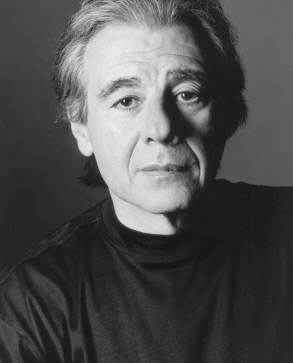 Lalo Schifrin Source: Hollywood Bowl |
|
|
Pianist, Horace Silver, known for hard bop and funk, was discovered by Stan Getz in Connecticut in 1950. It's with Getz that Silver is thought to have made his initial recordings on December 10 that year in New York City for 'Tootsie Roll'/'Strike Up the Band' (Roost 520), et al. A couple more sessions were held with Getz in '51, a final on April 15, 1952, at the Birdland where much of Silver's earlier career would occur, often performing for radio broadcasts. His first session at the Birdland with Getz bore 'Potter's Luck', 'I Can't Get Started' and 'Parker 51' ('Cherokee'). Among the more important jazz pianists with above 150 sessions to his name, 88 of those his own projects, we need confine this account to Silver's first decade in the fifties. A couple months after his last titles with Getz Silver joined alto saxophonist, Lou Donaldson, with Gene Ramey (bass) and Art Taylor (drums) on June 20 of '52 for a Blue Note session of Donaldson's 'New Faces New Sounds'. Silver would see Ramey again per his first session as a leader on October 9, 1952, with drummer, Art Blakey, that trio to record 'Horace-Scope', 'Safari' and 'Thou Swell'. He would see Taylor again on June 17, 1956, for such as 'I'll Know' and 'Silver's Blue'. Silver would hold a couple more sessions with Donaldson at the Birdland in 1953, a final on February 21, 1954, with Donaldson backing Art Blakey Quintet with Clifford Brown on trumpet toward 'A Night at Birdland'. The month after Silver's first session with Donaldson he joined vibraphonist, Terry Gibbs, on July 11, 1952, at the Pythian Temple in NYC for such as 'T and S' and 'Flying Home'. Come trombonist, Bill Harris, the next month at the Birdland on the 23rd for such as 'Ow' and 'Pennies From Heaven'. Following Harris at the Birdland came a couple live broadcasts with Coleman Hawkins in September, bearing such as 'Rifftide' and 'Disorder at the Border'. Per above, Silver's first name tracks for Blue Note followed on October 9 at WOR Studios in NYC with Blakey and Ramey. That was followed on the 20th with another trio including bassist, Curly Russell, yielding such as 'Quicksilver' and 'Ecaroh'. Silver and Russell had first recorded together with Hawkins on September 6 of '52 at the Birdland for 'Rifftide', 'I Can't Get Started' and 'Disorder at the Border'. They would see one another numerously, both with the Jazz Messengers and backing other ensembles, to 1957, their last occasion on March 3 that year to support Clifford Jordan's 'Blowing in from Chicago'. Silver and Art Blakey had first recorded together with Hawkins at the Birdland on September 13, 1952, yielding 'Disorder at the Border', 'The Blue Room' and 'Stuffy'. Silver's first session with Blakey and the Messengers was on October 31, 1953, again broadcasting from the Birdland, titles like 'An Oscar for Oscar' and 'If I Love Again'. Albeit Blakey had already recorded with a group he'd called the Jazz Messengers in 1947 that was a brief affair. With Silver's participation and joint leadership the Messengers's name was resurrected. Recordings by Silver with Blakey that followed were essentially Messengers affairs without the name, such as those by the Horace Silver Quintet on November 13, 1954, bearing such as 'Room 608' and 'Creepin' In', and February 6 of 1955 bearing 'Hippy' and 'Hankerin'', et al. On November 23 of that year the Messengers recorded a long string of titles toward 'The Jazz Messengers at the Cafe Bohemia'. Titles on April 6 of '56 went toward the album, 'The Jazz Messengers', that year. Silver's last Messengers session ensued the next month on the 3rd in support of Rita Reys on such as 'Taking a Chance on Love' and 'That Old Black Magic'. Prior to Silver's first session as a leader he had joined Lester Young at the Birdland for six sessions from January 3 to April 15 of 1953. The first wrought such as 'Up 'n' Adam' and 'Blue and Sentimental', the sixth 'Lullaby of Birdland', 'Up 'n' Adam' and 'Too Marvelous for Words.' Silver's first recordings with trumpeter, Howard McGhee, had been with Terry Gibbs above in July of '52. They had also attended a session together with Hawkins in September that year. On May 20, 1953, Silver backed McGhee on such as 'Shabozz' and 'Tranquility'. Alto saxophonist/ flautist, Gigi Gryce, had been in on that. Silver joined Gryce again on May 10 the next year with Art Farmer for 'When Farmer Met Gryce'. He romped with the Gigi Gryce Orchestra for a couple sessions in October of '55 yielding such as 'Social Call' and 'Smoke Signal'. Come Al Cohn on June 23, 1953, for such as 'I'm Tellin' Ya', and 'Jane Street'. They would reunite on February 25, 1955, in Quincy Jones' All Stars for 'Grasshopper', that to be found on the album by various in 1963 called 'The Giants of Jazz'. Kenny Dorham had been one of the Jazz Messengers for its first session with Silver per above at the Birdland in October 1953. He was also a member of Silver's Quintet in 1954 before Silver joined Dorham's Sextet on January 30, 1955, toward 'Afro/Cuban'. Dorham would join a couple more Messengers sessions in '55 ('The Jazz Messengers at the Cafe Bohemia') and '56 ('The Jazz Messengers'). Silver commenced 1954 with the Art Farmer Quintet on January 20 with titles like 'Wisteria' and 'Soft Shoe'. Farmer and Silver would see a couple sessions with Gryce in '55, another with Hank Mobley in '57 before Farmer supported Silver on 'The Stylings of Silver' on May 8 of '57. Also present at that January 20 session in '54 was drummer, Kenny Clarke. Silver and Clarke would get partnered on several occasions in the fifties, both backing other operations and each other. As Clarke was a member of the Modern Jazz Quartet, Silver took John Lewis' place [1, 2] at the first [1, 2, 3, 4] Newport Jazz Festival [1, 2, 3, 4, 5, 6] held on July 17 and 18 of 1954, that so Lewis could back Ella Fitzgerald. Filling that temporary version of the MJQ were its founders (along w Lewis), Milt Jackson (vibraphone) and Percy Heath (double bass).January 28 of '55 found Silver participating in Clarke's 'Bohemia After Dark'. July 2 of '65 found Clarke contributing to Silver's 'Silver's Blue'. Tenor saxophonist, Sonny Rollins, had been in on the Farmer session of January 20 1954, above. Rollins and Silver would back Miles Davis on 'Bag's Groove' on June 19 1954. They would reunite on April 14, 1957, Silver backing Rollins on titles like 'Why Don't I' and 'Wail March'. Silver's first session with Miles Davis had been on March 6 of '54 with Art Blakey on drums and Percy Heath on bass. His first of several sessions with Heath had been with Lou Donaldson and trumpeter, Blue Mitchell, on November 19, 1952, for such as 'Down Home' and 'If I Love Again'. Numerous followed until January 7 of '57, they backing Milt Jackson on 'Boogity Boogity' and 'Heartstrings', et al. Mitchell would later back Silver a few times in 1959, including the Newport Jazz Festival' followed by 'Blowin' the Blues Away' on August 29. As for Miles Davis, a few more sessions ensued until 'Bags' Groove' on June 29 the same year ('54). A session with Davis on April 29 had included trombonist, JJ Johnson. Silver would join Johnson again to support both Kenny Dorham and Quincy Jones before a session on June 6, 1955, resulting in 'The Eminent Jay Jay Johnson Vol 3'. They would back Rollins in '57, then reunite eight years later on October 22, 1965, Johnson supporting Silver on 'Nutville', 'Bonita' and 'Mojo'. Silver's first session with trumpeter, Clark Terry, had been on June 2, 1954, for 'Cats vs Chicks', those titles to appear on side B of an album of various with 'Hot vs Cool' on side A in 1978. A couple sessions with Terry in '55 followed, they to reunite more than thirty years later on March 31, 1988, for Silver's 'Music to Ease Your Disease'. A couple weeks after his first Terry session Silver joined Milt Jackson on the 16th ('54) for such as 'Opus de Funk' and 'I've Lost Your Love'. Silver would back Jackson again in '55 and January of '57, those last two sessions coming to Jackson's 'Plenty Plenty Soul'. Tenor saxophonist, Hank Mobley, had first recorded with Silver per the latter's Quintet on November 13, 1954: 'Room 608', 'Creepin' In', etc.. Mobley and Silver would get partnered severally in the fifties, both supporting other operations and each other. Silver participated in Mobley's album 'Hank Mobley Quartet' on March 27, 1955. Later that year Mobley joined the Jazz Messengers per above for 'The Jazz Messengers at the Cafe Bohemia'. Mobley contributed to 'The Stylings Of Silver' in May of '57 and 'Further Explorations' on January 13, 1958. Silver had first recorded with trumpeter, Quincy Jones, on January 23 of '54, Jones arranging titles for Terry like 'Double Play' and 'Slow Boat'. February of '55 found Silver contributing to Jones' 'Grasshopper' per above, they to reunite on January 7, 1957, with Jones arranging titles for Milt Jackson like 'Plenty Plenty Soul' and 'Boogity Boogity'. Silver's first occasion to record with bassist, Paul Chambers had been with JJ Johnson on June 6, 1955, for 'The Eminent Jay Jay Johnson Vol 3'. They would witness several sessions backing other enterprises together to April 14, 1957, for Sonny Rollins. Silver had meanwhile supported Chambers on 'Whims of Chambers' on September 21, 1956. Silver's first tracks with trumpeter, Nat Adderley, had been on June 28, 1955, for Clark Terry's 'Bohemia After Dark'. On September 6 that year he supported Adderley on 'Introducing Nat Adderley' with Nat's brother, saxophonist, Cannonball Adderley, Roy Haynes on drums and Chambers on bass. Silver had first recorded with Haynes per the Stan Getz Quintet on August 15 of 1951, for titles like 'Melody Express' and 'Yvette'. Trumpeter, Donald Byrd, had also been in the crew for Terry's 'Bohemia After Dark' per above in June of '55. Silver would support Byrd's 'Byrd's Eye View' on December 2, 1955, and 'The Jazz Message' on January 30, 1956. Byrd then joined the Jazz Messengers for a couple of sessions in spring that year, his last supporting Rita Reys per above on May 3 for such as 'That Old Black Magic'. Byrd contributed to '6 Pieces of Silver' on November 10 of '56. A session with Hank Mobley followed fifteen days later, Byrd and Silver to reunite on June 15, 1958, to back vocalist, Bill Henderson, on 'Senor Blues'. Silver's first occasion to record with guitarist, Kenny Burrell, was per 'Whims of Chambers' above in September of '56. The next year on February 10 Silver backed Burrell's 'K.B. Blues'. Silver contributed to the debut album, of saxophonist, JR Monterose on October 21, 1956: 'J. R. Monterose'. The next month on the 4th he participated in trumpeter, Lee Morgan's, 'Lee Morgan Indeed!'. A session would follow with Mobley and Byrd on the 25th before their last titles together the next month on December 2 for 'Lee Morgan Sextet'. Silver joined saxophonists, Clifford Jordan and John Gilmore on March 3, 1957, for 'Blowing In From Chicago'. On January 13, 1958, Jordan supported Silver on 'Further Explorations'. Silver wasn't known for his work with vocalists. One exception beyond Rita Reys and Bill Henderson above consisted of Gail Nelson with Andy and Salome Bey for Silver's issue of 'All' in 1972. Silver had accomplished a number of compositions during his career, both classical and jazz. Among his earlier was 'Opus de Funk' first going down on November 23, 1953, to be found on Silver's album, 'Sabu'. 'Creepin' In' was first recorded on November 13, 1954. 'The Preacher' followed on February 6, 1955. 'Soulville' arrived on May 8, 1957, on 'The Stylings of Silver'. 'Peace' was first recorded at the Newport Jazz Festival on July 3, 1959. Come 'Song for My Father' on October 26, 1964, issued on the album titled the same. 'Liberated Brother' saw issue in 1973 on 'In Pursuit of the 27th Man'. Silver toured internationally very little in comparison to other musicians. In July of 1962 he recorded 'Tokyo Blues' in Japan. He was in Paris on November 4, 1968, for live recordings of ''The Natives Are Restless Tonight, 'Serenade to a Soul Sister' and 'Psychedelic Sally'. Silver's album, 'You Gotta Take a Little Love', followed in January of '69, recorded back in New Jersey. Leaping ahead to the nineties, beginning with 'Rockin' with Rachmaninoff' in June of '91 Silver recorded seven albums to 'Jazz Has a Sense of Humor' in December of 1998. U of CA Press published his memoir, 'Let’s Get to the Nitty Gritty'', in 2006, edited by Phil Pastras w Foreword by Joe Zawinul. Silver died on June 18 of 2014 [obits 1, 2], leaving a trail of 36 studio albums, three live albums and seven compilations. References: 1, 2, 3, 4. Sessions: JDP, Lord, Horace Silver website. Discographies: 1, 2, 3, 4. Compilations: hard bop: 'The Compositions of Horace Silver' by Riverside 1962; Blue Note recordings 1952-78: 'The Horace Silver Retrospective' Blue Note 1999: 1, 2, 3. Album reviews. Silver in visual media. Awards. Interviews: Herb Nolan 1973, Bob Rosenbaum 1981, Josef Woodard 1997. Further reading: Silver w trumpeter, Dave Douglas; JazzWax. Other profiles: 1, 2, 3, 4. Horace Silver 1951 Tenor sax: Stan Getz Music: George Gershwin 1927 Lyrics: Ira Gershwin For the musical same title Tenor sax: Stan Getz Composition: John Steadwell Note: Above titles were recorded 10 Dec 1950 toward issue on Roost 520 (US) and Vogue 2081 (UK). Roost 520 is listed in 'Billboard' Advance Record Releases 30 Dec 1950. Horace Silver 1952 Saxophone: Stan Getz Composition: Silver Art Blakey 1955 Composition: Silver Album: 'Horace Silver and the Jazz Messengers' Drums: Art Blakey Recorded 1952 Composition: Duke Ellington/Irving Gordon/Irving Mills First issued by Ellington 1938 Horace Silver 1956 Composition: Silver Horace Silver 1959 Composition: Silver Album: 'Blowin' the Blues Away' Live performance Composition: Silver Horace Silver 1962 Composition: Silver Album: 'The Tokyo Blues' Tenor sax: Stan Getz Composition: Gigi Gryce Horace Silver 1963 Composition: Silver Album: 'Silver's Serenade' Horace Silver 1964 Composition: Silver Album: 'Song for My Father' Horace Silver 1965 Composition: Silver Album: 'The Cape Verdean Blues' Issued Dec '65 on Blue Note BLP 4220 [Discogs] Also issued on Blue Note 45-1924 Horace Silver 1968 Composition: Silver Album: 'The Cape Verdean Blues' Live version Composition: Silver Horace Silver 1971 Composition: Silver Album: 'Total Response' Horace Silver 1972 From 'In Pursuit of the 27th Man' Compositions: Silver Horace Silver 1974 Umbria Jazz Festival Composition: Weldon Irvine Horace Silver 1976 Live at the Umbria Jazz Festival Concert Horace Silver 1978 Composition: Silver Album: 'Silver 'N Percussion'
|
Horace Silver Photo: Dimitri Savitski Source: Wikiwand
|
|
|
Born in 1924 in East Durham, New York, singer Blossom Dearie switched from classical piano to jazz as a teenager. In 1948-49 she recorded a few vocals in NYC which didn't make it to issue at the time. The first was 'In the Merry Land of Bop' in May of '48, sharing vocals with Dave Lambert and Buddy Stewart with Al Haig on piano. That would be included on an album by various in 1965 called 'A Look at Yesterday', also on the 1972 issue of 'Yesterday'. On July 28 of '49 she contributed vocals to 'Be Still, TV' and 'Short P, Not LP' with Haig at piano, those to eventually be included on the album by various, 'Prezervation', in 1967. February 19, 1952, found her singing with King Pleasure on 'Moody's Mood for Love'. Allmusic mentions her recording a lost album of piano solos around this time. Her first issue at piano was recorded April 1, 1952, for Annie Ross, resulting in Dee Gee titles like 'Every Time' and 'The Way You Look Tonight. Shortly afterward that year, at age 28 she took off for France where she formed the group, The Blue Stars of France. Her initial session with that ensemble in November of '54 in Paris was a long stream of vocals such as 'La legende du pays des oiseaux' ('Lullaby of Birdland') and 'Cherokee'. The next year she performed piano with Herman Garst (bass) and Bernard Planchenault (drums) toward her first name album, 'Jazz Sweet'. On April 20 of '55 Dearie arranged titles for Bobby Jaspar such as 'Lover Man' and 'What's New?'. They co-led more titles on January 16, 1956, like 'Old Devil Moon' and 'Flamingo'. Dearie and Jaspar married in April of '56 to 1963. Numerous sessions with Les Blue Stars ensued in '56 until Dearie returned to America that year to record her first record album in September: 'Blossom Dearie'. 'Give Him the Ooh-la-la' followed in September of '57, 'Once Upon a Summertime' in September of '58. Sessions in NYC followed until the recording of 'Soubrette: Blossom Dearie Sings Broadway Hit Songs' in Los Angeles in February of 1960. Her first trip to London in '62 or '63 resulted in 'Sweet Blossom Dearie' recorded live at Ronnie Scott's jazz club. She would spend the remainder of her career commuting between the United Kingdom, New York City and California. She founded Daffodil Records in New York in 1974 (not to be confused with the Canadian label existent in 1971-78). Dearie's career wasn't recording intensive with only fifty some sessions, the majority her own. She yet maintained, if not a blockbusting presence, one of distinctive charm. Dearie is thought to have recorded her final album, 'Blossom's Planet', in 1999 for 2000 release. Her last title, 'It's All Right to Be Afraid', was issued in 2003. Dearie died on February 7, 2009, in her flat in Greenwich Village, NYC. The box set of 4 CDs, 'Complete Recordings: 1952-1962', was issued in 2014. More Dearie w references and a few of her earlier recordings in France. There was a time when piano solos by Dearie were more abundant at YouTube. Those have since disappeared, leaving: Blossom Dearie 1955 Composition: Vernon Duke/Yip Harburg
|
Blossom Dearie Source: Soulful Planet
|
|
|
Vince Guaraldi
was born in 1928 in San Francisco. He began performing on piano during
college, that early inclination interrupted by service as an army cook
during the Korean War. Upon discharge he found employment as an intermission
pianist at the Black Hawk in San Francisco, filling in breaks at Art
Tatum performances. In 1951 Guaraldi joined the
Cal Tjader Trio with which he is
thought to have first recorded in San Francisco in November of '51, such as
'Vibra-Tharpe' and 'Chopsticks Mambo' released by Gotham in '52. Titles from
that would also go toward the December 1953 album, 'The Cal Tjader Trio'. Three
years later he formed his own trio and recorded his first album in April of
'56, 'Vince Guaraldi
Trio'. November of that year found him with
Tjader again, backing three
titles on 'Introducing Gus Mancuso'. Guaraldi then joined
Tjader's quartet for 'Jazz at the
Blackhawk' on January 20, 1957. He stuck with
Tjader, contributing to numerous
albums, into 1959, mostly in San Francisco, often at the Blackhawk.
Guaraldi's main claim to fame were his piano pieces for fifteen 'Peanuts'
cartoon [1,
2,
3,
4,
5]
televisions specials written by Charles Schulz [1,
2,
3].
The first of his 'Peanuts' projects was the music for 'A Boy Named Charlie
Brown' in 1963, a documentary about Schulz that didn't get aired. The
soundtrack was nevertheless released in '64 on both LP and reel-to-reel as
'Jazz Impressions of 'A Boy Named Charlie Brown'. Tracks from that, like
'Linus and Lucy', were included on the 1965 issue of 'A Charlie Brown
Christmas'. Guaraldi's last recording, the soundtrack for
'It's Arbor Day, Charlie Brown', took place on February 6, 1976, he dropping
dead later that day, possibly of heart attack. References: 1,
2,
3,
4.
Timeline.
Compositions: jazz,
'Peanuts'.
Discographies: 1,
2,
3,
4.
Reviews: 1,
2.
Guaraldi in visual media.
Further reading: books: 'Vince Guaraldi at the Piano' by Derrick Bang (McFarland 2012): 1,
2;
Guaraldi and 'Peanuts': 1,
2,
3.
Other profiles: *.
Cal Tjader plays both drums and
vibes in tracks below. Per 'Chopsticks-Mambo',
Tjader's embellishment is of the
original 'The Celebrated Chop Waltz' published in 1877 by British composer,
Euphemia Allen, as Arthur de Lulli. Vince Guaraldi 1952 With Cal Tjader With Cal Tjader Composition: Bernice Petkere/Joe Young With Cal Tjader Composition: Bert Kalmar/Harry Ruby With Cal Tjader Composition: Bramy/Valerio/Zantz Vince Guaraldi 1956 Composition: John Lewis Album: 'Vince Guaraldi Trio' Vince Guaraldi 1957 Album Vince Guaraldi 1962 Music: Guaraldi Lyrics: Carel Werber Vince Guaraldi 1965 Album
|
Vince Guaraldi Source: Jazz Times |
|
|
Born in 1925 in Leipzig, Germany, Jutta Hipp
studied painting before moving to West Germany upon Soviet occupation and
the establishment of East Germany (German Democratic Republic) in 1949.
Among the names with whom she first played piano was tenor saxophonist,
Hans Koller, Hipp also forming
her first ensemble at that time. Hipp had recorded as early as December '45
or January '46 in Leipzig at the Lime City Swing Club with the Lindenstadt
Swing Quintett [Lord]. Such as 'Flat Foot Floogie' and 'St. Louis Blues' would much
later be included in a box set called 'Hipp Is Cool' in 2015. Hipp is
thought to have grooved her first issued recordings in 1952, the same year
she began working with guitarist,
Attila Zoller. Those were recorded
with the
Hans Koller Quartet in May, such as
'Hans Is Hip' and 'Up From Munich'. Hipp's first titles as a leader on
November 30 of 1952 went unissued. Such as 'Blues After Hours' and 'Erroll's
Bounce' would much later be included on 'Lost Tapes: The German Recordings 1952-1955' in
2013. Hipp recorded in
Germany into 1955, releasing the album, 'Jutta (New Faces - New Sounds From
Germany)' that year, then emigrated to the United States, there releasing
the album, 'At the Hickory House Vol. 1', the same year. In 1956 she issued
'At the Hickory House Vol. 2', also featuring at the Newport Jazz Festival
in Rhode Island that year. Also in 1956 she recorded the album, 'Jutta
Hipp with Zoot Sims', released the following year. Hipp left the music industry in 1958 to paint,
supporting herself in a garment factory. One source explains that she
dropped away from the jazz scene due that she didn't possess a business
drive, especially as rock music was by that time stealing away jazz
audiences: she played piano well enough, but owned small ambition and was
socially withdrawn. Another source cites that she suffered PTSD
(post-traumatic stress syndrome) due largely to living in Germany during the
war years. Though she played weekends until 1960 she gradually fully settled into
employment at Wallach’s Clothiers, where she remained until retirement in the
nineties. Among the few musicians with whom she remained in contact
throughout her life was alto saxophonist, Lee Konitz. Hipp died
on April 7, 2003, of
pancreatic cancer in Queens [obit].
References: 1,
2,
3,
4.
Sessions: JDP, Lord.
Discographies: 1,
2,
3,
4.
Compilations: 'Hipp Is Cool: The Life and Art of Jutta Hipp' 1945-66 by
BE! Jazz 2015; 'The German Recordings 1952-1955' by Jazzhaus 2012:
1,
2,
3;
'The Legendary Jutta Hipp Quintet 1954: Frankfurt Special' by Fresh Sound 2006.
Forum.
Twitter tribute page.
Further reading at JazzWax: 1,
2.
Saxophonist, Zoot Sims,
performs with Hipp on all tracks for 1956 below. Jutta Hipp 1952 Recorded 30 November '52
Composition:
Pee Wee Crayton
Issued 2006 on 'The German
Recordings 1952-1955'
Jutta Hipp 1953
Composition:
Victor Herbert
One of two
versions recorded 1953
This issue
1989:
'Forty
Years of Women in Jazz'
Jutta Hipp 1954
'Dear Old Stockholm'
Tenor Sax: Joki Freund &
Hans Koller
Music: Max
Bruch from Op 88 1911
Lyrics:
Anders Fryxell/Fredrik Dahlgren
Commonly
credited anonymously as a Swedish folk song Tenor Sax: Joki Freund &
Hans Koller
Composition:
Joki Freund Tenor Sax: Joki Freund Music: David
Raksin 1944 Lyrics:
Johnny Mercer
Jutta Hipp 1955 Album: 'Cool Europe'
Jutta Hipp and Her German Jazzmen Leonard Feather LP
Composition:
Joki Freund
Composition:
Emil Mangelsdorff
Composition:
Joki Freund
Note: Samples above may lend Albert Mangelsdorff at trombone. A search
through several Mangelsdorff and Hipp discographies mention him not. See also:
1,
2.
Jutta Hipp 1956
Composition:
Al Lerner/Frederick Loewe
Album: 'Jutta Hipp with
Zoot Sims'
Album
Bass: Peter
Ind
Drums: Ed
Thigpen
Album
Bass: Peter
Ind
Drums: Ed
Thigpen
Composition:
Jerry Lloyd
Album: 'Jutta Hipp with
Zoot Sims'
Composition:
Zoot Sims
Album: 'Jutta Hipp
with Zoot Sims'
Composition:
Gershwin Brothers
Album: 'Jutta Hipp with
Zoot Sims'
Composition:
George
David Weiss
Jerry Bock
Lawrence
Holofcener
Album: 'Jutta Hipp with
Zoot Sims' Music:
Jack Strachey 1936 Lyrics:
Holt Marvell (Eric Maschwitz)
Album: 'At
the Hickory House Vol 1'
Composition:
Matt Dennis/Tom Adair
Album: 'Jutta Hipp
with Zoot Sims'
Composition:
JJ Johnson/Leo Parker
Album: 'Jutta Hipp
with Zoot Sims'
|
Jutta Hipp Source: Discogs |
|
 Hank Mar Source: Second Hand Songs |
Born in 1927 in Columbus, Ohio, Hammond B3 organist, Hank Marr,
lived in the same neighborhood with saxophonist,
Roland Kirk. After a period in
the military he gigged clubs in Tampa for a couple years before attending
Ohio State University. In 1952 he joined
Rusty Bryant in Columbus, Ohio, for a
session yielding 'Castle Rock' and 'All Night Long' (Dot 15134) [Lord]. Marr would stick
with Bryant for a few years into 1955-56. In August 1954 he joined
Julian Dash in Chicago in the
recording of several R&B tunes for Vee Jay Records: 'Dash Is It', 'So Let It Be' and 'Zig Zag'
and 'Mambo'. Marr began
issuing as a leader for the Federal label in 1961: 'Tonk Game'/'Hob Nobbin'',
'Ram-Bunk-Shush'/'The Push' and 'Travelin' Heavy'/'Mexican Vodka'. He issued
his debut LP, 'Teentime Latest Dance Steps', in 1963, a collection of
already issued recordings. The single, 'Greasy
Spoon', released in '63, would show up on another collection in 1969 titled,
'The Greasy Spoon'. Marr had emphasized R&B during his
career, but came to greater favor for his jazz
recordings, such as those with guitarists,
Wilbert Longmire and
James Ulmer.
Longmire had
joined Marr's Quartette in '63 consisting of
Rusty Bryant (tenor sax) and Taylor Orr (drums). In
December of '63 they
recorded Marr's 'Live at the Club 502' in Columbus, OH [*].
Longmire and Marr would reunite more than thirty years later in Louisville,
Kentucky, for the latter's 'Groovin' It' with Bill Stewart on drums.
Longmire would also join Marr on titles for 'Blues'n and Cruisin'' in 2001.
As for
Ulmer, his debut recordings were with Marr in 1964, 'Sounds from the
Marr-Ket Place' not released until 1967.
Lord's disco has him on only 50 sessions during his fifty-year recording
career, 15 of those his own. Marr began teaching music at Ohio State in
1983. 1998 saw the issue of 'hank & frank' on Double
Time Records (founded 1995 by Jamey Aebersold) w tenor saxophonist,
Frank Foster. Into the new millennium he recorded 'Blues'n
and Cruisin'' in Louisville, Kentucky, on June 20, 2001. His next sessions
fell in October of 2002 for Tim Cummiskey's 'Redeeming the Time', those
thought to be his last titles. He died on March
16 of 2004 [obit]. Per 1954 below, not to confuse, but to note the
anomaly, the back to back labels for
Julian Dash would appear to have gotten
reversed on those particular records. References: 1,
2,
3.
Discos: 1,
2,
3.
Further reading:
the Hammond organ: 1,
2,
3,
4,
5; 'The Jazz Organ'
by Geoff Alexander *; 'The Organ in Jazz'
by Steven Cerra: 1,
2. Hank Marr 1954 Titled as 'Zig Zag' With Julian Dash Composition: Julian Dash Titled as 'So Let It Be' Composition: Julian Dash Hank Marr 1961 Composition: Marr Hank Marr 1962 Composition: Marr Composition: Marr Hank Marr 1963 Composition: Gene Redd/Marr Composition: Henry Glover/Sally Nix Composition: Gene Redd/Marr Hank Marr 1964 LP: 'Live at Club 502' Guitar: Wilbert Longmire Composition: Count Basie Hank Marr 1967 Sounds from the Marr-Ket Place Album with James Ulmer Recorded 1964 Hank Marr 1968 Composition: Gene Redd/Marr Hank Marr 2001 Filmed at the 501 With Organic Chemistry: Guitar: Tom Carroll Drums: Jim Rupp See also 'Live @ the 501' by Cojazz
|
|
|
Composer/pianist,
Stan Tracey,
was born in 1926 in Denmark Hill, South London. With World War II
interrupting his education, he became a professional accordionist at age
sixteen, performing with ENSA (Entertainments National Service Association),
providing music to British armed forces. He himself was in the Royal Air
Force before taking gigs on ocean liners, the Queen Mary and Coronia. He
toured the UK in 1951 with
Cab Calloway before his initial
recording sessions in 1952 with the Kenny Baker Swing Group: 'Lullaby of
Birdland'/'Exploitation' (Parlophone 3490) and 'Round About Midnight'/'Afternoon in Paris'
(Parlophone 3646).
Tracey recorded numerously with Baker into 1954, their last session of that
period on June 8 yielding 'Peg o' My Heart' and 'The Other Side'. Later in
the sixties Baker would contribute trumpet to a few of Tracey's projects:
'Alice in Jazzland' in '66 as well as 'The Latin-American Caper' and 'We
Love You Madly' in 1968. Shortly after joining Baker, Tracey also recorded with
the
Victor Feldman All Stars on March 3, 1952 ('Lullaby In Rhythm', 'Serenity', 'Just
Friends' and 'Euphony'). He would see
Feldman again in July of 1960 to back
Tony Crombie's 'Sweet Wild and Blue'. Tracey's first session after leaving
Baker in 1954 was with the Harry Klein Quintet on January 19 of 1955 for
'Monument' and 'Euphony'. Klein and Tracey had first recorded together
backing Baker on March 3 of '52 for 'The Very Thought of You' and 'The Night
Is Long'. They were also together with
Feldman per above on the same date.
They would would get conglomerated on wide occasion in the sixties backing
other operations, Klein also supporting Tracey's 'Alice In Jazzland' on
March 8, 1966. Among the more significant figures in Tracey's career was
drummer, Tony Crombie, first recording with him on February 1, 1956, to
support Jimmy Deuchar's 'Worthington E' and 'Barley Wine'. Crombie and
Tracey partnered numerously, both backing other operations such as Ronnie
Scott's and each other, into and throughout the sixties. Examples of Tracey
backing Crombie were 'Jazz Inc.' on January 6, 1960, and 'Sweet Wild and
Blue' per above in July of '60. Among Tracey sessions that Crombie supported
in '59 and '64 was one featuring
Tubby Hayes on vibraphone on December
1, of '59 for such as 'We'll Call You' and 'The Toff'. Their last tracks
together are thought to have been in October 1970 for touring
Ben Webster's
'Webster's Dictionary'. Another drummer Tracey saw a good amount of was Phil Seamen, they first recording together on May 5, 1956, for Kenny Graham's
'Poinciana' and 'Teddy Boy' with Tracey on bongos. Their careers would
interweave often into the sixties,
Seamen also backing Tracey on such as
'Showcase' on May 1 of '58 and 'Little Klunk' on May 2, 1959. Their last
tracks together were in the Splinters for 'One In One Hundred' and 'Two In
One Hundred' on May 2, 1972, issued in 2009 as 'Split the Difference'. As
for Deuchar above, he and Tracey had first recorded together per
Victor Feldman above on March 3,
1952. They would join one another a number of times, backing other bands if
not Tracey supporting Deuchar, in 1956-57, 1961 at Ronnie Scott's Jazz Club
(to include
Zoot Sims in November, 1966) and, finally, March 23 of 1986 for
Rolling Stones drummer,
Charlie Watts's 'Live at Forum Town
Hall'. Eighteen days after Tracey's initial session with Deuchar above on
March 1, 1956, Tracey fell in with
Ronnie Scott's band at Royal Festival Hall in London for titles like
'Basie Talks' and 'It Might As Well Be Spring'.
Scott would be a highly
significant figure in Tracey's career for another twelve years supporting
other operations when Tracey wasn't working for
Scott. Notable were Tracey's
numerous appearances at Ronnie Scott's Jazz Club
in the sixties and eighties. His first recorded session there was November
14, 1961 with touring saxophonist,
Zoot Sims, for 'Zoot at Ronnie Scott's'.
He was house pianist from 1963 to 1966, returned in 1968 for touring
saxophonist,
Ben Webster's, 'Soho Nights Vol 1', returned again for a couple
sessions in '85 and, finally, January of 1988 for unissued titles like
'Creole Love Call' and 'Festival Junction'. Returning to 1956, sessions with
Kenny Graham's Satellites that July found him contributing various
instruments like cello to 'Lullaby', vibes to 'Tropical Sun' and accordion
to 'Sunday'. Continuing with Graham into 1957, their last session
together was on February 5 that year for such as 'Tuxedo Junction' and
'Swallowing the Blues'. That was followed by a two-year trot with the Ted Heath
Orchestra, his first title with that outfit on November of 1957: 'The
Keel Row'. His last of numerous sessions with
Heath arrived on October of 1959 toward 'Pop Hits From The Classics'.
While with Heath, Tracey recorded his
first name session as a leader on May 1 of 1958 beginning with 'Over the
Rainbow', those titles to appear on his debut album that year: 'Showcase'.
Tracey founded his own record label, Resteamed, in 1964, holding its first
session on December 11 for
Ben Webster''s 'Soho Nights Vol 2'.
That label would release Tracey's last recordings in 2013. Venturing into
the seventies, Tracey first recorded as a duo with alto saxophonist,
Mike Osborne, at Surrey Hall in
Stockwell in April '72, yielding 'Original'. They would record a number of
times together to November 26, 1976 at South Hill Park in Bracknell for
'Back to Berks'. Also of note during that period were his first duets with
pianist,
Keith Tippett, on December 21,
1974, toward 'T n T'. 'Supernova' followed on August 21, 1977. In May of
1978 Tracey would join
Tippett's Ark for 'Frames'. We
take a step back to the founding of another record label, Steam, in 1976 to
issue such as 'Under Milk Wood' (1976), 'The Salisbury Suite' (1978), 'The
Crompton Suite' (1981) and 'The Poets Suite' (1984). Another important
drummer came along in the person of Tracey's son, Clark Tracey, on June 20,
1980, that first session to bear 'South East Assignment'. Clark would remain
Stan's main drummer for more than thirty years to come, their final session
together also Stan's last on January 30, 2013, toward 'The Flying Pig'.
Among several albums issued in the new millennium had been 'A Child's
Christmas' in 2011. Tracey released nigh fifty albums as a leader from out
of about 100 sessions. Another 165 sessions were in support of other groups
and bands. Among Americans not mentioned above with whom he recorded as they
toured to England were
Johnny Griffin (1983),
Stan Getz (1964),
Sonny Rollins (1965),
Prince Lasha (1966) and
Jimmy Witherspoon
(1966). Other Brits were
Evan Parker ('86, '03, '04) and
John Surman (1978). Tracey died of cancer
on
December 6, 2013 [obits: 1,
2].
References: 1,
2,
3,
4,
5.
Discographies: 1,
2,
3,
4.
Reviews.
Tracey in visual media.
Documentaries: 'Stan Tracey: The Godfather of British Jazz' directed by John
Akomfrah (2003).
Interviews.
Further reading: Jazz Profiles,
The Independent. Per 1956 below, Tracey records on cello. Per 1986, edits were filmed at a tribute
to Duke
Ellington at the Bath International Jazz Festival. Stan Tracey 1956 Ronnie Scott/Tony Crombie Orchestra Composition: Duke Ellington Album: 'At The Royal Festival Hall' Ronnie Scott/Tony Crombie Orchestra Composition: Duke Ellington Album: 'At The Royal Festival Hall' Stan Tracey 1957 Kenny Graham & His Satellites Composition: Moondog (Louis Thomas Hardin) Graham album: 'Moondog and Suncat Suites' Stan Tracey 1964 From 'The New Departures Quartet': Composition: Tracey Composition: Bobby Wellins Stan Tracey 1965 From 'Jazz Suite Inspired by Dylan Thomas': All compositions on the LP by Tracey Stan Tracey 1966 Composition: Tracey LP: 'Alice in Jazz Land' Stan Tracey 1967 Composition: Tracey LP: 'In Person' Stan Tracey 1968 Composition: Tracey LP: 'With Love from Jazz' LP: 'Latin American Caper' Stan Tracey 1969 I Let a Song Go Out of My Heart Filmed live with Ian Carr Composition: Duke Ellington/Henry Nemo/Irving Mills I'm Beginning to See the Light Filmed live with Ian Carr Composition: Duke Ellington/Don George Harry James/Johnny Hodges Stan Tracey 1970 Composition: Tracey LP: 'Perspectives' Stan Tracey 1975 Composition: Tracey Telecast Stan Tracey 1986 Composition: Duke Ellington I'm Beginning to See the Light Composition: Duke Ellington/Don George Harry James/Johnny Hodges Composition: Manny Kurtz/Duke Ellington/Irving Mills Composition: Duke Ellington Stan Tracey 2008 Filmed in London
|
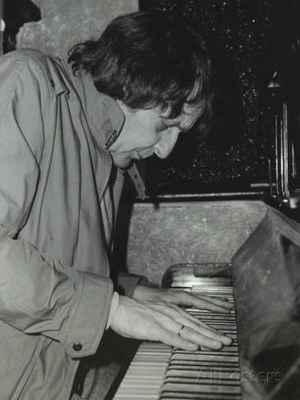 Stan Tracey 1986 Source: Getty Images |
|
|
Malcolm Earl "Mal" Waldron
was born in 1925 in New York City. He took his bachelor
degree in music in 1949. He also made his first recordings in 1949 in New
York City. But those piano solos, 'Fine and Dandy' and 'I Can't Get
Started', for Atlantic went unissued, as did titles with tenor saxophonist,
Ike Quebec's, Kansas Fields Quartet with
vocalist, Frank Price, on April 18 of '52: 'Forgive This Fool' and 'Don't
Tell Me'. The second session that day with that group consisting of Fields
on drums and Alfred Matthews on bass resulted in 'Whispering Winds' and
'Kiss of Fire' minus Price. Waldron recorded with Emmett Davis on the same day (April 18) for
the same label (Hi-Lo): 'Rippin' and Runnin'/'Look What'cha Done'. Waldron
attended a couple sessions for both the Wanderers ('Heh Mae Ethel'/'We Could
Find Happiness')and Varetta Dillard ('I Ain't Gonna Tell'/'My Mind Is
Working') in 1953 before arriving to bassist,
Charles Mingus', Sextet on October
31, 1954, toward 'Jazz Composers Workshop'. December 18, 1955, found Waldron
contributing to 'Mingus at the Bohemia'. January 30, 1956, found him
participating
Mingus' 'Pithecanthropus Erectus'.
February 4, 1959, witnessed him supporting
Mingus' 'Blues and Roots'. Waldron
backed operations like those of
Lucky Millinder and
Lucky Thompson in 1955, but doesn't
seem to have recorded with them. With Waldrons' career approaching 300
sessions, 115 of those his own, we need confine this account to a few of its
bigger nuggets with whom he attended multiple sessions. Alto saxophonist,
Jackie McLean, was one such
compatriot, Waldron joining him on October 21, 1955, with trumpeter,
Donald Byrd, for 'New
Traditions'.
Byrd and Waldron would cross
paths several more times backing various outfits to 1960. Ditto
McLean with whom he would have
occasion to support both
Mingus and
Gene Ammons. Works by
McLean to which Waldron contributed
include '4 5 and 6' on July 13 of '56 and 'Jackie's Pal' on August 31 of
'56.
McLean backed Waldron on 'Mal/2' on
April 19 of '57, 'Left Alone' in April of '60, 'Like Old Times' on April 12
of '76 in Tokyo, and 'Left Alone '86' on September 1 of '86 in Tokyo. We
return to 1955 and drummer,
Max Roach, with whom Waldron first
recorded on December 18 per above with
Mingus for 'Mingus at the Bohemia'.
Later on February 22, 1961, they would back
Abbey Lincoln on 'Straight
Ahead'. August 1 that year found Waldron contributing to
Roach's 'Percussion Bitter Sweet'.
Febrruary 15 of '62 saw him participating on
Roach's 'It's Time'. October 27
that year found him on
Roach's 'Speak, Brother, Speak'.
Returning to the fifties, come vibraphonist,
Teddy Charles, with trumpeter, Art Farmer,
on January 6 of 1956 for 'Nature Boy' and 'The Quiet Time'.
Farmer and Waldron would get grouped again on a few occasions, notably
with
Gene Ammons,
Farmer also supporting Waldron on 'Earthy' on January 25 of '57 and
'Mal/3 Sounds' on January 31 of '58. As for
Charles, he and Waldron
recorded severally with various bands including
Charles' until 1961 when
Charles participated in
Waldron's 'For Pianists Only!'. Come tenor saxophonist,
Gene Ammons, on July 13, 1956, with
Donald Byrd for 'Jammin' With
Gene'. Waldron appeared on several
Ammons albums in the latter fifties,
they last recording together with
Wendell Marshall (bass) and
Ed Thigpen (drums) on September
5, 1962, for such as 'Light'n Up' and 'Short Stop'. On November 9, 1956,
Waldron recorded his debut album, 'Mal-1', that followed by 'Earthy' on
January 25, 1957. 'Mal-1' employed Idrees Sulieman (trumpet),
Gigi Gryce (alto), Julian Euell (bass)
and Arthur Edgehill (drums). 'Earthy' employed Art Farmer
(trumpetp),
Hal McKusic (alto),
Al Cohn (tenor),
Kenny Burrell (guitar), Teddy Kotick
(bass) and
Ed Thigpen (drums). Waldron
worked with
Billie Holiday the last couple
years of her life. His first session with her was at the Newport Jazz
Festival on July 6, 1957, for titles like 'Nice Work If You Can Get It' and
'Willow Weep for Me'. His final session with her was in April of 1959 with
Champ Jones (bass) and
Roy Haynes (drums) for a Boston
broadcast of such as, again, 'Nice Work If You Can Get It' and 'Willow Weep
for Me'.
Holiday would die a few months
later on July 19. While with
Holiday Waldron recorded the
piano solo 'Nervous', issued in December that year on the album by various,
'The Sound of Jazz'. Other highlights in the latter fifties included a few
appearances on the television program, 'Art Ford's Jazz Party', in 1958.
Come soprano saxophonist,
Steve Lacy's, Quartet on October 19,
1958 for 'Reflections'.
Lacy would become one of the more
important figures in Waldron's career, they supporting each other numerously
into the new millennium. Of especial note were their many duos: 'Live at
Dreher Paris Vol 1 & 2' (1981 in Paris), 'Snake-Out' (1981 in Paris), ''Herbe De
L'oubli' (1981 in Paris), 'At the Bimhuis 1982' (in Amsterdam), 'Live in
Berlin' in 1984, 'Sempre Amore' (1986 in Milan), 'Hot House' (1990 in
Paris), 'I Remember Thelonious' (1992 in Vignola), 'Japan Dream' (1992 in
Saitama), 'Let's Call This . . . Esteem' (1993 in Oxford) and 'Communique'
(1994 in Milan). Waldron's last recordings with
Lacy were in France in January of 2002
for Waldron's 'One More Time' with bassist, Jean-Jacques Avenel. Waldron
favored smaller ensembles from the quintet down to the duo. Another vocalist
with whom he would be strongly associated was
Jeanne Lee, their first titles as
a duo in May of 1994 in Paris toward 'After Hours'. They also recorded
'Travellin' in Soul Time' and 'White Rain Black Road' in August of '95 in
Japan, and 'Soul Eyes' in Belgium in August of '97. Other duos in the
nineties were recorded with George Haslam (baritone sax 1994), Judy Niemack
(vocals 1994), Danila Satragno (vocals 1994), Danila Satragno (vocals
1994), Takeo Moriyama (drums 1995) and Roberto Ottaviano (soprano sax 1996).
Duos were recorded in the new millennium with Judi Silvano (vocals 2000),
David Murray (tenor sax 2001) and
Archie Shepp (tenor sax 2002).
Waldron lived in Europe the last quarter century of his life. His career had
come to serious threat in
1963 due to heroin overdose. Upon recovering, a change of scenery to Europe
was of assistance, he recording there for the first time in Milan on March
1, 1966, a suite of piano solos titled 'All Alone'. Waldron eventually moved to Munich in 1967.
His first
visit to Japan was in 1970, recording 'Tokyo Reverie' and 'Tokyo Bound' on
February 7. Waldron's final tracks are thought to have been in Paris for a
duo (above) with Archie Shepp on February 7 and 8 for 'Left Alone
Revisited'. He performed his last concert in Lille, France, in 2002, dying two weeks later
on December 2 of complications arising from cancer [obit].
Among other golden names in his portfolio had been Dizzy
Gillespie in 1964. References: 1,
2,
3,
4.
Synopses: 1,
2.
Sessions: JDP,
Lord.
Discos: 1,
2,
3,
4,
5.
Waldron in visual media.
Documentaries: 'A Portrait of Mal Waldron' by Tom Van Overberghe 1997.
Further reading: Waldron's early songbook by David Johnson,
'On Mal Waldron' by Ethan Iverson,
interviews 2001/02 w Ted Panken,
'Free at Last' by Adam Shatz. Per below, all tracks for 1987 are from Waldron's album, 'Breaking New Ground'. Mal Waldron 1956 Alto sax: Jackie McLean Composition: Charlie Parker 1946 Alto sax: Jackie McLean Composition: Waldron Composition: Otto Harbach/Jerome Kern Album: 'Mal-1' Mal Waldron 1959 Composition: Waldron Album: 'Left Alone' Alto sax: Jackie McLean Composition: Billie Holiday/Mal Waldron Album: 'Left Alone' Mal Waldron 1971 Composition: Waldron Album Bass: Gary Peacock Drums: Hiroshi Murakami Mal Waldron 1973 Composition: Waldron Album: 'Up Popped the Devil' Mal Waldron 1983 Composition: Erik Satie Composition: Thelonious Monk 1944 Lyrics: Bernie Hanighen Mal Waldron 1984 Recorded Tokyo 9 Dec 1983 Composition: Waldron Album: 'You and the Night and the Music' You and the Night and the Music Recorded Tokyo 9 Dec 1983 Composition: Arthur Schwartz Album: 'You and the Night and the Music' Mal Waldron 1986 Filmed live Alto sax: Jackie McLean Composition: Billie Holiday/Mal Waldron Mal Waldron 1987 Composition: Bernard Ighner Composition: Erik Satie Composition: Mike Altman/Johnny Mandel Composition: Waldron Mal Waldron 1994 Vocal: Jeanne Lee Composition: Charles Mingus/Roland Kirk Album: 'After Hours' Mal Waldron 1995 Live performance Mal Waldron 1997 With Steve Lacy Composition: Charles Mingus Album: 'Communiqué' With Steve Lacy Composition: Miles Davis/Charles Mingus Album: 'Communiqué' Vocal: Jeanne Lee Composition: Waldron Mal Waldron 2000 Vocal: Jeanne Lee Composition: Jimmy Van Heusen Mal Waldron 2002 Composition: Waldron Composition: Waldron
|
Mal Waldron Source: Discogs |
|
|
Toshiko Akiyoshi Source: Jazz Talk |
Classical fans of Mitsuko Uchida (b 1948), meet the Uchida of jazz, Toshiko Akiyoshi (秋吉 敏子 or 穐吉 敏子), whose recording career began much earlier in 1953 upon discovery by pianist, Oscar Peterson, one reason being her much earlier birth in Japan in 1929. Peterson had met Akiyoshi on a JATP tour to Japan in 1952. Returning in '53, Peterson loaned her his rhythm section consisting of guitarist Herb Ellis, bassist Ray Brown and drummer J.C. Heard to record her first album in November of '53: 'Toshiko's Piano', also issued as 'Amazing Toshiko Akiyoshi'. She became the first Japanese student at the Berklee School of Music in Boston in 1956, attending on scholarship. She issued seven albums before her marriage to saxophonist, Charlie Mariano, in 1959, her seventh being 'United Notions' [1, 2, 3] recorded 13 June 1958 in NYC w backing by a heavyweight cast of Nat Adderley (cornet), Doc Severinsen (trumpet), Bobby Jaspar (flute; sax tenor, baritone), Rolf Kühn (clarinet; sax alto), René Thomas (guitar), John Drew (bass) and Bert Dale (drums) w production by Leonard Feather. Akiyoshi's first recording w Mariano was at the Birdland in NYC on April 2, 1960, co-leading what would be issued in 1991 as 'Live at Birdland'. Numerous sessions followed until July 16, 1964, Mariano contributing to arrangements for 'Toshiko Mariano and her Big Band'. She and Mariano divorcing in '67, in 1969 Toshiko married saxophonist, Lew Tabackin [1, 2, 3], with whom she formed a 16-piece big band in 1973 to release the album, 'Kogun', the next year. In 1982 she and Tabackin formed the Toshiko Akiyoshi Jazz Orchestra. Akiyoshi's proclivity to work with big bands meant that a number of her recordings were released only in Japan, as by the time she entered the music business big bands were becoming passé in the States, the more so over the decades. Akiyoshi published her autobiography, 'Life with Jazz', in 1997. She dissolved her orchestra in 2003, 'Last Live in Blue Note Tokyo', released in 2004, its last recording. Having difficulty acquiring recording contracts for orchestral jazz, she then concentrated on piano. She became an NEA Jazz Master in 2007. As of this writing Akiyoshi yet lives with her husband in Manhattan. References: 1, 2, 3, 4. Sessions: JDP, Lord. Discoos Akiyoshi: 1, 2, 3; Akiyoshi-Lew Tabackin Big Band: 1, 2, 3. Compilations of compositions by Akiyoshi: 'Toshiko Akiyoshi-Lew Tabackin Big Band' 1974-77 by Mosaic 2008 1, 2. Akiyoshi in visual media. Documentaries: 'Jazz is my Native Language' directed by Renee Cho 1983. Awards. Interviews: Anthony Brown 2008 (pdf), Ted Panken 2008. Further reading: mosaic, early piano, marriage w Tabackin, the Jazz Orchestra, musical authenticity. All titles below were authored and arranged by Akiyoshi except as noted. Toshiko Akiyoshi 1956 Album: 'The Toshiko Trio' Toshiko Akiyoshi 1958 Television performance Toshiko Akiyoshi 1975 With the Lew Tabackin Big Band Album: 'Long Yellow Road' Toshiko Akiyoshi 1976 Album: 'Road Time' Toshiko Akiyoshi 1996 Album: 'Four Seasons of Morita Village' Toshiko Akiyoshi 1997 Live at the Blue Note Tokyo Composition: Irving Berlin Live at the Blue Note Tokyo Composition: Duke Ellington Toshiko Akiyoshi 2000
|
|
| Born in 1932 in
Montreal, it was 1953 when free form composer and pianist
Paul Bley was first recorded [in Lord] on a Canadian television
broadcast of 'Jazz Workshop' in Montreal, Quebec, on February 5 with alto
saxophonist,
Charlie Parker, and tenor saxophonist, Brew Moore.
Titles like 'Don't Blame Me' and 'Wahoo' wouldn't be issued until much later
on CD. Bley's first issued titles occurred on October 4 that year with the Charles Mingus
Octet, 'Miss Bliss', 'Blue Tide', 'Pink Topsy' and 'Eclipse' to appear on
Mingus' album, 'Charles Mingus Octet' that year. Bley's next session was
his first as a leader per the Paul Bley Trio with
Mingus
on bass and
Art Blakey on drums, that on November 30 of
1953 for the album, 'Introducing Paul Bley'. IMDb has him leading his trio
in the 1954 Canadian themed documentary, 'Spotlight No. 5'. Bley's favored
configuration was the trio, which he filled over the years with a list of
musicians too long for particular mention here, his movement through the
trio and trios better addressed in a book. Jumping ahead to the sixties, Bley
first laid tracks with clarinetist/saxophonist, Jimmy
Giuffre, on March 3, 1961, as a member of the Jimmy
Giuffre Trio with bassist,
Steve Swallow, that toward the
issue of 'Fusion'. That trio recorded numerously into 1962, most of their
sessions while on tour in Europe in '61. Bley and Giuffre
would record on several more occasions together throughout Bley's career,
their last a reunion with
Swallow in Milan, Italy, on
May 27, 1993, for 'Conversations With a Goose'.
Swallow had been a member of
the
Don Ellis Trio with Bley on April
21, 1961, for the recording of 'Out of Nowhere'. After Giuffre,
Swallow joined Bley in the
latter's trio with
Pete La Roca on drums on
September 12, 1963, for titles like 'Syndrome' and 'King Korn'. They found
themselves recording together again in 1965, including Bley's trio with
Barry Altschul on drums on December 12 toward the album, 'Closer'. That trio
reunited twenty years later for 'Hot' on March 10, 1985. Besides Giuffre,
another infusing saxophonist in the early sixties was
Sonny Rollins. Tenor saxophonist,
Coleman Hawkins, was also part of
Rollins' quintet when Bley first
recorded with
Rollins at the Newport Jazz Festival
on July 7, 1963, putting down 'Remember' (Hawkins out), 'All the Things You
Are' and 'The Way You Look Tonight'. Eight and eleven days later they held a
couple sessions toward 'Sonny Meets Hawk!', his roundly toasted solo on 'All the
Things You Are' [1,
2,
3] going down on the 15th w
Bob Cranshaw (bass) and Roy McCurdy
(drums) filling out the quintet. Bley then toured to Japan with
Rollins, their last track together on
January 17 of '64 in NYC, 'Blue 'n' Boogie', gone unissued. Bley was married
1964-67 to composer and pianist,
Carla Bley. Their only recorded
collaboration of sorts would appear to have been in December of '64, Carla
arranging 'Roast' and 'Composition No. 3' for the Jazz Composer's Orchestra
per a performance at Judson Hall in NYC. Bley also helped form the
Jazz Composers Guild in 1964 to promote free form jazz in New York City. On
5 November 1965 Bley's trio of Kent Carter (bass) and Barry Altschul (drums)
recorded 'Cartoon' in Copenhagen, Denmark, toward issue on 'Touching' in
'65. That went down again on 12 December 1965 in NYC for issue on 'Closer'
in '66. 'Cartoon' had been authored by free from composer, Annette Peacock
(married to
Gary Peacock), whom Paul married
in 1967 upon separation from
Carla [1,
2]. Among albums recorded by Bley featuring the work Annette was 'Ballads', gone down in 1967 for issue
in 1971. Bley married his next wife, Carol Goss, in May of 1975, with whom
he founded Improvising Artists Inc. [1,
2,
3]
to produce free form jazz, the first release of which is thought
to have been 'Turning Point' in '75, recorded by Bley in '64 and '68. Other
releases in '75 went down in Aug and Nov of '74: 'Alone, Again' and 'Quiet
Song'. Bley addressed his music in the documentary, 'Imagine the Sound', released
in 1981. Bley and his trio w
Gary Peacock (bass) and Franz
Koglmann (trumpet, flugelhorn) strung along a set of Annette Peacock's
compositions on 12-14 April of '92 in Bremen, Germany, for release on 'Annette' the next year, that
containing 'Annette' written by the three of them. On 25 April Bley was back
in New York recording an album of solos titled 'Homage to Carla' consisting
of compositions by her. Bley began instructing at the New England Music Conservatory in the
nineties. Vehicule Press published his memoir,
'Stopping Time: Paul Bley and
the Transformation of Jazz', in 1999, written w assistance by David Lee.
Highlighting the new millennium was Bley's recording of 'Solo in Mondsee'
[1,
2]
on 25 June 2001 toward issue in
2007. Bley passed away on January 3, 2016, in Stuart, Florida
[obits: 1,
2,
3,
4,
5]. His final
recordings would appear to have been at the Oslo Jazz Festival in Norway in
August, 2008, issued in 2014 as 'Play Blue'. References: 1,
2,
3,
4,
5. Sessions:
JDP,
Lord. Discographies: 1,
2,
3.
Reviews.
Further reading: articles: Cerra,
Iverson;
books: Arrigo Cappelletti: 'La Logica del Caso' (Italian 2004), 'The Logic of Chance' (English 2010);
Norman Meehan:
'Time Will Tell: Conversations with Paul Bley' (Berkeley Hills 2003).
References for Carol Goss: 1,
2,
3; for Annette Peacock: 1,
2,
3,
4,
5,
6. Paul Bley 1953 Alto sax: Charlie Parker Recorded 7 Feb 1953 This issue 'Montreal 1953' 1989 Composition: Gershwin Brothers 1928 Suite Alto sax: Charlie Parker Recorded 5 Feb 1953 This issue 'Montreal 1953' 1989 Paul Bley 1954 Bass: Charles Mingus Drums: Art Blakey Composition: Horace Silver Album: 'Introducing Paul Bley' Paul Bley 1955 Album Paul Bley 1958 Ornette Coleman Quintet Paul Bley 1961 'Suite for Germany' Recorded 25 Nov 1961 Issued on 'Flight, Bremen 1961' 1993 Bass: Steve Swallow Clarinet: Jimmy Giuffre Composition: Jimmy Giuffre Paul Bley 1963 From the LP 'Footloose!': Recorded 17 Aug 1962 Composition: Carla Bley Recorded 17 Aug 1962 Composition: Ornette Coleman Paul Bley 1965 From the LP 'Touching': Composition: Carla Bley Composition: Annette Peacock Paul Bley 1966 Recorded 12 Dec 1965 Composition: Annette Peacock Album: 'Closer' Recorded 12 Dec 1965 Composition: Carla Bley Album: 'Closer' Composition: Paul Bley Album: 'Blood' Composition: Ornette Coleman Album: 'Blood' Paul Bley 1967 Album Paul Bley 1968 From the LP 'Mr. Joy': Composition: Annette Peacock Composition: Annette Peacock Composition: Annette Peacock Composition: Annette Peacock Composition: Ornette Coleman Paul Bley 1972 Vocal: Annette Peacock Composition: Annette Peacock Album: 'Dual Unity' Paul Bley 1973 Filmed live Composition: ? Note: "Alrac" is "Carla" spelled backwards. Alrac was the name of Carla Bley's publishing company. Composition: Carla Bley Paul Bley 1976 Album Paul Bley 1977 Alto sax: Lee Konitz Guitar: Bill Connors Album Paul Bley 1985 Album Paul Bley 1985 With Chet Baker Composition: JF Coots/Haven Gillespie Album: 'Diane' Paul Bley 1988 Music: Richard Rodgers Lyrics: Oscar Hammerstein II Paul Bley 1992 Composition: Carla Bley Paul Bley 1993 Composition: Paul Bley Album: 'Hands On' Composition: Carla Bley Paul Bley 1995 From 'Time Will Tell' Sax: Evan Parker: Bass: Barre Phillips Compositions: Bley/Parker/Phillips Paul Bley 1999 Percussion: Masahiko Togashi Album Paul Bley 2008 Filmed live
|
Paul Bley Source: Stomp Beast
|
|
|
Sonny Clark, organ and piano, was born in Herminie, PA, in 1931. He left Pennsylvania for California at age 20 to pursue a career in jazz. He soon met Wardell Gray and Oscar Pettiford. Clark's recording career would span only ten years. Yet in that time he contributed to titles rapid fire, attending 144 sessions, nearly forty of those his own. We'll mention but his initial three in this abbreviated account, starting in Los Angeles on February 10, 1953, with the Teddy Charles West Coasters, Charles on vibes, Frank Morgan on alto sax and Wardell Gray on tenor sax. Titles for Prestige were 'The Man I Love', 'Lavonne', 'So Long Broadway' and 'Paul's Cause'. Spring of that year found Clark at the Lighthouse Cafe in Hermosa Beach featuring his own trio of Harry Babasin (bass/cello) and Bobby White (drums) accompanied by alto saxophonist, Art Pepper, for such as 'Deep Purple' and 'Bluebird'. Clark would contribute to titles at the Lighthouse again for bassist, Howard Rumsey, on September 25, 1956, bearing such as 'A Bit of Basie' and 'Blue Sands'. Clark's third and last session in '53 arrived in September with the Buddy DeFranco Orchestra in Los Angeles, laying out such as 'Gold Nugget' and 'Love Is For the Very Young'. DeFranco would be a three-year study for Clark to 1956, they touring to Scandinavia and Europe in '54. Clark is thought to have held his first sessions during such at the apartment of Randi Hiltin in Oslo in January of 1954: 'Jeepers Creepers', to be found on an album by various called 'Born Under the Sign of Jazz' (Sanctuary Publishing 001 UK) in 1998. Other titles would be found on 'The Sonny Clark Memorial Album' [*] in 1976. Clark last recorded with DeFranco in August of '56 in Los Angeles toward the latter's 'Broadway Showcase'. He had issued his first album, 'Oakland', the year before, recorded 13 Jan 1955 at the Mocambo Club in Oakland, CA, w Jerry Good (bass) and Al Randall (drums), David and Robert Sunenblick producing. In 1957 he traded coastlines for NYC by way of tour with singer, Dinah Washington. He recorded his second album, 'Dial "S" for Sonny', on 21 July 1957 for issue in December w a gang of Hank Mobley (tenor saxophone), Art Farmer (trumpet), Curtis Fuller (trombone), Wilbur Ware (bass) and Louis Hayes (drums), Alfred Lion producing. Clark released two albums titled 'Sonny Clark Trio' during his early career. The first went down on 13 Oct 1957 for issue in '58 w a trio of Paul Chambers (bass) and Philly Joe Jones (drums), Alfred Lion producing. Several sessions later on 8 Dec Clark put down the initial tracks for 'My Conception', the rest to be completed on 29 March of 1959 toward issue in 1979. Clark completed the year ('57) on 15 Dec with Lou Donaldson on tracks like 'Groovin' High', 'Strollin' In', etc.. He began '58 on January 5 with the recording of 'Cool Struttin', members of that crew were Art Farmer (trumpet), Jackie McLean (alto sax), Paul Chambers (bass) and Philly Joe Jones (drums). Backing McLean on albums in '59 ('Jackie's Bag'), '60 ('A Fickle Sonance') and '61 ('Hipnosis'), Clark recorded the second 'Sonny Clark Trio' with George Duvivier (bass) and Max Roach (drums) on 23 March 1960, Bob Shad producing. That saw reissue on 'Sonny Clark Trio: The 1960 Time Sessions with George Duvivier and Max Roach' in 2017 [*]. Sessions in Dec '61 and Jan '62 found Clark w guitarist, Grant Green, on titles getting issued in 1997 on Green's 'The Complete Quartets with Sonny Clark' [1, 2]. 1962 found Clark supporting saxophonist, Dexter Gordon, on the albums, 'Go!' and 'A Swinging Affair' before further tracks with Green, McLean ('Tippin' the Scales') and Coleman Hawkins, followed by his final session on October 18 with Stanley Turrentine for titles like 'Brother Tom', 'My Ship' and 'Jubilee Shout'. Clark then died of a sudden, young at age 31, on January 13, 1963, of heart attack. References: 1, 2, 3. Sessions: JDP, Lord. Discographies: 1, 2, 3. Further reading: Sam Stevenson: 1, 2. Other profiles: 1, 2. Sonny Clark 1953 Teddy Charles' West Coasters Alto sax: Frank Morgan Tenor sax: Wardell Gray Composition: Sonny Clark Teddy Charles' West Coasters Alto sax: Frank Morgan Tenor sax: Wardell Gray Composition: Gershwin Brothers Alto sax: Frank Morgan Tenor sax: Wardell Gray Composition: Teddy Charles Alto sax: Frank Morgan Composition: Teddy Charles Sonny Clark 1954 With Buddy DeFranco Composition: Oscar Pettiford With Buddy DeFranco Composition: Gershwin Brothers Jimmy Raney Quartet Recorded 15 Feb 1954 Later issues various Bass: Red Mitchell Drums: Bobby White Raney out Sonny Clark 1957 From 'Dial 'S' for Sonny' Tenor sax: Hank Mobley Trumpet: Art Farmer Trombone: Curtis Fuller Bass: Wilbur Ware Drums: Louis Hayes Composition: Sonny Clark Composition: Gershwin Brothers Composition: Sonny Clark Sonny Clark 1958 Recorded 7 Dec 1958 Issued 1979 by Blue Note: 'Blues in the Night' Composition: Cole Porter Album Recorded 5 Jan 1958 Alto sax: Jackie McLean Trumpet: Art Farmer Bass: Paul Chambers Drums: Philly Joe Jones Softly, as in a Morning Sunrise Recorded 13 Oct 1957 Bass: Paul Chambers Drums: Philly Joe Jones Composition: Sigmund Romberg/Oscar Hammerstein II LP: 'Sonny Clark Trio' Sonny Clark 1960 Album Recorded 23 March 1960 Bass: George Duvivier Drums: Max Roach Sonny Clark 1961 From 'Leapin' and Lopin'' Tenor sax: Charlie Rouse Trumpet: Tommy Turrentine Bass: Butch Warren Drums: Billy Higgins Composition: Butch Warren Composition: Sonny Clark Composition: Sonny Clark
|
Sonny Clark Source: Jazz Wax |
|
|
Michel Legrand [1, 2, 3] was born in 1932 in Paris. He entered the Paris Conservatory of Music at age ten where he studied until age eighteen. Upon leaving school he accompanied a number of French popular singers and also toured with Maurice Chevelier. Lord's discography has Legrand arranging titles for Dizzy Gillespie as early as 1953, that in Paris for Blue Star for titles like ''Undecided' and 'The Way You Look Tonight'. Legrand recorded his first album, 'I Love Paris', at age 22 (1954). He contributed numerous arrangements to Blossom Dearie's Blue Stars on five occasions between November of '54 and circa May of '56. Legrand first recorded jazz in the United States in NYC in June of 1958 per his orchestral 'Legrand Jazz' [1, 2]. His band for that was an all-star gathering including trumpeter, Miles Davis, with whom Legrand collaborated three decades later in 1990 on the soundtrack to 'Dingo'. December of 1962 saw Legrand w another orchestra recording 'Plays Richard Rodgers' [1, 2], that w musical direction by Quincy Jones. As an orchestral composer and conductor Legrand wrote above 200 film and television scores such as 'Cléo from 5 to 7' in 1961, 'The Thomas Crown Affair' in 1968, and 'F for Fake' in 1974. The songwriting team of Alan and Marilyn Bergman [1, 2, 3, 4] had contributed lyrics to 'The Thomas Crown Affair', notably 'The Windmills of Your Mind' which won an Academy Award. The Bergmans would supply lyrics for scores by Legrand into the new millennium. Among other American musicians with whom LeGrand performed in Europe was trumpeter, Stan Getz, they recording at Palais de Chaillot in Paris together on October 5, 1969, for 'I Remember Clifford' and 'Perdido'. A session in Paris in '71 came to Getz' album, 'Communications '72'. His following session was in Los Angeles to back Sarah Vaughan on a couple of dates in spring of '72. Highlighting the eighties was opportunity to collaborate with Oscar Peterson, Claude Bolling, Niels-Henning Ørsted Pedersen and Martin Drew at the National Art Centre in Ottawa, Ontario, on September 21, 1984, for titles like 'Frere Jaques' and 'I Will Wait For You'. Highlighting the nineties were contributions to Arturo Sandoval's 'Dream Come True' in January of '93. Legrand joined Peterson again in Toronto in April 2000 for Trail of Dreams: A Canadian Suite'. Legrand's music for the ballet, 'Liliom', premiered at the Hamburg Ballet on 4 December 2011, that choreographed by John Neumeier. Having released more than 100 albums, Legrand died on 26 Jan 2019 in Neuilly-sur-Seine, France [obits: 1, 2, 3, 4]. His last completed work is thought to have been the soundtrack for the film, 'J’ai perdu Albert', premiering on 12 Sep 2018 in France. Compositions by Legrand: Broadway, film, SHS. Discographies: 1, 2, 3. Awards: 1, 2. Facebook tribute page. Further reading at JazzWax. Other profiles: *. Michel Legrand 1953 Composition: Henri Leca/Jacques Larue Michel Legrand 1954 Composition: Cole Porter Album: 'I Love Paris' Composition: Georges Auric Album: 'I Love Paris' Michel Legrand 1958 From 'Legrand Jazz': Composition: Thomas Fats Waller Trumpets: Donald Byrd and Art Farmer Composition: Dizzy Gillespie Sax: Ben Webster Composition: Earl Hines/Henri Woode Composition: Thelonious Monk 1944 Lyrics: Bernie Hanighen Michel Legrand 1959 Composition: Harry Revel Michel Legrand 1970 From the film 'Wuthering Heights' Music: Michel Legrand Lyrics: Alan & Marilyn Bergman Michel Legrand 1971 Composition: Michel Legrand/Jean Dréjac Michel Legrand 1972 Music: Michel Legrand Lyrics: Alan & Marilyn Bergman Album: 'Sarah Vaughan with Michel Legrand' Michel Legrand 2001 From Phil Wood's 'Images' Alto sax: Phil Woods Alto sax: Phil Woods Music: Michel Legrand Lyrics: Alan & Marilyn Bergman Alto sax: Phil Woods Composition: Michel Legrand Alto sax: Phil Woods Music: Michel Legrand Lyrics: Alan & Marilyn Bergman
|
Michel Legrand Source: Armenpress |
|
| Born in French Algeria in 1927,
Martial Solal first recorded
in 1952 in Paris for Andre Hodeir on the soundtrack, 'Jazz et Jazz' which
saw release eight years later in 1960 on LP per Fontana 680.208 ML in France
and Philips PHM 200-073/PHS 600-073 in the US [Lord, Discogs]. Come
Django Reinhardt on April 8, 1953
for such as 'Le Soir' and 'Chez Moi'. The next month after his session with
Reinhardt, above, Solal held his
first as a leader on May 16, that with his trio consisting of Pierre
Michelot (bass) and Pierre Lemarchand (drums) toward 'Dinah', 'La Chaloupee',
'Ramona' and 'Once in a While'. Those would be included on his 1954 issue of
'Modern Sounds: France'. Solal's base of operations was Paris
throughout his career. As such, he numerously hosted European and American
musicians visiting Paris on tour. With at least 211 sessions to his name,
122 of those his own, we'll not attempt to represent the whole of Solal's career
here, but concentrate on only American musicians, and those only in the
fifties. Such leaves the larger part of Solal's career on his own turf hugely
missing, but I could come up a missing person myself to venture his greater
career. Solal's first session with a visiting American was for the
French label, Vogue, on November 23 of '53, that with Don Byas for
such as 'Remember My Forgotten Man' and 'If I Had You'. A session on
December 8 affected 'G.D.P.', 'Time on My Hands', et al.
Byas and Solal would reunite on July 13,
1958, at the Jazz Festival du Cannes for 'Now's the Time' and
'Indiana'. 1954 saw Solal working with Jean Pierre Sasson, '55 with Henri
Crolla, and '56 with Fats Sadi before
Lucky Thompson arrived for a session
on March 14 of '56 with drummer, Gerard Pochonet's, All Stars, that coming
to titles like 'You Go to My Head', 'Undecided', et al. Sometime that month
Solal had also put down 'It Had to Be You' with the
Zoot Sims Quartet. A total of nine
sessions would be held with
Thompson to April 25, the last with
the Gerard Pochonet Quartet to yield Thompson's 'Lucky Plays the Club' (Club
Saint-Germain in Paris). Solal would see
Thompson again in '57, a last time in
spring of '61 for the latter's 'Lord, Lord, Am I Ever Gonna Know?'. Bassist,
George Duvivier, popped up in May of 1956 for a session on the 22nd yielding
such as ''Rue Dauphine' and 'Nautilus'. Come October 26 for tracks to
drummer,
Kenny Clarke's, 'Kenny Clarke's
Sextet Plays Andre Hodeir'.
Clarke had been in
Sims' Quartet per above
the previous March. He had also backed Solal on September 24 for 'Reunion a
Paris'. Another session for
Clarke on November 21 bore such as 'Oblique' and
'Jeru'. November 30 saw such as 'Bemsha Swing' and 'Blue Serge'.
Clarke had
immigrated to Paris in '56 so he and Solal found themselves partners on
numerous occasions to 1961, their last such in spring to back
Thompson's
'Lord, Lord, Am I Ever Gonna Know?' per above. They would reunite in January
of 1968 for
Hampton Hawes' 'Key for Two'. March 12 of 1957 found Solal
leading a quartet with alto saxophonist,
Sidney Bechet, consisting
of Lloyd Thompson (bass) and Al Levitt (drums) to put down 'I Only Have Eyes
for You', 'The Man I Love', et al. Their Quartet on June 17 consisting of
Pierre Michelot (bass) and
Kenny Clarke (drums) saw such as 'All the Things
You Are' and 'Embraceable You'. Saxophonist,
Stan Getz, arrived in June and/or July
for concerts in Paris which would occur the latter's 'Live In Europe 1958'.
Titles put down at the Cannes Jazz Festival on July 12 and 13 would get
issued on a compilation called 'Jazz Sur La Croisette: Cannes 1958'. A radio
broadcast the next day from Cannes resulted in 'Now's the Time' and
'Indiana'. That was with four other saxophonists: Don Byas, Barney Wilen,
Guy Lafittea and Coleman Hawkins with Arvell Shaw (bass) and JC Heard
(drums). Trumpeter, Dizzy
Gillespie, was also present in Cannes on those dates to appear on
'Jazz Sur La Croisette: Cannes 1958' above. One of those recordings on the
13th included three other trumpeters:
Bill Coleman, Teddy Buckner, Roy
Eldridge with Arvell Shaw (bass) and JC Heard (drums) for 'Just Uou, Just
Me'. Solal's Trio in Essen, Germany, on April 18 of 1959 consisted of
Oscar Pettiford and
Kenny Clarke for titles like
'Special Club' and 'Lover Man'. Those would get issued in 2012 on side B of
an album with
Thelonious Monk on side A titled 'Live In Berlin 1961/Live In
Essen 1959'. His appearance on a couple tracks of 'One World Jazz' released
in 1960 was dubbed along with others except the main crew consisting of
Clark
Terry (trumpet), JJ Johnson (trombone,)
Ben Webster (tenor sax),
Hank Jones (piano)
Kenny Burrell (guitar),
George Duvivier (bass) and
Jo Jones (drums) who had recorded the album on May 19 of 1959 in NYC. Solal's
first visit to the States was in 1963 toward 'Martial Solal at Newport '63'.
The next month on August 13 he recorded such as 'Jordu' and 'Suite Pour Une
Frise' at the Montreal Jazz Festival. Among highlights in the sixties was
guitarist,
Wes Montgomery, in Hamburg on April 30 to result in the latter's
'Live in Europe'. He was back in the States on September 30, 1974, to
participate in 'Sometime Ago' on saxophonist,
Lee Konitz', album, 'Satori'. Solal had
already recorded with
Konitz on the latter's previous trips to Paris in 1968
('European Episode') and 1974 ('Jazz a Juan'). He would join
Konitz again in
Rome on November 29, 1977, for the latter's 'Duplicity'. A session in
Villingen, Germany, on May 8, 1979, saw Konitz' 'Four Keys'. A session in
Berlin, Germany, on October 30, 1980, saw their duo 'Live at the Berlin Jazz
Days 1980'. Another duo followed in Nice on May 14 of '81 for 'Just
Friends'. Yet another duo followed on November 11, 1983 in Hamburg resulting
in 'Star Eyes, Hamburg 1983'. June of 1988 found Solal in New York City
again for '9.11 PM Town Hall' with European associates Michel Portal
(sax/bass clarinet), Joachim Kuhn (piano), Marc Ducret (guitar),
Jean-Francois Jenny-Clark (bass) and Daniel Humair (drums). September of
2001 witnessed the recording of 'NY-1: Live at the Village Vanguard' with
his trio of Francois Moutin (bass) and Bill Stewart (drums). Another session
at the Village Vanguard on October 12, 2007, resulted in a suite of piano
solos titled 'I Can't Give You Anything But Love'. Among Solal's more famous
French compatriots was violinist,
Stephane Grappelli, with whom he'd
recorded on several occasions since 1959. One such occurrence was their duo
in February of 1980 resulting in 'Happy Reunion'. Among Solal's latest
recordings was participation in violinist, Dider Lockwood's, 'For Stephane'
in 2007/08 with vocalist Dee Dee Bridgewater. Among his latest compositions
(prior to 2011) are those found on the 2015 issue of 'Works for Piano and
Two Pianos' with pianist, Eric Ferrand-N’Kaoua. Solal is yet active as of this writing.
References: 1,
2,
3,
4.
Compositions for film.
Discographies: 1,
2.
See also David Johnson
on the first decade of Solal's recording career. All
edits below from 1990 onward are live performances. Martial Solal 1953 With Django Reinhardt Music: Johnny Green 1928 Lyrics: Edward Heyman With Django Reinhardt Composition: Louis Gasté/Django Reinhardt Martial Solal 1954 Composition: Buddy Bernier/Nat Simon Martial Solal 1960 From 'À Bout de Souffle' Soundtrack: Martial Solal Martial Solal 1965 Live performance Composition: Bronislaw Kaper/Ned Washington Martial Solal 1974 Album Electric bass: Henri Texier Drums: Bernard Lubat Martial Solal 1990 Filmed live Composition: Martial Solal Martial Solal 2007 Composition: Cole Porter 1940 Music: Johnny Green 1930 Lyrics: Edward Heyman/Robert Sour/Frank Eyton Martial Solal 2011 Composition: Martial Solal Music: Jerome Kern 1940 Lyrics: Oscar Hammerstein II Music: Vincent Youmans 1925 Lyrics: Irving Caesar Filmed concert Martial Solal 2008 Martial Solal 2010 Composition: Richard Rodgers/Lorenz Hart Martial Solal 2012
|
Martial Solal
Photo: Jos L. Knaepen Source: Musique a la Campagne |
|
| Born in Harrisburg, Pennsylvania in 1918,
pianist Bobby Troup
sparked his career in 1941 by selling a couple compositions: 'Daddy' got recorded by Sammy
Kaye and the
Andrews Sisters, 'Snootie Little Cutie' by
Tommy Dorsey and
Frank Sinatra. It was 1946 when he
composed 'Route 66' (Nat King Cole)
on his drive west to venture Los Angeles, that soon recorded by Nat King Cole
as jazz: though 'Route '66' is often cited in the early development of rock
music, Cole himself was decidedly
not a fan of rock n roll to come. Route 66
[1,
2] was the paved way to get to L.A.
from Chicago before Eisenhower's interstate project laid I-55 and I-40 in
the fifties. Old highway 66 yet operates along portions of those freeways.
Just so, 'Route 66' well remarks on a largely transitory nature of American
culture in both space and time. Though 'Orange Blossom Special' wasn't
recorded until 1942, the railroad tunes of early country music were soon to
get exchanged for eight-piston rock that could motor you coast to coast in
three days. The homestead is disappearing along w the family unit as
movement gets "temporary" applied to most of life's aspects, such as
children no longer sticking around to run the farm after high school but
moving a thousand miles away. Be as may, hip 'Route '66' is a bright spot
out of the darkness of the remembrance of things past, both in American
history and music, which to reminisce grabs me by the heart just now. I hear
it distant in the deep and have no choice but become a little weepy. Music.
"Cry Me a River" beneath
Dinah Washington's blue skies. As
for Troup, his first name recordings didn't occur until
his release of the album, 'Bobby Troup!', in 1953. Troup had graduated from
the University of Pennsylvania with a degree in economics before joining the
Marines, promoted to Captain in 1944. Troup was first married to Cynthia
Hare [who contributed to lyrics
on 'Route 66' *] in 1942. He later married
vocalist, Julie London, in 1959, that after
hosting the 'Stars of Jazz'
television program from 1956 to '58.
The latter year he held studio sessions in which he sang vocals toward the
1959 issue of 'Bobby Troup and His Stars of Jazz'
[1,
2]. Though Troup's musical career was based in jazz he also worked as an actor and
contributed to numerous soundtracks for film and television
[IMDb]. Both he
and
London starred in the television
series, 'Emergency!', from 1972 to '78. He died of heart attack on February 7, 1999, in Los Angeles, where he had worked
as an actor [obit]. The major portion of Troup's career in film and
television is reflected in Lord's sessionography (listing only jazz
recordings) which has Troup leading 21 of only 43 sessions.
References: 1,
2,
3,
4.
Compositions.
Reviews.
Discos: 'Stars of Jazz';
Troup: 1,
2,
3. Bobby Troup 1953 From the LP 'Bobby Troup!: Composition: Fred Fisher Composition: George Duke/Ira Gershwin Composition: Troup Composition: Walter Donaldson/George Whiting Bobby Troup 1954 Composition: Troup Bobby Troup 1955 Music: Richard Rodgers 1935 Lyrics: Lorenz Hart Composition: Eddie Miller/Johnny Mercer Bobby Troup 1958 Their Hearts Were Full of Spring Composition: Troup Bobby Troup 1964 '(Get Your Kicks on) Route '66' Composition: Troup Title: Cynthia Hare First issue: Nat King Cole 1946 Composition: Walter Gross/Jack Lawrence You'd Be So Nice to Come Home To Filmed live in Japan Vocal: Julie London Composition: Cole Porter
|
Bobby Troup Source: Songbook |
|
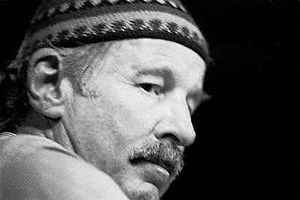 Joe Zawinul Source: Secret Society |
Born in Vienna, Austria, in
1932, Joe Zawinul
was part Hungarian, part Czech. Zawinal was studying classical piano,
clarinet and violin at the Konservatorium Wien when Vienna came under siege
by Allied forces during World War II. He and 28 other students were
evacuated by the German military to Czechoslovakia where Zawinul's education
continued under SS directorship. Upon the end of the war Zawinul returned to
Vienna to further his studies in piano while playing accordion
professionally. Lord's disco has him first recording with Willi Fantl und
Seine Solisten in November of 1952 for HMV GA854: 'Sie tantz mit ihm' and 'Er
tantz mit ihr'. 1953 found him in Fantl's orchestra for 'Oh!' (Columbia
DV1726). HMV had him recording a duo with pianist, Sascha Janus, in December
of '53, titles like 'Fine and Dandy' and 'Pick Yourself Up' with Rudolf
Hansen (bass) and Victor Plasil (drums). His first recordings with
Hans Koller were on the 15th
('Laura', documentation unkown) and 16th of September, 1954. The latter were
for the Elite Special label, assumed to be have been issued that year:
'Zero', 'These', 'M.S.K.' and 'Koller’s idea'. Zawinal recorded between 1955
(Hans Koller: 'Some Winds') and 1958 with the Fatty George Jazzband ('65 to
'58) and
Bud Shank ('European Tour ’57', release date unkown). 'Some Winds'
with
Koller was taped privately, not issued until 'Hans Across The Sea
1952-55' on an unknown date. Nor were Zawinul's numerous recordings with
Fatty George released to the public until later in collections on unknown
dates: 'On the Air', 'Dixie aus dem Wienerwald' ('Dixie from the Vienna
Woods'), 'Fatty’s Saloon 1958' (1969 by Preiser Records) and 'A Tribute to
Vienna'. Zawinul's first session as a leader had been in Vienna on March 12
of '57: 'Easy Living', 'What a Difference a Day Made' and 'The Beat'. He was becoming of note in Vienna, and must have been making good
money and saving frugally while performing at American military bases and on
American Armed Forces Radio, for he had $800 in his pocket (per Zawinul's
official website) when in 1959 he spent five days to cross the Atlantic to
the U.S. to attend the Berklee College of Music on scholarship. He that year
issued his initial album as a leader: 'To You with Love' recorded in NYC. The next year he
would appear on a couple albums with
Dinah Washington, but it was
Cannonball Adderley with whom
he spent an intense sixties, they issuing well above twenty albums
together in nine years from '61 to 1970. Miles
Davis liked Zawinul on five LPs from 1969 to to '79. The meanwhile
Zawinul had formed the early jazz fusion band,
Weather Report, with
Wayne Shorter (saxophone) and
Miroslav Vitouš (double
bass).
Weather Report released its
first eponymous album in 1971. That group issued some fifteen more until
1986. Along the way arrived 'Heavy Weather'
[1,
2,
3] in 1977, that containing Zawinul's composition, 'Birdland' [1,
2], one of numerous titles by which he came
to distinction as a composer. Joe formed the Zawinul Syndicate [1,
2,
3] in 1988,
releasing 'The Immigrants' that year w Scott Henderson on guitar. During the nineties Zawinal composed 'Stories of the Danube'. First
performed at the Bruckner Festival in Linz, Austria, in 1993, it was
recorded in 1995 by the Czech State Philharmonic Orchestra with Caspar
Richter. Zawinul issued about fifteen albums as a leader. His last studio
effort was released posthumously in 2009: 'Absolute Zawinul'. His final live
titles had gone down in Lugano, Switzerland, in the summer of 2007 w his
Syndicate to be
issued as '75th' the next year. Zawinul died of
skin cancer in Vienna on September 11, 2007
[obit].
Facebook tribute page.
References: 1,
2,
3,
4.
Discographies: 1,
2,
3. 1997 interview w Anil Prasad.
Further reading: Zawinul Online. Per 1959 below, each track is from Zawinul's debut LP: 'To You with Love'. All entries from 1985 onward are
filmed concerts unless otherwise noted. More Zawinul naturally under
Weather Report. Joe Zawinul 1954 With Hans Koller Composition: Koller Joe Zawinul 1961 From 'To You with Love' Recorded NYC Sep 1959 Composition: Richard Rodgers/Oscar Hammerstein II Composition: Axel Stordahl/Paul Weston/Sammy Cahn Composition: Guy Wood/Robert Mellin Please Send Me Someone to Love Composition: Percy Mayfield Joe Zawinul 1961 Television program Cannonball Adderley Quintet Joe Zawinul 1985 Joe Zawinul 1986 Filmed live Joe Zawinul 1994 Joe Zawinul 1996 Composition: Zawinul LP: 'Stories of the Danube' Composition: Zawinul LP: "My People' Joe Zawinul 1997 Joe Zawinul 2004 Filmed concert Paris
|
|
|
Born Adolph Johannes Brand in 1934 in Cape Town, South Africa, pianist, Abdullah Ibrahim,
went by
Dollar
Brand before becoming Muslim in 1968. He'd picked up "Dollar" during
World War II as a customer for used 78 rpm records from American soldiers.
He began training at age seven to begin performing professionally at age
fifteen with such as the Willie Max Big Band. He took up martial arts about
that time due that he didn't perform in the friendliest neighborhoods.
Lord's Disco lists two sessions as early as October 1 of 1954 in
Johannesburg with the Tuxedo Slickers Orchestra for 'Mbube', 'Mlamlankunzi',
'Isililo' and 'Za Jika'. Discogs has 'Isililo' and 'Za Jika' issued on
Quality TJ 3 and 'Mbube' with 'Mlamlankunzi' on Quality TJ 4 on unknown
dates. I but assume they were released that year. Not until 1959 did Brand help
form the Jazz Epistles [1,
2,
3,
4] with trumpeter,
Hugh Masekela. Thought to be
the first black ensemble to record jazz in South Africa, the album, 'Jazz
Epistle - Verse 1', went down in Johannesburg on January 22, 1960, for issue
that year. That was an especially remarkable occasion as apartheid had been
the official policy of the National Party government (1948-94) of South
Africa for twelve years, such that black talent of all kind found South
Africa a better place to be from than at. 'Dollar Brand Plays Sphere Jazz'
ensued on February 4, issued in South Africa in 1962. That was with a trio
consisting of Johnny Gertze (bass) and Makaya Ntshoko (drums). Brand was member of the retinue of 'King Kong'
[1,
2,
3,
4,
5,
7], a musical
about the heavyweight boxer, when he first saw Europe on tour there, the
show appearing in London in 1961. In 1962
Brand left for Europe for good with wife to be ('65), Sathima Bea Benjamin.
In Zurich in 1963 Benjamin gained the audience of Duke
Ellington for Brand's Trio, that resulting in two sessions on February
24: Lord's disco comments that the Enja date of February 23 for Benjamin's
'A Morning in Paris' is incorrect. That was with the same trio as above,
with both Ellington and Billy
Strayhorn (Ellington's composer) contributing to tracks minus Brand. Be as
may, that wasn't issued until 1997 by Enja in Germany. Lord's indicates a
second session on the 24th toward the 1965 release of 'Duke Ellington
Presents The Dollar Brand Trio', again with Gertze and Ntshoko.
Contradictions arise with Brand's Trio plus Benjamin for 'The Dream' issued
in 1991. To simplify we go by Lord's which has that recorded live at the
Antibes Jazz Festival in Juan Les Pins, France, on July 28, 1963. Lord's
comments that the date of 1968 by JMY is incorrect. Lord's speculates that
Brand recorded 'Ubu Suku' on the same date at the same venue, that included
on 'I Giganti del Jazz 19' issued in 1984 [rateyourmusic]. On the 7th and
10th of January 1965 Brand was featured at the Jazzhus Montmartre in
Copenhagen, Denmark, on Bent Jaedig's 'Easter Joy' ('Jubulani') and 'Waltz',
those included on 'The Free Spirit: Recordings 1963-2003' in 2009. Come the Jazzhus Montmartre on January 30, 1965, for 'Anatomy of a South
African Village' ('65). Titles were pulled from that session for a 1979
issue of 'The Dream', not the same as the later issue in '91 above, and with
Brand's Trio only (Benjamin out). Come March 16 of 1965 for 'This Is Dollar
Brand' ('73) in London. A visit to Europe that year by
Ellington found Brand and Benjamin following him back to the States
where Brand's Trio performed at the Newport Jazz Festival that year on July
4, a Sunday, the day after
Ellington's performance on the 3rd. An ensuing tour of the States
with
Ellington was significant in that Brand led
Ellington's orchestra on five occasions in early 1966, a heady promotion
remarking Brand to be an especially high-caliber musician by that time.
Remaining in the States, Brand then joined drummer,
Elvin Jones, recording
'Midnight Walk' in March of 1966. A Rockefeller Foundation grant in 1967
found him studying at the Juilliard School of Music in NYC. It was a duo
with tenor saxophonist,
Gato Barbieri, in Milan for 'Hamba
Khale!' on March 16, 1968. It was also '68 when he and wife, Benjamin, became Muslims,
he then to exchange Dollar Brand for Abdullah
Ibrahim. Though he continued professionally as Brand into the nineties we
henceforth refer to him as Ibrahim. Ibrahim recorded three more albums in '69 and
'70 on tours to Europe before 'Peace' and 'Dollar Brand + 3' in October of
1971, that per his first return to Johannesburg since having left in '62
nine years before. Skipping ahead to 1974, after a tour to Tokyo that year
in February for 'African Breeze' he visited South Africa again, this time to put down
''Underground in Africa', about his seventeenth album. That was followed in
June in Cape Town per 'Mannenberg' b/w 'The Pilgrim'
released in 1974. 'Mannenberg' would become the theme song of
anti-apartheid, and was a very early spearhead toward what would become known
as Cape jazz in the nineties once South Africa lost the National Party and
apartheid in 1994. Once the 46-year old presiding government of the National
Party was offed by the election of Nelson Mandela in 1994 Ibrahim returned
to Cape Town to reside. He has since toured internationally, working in
various groups from trios to orchestras. In 1999 he founded the school of
music, M7. Issuing well above fifty albums, 'The Song Is My
Story' appeared in 2014, 'The Balance' in 2019, the same year he was honored
an NEA Jazz Master. Among others with whom Ibrahim has recorded was
Buddy Tate in 1977 in a quartet with
Cecil McBee (bass) and Roy Brooks
(drums) for 'Buddy Tate Meets Dollar Brand'. Beyond music, Ibrahim has long since been a Black Belt in
the martial arts, that engaged with zen philosophy. Ibrahim yet tours
internationally. References: 1,
2,
3,
4,
5,
6.
Discos: 1,
2,
3,
4, Lord.
Reviews: 1,
2.
Interviews: Marc Myers 2011;
NEA 2019. Brand/Ibrahim in visual media.
Documentaries: 'A Brother with Perfect Timing' 1987 directed by Chris Austin
(excerpt);
'A Struggle for Love' 2005 directed by Ciro Cappellari. Further reading:
Maya Jaggi.
Other profiles: 1,
2,
3
4.
See also Cape jazz: 1,
2,
3. "Brand/Imbrahim"
below reflects Brand's transitional dual billing as Abdullah Ibrahim until
he dropped "Dollar Brand" altogether. Credits are per a contrived convention
of "Brand" to 1968, "Ibrahim" afterward. The Jazz Epistles 1960 From 'Jazz Epistle - Verse 1' Trumpet: Hugh Masekela Composition: Kippie Moeketsi Composition: Dollar Brand Dollar Brand 1965 From 'Duke Ellington Presents' The Dollar Brand Trio Bass: Johnny Gertze Drums: Makaya Ntshoko All compositions: Brand Dollar Brand 1974 Album: 'Mannenberg - 'Is Where It's Happening' All composition: Ibrahim Album: 'Underground in Africa' All composition: Ibrahim Brand/Ibrahim 1977 ('The Journey') Album: 'The Journey' All composition: Ibrahim Brand/Ibrahim 1980 Live at Montreux Composition: Ibrahim Brand/Ibrahim 1988 Recorded 1973 Composition: Ibrahim Album: 'Ode to Duke Ellington' Dollar Brand 1993 Album w Archie Shepp Saxophones: Archie Shepp Abdullah Ibrahim 1997 Album: 'Cape Town Flowers' Bass: Marcus McLaurine Drums: George Gray All compositions: Ibrahim Abdullah Ibrahim 1998 Album: 'African Suite' All compositions: Ibrahim All arrangements: Daniel Schnyder Abdullah Ibrahim 1999 Filmed live at the Lugano Jazz Festival Composition: Ibrahim Abdullah Ibrahim 2001 Composition: Ibrahim Album: 'African Magic' Recorded live in Berlin 13 July 2001 Abdullah Ibrahim 2007 Filmed live in Leverkusen, Germany Bass: Belden Bullock Drums: George Gray Abdullah Ibrahim 2010 Composition: Ibrahim Album: 'Sotho Blue' Abdullah Ibrahim 2011 Filmed concert with Ekaya Abdullah Ibrahim 2014 Filmed live Composition: Ibrahim
|
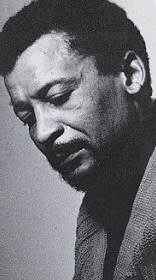 Dollar Brand Source: All Music |
|
| Eddie Costa See
Jazz Vibes:
Eddie Costa. |
||
|
Bill Evans Source: Notes on the Road |
Bill Evans was born in 1929 in Plainfield, New Jersey. He began to play piano in his brother's band at age twelve. Though good at classical, but not improvisation, at the time, he taped his own first recording in 1943 at age fourteen in Plainfield with George Bache (tenor sax), Walt Kaye Kawalski (bass) and Frank "Fluffy" Wrobel (drums): 'The Man I Love'. Evans taped numerous titles to 1949, available on '1943-1949 Very Early Volume 1' issued in 2000 by E3 Records. Tapes made in the early fifties at his home in Plainfield were likewise made available by E3 in 2000: 'Practice Tape No. 1'. Evans is thought to have taken his first professional employment in 1950 with Herbie Fields. Drafted into the Army in 1951, upon discharge Evans scratched his first grooves with the Jerry Wald Orchestra in 1953 and 1955. Those albums were 'Jerry Wald and His Orchestra' and 'Listen To The Music of Jerry Wald'. A session with Dick Garcia in 1955 wrought such as 'Kimona My House' before tracks with Lucy Reed in spring, resulted in her 1957 album, 'The Singing Reed'. Sessions in '56 and '57 with trumpeter/vibraphonist, Don Elliott, were made available in 2001 as 'Tenderly: An Informal Session'. Another name to develop some prestige arrived on March 31 of '56 per pianist, George Russell, and his Smalltet, Russell directing titles for RCA Victor's 'The Jazz Workshop' issued the next year. Evans found himself working for Russell on multiple occasions into 1960, there a reunion in May of '72 with both of them co-leading Evans' 'Living Time' consisting of 'Events I-VIII'. Following Russell in '56 was clarinetist, Tony Scott, on July 2 for titles to 'The Touch of Tony Scott'. With the exception of '58 Evans found multiple occasions to back Scott to October of '59 for the latter's 'Sung Heroes'. Evans also released his first name album, 'New Jazz Conceptions' in 1956. Evans was highly prolific at recording, his career resulting in around 330 sessions, a good two thirds of those his own. Unable to trace such here to any detail, it is nevertheless apt to mention a couple heavyweights with whom Evans held multiple sessions: Trumpeter, Miles Davis, came along with a quintet on May 17 of '58 for a radio broadcast from the Cafe Bohemia in NYC, resulting in such as 'Bye Bye Blackbird' and 'Walkin''. Evans' last occasion to record with Davis is thought to have been with the latter's sextet on April 22, 1959, for multiple takes of 'Flamenco Sketches' and 'All Blues'. Nine days after his initial session with Davis in '58 fell another on May 26 with a sextet including sax man, Cannonball Adderley, that resulting in multiple takes of 'Stella By Starlight' among others. Evans and Adderley would work with Davis for a time, Evans also backing Adderley on a couple of the latter's albums: 'Portrait of Cannonball' ('58) with the Julian Adderley Quintet (Julian Adderley being Cannonball Adderley) and 'Jump For Joy' the next month in August with the Julian Adderley Orchestra. In January and February of 1961 Adderley and Evans co-led 'Know What I Mean?' and 'Explorations'. Evans stepped onto the heroin carpet in the latter fifties, which he rode into the early seventies. Among highlights in the sixties was trombonist, Jay Jay Johnson, they recording 'This Could Be the Start of Something Big' on October 3, 1960, with trombonist, Kai Winding. That would be included on Johnson and Winding's 'Swinging Together Again', recorded during sessions the next month. Evans first switched from acoustic to electric piano for the release of 'From Left to Right' in 1970. During the latter seventies Evans found cocaine to be choice. Highlighting that decade were sessions with harmonica player, Toots Thielemans, in November of '78 with saxophonist/flautist, Larry Schneider, resulting in 'Affinity'. Thielemans would also join Evans in Netherlands on December 6 of '79 for titles like 'Blue In Green'. Evans had recorded his last studio LP in August of 1979, 'We Will Meet Again', though numerous live recordings would follow in the States, Brazil and Europe before his early death at age 49 on September 15, 1980, of multiple causes: ulcer, cirrhosis, pneumonia and hepatitis. In August and early September he had recorded a river of titles in San Francisco that would be released in 2000 per a box set of 8 CDs called 'The Last Waltz'. Those were with his trio consisting of Marc Johnson (bass) and Joe LaBarbera (drums). The same would accompany him on his final recording 5 days before his death at Fat Tuesday's in NYC, getting issued as 'The Very Last Performance' in 2010. Large name musical associates along his page included Lee Konitz, John Coltrane, Paul Chambers, Roy Haynes and Jimmy Giuffre [see also main trio partners]. Among Evans' favorite nonmusical interests had been horseracing, frequently gambling sizable sums and winning. He also owned the horse, Annie Hall, with film producer, Jack Rollins. References: 1, 2, 3, 4, 5. Sessionographies: Group TGS; Lord; Truffi. Discographies: 45 Worlds (strike later saxophonist, Bill Evans), Discogs, Music Graffiti, RYM, Wikipedia, significant collaborations. Compositions. Transcriptions: 1, 2. Evans in visual media. Criticism: Dyer, Gioia, Murray, Pantagruel. Reviews. Documentaries: 'Time Remembered' 1, 2. Interviews 1965-76. Further reading: Ted Gioia; notable projects in the fifties: 1, 2; sixties: 1, 2; seventies: 1, 2, 3; important musical associates; books: 'Bill Evans: How My Heart Sings' by Peter Pettinger (Yale University Press 2002); archives: 'Metronome' Jan 1959; other profiles: Donald's. Commercial website. Evans also under Toots Thielemans. Per 2000 below, 'Star Eyes' had initially been performed in the 1943 film, 'I Dood It', by Helen O'Connell and Bob Eberly accompanied by the Jimmy Dorsey Orchestra. Bill Evans 1956 Guitar: Dick Garcia Album: 'A Message from Garcia' Bill Evans 1958 Bass: Sam Jones Trumpet: Blue Mitchell Bill Evans 1961 Know What I Mean? Album Sax: Cannonball Adderley Bass: Scott LaFaro Drums: Paul Motian Bill Evans 1965 Jazz 625 Filmed concert Bill Evans 1966 Filmed live in Copenhagen Bass: Eddie Gómez Drums: Alex Riel Bill Evans 1970 Soirée Album: 'From Left to Right' Bill Evans 1979 Bass: Marc Johnson Drums: Joe LaBarbera Bill Evans 1980 Composition: Henry Mancini/Johnny Mercer Bill Evans 2000 Likely recorded sometime in the seventies Composition: Gene de Paul/Don Raye Likely recorded sometime in the seventies
|
|
|
Jimmy Smith Source: Naver |
While James Brown was delivering funk to rock n' roll fans,
organist Jimmy Smith
brought funk to jazz listeners. Born in 1925 in Norristown, Pennsylvania,
Smith began playing piano as a child. He dropped out of school at age fifteen in the eighth grade and joined the
Navy. Seven years later he finished his tour in the service and returned to
Philadelphia where he studied music, piano and double bass, at the Ornstein
School of Music. for a couple years. Of the numerous musicians named Jimmy Smith
(Discogs counts a couple hundred), Lord's
sessionography seems to have this one confused with another obscure bassist
per the Loumell Morgan Trio in Hollywood in 1944 and '45. Discogs has that
as a different Smith along w Marv Goldberg
who would be acquainted w both Lord's disco and this Smith. Thought to have been in the Navy at age
nineteen at the time, no mention is found of him in California during that
period. Smith's first appearance on vinyl was
much later with
Don Gardner's outfit. Smith
joined
Gardner's band in Philadelphia in 1951, the same year he began experimenting with the
Hammond organ. Smith originally played piano with Gardner, but his first
recordings with Gardner's
ensemble were on organ. The earliest titles given some kind of date in
Lord's disco were per spring of 1953 for DeLuxe. Those weren't released,
however, until '57 and '58 as 'This Nearly Was Mine'/'A Dagger In My Chest'
and 'There! I've Said It Again'/'I Don't Want to Go Home'. Soulful Kinda Music
wants Smith with the Gardner Trio
on Bruce 105 in 1954 for 'How Do You Speak to an Angel'/'Sonotone Bounce'
with Albert Cass on bass. Globaldogproductions wants him leading the
Sonotones on Bruce 112 for 'Jughead'/'Dancing On The Ceiling' the same year.
Come
Don Gardner and the Sonotones in
1955 on Bruce 127 for 'It's a Sin To Tell a Lie'/'I Hear a Rhapsody'. Smith began recording as a bandleader for Blue
Note in 1956, releasing his first album, 'A New Sound... A New Star...',
for that label the same year. Also in his Trio were Thornell Schwartz
(guitar) and Bazeley Perry (drums). On February 12, 1957, he formed a trio
with
Kenny Burrell on guitar and
Art Blakey on drums for such as
'Billie's Bounce' and 'Yardbird Suite'. Smith would see
Blakey on a few other occasions,
but
Kenny Burrell would become a
significant figure throughout his career, they basically each in the other's
ensembles for countless titles to as late as April 6, 1994, at Carnegie Hall
for the tune, 'Down by the Riverside'. Of above 170 sessions during his
career 134 of those were Smith's own. Highlighting the sixties was his first album for Verve, 'Bashin'',
in 1962. He had opportunity to record with Wes Montgomery
a couple times in 1966, the first on September 21 for 'The Dynamic Duo', the
next seven days later for 'The Further Adventures of Jimmy and Wes'.
George Benson joined him in Atlanta
for 'The Boss' in 1968.
Benson would join him again on June
7 of '82 for 'Off the Top'. Notable in the seventies was his recording of
'Portuguese Soul' for Verve in Feb '73. December 17 of 1984 found them supporting
Stanley Turrentine on
titles like 'Plum' and 'A Child Is Born'. Come his Supper Club in Hollywood
to highlight the
seventies, where on July 6 and 7 of '77 he recorded 'It's Necessary'. In
1978 he toured to South Africa to record 'Jimmy Smith Plays For The People'.
Releasing above 100 albums during his career, among them came 'Damn! in '95. Smith moved to Flagstaff, Arizona, in 2004. His wife,
Lola, died a few months later, and he himself, of natural causes, on
February 8, 2005 [obits: 1,
2,
3]. He had begun recording the LP, 'Legacy', in 2004 with Joey DeFrancesco,
that platter released posthumously the next year. References encyclopedic: 1,
2,
3;
musical: 1,
2,
3,
4.
Discographies: 1,
2,
3,
4,
5.
Smith in visual media.
Further reading:
Jimmy Smith: 'Breaking New Ground' by Steven Cerra *; the
Hammond organ: 1,
2 (strike Mighty Avons and Hal Smith),
3,
4,
5; 'The Jazz Organ'
by Geoff Alexander *;
'The Organ in Jazz' by Steven Cerra: 1,
2. Jimmy Smith 1954 With Don Gardner Composition: Bob Hilliard/Jule Styne With Don Gardner Composition: Jimmy Smith/Don Gardner Jimmy Smith 1959 Composition: Edmund Anderson/Ted Grouya Album: 'The Sermon' Jimmy Smith 1962 Jimmy Smith 1965 Film Jimmy Smith 1971 Composition: Jimmy Smith/Johnny Pate Album Jimmy Smith 1972 Composition: Jimmy Smith Live album: 'Root Down' Jimmy Smith 1974 Composition: Jimmy Smith Album: 'Paid in Full' Jimmy Smith 1977 Arrangement: * Album: 'Sit on It!' Arrangement: * Album: 'Sit on It!' Jimmy Smith 1988 Concert filmed live Jimmy Smith 1995 Filmed live Composition: Jimmy Smith Jimmy Smith 1996 Composition: Arlester "Dyke" Christian Jimmy Smith 2005 With Joey DeFrancesco Composition: Preston "Red" Foster
|
|
|
Pianist, Don Friedman,
was born
in 1935 in San Francisco. He is thought to have first recorded in Los
Angeles in May of 1955 with Jack Millman: 'When You're Near', 'So Goes My
Love', 'Too Much' and 'Tom And Jerry'. He stepped into the studio again with
Millman in March the next year to record 'Woody 'n You', 'Darn That Dream'
and 'Stitt's It'. Friedman first recorded as a leader on an un known date in 1961 in NYC in a
trio with Scott LaFaro at double bass and Pete LaRoca Sims on drums.
Those tracks were 'I Hear A Rhapsody', two takes of 'Sacre Bleu' (Friedman's
composition), 'Woody 'n You' (Dizzy
Gillespie's composition) and 'On Green Dolphin Street'. That trio
released three LPs. Also of note in '61 were dates with trumpet player,
Booker Little, in March, April
and summer to result in
Little's LPs, 'Out Front' and
'Booker Little and Friend*'. Friedman's later issue of
'Strength and Sanity'
in 2016 w Phil Palombi (bass) and Shinnosuke Takahashi (drums) featured
Little's compositions from
those. Friedman's first recordings with guitarist,
Attila Zoller, were at the Newport
Jazz Festival in Rhode Island in July 1963. Friedman and
Zoller would record numerous albums
together into the new millennium, their last in 2007 for Friedman's release
of 'Straight Ahead' in 2008. Friedman would also record frequently with
trumpeter, Clark
Terry. Their first such occasion was as members of
Herbie Mann's outfit in May of
'64 in NYC, recording 'And This Is My Beloved', 'Saudade De Bahia', 'Vikki'
and 'I Have Dreamed'. Friedman's last album session with
Terry was in 2004 for Terry's
release of 'Chilled & Remixed' in 2006. His base of operations in NYC, as
well as teaching at New York University, Friedman filled out his career
performing local venues in New York City and touring internationally. He
died on June 30, 2016. His last recordings are thought to have been in April
of 2015 for 'Nite Lites' and September for 'Strength and Sanity' References:
1,
2,
3,
4.
Synopsis.
Sessions: Fitzgerald: w composers,
multiple versions,
personnel; Lord.
Discos: 1,
2,
3.
2009 interview w Marc Myers.
Further reading: Joe Alterman,
Nate Chinen,
Don Nelson. Don Friedman 1961 Album Bass: Chuck Israels Drums: Joe Hunt All compositions: Friedman Don Friedman 1962 From 'Circle Waltz' Bass: Chuck Israels Drums: Pete LaRoca Compositions: Friedman Album: 'Circle Waltz' Album: 'Circle Waltz' Don Friedman 1963 Composition: Friedman Album: 'Flashback' Don Friedman 1966 Guitar: Attila Zoller Bass: Richard Davis CDrums: Joe Chambers Album: 'Metamorphosis' Don Friedman 1996 From 'The Days of Wine and Roses' Issued 1996 per Discogs All Music has 22 April 1997 Composition: Richard Rodgers/Lorenz Hart Composition: James Van Heusen/Johnny Burke Composition: Henri Mancini/Johnny Mercer Don Friedman 2005 Concert filmed live with Jim Hall Don Friedman 2011 Concert filmed live Don Friedman 2016 Filmed live 2015 Composition: Booker Little Album: 'Strength and Sanity'
|
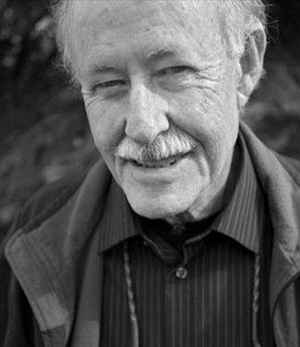 Don Friedman Source: All Music |
|
|
Born in Benton Harbor, Michigan in 1933,
Gene Harris
[1,
2,
3]
is an underappreciated pianist who toured with various bands upon discharge from the Army in 1954. His first
name recording was possibly his first recording session as well, in 1955 in
NYC, releasing the Jubilee LP, 'Our Love Is Here to Stay' as the Gene Harris
Trio the same year. In 1956 he formed the Four Sounds which became
the Three Sounds [1,
2,
3] a year later upon the departure of Lonnie "The Sound"
Walker at sax, that leaving Andy Simpkins (bass) and Bill Dowdy (drums). Lord's disco has
that trio first
recording at the Blue Note studio in Inglewood, NJ, on September 16, 1958,
toward such as 'Both Sides' and 'Bobby' on the album, 'Introducing the 3
Sounds'. (Harris also
participated in Nat
Adderley's 'Branching Out' some time in Sep of '58.) Harris performed with the Three Sounds
into the seventies, they to issue above thirty albums. It was Harris,
Simpkins and Dowdy to 1969 when the Three Sounds became Harris w John Halton (bass) and Carl Burnett (drums). The trio's final session [Lord] in Detroit in June of '73 for 'Yesterday,
Today and Tomorrow' consisted of John Halton (bass) and Carl Burnett (drums). Harris attended well above 100 sessions
during his career, 41 of those his own [Lord]. Those untraceable in this
space, a few of the highlights of Harris' recording career include his initial occasion to record with
Stanley Turrentine on
June 29, 1960. That and another session on December 16 would result in what
got issued as 'Blue Hour - The Complete Sessions' in 2000. Separate albums
per each session had been issued in 1961 as well, each called 'Blue Hour'.
Turrentine
would later support Harris on a couple projects in '85 ('The Gene Harris
Trio Plus One' *) and '95 ('Gene Harris & The Philip Morris All-Stars Live'
1998). Not long after
Turrentine
arrived tenor saxophonist,
James Clay, on October 11, 1960, in Los
Angeles for 'A Double Dose of Soul'. Seventeen years later Harris thought to
retire to local performances in Boise,
Idaho, only to resume his career with bassist,
Ray Brown,
in the early eighties. They would join Milt Jackson's
Quartet on December 1, 1983, with Mickey Roker on drums for 'Soul Route'.
They would begin supporting each other's projects in 1987 to as late as
August 4, 1991, in San Francisco for
Brown's '3 Dimensional'. Along the
way Brown contributed to Harris' big band project, 'Tribute to Count Basie'
in March of '87, Harris' orchestra also consisting of
Herb Ellis at guitar and Jeff
Hamilton at drums. Harris' final
recordings are thought to have been live in Seattle in December of 1998, for
'Alley Cats'. Harris died of kidney failure on January 16, 2000. Other of
his projects included backing vocalists per
Anita O'Day in '62 ('Anita
O'Day & the Three Sounds' '63) and
Ernestine Anderson in '84
('When the Sun Goes Down' '85). Catalogs
for Harris: 1,
2,
3;
the Three Sounds: 1,
2,
3,
4.
Compilations: Three Sounds: 'Groovin' Hard' 1964-68 at the Penthouse in Seattle issued by Resonance in 2016:
1,
2,
3,
4. Gene Harris 1955 From 'Our Love Is Here to Stay' Recorded 1955 [see AllMusic] Issued 1955 [see RYM] Bass: Mike Long Drums: George Herman
Almost Like Being
in Love
Composition:
Alan Jay Lerner/Frederick Loewe
Our Love Is Here
to Stay
Composition: Gershwin Brothers
There'll Never Be Another You
Composition: Harry Warren/Mack Gordon
Gene Harris 1968
Composition:
Monk Higgins Album: 'Elegant Soul'
Gene Harris 1973
Composition:
Neil Hefti
Album: 'Yesterday,
Today & Tomorrow'
Gene Harris 1976
Composition: Skip Scarborough
Album: 'In a Special
Way'
Gene Harris 1977
Composition: Stevie Wonder
Album: 'Tone Tantrum'
Gene Harris 1986
From 'The Gene Harris Trio Plus
One'
Tenor Sax: Stanley Turrentine
Bass: Ray Brown
Drums: Mickey Roker
Compositions: Ray Brown
Gene Harris 1987
Composition: Allie
Wrubel/Herbert Magidson
Album: 'Tribute to Count Basie'
Gene Harris 1991
From 'Black and Blue':
Composition:
Thomas Fats Waller/Harry
Brooks/Andy Razaf
Composition: Kenny Dorham/Beverly
Kelly
Gene Harris 1992
Guitar: Ron
Eschete
Bass: Luther Hughes
Drums: Paul Humphrey
Composition:
Leigh Harline/Ned Washington
Album: 'Brotherhood'
Gene Harris 1994
Composition: Gene Harris
Album: 'Funky Gene's'
Gene Harris 1996
Music: George Gershwin 1935
Lyrics:
DuBose Heyward/Ira Gershwin
For the opera 'Porgy and Bess' Album: 'It's the Real Soul' Gene Harris 1998 Composition: Antonio Carlos Jobim/Newton Mendonça Lyrics English: Norman Gimbel
Filmed
Live
Gene Harris 1999
From 'Alley Cats':
Composition: Eddie Harris
Composition: Joe Sample
Gene Harris 2010
Composition: Leon Russell 1972
|
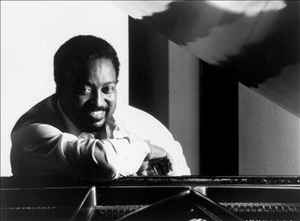 Gene Harris Photo: Pam Bentham Source: VK |
|
|
Born in 1931 in Chicago, underrated composer and
pianist Andrew Hill
began dancing, singing and performing on accordion at age twelve. He took up
piano the next year and was touring with such as
Charlie Parker and Miles
Davis as a teenager. Hill is thought to have first recorded in November of
1954 in the band of David Shipp. Two of those four tracks were released the
next year: 'Romping/Let's Live'. Hill's first vinyl as a leader
was recorded in October of 1956 with his band, the De'bonairs. Released on
78 that year were 'Lanky Linda', 'Mother's Son', 'Say a Prayer For Me',
'Cracker-Jack Daddy', 'Dot', 'Mal's Blues', 'After Dark' and 'Down Pat'.
Hill recorded his debut album in 1959, 'So in Love', w
Malachi Favors (bass) and James
Slaughter (drums), released in 1960. Hill
recorded the album, 'Black Fire', in 1963 for 1964 release. He also recorded 'Smokestack' in
1963, to be issued in 1966. Come 21 March of '64 toward
'Point of
Departure'. Highlighting the seventies was his release of 'Homage' in
1975, an album of piano solos composed mostly by himself. Hill taught at
Portland State University from '89 to '96, one of numerous positions as an
instructor. Hill commenced the new millennium w the issue of 'Dusk' in May
2000, gone down in Sep and Oct of 1999. Come 'The Day the World Stood Still' in 2003,
recorded live in April in Sweden and Denmark. Releasing well above thirty
albums, Hill's final issue in
2006 was 'Time Lines', recorded in June and July of of 2005. He gave his last
performance at Trinity Church in NYC in March 2007, dying the next month of
lung cancer in Jersey City, New Jersey [obits: 1,
2].
References encyclopedic: 1,
2,
3; musical:
1,
2,
3,
4.
Sessions: Lord, Lyles w composing credits,
Safier.
Discos: 1,
2,
3.
Album reviews.
Awards.
Interviews: Ted Panken 2000,
Daniel King 2003.
Other profiles: BlueNote,
JazzTimes,
NYTimes. Andrew Hill 1956 Composition: Von Freeman Composition: Pat Patrick Andrew Hill 1960 Album Andrew Hill 1964 Album: 'Judgment!' All compositions by Hill Album All compositions by Hill Andrew Hill 1965 From 'Point of Departure' All compositions by Hill Andrew Hill 1966 Album All compositions by Hill Album All compositions by Hill Andrew Hill 1968 Album: 'Andrew!!!' Recorded 1964 All compositions by Hill Album: 'Grass Roots' All compositions by Hill Andrew Hill 1975 Album All compositions by Hill Album: 'One For One' All compositions by Hill Andrew Hill 2000 Album: 'Dusk' All compositions by Hill Andrew Hill 2002 Album All compositions by Hill Andrew Hill 2003 Album: 'Passing Ships' Recorded 1969 All compositions by Hill Andrew Hill 2010 DVD: 'Solos: The Jazz Sessions' Recorded 2004
|
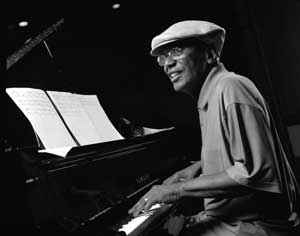 Andrew Hill Photo: Jimmy Katz Source: Andrew Hill |
|
|
Born in 1932 in Detroit, Sir Roland Hanna began studying
classical piano at age eleven. Pianist, Tommy Flannigan, was a childhood
friend of his. Hanna began playing professionally while yet in high school.
Upon graduation he enlisted in the Army for a couple of years, during which
time he played in an Army band. Upon release from duty in 1951 Hanna
connected with Thad Jones in Detroit. Moving to NYC in 1955, he played with
Benny Goodman, then
Coleman Hawkins, then
Charles Mingus, He would later
record with all but Hawkins. Hanna's first vinyl was put down in 1956 for 'Seldon
Powell Sextet Featuring Jimmy Cleveland' [Lord]. In May of '58 he took off for
Europe with
Goodman where numerous sessions would be held in Berlin,
Brussels and finally NYC. August 28 of '58 found Hanna participating in WNTA
TV's 'Art Ford's Jazz Party' for a salute to
Goodman (out), covering titles
like 'Air Mail Special' and 'How Deep Is the Ocean'. IMDb has that airing 18
Sep of '58. Hanna followed that
with his first sessions as a leader in 1959 to result in 'Roland Hanna Plays Harold Rome's Destry
Rides Again' and 'Easy to Love'. 'Destry Rides Again' featured contributions
by guitarist,
Kenny Burrell, with whom Hanna
had first recorded at the '58 Newport Jazz Festival as members of the
Benny Goodman Orchestra. His first titles in support of
Burrell were on August 25,
1959, at the Five Spot in NYC toward
Burrell's 'On View at the Five Spot
Cafe'. Hanna would record with
Burrell again in '68, '69, '76, '88 and,
finally, July of 1996 as one of the Jazz Heritage All Stars for
Burrell's
'Live at the Blue Note'. Hanna first backed
Charles Mingus on November 1, 1959, for
'Mingus Dynasty'. Hanna recorded with
Mingus into 1960, later in 1971-72 and
'74, that last occasion at Radio City Music Hall in NYC on July 7. During
the eighties Hanna joined a few sessions with the band, Mingus Dynasty,
formed after Mingus' death (January 5, 1979) and expanded into an orchestra.
His last such occasion was for a string of Mingus compositions on June 3,
1989, at Alice Tully Hall at Lincoln Center, that to be issued as 'Epitaph'. In 1960 Hanna took his bachelor's
degree from Julliard, upon which he began backing Sarah Vaughan
into 1961. They would reunite in March of '82 for Vaughan's 'Crazy and Mixed
Up'. After Vaughan, Hanna joined Lionel
Hampton's orchestra to participate
for a tour to Europe, recording titles in Essen, Germany on March 12, 1961:
'Four in One', 'Hava Nagilah' and 'Alexander's Ragtime Band'. Hanna stuck
with Hampton into 1962, reuniting in 1977 for
Hampton's 'New York Black Out
1977'. Among other vocalists Hanna backed in the sixties were
Al Hibbler for 'Early Morning' on
August 10, 1964, and
Ruth Brown that December for her album, ''65'. Reunions
with
Brown would occur in '68 with the
Thad Jones/Mel Lewis Orchestra and,
finally, in late '82 for 'Black and Blue'. Come the
Thad Jones/Mel Lewis Jazz Orchestra
to back Joe Williams on September 30, 1966, for 'Presenting Joe Williams and
Thad Jones/Mel Lewis Orchestra'. Hanna stayed with the
Thad Jones/Mel Lewis
operation for the next ten years, including a tour to Europe in '69, London
in '73 and Tokyo in '74. Among numerous sessions with
Jones and
Lewis was
one in January of '70 for 'Consummation', after which Hanna recorded his
album, 'Child of Gemini' in 1971. Next came 'Suite For Pops' for
Jones and
Lewis in January of 1972. Hanna's last session with
Jones/Lewis is
thought to have been in January of 1976 for such as 'Little Rascal On a
Rock' and 'Cherry Juice'. While working with the
Thad Jones/Mel Lewis
Orchestra Hanna had found time in 1968 to begin a series of
charity concerts in Liberia, resulting in being knighted by Liberian
President, William Tubman, in 1970. Marc Myers draws attention to 'Child of
Gemini' recorded in Villingen, Germany, in early 1971 while on tour in
Europe, that w
Dave Holland on bass and Daniel Humair on drums. Later that
year Hanna formed the New York Jazz
Quartet with saxophonist, Frank West, then toured the Soviet Union in 1972.
In 1988 Hanna composed the soundtrack for the Clint Eastwood film, 'Bird'.
Also highlighting his latter career was trumpeter/composer/conductor,
Terence Blanchard ('89 for Ed Thigpen: 'B'Way' and 'Face To Face') and '92
(soundtrack to 'Malcolm X'). Also during his latter career Hanna taught music, particularly at the Aaron
Copland School of Music at Queens College in Flushing, New York, where he
was a tenured professor. In association with that he founded the RMI record
label in 1997. With above 330 sessions during his career, 60 of those his
own, Hanna was recording albums numerously into the new millennium before
his last live session in Asaka, Japan, on October 5 of 2002, issued
posthumously the next year as 'Last Concert'. Hanna died of a heart infection
on November 2, 2002
[obit].
References encyclopedic: 1,
2,
3; musical
1,
2,
3.
Discographies: categorized by duos, trios and quartets *; other:
1,
2,
3,
4. All tracks below for
year 1959 are from the album, 'Roland Hanna Plays Harold Rome's Destry Rides
Again'. Sir Roland Hanna 1956 Seldon Powell Sextet Featuring Jimmy Cleveland Album Thought to be Hanna's 1st issued recordings Sir Roland Hanna 1958 'Art Ford's Jazz Party' Music: Sigmund Romberg 1928 Lyrics: Oscar Hammerstein II Sir Roland Hanna 1959 From 'Destry Rides Again' Bass: George Duvivier Drums: Roy Burnes All compositions: Harold Rome Guitar: Kenny Burrell Guitar: Kenny Burrell Rose Lovejoy of Paradise Alley Guitar: Kenny Burrell Sir Roland Hanna 1960 Composition: Charles Mingus Mingus album: 'Mingus Dynasty' 'Mingus - Alternate Takes' 1998 Composition: Cole Porter Album: 'Easy to Love' Composition: Leigh Harlin/Mort Green Album: 'Easy to Love' Composition: Leigh Harlin/Mort Green Jimmy Van Heusen/Johnny Burke Album: 'Easy to Love' Composition: Jerome Kern/Otto Harbach Album: 'Easy to Love' Sir Roland Hanna 1974 From 'Perugia: Live at Montreux '74' Composition: Thad Jones/Alec Wilder Composition: Hanna Music: Billy Strayhorn 1939 Lyrics: Joya Sherrill 1944Sir Roland Hanna 1976 Bass: George Mraz Music: George Gershwin 1935 Lyrics: DuBose Heyward/Ira Gershwin For the opera 'Porgy and Bess' Sir Roland Hanna 1977 Composition: Hanna Album: 'At Home with Friends' Sir Roland Hanna 1981 Filmed live Composition: Hanna Sir Roland Hanna 2002 Composition: Ron Carter Composition: Hanna Album: 'Milano, Paris, New York'
Sir Roland Hanna 2003
Music: Johnny Green
1930 Lyrics:
Edward Heyman/Robert
Sour/Frank Eyton
Album: 'Tributaries: Reflections on Tommy
Flanagan'
Posthumous release
Bass: Ron Carter
Drums: Grady Tate
Composition: Frédéric Chopin
Album: 'Apres un Reve' Posthumous release
|
Sir Roland Hanna Source: IPO Recordings |
|
|
Pianist,
Krzysztof Komeda,
was born Krzysztof Trzciński in 1931 in Poznań, Poland. His was a brief
career in jazz and composing for film, but a highly productive and well-regarded
one. Raised in Częstochowa, Komeda took up piano at age seven but became a
physician in 1956 upon receiving his doctorate from the Poznań Medical
Academy. He had made his first recordings four years earlier in Cracow. One
for Radio Cracow with Witold Kujawski (bass) and Witold Sobocinski (drums)
went unissued: 'How High the Moon'. That didn't see light until 1975 on
'Polish Jazz 1946-1956 Vol 4'. The other went unissued as well, he a member
of Melomani for 'September Song' and 'Caravan' which would eventually get
included on 'Polish Jazz 1946-1956 Vol 2' in 1975. In August of '56 he
performed at the Ogolnopolski Jazz Festival with his Sekstet Komedy (Komeda
Sextet) for several titles among which one, 'Memory of Bach', saw issue that
year on an album called 'Festiwal Jazzowy Sopot 1956'. His sextet made its debut performance on Polish television in Poznań in 1956
as well.
"Komeda" was a stage name he began using at that time, Trzciński the
otolaryngologist, Komeda the jazz musician. They then performed at the 1st
Sopot Jazz Festival. Recordings from that were released on a 10" album. The
group performed in Moscow in 1957, the same year he began working with his
most important associate in film, Roman Polanski. Komeda's first film score
for Polanaki was for the silent film, 'Dwaj ludzie z szafą' ('Two Men and a
Wardrobe') in 1958. Unfortunately, since it was for a silent film it
couldn't be heard and his sanity was questioned ever after. Just kidding,
though
it was composed for a silent film (below). Komeda thereafter led a
double railed career as a composer and jazz musician. He was a member of the
Jazz Believers in 1958, after which he appeared on a number of 'Jazz
Jamboree' recordings for Muza before releasing 'Crazy Girl', in 1962. He
toured Europe from Scandinavia in the north to Yugoslavia to the south. It
was a fateful decision when he traveled to the United States in January of
1968 to compose scores for 'Rosemary's Baby' and 'The Riot'. Lord's
discography lists final recordings that year in Warsaw, one with the Polish
Radio Jazz Studio Orchestra ('Moja Ballada'), several piano solos for
'Private Conversation', and one with a quintet consisting of Tomasz Stanko (tp/flugelhorn),
Zbigniew Namyslowski (alto sax), Roman Dylag (bass) and Rune Carlsson
(drums) for 'Jazz and Poetry'. Komeda's whole recording career from 1956 to
1967 was issued by Polonia in 1994-98 on 'The Complete Recordings of
Krzysztof Komeda Vol 1 - 23'. Accounts of Komeda's
death vary but it was the result of an accident causing cerebral hemorrhage.
He was taken back to Warsaw where he died in the prime of his life at age 38
on 23 April of '69. References: 1,
2,
3.
Sessions: JDP, Lord.
Discos: 1,
2,
3,
4.
Compositions;
compositions covered by the Tomasz Stanko Septet on 'Litania' 1997:
1,
2;
compositions covered by the Komeda Project' [1,
2,
3]:
'Crazy Girl' 2006: 1,
2;
'Requiem' 2009: 1,
2;
'The Komeda Project' 2018: 1,
2. Film scores by Komeda: 1,
2,
3,
4.
Further reading: Komeda and Stanko amidst Poland's relatively late arrival to
recognition in jazz expression:
Richard Williams.
Other profiles:
*.
All titles below were written by Komeda except as otherwise noted. Krzysztof Komeda 1956 1st Sopot Jazz Festival Music: Walter Donaldson 1928 Lyrics: Gus Kahn Filmed at 1st Sopot Jazz Festival Krzysztof Komeda 1958 Film by Roman Polanski Krzysztof Komeda 1961 Album All titles composed by Komeda except: Titles composed by Andrzej Winnicki: 'Tail Peace' & 'Stop Time' Krzysztof Komeda 1965 Not issued until 1998 Composition: Henry Mancini Krzysztof Komeda 1966 Album Composition all titles: Komeda Album Composition all titles: Komeda Krzysztof Komeda 1967 Soundtrack: 'People Meet' Aka 'Nightime, Daytime Requiem' Telecast Album issued 1989 Recorded Warsaw Nov 1967 First issue: 'Muzyka Krzysztofa Komedy' 1974 Krzysztof Komeda 1968 Soundtrack Krzysztof Komeda 1969 Vocal: Bill Medley Lyrics: Robert Wells Soundtrack: 'Riot'
|
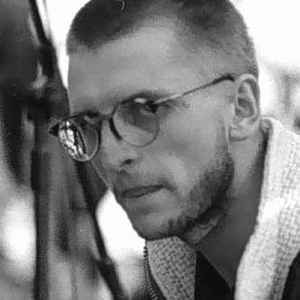 Krzysztof Komeda Source: Alchetron |
|
|
Pianist and vocalist,
Les McCann,
was born in 1935 in Lexington, Kentucky. His first recording was on
television rather than vinyl, appearing on 'Ed Sullivan' in August of '56
('U.S. Navy Talent Show', season 8 with Kirk Douglas substituting for
Sullivan). In 1959 he appeared on the LP by the Lewis Sisters, 'Way Out
Far'. He also backed the album, 'It's About Time', for
Teddy Edwards in August of '59 for release the
next year. Also that month he supported Gloria Smyth on 'Like Soul'.
McCann's first two of several albums with Les McCann Ltd. were
released in 1960: 'Les McCann Ltd. Plays the Truth'
[1,
2] and 'Les McCann Ltd.
Plays the Shout' [*]. Ltd. was a trio with
Leroy Vinnegar on double bass
and Ron Jefferson on drums.
Herbie Lewis would replace
Vinnegar on Ltd. albums
to follow. Among McCann's recordings in the sixties Steven Cerra draws
attention to 'On Time' [1,
2]
going down mid 1962 in Hollywood w
Vinnegar,
Jefferson and
Joe Pass at guitar. Fast forwarding
through the sixties, in 1969 McCann discovered Roberta Flack, gaining
her an
audition with Atlantic that would find her releasing 'Take Five' in June
that year.
It was also June (21) of '69 when he joined tenor saxophonist,
Eddie Harris,
at the Montreux Jazz Festival toward the issue of 'Swiss Movement'
[1,
2] that
year. That quintet also consisted of
Vinnegar, Benny Bailey (trumpet) and
Donald Dean (drums). That was followed by 'Second Movement'
[1,
2] in NYC
on 21 January 1971 w
Vinnegar exchanged by Cornell Dupree
at bass guitar and James Rowser on upright. In between those recordings
McCann, Flack and
Harris had toured to Ghana in Feb of 1971 with others like
Wilson Pickett and
Santana where was filmed 'Soul to Soul'
released on DVD in 2004 [1,
2]. McCann has issued well above sixty
albums through the years. Into the new millennium he released 'Pump It Up'
in '02 and 'Vibrations' in '04. More recently, McCann first performed w
tenor saxophonist, Javon Jackson [1,
2,
3,
4,
5], in 2007
[*]. McCann supported Jackson's
'Lucky 13' issued in 2012.
Beyond music, McCann is also an artist working
in watercolors.
Also a photographer, 'Invitation to Openness: The Jazz & Soul Photography of Les McCann 1960-1980'
[1,
2] was published by Fantagraphics Books in 2015. Curated by Ted Williams,
that contains McCann's photos of numerous famous people from Stokely
Carmichael to
Stevie Wonder. References for
McCann: 1,
2,
3,
4.
Discos: 1,
2,
3,
4,
5.
Compilations: 'The Best of Les McCann Ltd' by Pacific Jazz 1996. McCann
in visual media.
NAMM interview 2015.
Other profiles: 1,
2,
3,
4.
Per below, all single titles were authored by McCann excepted as noted. Les McCann 1959 LP by the Lewis Sisters Les McCann 1960 Album: 'The Truth' Les McCann 1961 Filmed live Bass: Herbie Lewis Drums: Ron Jefferson Les McCann 1962 Guitar: Joe Pass Bass: Leroy Vinnegar Drums: Ron Jefferson Composition: Franz Lehár/Fritz Löhner-Beda/Ludwig Herzere Album: 'On Time' Les McCann 1963 Tenor sax: Clifford Scott Scott album: 'Out Front!' Les McCann 1965 Album: 'But Not Really' Les McCann 1969 Album: 'Much Les' Composition: Gene McDaniels Album: 'Swiss Movement' Filmed live in France Date estimated Composition: Gene McDaniels Les McCann 1972 Live in Montreux Composition: McCann/Rev. Bee Album All compositions: McCann Album Les McCann 1974 Album Les McCann 1985 Filmed live Bass: Curtis Robertson Drums: Alan Sharrod
|
 Les McCann Source: Martini & Jopparelli |
|
 Barry Miles Source: Atlantic City Press |
Born in Newark, New Jersey, in 1947, multi-faceted jazz
fusion pianist,
Barry Miles,
was a highly focused prodigy who began playing drums professionally at age
eight. Not to be mistaken with the rock n roll biographer, Barry Miles,
Miles' was yet a child when he was performing with heavyweights such as
Woody Herman, Roy
Eldridge and Chet Baker. His first recordings were on
television rather than vinyl, appearing on 'To Tell the Truth' as early as
1956 during that program's 6th season. His abilities were featured on other
television shows as well at an early age, such as the 'Art Ford Jazz Party'
in 1958 on which he played drums (below). He waited all the way to his first album release in 1962 at
age fourteen with
Duke Jordan at piano: 'Miles of Genius'. During the
sixties Miles composed and ran his own band while attending Princeton
University from which he graduated in 1969. During that period he had
released his initial piano LP, 'Barry Miles Presents His Syncretic
Compositions', in '66. Electric piano ensued in 1969 on 'Barry Miles'. Miles
hooked up w drummer, Terry Silverlight, in 1971. Silverlight supported Miles
on several albums in the seventies from 'White Heat' in 1971 to 'Zoot Suit
Stomp' in 1979 [*].
The latter saw issue in 1986 by T.C. Records. A couple of highly successful albums
followed with R&B
group, Gladys Knight & the Pips: 'Imagination' ('73) and 'I Feel a Song' ('74).
Come June of '75 Miles supported saxophonist,
Eric Kloss, on the
latter's 'Bodies' Warmth'. They released 'Together' in 1977 and
'Celebration' in 1980. Guitarist, Al Di Meola, began to figure big in Miles' career
about the same time as
Kloss, they releasing several albums together. In the summer of '75
Miles backed Di Meola on the latter's debut album, 'Land of the
Midnight Sun', issued in '76. Miles and Di Meola recorded together as
recently as the latter's 'Consequence of Chaos' released in 2006. Miles was
musical director for R&B singer, Roberta Flack,
from 1980 to 1995, appearing on 'Oasis' in 1988. Among highlights in the
nineties were sessions supporting Nino Tempo for 'Tenor Saxophone' in 1990.
Working much as a backup musician, it was nearly thirty years between Miles'
'Zoot Suit Stomp' per '86 and 'Home and Away Vol One'
in 2013, the latter a long string of piano solos. References: 1,
2,
3.
Discos: 1,
2,
3.
Other profiles: Vincent Jackson.
Per below, all single titles were written by Miles except as noted. Barry Miles 1958 'Art Ford Jazz Party' Drum battle vs John Parelli Composition: Coleman Hawkins Barry Miles 1962 LP: 'Miles of Genius' Barry Miles 1970 LP: 'Barry Miles' Barry Miles 1971 Composition: Joni Mitchell LP: 'White Heat' Barry Miles 1972 From 'Scatbird': Barry Miles 1974 LP: 'Barry Miles and Silverlight' Barry Miles 1976 Album Composition all titles: Miles Barry Miles 1978 LP: 'Fusion Is...Barry Miles' LP: 'Fusion Is...Barry Miles' Barry Miles 1986 Tenor Sax: Hank Mobley Composition: Hank Mobley Mobley album: 'The Turnaround!' Barry Miles 2013 Composition: ? LP: 'Home and Away Vol One'
|
|
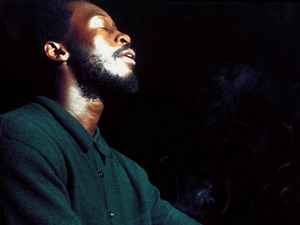 Big John Patton Source: Flea Market Funk |
Big John Patton
[1,
2]
was a self-taught pianist born in Kansas City, Missouri, in 1935. It was
1954 that he met
Lloyd Price at the Howard
Theater in Washington D.C. Price had just fired his pianist and was in need
of another. Patton's first vinyl release was with
Price in 1956, 'Rock 'n' Roll
Dance', that session held in April [*]. Patton left
Price's crew in 1959 to put
together a Hammond organ trio in NYC, also working as a studio musician for
the Blue Note label. A few of Patton's more important musical associations
were
Ike Quebec (his mentor at Blue Note),
Lou Donaldson and guitarist,
Grant Green. Patton first shows up in
Lord's sessionography with
Green in
Donaldson's quintet on May 9 of 1962
to lay out the album, 'The Natural Soul', released the next year [see also
*].
Also w
Donaldson on alto sax were Tommy Turrentine (trumpet) and Ben Dixon (drums). The Jazz Discography Project and Discogs have one title from that
session, 'Funky Mama', issued on Blue Note 1868 in 1962. 45Cat prefers March
of 1963. We tentatively float w '62 since JDP begins the Blue Note 1800
series for '63 w 1881. Come June 21 of 1962 when
Green, Dixon and Patton
joined
Herbie Lewis on bass and Fred Jackson on tenor sax for several
titles, Lord showing only one of which, 'Cowbell Boogie', eventually issued
on CD per Blue Note 5-21484-2. Jan 24 of '63 saw
Donaldson's 'Good Gracious'
go down w Turrentine out. Recording variously w
Donaldson,
Green, Jackson
and Dixon, among notable sessions in 1963 was that on June 7 w trumpeter,
Irvin Stokes, resulting in
part of Donaldson's LP, 'A
Man with a Horn' [1,
2]
not released until 1999. Patton released his debut album, 'Along Came John', in 1963. Patton's last album
collaboration with
Green was in 1967 in a trio with Dixon on drums: 'Iron City!'. Patton composed most of the titles on his 1968
release of 'That Certain Feeling' [1,
2]. He later became involved in acid jazz in
London, another name for pub jazz that combined jazz with funk, soul and
disco. Patton issued his last album in 2001 with saxophonist, George Braith:
'Eagle Eye Blues'. He passed away of diabetes in March 2002 in Montclair,
New Jersey [obit].
Discos: 1,
2,
3. Further reading: the Hammond organ:
1,
2,
3,
4,
5; 'The Jazz Organ'
by Geoff Alexander *; 'The Organ in Jazz' by Steven Cerra: 1,
2.. Big John Patton 1956 With Lloyd Price Composition: John Marascalco/Price Big John Patton 1963 Guitar: Grant Green Composition: George Braith Album: 'Blue John' Guitar: Grant Green Composition: Ben Dixon Album: 'Along Came John' Big John Patton 1964 Composition: Patton Album: 'The Way I Feel' Composition: Patton Album: 'The Way I Feel' Big John Patton 1965 Composition: Patton Album: 'Let 'em Roll' Big John Patton 1966 Composition: Patton/Grant Green Album: 'Got a Good Thing Goin' Big John Patton 1968 Composition: Patton Big John Patton 2001 Composition: Patton
|
|
|
Shirley Scott Source: Second Hand Songs |
Shirley Scott [1, 2, 3] played piano on occasion but her preferred instrument was organ. Born in Philadelphia in 1934 to parents who ran a jazz club in the basement of their home (earlier a speakeasy), both JDP and Lord have Scott first recording piano at age fifteen on November 18, 1949, in Sheffield, England, with an obscure Leicester Jazz Band. Those released by an equally obscure Talent label without dates or issue numbers were 'Kansas City Stomps', 'Savoy Blues', 'Buddy Bolden's Blues' and 'Courtin' Man Blues'. Be as may, no biography mentions Scott in England as a teenager and Payne's sessionography deletes that date altogether, not commencing her recording career until July 16 of 1956, playing organ for Eddie Lockjaw Davis on titles like 'The Happy Whistler' (King 4966) and 'Scotty Roo' (King 5164). Tracks from that date were also issued on the Davis albums, 'Uptown' and 'Jazz with a Beat'. Scott kept with Davis until 1960, their last session on January 31 that year for the album, 'Eddie Lockjaw Davis with Shirley Scott'. Scott created nine record albums from 1958 to 1960, her first, 'Great Scott!'. Jazz critic, Marc Myers, notes her ninth album, 'Like Cozy'. 'Satin Doll', below, is from her tenth album, 'Satin Doll'. Scott was married to tenor sax player, Stanley Turrentine, with whom she performed from 1960 to 1969. Her initial session with Turrentine in Lord was for the latter's 'Hip Soul' on June 2, 1961. Their last was in September and November of 1968 for Scott's 'Soul Spring'. In the meantime she had early appeared on the 'Mike Douglas Show' in June of 1962 [IMDb]. Scott spent the latter portion of her career performing at jazz clubs in Philadelphia where her health began to decline in the nineties following a live session at the Birdland in NYC in Nov of '91 resulting in the album, 'Skylark'. She died of heart failure on March 10, 2002 [obit], so her last recordings at the Montreux Jazz Festival in Switzerland per George A. Johnson Jr's 'All Star Tribute' ('06) had to have preceded that. Lord's disco has her at 109 sessions, nigh 60 of those her own projects. Among other big names with whom she recorded were pianist Horace Silver, guitarist Kenny Burrell and trumpeter Clark Terry. Sessions: Lord; Payne. Discographies: 1, 2, 3, 4. Further reading: the Hammond organ: 1, 2, 3, 4, 5; 'The Jazz Organ' by Geoff Alexander *; 'The Organ in Jazz' by Steven Cerra: 1, 2. Shirley Scott 1958 Saxophone: Eddie Lockjaw Davis Composition: Johnny Hodges Shirley Scott 1960 From the LP 'Mucho, Mucho' Recorded 8 July 1960 With the Latin Jazz Quintet Composition: Shirley Scott With the Latin Jazz Quintet Composition: Richard Carpenter First issue: Miles Davis 1954 Shirley Scott 1963 From the LP 'Satin Doll' Recorded 7 March 1961 Composition: Duke Ellington 1941 Composition: Duke Ellington/Billy Strayhorn/Johnny Mercer Shirley Scott 1964 Saxophone: Stanley Turrentine Composition: Stanley Turrentine Turrentine LP 'Mr. Natural' Shirley Scott 1972 Composition: Jimmy Webb First issue: Johnny Rivers 1965 Shirley Scott 1976 Shirley Scott 1999 Hammond Summit Last public performance Organ: Joey DeFrancesco Guitar: Wayne Boyd Drums: Byron Landham Composition: Ray Noble
|
|
|
Cecil Taylor
Source: Puro Jazz
|
It's possible that Cecil Percival Taylor could have first been recorded in 1948 by WHN Radio in New York City [J-Disc]. Nothing else is known about that recording, thought to have been a duo of piano and drums, but that it would have to have occurred before WHN (founded 1922) became WMGM in September that year (to become WGN again in 1962) [1, 2, 3, 4]. Born in 1929 in NYC, Taylor was a major figure in the launching of the free jazz genre, another figure being Ornette Coleman. We pick up Taylor forming his first band in 1955 with Steve Lacy, releasing his first album the next year, 'Jazz Advance'. Personnel were Lacy (soprano sax), Buell Neidlinger (bass) and Denis Charles (drums). He was next found at the Newport Jazz Festival on July 6, 1957, with the same personnel for 'Johnny Come Lately', 'Nona's Blues' and 'Tune 2'. Taylor wrapped up the fifties with various personnel on 'Lookin' Ahead!'', 'Hard Driving Jazz' and 'Love for Sale' before a session on 12 Oct 1960 w tenor saxophonist, Archie Shepp, to result in 'The World of Cecil Taylor'. Backing were Neidlinger, Charles and Taylor's first tracks w Sunny Murray at drums. Murray would support Taylor through several sessions to as late as 'Corona 1996' recorded in Berlin. Taylor joined Charles and Shepp in support of Neidlinger's operation, Krystall Klear and the Buells, for 'Ready for the Nineties' in January of 1961. Shepp last joined Taylor on October 10, 1961, for tracks to 'Into the Hot', those including Henry Grimes at bass and Murray at drums. Taylor's last tracks with Lacy had been recorded January 10 that year during sessions ascribed to Neidlinger by Lord's disco though later issued in 1967 on Taylor's 'Jumpin' Punkins'. Those would also appear to have been his last sessions with Charles and Neidlinger. We need back up to 'Into the Hot' in Oct of '61 (above) for alto saxophonist, Jimmy Lyons [1, 2, 3, 4], with whom Taylor had begun to work the year before. Lyons would partner with Taylor for another quarter century in their various Units (groups). Eighty of Taylor's well above 100 sessions in Lord were his own projects. He did, however, back bad boy, Albert Ayler, on 'Four' on November 16, 1962, for a telecast from Copenhagen, Denmark. Both Fitzgerald and Strom have Taylor recording his compositions, 'Number One' and 'Octagonal Skirt and Fancy Pants' as early as 31 Dec 1963 at Philharmonic Hall, Lincoln Center, in NYC w a gang of Lyons, Ayler, Grimes Murray. A tape is said to exist but hasn't seen issue. The water gets murky down here in the deep. The attempt to align YouTube titles below with sessions and issues has caused me to hang myself. But I only floated upward the length of the rope to undulate upside down. From that wavy position, therefore, it would appear that Taylor next recorded those titles on 10 Sep 1965 for an 'The Arts in America' radio broadcast w a crew manned by Lyons, Grimes and Andrew Cyrille [Strom; J-Disc has Lyons out and Murray at drums on that date]. Strom aligns with Discogs which has those later issued in 2009 as bonus tracks on 'Piano Solo at Town Hall 1971' per FreeFactory 062. Those titles saw recording again on 19 Sep of '65 for a BBS television broadcast by WNET-TV from the Village Gate called 'The Experimenters' w an ensemble of Lyons, Grimes and Murray [J-Disc, LOC; Fitzgerald lists Cyrille on that date; Santoro has 'The Experimenters' going down on the above radio date of 10 September]. Sources [1, 2, 3, 4, 5] have that produced by NET (National Education Television) shortly before becoming PBS (Public Broadcasting Service). Discogs and EFI have those issued on an unknown date in Italy per Ozone 19 on 'Charlie Mingus-Cecil Taylor'. Andrew Cyrille [1, 2, 3] had backed Taylor for the first time at the Newport Jazz Fest in June 1965 and would support him numerously to a concert at Town Hall NYC on 4 Nov 1973 toward in 'Spring of Two Blue-J's'. Their reunion in Berlin on 4 Nov 1999 resulted in 'Incarnation' w Franky Douglas (guitar) and Tristan Honsinger (cello). Taylor joined Lyons and Cyrille as artists-in-residence at Antioch College in 1972-73, garnering a Guggenheim Fellowship the latter year as well. Acquiring an Honorary Doctorate of Music from the New England Conservatory in 1977, he gave an outdoor concert for President Carter at the White House the next year. Following Lyons' death in 1986, Taylor formed the Feel Good Trio. Lord finds his first session with that ensemble consisting of William Parker (bass) and Tony Oxley (drums) was on November 2, 1989, at the Quartier Latin in Berlin, that performance of 'Looking' to get issued in 1990 as 'Cecil Taylor Looking (Berlin Version) The Feel Trio'. The next day or so Taylor recorded 'Looking' with his quintet, that issued in 1991 as 'Looking (Berlin Version) Corona'. The Feel Trio also issued '2 Ts for a Lovely T', recorded in 1990 in London, and 'Celebrated Blazons' recorded June 29, 1990. Parker had first joined Taylor on November 8, 1981 in a quartet for 'Calling It The Eighth'. Their last tracks together would be July 8, 1990, for 'The Dance Project'. Taylor's first duo with Oxley had been on July 17, 1988, for 'Leaf Palm Hand'. Another duo was held for 'Nailed' in Berlin at Bechstein Concert Hall on September 26, 1990. Nigh twenty years later they partnered again for Taylor's last recordings per this writing, a duo at the Village Vanguard in November of 2008 getting issued in 2010 as 'Ailanthus/Altissima: Bilateral Dimensions of 2 Root Songs'. Having received a MacArthur Fellowship in 1991, Taylor accepted the Kyoto Prize in 2014, only to be swindled of the $500,000 award by one Noel Muir. The account into which Miuir fraudulently deposited Taylor's prize was depleted by the time he was caught, though as of this writing $200,000 has thus far been replenished. Taylor gave his final public performance at the Whitney Museum of American Art on April 23, 2016 [*]. He died on 5 April 2018 in Brooklyn [obits: 1, 2, 3, 4]. References: 1, 2, 3, 4, 5. Sessions: EFI/ Shapiro, J-Disc, Lord, Taylor website. Discos: 1, 2, 3. Concert chronology 1952-2011. Composition: analyses of structure within improvisation, within cultural milieu; poetry by Taylor. Reviews. Say Brother interview 1975. Taylor continues to be one of the more highly discussed musicians on the internet, making a trove of further reading by Carl Ackermann; Ramsey Ameen and Spencer Richards for New World Records; Richard Brody; Marty Goodman; Kurt Gottschalk; David Grundy 1, 2; Robert Ham; Alexander Hawkins; Robert Levon 1, 2, 3; Alex Ross; Martin Schray; Hank Shteamer. Per below, Taylor wrote all titles except as noted. Per 1956, all tracks are from the album, 'Jazz Advance', with bassist, Buell Neidlinger, and drummer, Dennis Charles. Cecil Taylor 1956 Composition: Denzil Best/Thelonious Monk You'd Be So Nice to Come Home To Composition: Cole Porter Cecil Taylor 1959 Recorded 9 June 1958 Album: 'Looking Ahead!' Cecil Taylor 1959 Composition: Cole Porter Album: 'Love for Sale' Cecil Taylor 1961 Composition: Cecil Taylor Cecil Taylor LP: 'Cell Walk for Celeste' Recorded 9 & 10 Jan '61 Not issued until 1988 Cecil Taylor 1965 'Arts in America' Radio broadcast from the Village Gate NYC 10 Sep 1965 Alto Sax: Jimmy Lyons Bass: Henry Grimes Drums: Andrew Cyrille Octagonal Skirt and Fancy Pants Alto Sax: Jimmy Lyons Bass: Henry Grimes Drums: Andrew Cyrille Note: Per text above, the above titles are thought to correspond to bonus tracks on 'Piano Solo at Town Hall 1971' per FreeFactory 062 in 2009. 'The Experimenters' WNET from the Village Gate NYC 19 Sep 1965 Alto Sax: Jimmy Lyons Bass: Henry Grimes Drums: Sunny Murray Octagonal Skirt and Fancy Pants Alto Sax: Jimmy Lyons Bass: Henry Grimes Drums: Sunny Murray Note: Per text above, the above titles are thought to correspond to 'Charlie Mingus-Cecil Taylor' issued on an unknown date on Ozone 19. Cecil Taylor 1995 Filmed concert
|
|
|
Bobby Timmons Source: All About Jazz |
Born in 1935 in Philadelphia, pianist Bobby Timmons studied on scholarship at the Philadelphia Musical Academy. Moving to New York City in 1954, Timmons first recorded with trumpeter, Kenny Dorham's Jazz Propets for 4 sets on May 31, 1956, toward the latter's ''Round About Midnight at the Cafe Bohemia'. He would see Dorham again for the latter's 'Matador' on April 15, 1962, in NYC. After Dorham came trumpeter, Chet Baker, with his Sextet on July 9, 1956, with whom he appeared on 'Stars of Jazz' for KABC TV in Los Angeles, recording such as 'Dig' and 'The Thrill Is Gone'. Baker gave Timmons no rest to October 26 with his Big Band for 'Tenderly', 'A Foggy Day' and 'Darn That Dream'. He had held his first session as a leader the day before with his trio filled by Jimmy Bond (bass) and Peter Littman (drums). 'Autumn in New York' found issue in 1957 on the album by various, 'Jazz Pianists Galore'. Bill Hood played baritone sax on 'This Is Always' gone unissued. Timmons next accompanied Anthony Ortega in November of '56 toward 'Jazz for Young Moderns'. Other outfits with which he had recorded in 1956 were those of Frank Morgan, James Clay and Phil Urso. Timmons' first session in 1957 was on April 21 with tenor saxophonist Hank Mobley for 'Hank'. Following that to fill out the year came Sonny Stitt, Curtis Fuller, Maynard Ferguson, John Jenkins and Lee Morgan. 1958 witnessed sessions with both Pepper Adams and Kenny Burrell before his first with Art Blakey's Jazz Messengers on October 30 that year to participate in 'Moanin'. Along w Blakey at drums the Messengers consisted of Benny Golson (tenor sax), Lee Morgan (trumpet) and Jymie Merritt (bass) on that. Blakey and Timmons got along for three years of nonstop jazz to June 1961 for 'Jazz Messengers!!!!!'. In the meantime Blakey had backed Timmons on 'Soul Time' in August 1960. That followed his first album, 'This Here Is Bobby Timmons', recorded in January 1960 w a trio filled by Sam Jones at bass and Jimmy Cobb on drums. Another highlight during the early sixties occurred in fall of 1961 with the Riverside All Stars featuring trumpeters, Blue Mitchell and Clark Terry toward the LP, 'A Jazz Version of Kean'. During the twelve years that Timmons recorded he would average ten sessions a year, a couple of those his own, to 112 in all, 24 his own [Lord]. That pace, however, didn't last long. His last titles that Lord's disco gives some kind of specific date was in November of 1968 in NYC with Joe Beck (guitar), Bob Cranshaw (electric bass) and Jack DeJohnette (drums) for 'Do You Know the Way'. More than Timmons' career was daunted by alcoholism during the sixties, he drinking so heavily as to die of cirrhosis in 1974. He had fallen in a Swedish bar while beginning a tour in Europe with Clark Terry and been flown back to the States to be hospitalized to no avail, he dying a month later on March 1, 1974. References: 1, 2, 3, 4, 5. Sessions all: J-Disc, JDP, Lord; as leader w composing credits: Fitzgerald. Discos: Discogs, RYM, Wikipedia. Compilations: 'The Best of Bobby Timmons' 1960-64 by Riverside 2004: 1, 2. Timmons in visual media. Per 1957 below, all titles are w Kenny Dorham's Jazz Prophets from the album, 'Round About Midnight at the Cafe Bohemia', recorded 31 May 1956. Bobby Timmons 1957 Composition: Vernon Duke 1924 Composition: Kenny Dorham Composition: Kenny Dorham/Horace Henderson Bobby Timmons 1958 Composition: Timmons From album with the Jazz Messengers Bobby Timmons 1960 Composition: Timmons Album: 'This Is Bobby Timmons' With the Jazz Messengers Composition: Timmons Composition: Timmons Album: 'This Is Bobby Timmons' With the Jazz Messengers Composition: Richard Rodgers/Lorenz Hart
|
|
|
Pianist and vocalist Mose Allison was born in 1927 in Tippo, Mississippi. He attended the University of Mississippi, joined the Army for two years, then graduated from Louisiana with a bachelor's in English. Moving to New York City in 1956, Allison quickly found work with such as Gerry Mulligan. He recorded his first vinyl as a member of the Al Cohn Quintet in December of '56 toward the album, 'The Al Cohn Quintet Featuring Bobby Brookmeyer'. Allison would record with Brookmeyer again on October 27, 1959, as members of the Manhattan Jazz All-Stars, such as 'Adelaide' and 'I'll Know'. Allison recorded with Cohn again on March 27, 1957, in 1959-61 and, finally in April of 1976, Cohn supporting Allison on the latter's album, 'You Mind Is On Vacation'. A portion of Allison's professional circle in 1957 consisted of Stan Getz and Zoot Sims. His first tracks for Getz were per a Mutual radio broadcast at the Red Hill Inn in Pennsauken NJ on February 16, 1957, participating in such as 'Some Blues' and 'Feather Merchant'. Allison contributed to Getz' 'The Soft Swing' on July 12. Allison had by that time accomplished his first name session as a leader on March 7, 1957, that for 'Back Country Suite' with Taylor LaFargue on bass and Frank Isola on drums. Twenty days later on the 27th he recorded with Sims for the first time, they members of the Al Cohn Quintet for the album 'Al and Zoot'. They would record variously several more times together, also supporting each other's projects, until their last occasion in February of '61 for Cohn's 'Either Way'. It was during a session with Sims at the Half Note in NYC on February 7, 1959, that Allison first saw titles with alto saxophonist, Phil Woods: 'Wee Dot and 'After You've Gone'. Woods was also one of the Manhattan Jazz All-Stars per above with Brookmeyer in October. From 'Local Color' on November 8, 1957, to 'Autumn Song' on February 13, 1959, Allison released five albums, making for six in three years, a pace something kept until gradually relaxing into his latter career, recording only on occasion. Alison died at his home in Hilton Head, South Carolina, on November 15, 2016, having for some years retired from the music profession. His last tracks are thought to have been recorded in Pasadena, CA, in 2009, for 'The Way of the World'. Fuller account of Mose Allison w references. Mose Allison 1957 From the album 'Back Country Suite' Composition: Allison
|
Mose Allison Source: ABC Jazz
|
|
|
Clare Fischer Source: Jazz Wax |
Keyboardist (piano, synthesizer), arranger and
composer Douglas Clare Fischer
(not to be confused with the earlier pianist, Clare
or Carl T. Fischer
[1,
2,
3], who
recorded with
Frankie Laine and Pee Wee Hunt in the forties),
was born in 1928 in Durand, Michigan. Fischer
explored Latin and fusion genres as a jazz musician, also expanding into
popular music. He put together his first band
at age fifteen. Graduating from high school in 1946, Fischer began studying
composition in 1947. But he didn't receive his Master in Music until 1955 due
to having been drafted into the Army. He began his professional career in Los
Angeles as an arranger and accompanist (piano) for the Hi-Lo's. 'Tenderly',
below, is among Fisher's first arrangements with that group, on which he also
conducts the orchestra. 'Agogically So' is another of his arrangements,
on which he may also be the accompanist on piano. Fischer began writing for
commercials in the early sixties. He first recorded with vibes player,
Cal Tjader, among the more significant figures in his career,
on October 18, 1960, for 'West Side Story'. His first period with
Tjader ran numerous sessions to
their last in January of '63 for
Tjader's 'Sona Libre'. Fischer
had meanwhile released his first album in
his own name in 1962, 'First Time Out' for Pacific Jazz Records with
Gary Peacock (bass) and Gene
Stone (drums). Clare directed both small ensembles and big bands. His first
orchestral recordings went down in 1963 toward 'Extension'. Fischer's second period with
Tjader commenced in September of
'76 for the latter's 'Guarabe' and ran to March of '78 for
Tjader's 'Huracan'. Fischer
strung along the album, 'Salsa Picante' in
1978 w his band of the same name. He began the eighties backing Pancho Sanchez on 'Straight Ahead', Bill
Perkins on 'Many Ways to Go' and the Hi-Lo's on 'Now'. 'Clare Fischer and
Salsa Picante Present 2 + 2' went
down in Sep that year w the quartet, 2 + 2. It was 2 + 2 again for 'And
Sometimes Voices' issued in 1982. He and Salsa Picante released 'Crazy Bird'
in '85. Fischer commenced the nineties w the issue of 'Lembrancas'
and 'Mo' Better Blues'. His soundtrack for 'Havana' followed in December. He
wrapped up the 20th century w the issue of 'The Latin Side' in 1998.
Among popular artists for whom Fischer arranged during his later
career were Prince (several titles from '85 to 2005) and
Michael Jackson (contributing
to the arrangement of the orchestral version of 'This Is It' in 2009 with
Brent Fischer). Lord's disco shows Fischer leading 77 of 166 sessions
(minus a different Fischer '46-'49) to arrive to fifty-one albums released by
Fischer prior to his death of cardiac arrest on 26 Jan 2012. His last two
were 'Clare Fischer Voices...and
Sometimes Instruments' followed by 'Continuum', the latter a big band album containing 'So What Do I
Care?' on which Brent Fischer [son b 1964: 1,
2,
3] played
electric bass as early as an unidentified date sometime in the seventies.
Brent states that he began working w Salsa Picante at age fifteen
[*]. A
reviewer at Amazon has 'So What Do I Care?' composed by Clare's mother sometime in the
thirties. Brent was the major force behind those releases as an arranger, director
and producer as well as performer. He also directed and produced several
posthumous big band releases: '¡Ritmo!'
in 2012, 'Music for Strings, Percussion and the Rest' in 2013, 'Pacific
Jazz' [1,
2]
in 2014 and 'Intenso!' in
2016. 'Out of the Blue' [1,
2] had arrived in 2015 w Brent at bass alternately
complimenting
Peter Erskine and Mike Shapiro on drums. The track, 'Out of
the Blue', featured Brent,
Erskine and vocalists, Denise Donatelli and John
Proulx. References for Clare Fischer: 1,
2,
3.
Discos: 1,
2,
3,
4.
Fischer in visual media. Interviews:
RBMA 2005.
Further reading: 'One Man's Road' by Clare Fischer;
Maarten de Haan;
Kaith Karns
(criticism);
Jazz Profiles;
Jazz Times;
Saturday Review (1964). A number of later tracks below are with
Fischer's Salsa
Picante. Clare Fischer 1957 Arrangement for the Hi-Lo's Composition: Jack Lawrence/Walter Gross Album: 'Suddenly It's The Hi-Lo's' Clare Fischer 1958 Arrangement for the Hi-Lo's Composition: Clare Fischer Clare Fischer 1960 Vibes: Cal Tjader Music: Harold Arlen 1939 Lyrics: Yip Harburg Clare Fischer 1962 Composition: Cole Porter Album: 'First Time Out' Saxophone: Bud Shank Composition: Clare Fischer Album: 'Bossa Nova Jazz Samba' Composition: Ed Shaughnessy Album: 'First Time Out' Saxophone: Bud Shank Composition: Clare Fischer Album: 'Bossa Nova Jazz Samba' Clare Fischer 1963 Composition: Clare Fischer There Will Never Be Another You Guitar: Joe Pass Music: Harry Warren 1942 Lyrics: Mack Gordon For the film musical 'Iceland' Clare Fischer 1965 Composition: Clare Fischer Album: 'Manteca' Clare Fischer 1976 Composition: Frank Churchill/Larry Morey Clare Fischer 1979 Composition: Clare Fischer Album: 'Salsa Picante' Clare Fischer 1980 Composition: Clare Fischer Album: 'Muchaca' Clare Fischer 1981 With 2 + 2 Composition: Clare Fischer Clare Fischer 1988 From 'Tjaderama' Recorded June 1987 Composition: Ray Bryant Composition: Clare Fischer
|
|
|
Pianist, composer and orchestrator,
Eddie Higgins,
was born in Cambridge, Massachusetts, in 1932. He began his professional
career performing at jazz clubs in Chicago as a student at the Northwestern
University School of Music. His initial recording session was in late 1956
or early 1957 with Paul Severson for Replica Records in Des Plains,
Illinois, for such as 'Dinah' and 'Lela #1'. His next session is listed as of the 15th of January 1957 with
vocalist, Lucy Reed, then Warren Kime in summer for '2 of a Kime'. Higgins'
first session with his Trio consisted of Dave Poskonka (bass) and Jack Noren
(drums), held in September of '57 for a string of titles like 'A Night In
Tunisia' and 'Happiness Is Just a Thing Called Joe'. During his Chicago period Higgins performed and recorded with any number of
prominent musicians as they passed through Chicago, from
Cannonball Adderley to Dizzy
Gillespie. In 1970 he relocated to Fort Lauderdale, Florida, spending
his winters there and his summers in Cape Cod, Rhode Island. He participated
in some of
Sonny Stitt's latest
recordings in 1981, held at Bubba's Jazz Restaurant in Fort Lauderdale. The
albums, 'Sonny, Sweet and Jaws' and 'Sonny' were both recorded on November
11, 1981. (Stitt's final recordings would be in June of '82 in NYC.) Higgins began touring
internationally during the eighties, both Europe and Asia, most notably
Japan. He died on August 31, 2009, in Fort Lauderdale [obit]. His last LP,
'Portraits of Love', had been recorded in November 2008, one of four made
that year. References: 1,
2.
Sessions: JDP;
Gallagher: main w composing credits *,
multiple versions *,
personnel in alpha *;
Lord.
Discos: 1,
2,
3.
Further reading: Bill Gallagher,
Jazz Profiles,
Bryan Marquard. Per 2000 below, tracks are with
Eddie Lockjaw Davis, Sweets
Edison and
Sonny Stitt recorded live at Bubba's
Restaurant, Fort Lauderdale, in 1981, not issued until 2000. Eddie Higgins 1957 With Paul Severson Composition: Sammy Fain/Irving Kahal Eddie Higgins 1960 Composition: Frederick Hollander/Ralph Freed Eddie Higgins 1996 Album Eddie Higgins 2000 Recorded 1981 Composition: Eddie Lockjaw Davis Composition: Lester Willis Young Composition: Gershwin Brothers Eddie Higgins 2002 Eddie Higgins 2003 Composition: Alarcon Alvaro Carrillo/Alan Bernstein Eddie Higgins 2005 Composition: Django Reinhardt/Stephane Grappelli Composition: Frank Loesser Composition: Eddie Higgins Eddie Higgins 2007 Album Eddie Higgins 2008 Album
|
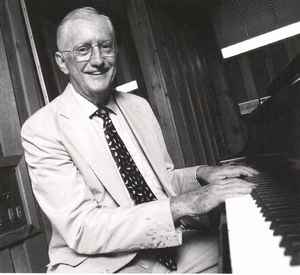 Eddie Higgins Source: Heidi's Jazz Club |
|
|
Pianist Ramsey Lewis was born in Chicago in 1935. He began piano lessons at age four and played in his first band at age fifteen (The Cleffs). With the drummer from that band, Isaac Holt, and bassist, Eldee Young, Lewis then formed the Ramsey Lewis Trio which released its first album, 'Ramsey Lewis and The Gentlemen of Swing' in 1957. (Release dates vary at several sources from 1956 to '58 for Argot LP 611. 4/57 looks most probable per David Edwards/Mike Callahan at bsnpubs.) Lewis released his second LP in 1958, 'The Gentlemen of Jazz', also for Argot (LP 627). His next session on September 2, 1957, was in support of 'The Colorful Strings of Jimmy Woode'. January 4 of 1958 saw Lewis in the Max Roach Quintet for the album, 'MAX'. Also in '58 Lewis contributed to 'Sonny Stitt' as a member of Stitt's Quartet on an unknown date. The high majority of Lewis' sessions approaching a couple hundred have been his own as a leader. In 1965 Lewis released two singles which each sold over a million copies: 'The In Crowd' (Billy Page) and 'Hang On Sloopy' (Bert Russell-Wes Farrell). Lewis' composition, 'Wade in the Water', was launched in 1966 to do the same. Lewis released over eighty albums over the years, produced seven gold records (500,000 copies) and received three Grammy Awards. Among later albums released in the new millennium AAJ highlights 'Time Flies' in 2004. The NEA awarded him Jazz Master in 2007. His last LP was 'Taking Another Look' in 2011. As of this writing Lewis resides in Chicago and is yet active giving concerts. References: 1, 2, 3, 4, 5. Discos: 1, 2, 3, 4. Lewis in visual media. Reviews. Awards: 1, 2, 3. Interviews: NEA 2006, Smooth Views 2007, Chicago Tribune 2007, Jazz Monthly 2008, Anthony Brown 2011 (pdf), Chicago Tribune 2015, Opera News 2015, NAMM 2017. Further reading: B&S. Ramsey Lewis 1957 Composition: Georges Bizet (premiere: 3 March 1875) Album: 'The Gentlemen of Swing' Bass: El Dee Young Drums: Isaac Red Holt Arrangements or compositions: Lewis Production: Dave Usher Ramsey Lewis 1958 Composition: Cole Porter Album: 'The Gentlemen of Jazz' Bass: El Dee Young Drums: Isaac Red Holt Engineering: Jack Weiner Ramsey Lewis 1968 Composition: Charles Stepney Album: 'Maiden Voyage' Bass: Cleveland Eaton Drums: Maurice White Arrangements: Charles Stepney/Cleveland Eaton Engineering: Doug Brand Supervision: Richard Evans Production: Charles Stepney Ramsey Lewis 1974 With Earth, Wind & Fire Composition: Maurice White Ramsey Lewis 1977 Composition: Larry Dunn/Roxanne Seeman Album: 'Tequila Mockingbird' Production: Bert DeCoteaux/Larry Dunn Ramsey Lewis 1983 From 'Les Fleurs': Composition: ? Arrangement: Tom Washington Composition: Stevie Wonder Ramsey Lewis 1984 Composition: Patrick Henderson Album: 'The Two of Us' With Nancy Wilson Production: Stanley Clarke Ramsey Lewis 2011 Composition: Lewis Album: 'Taking Another Look'
|
Ramsey Lewis Source: R2 Records |
|
| Buddy Montgomery See
Vibes:
Buddy Montgomery. |
||
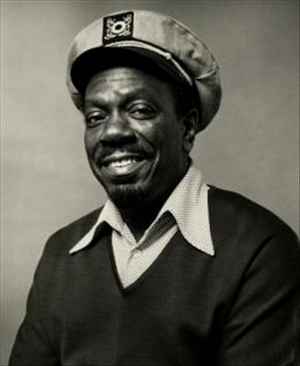 Johnny Hammond Smith Source: All Music |
Johnny Hammond Smith
[1,
2] was born
John Robert Smith in 1933 in Louisville, Kentucky. First recording as Johnny
Smith, he picked up "Hammond" in the seventies because he played the Hammond
B-3 organ. Lord's disco has Smith on organ in a group with drummer,
Christopher Columbo, on July 7, 1957, for two takes of 'Oh Yeah' per King
5012. He was working with
Nancy Wilson when the Arrow label offered
both of them a contract.
Wilson turned it down, waiting for a bigger label.
(Having recorded for Dot Records, she had experience with smaller labels, and would
soon be with Capitol which had the wherewithal to globally distribute and
promote as please.) Smith, however, went with Arrow, he to issue the 7"
45rpm 'Imagination Part 1 & 2', in 1958. 'Over the Rainbow' and 'Deep
Purple' were also released on 7" by Arrow, issue date unknown but likely '58
or '59. Come Smith's debut album, 'Have You Heard Johnny Smith', in 1959.
Smith issued three more albums in 1959: 'Imagination' (Warwidk), 'That Good
Feelin'' (New Jazz) and 'All Soul' (New Jazz). Among vocalists Smith
supported was Byrdie Green for 'The Golden Thrush
Strikes At Midnight' in July of '66, 'I Got It Bad' in April of '67
and 'Sister Byrdie' in March of '68'. Smith issued nearly forty
albums during his relatively brief career of above sixty sessions. His last was in 1978, 'Don't Let
the System Get You', when he retired from recording and started buying real
estate (he would own at least one motel). Smith performed regional gigs in
SoCal (southern California) and began teaching at Cal Poly Pomona in 1987
before recording again on July 8, 1990, to back Diane Witherspoon on such as
'Thankin' You' and 'Yes I'll Dare'. Lord's disco shows latest sessions with
Charles Earland at the
DuSable Museum of African American History in Chicago on May 24, 1997, one
of those an organ solo of 'Summertime'. He died of cancer at his home in either Victorville or Hesperia ("top of the hill"
in trucking lingo before descending toward LA) on June 4 of 1997.
Sessions: JDP, Lord.
Discographies: 1,
2,
3,
4. Further
reading: interview w Cheryl Smith (wife since 1988) *;
the Hammond organ: 1,
2,
3,
4,
5; 'The Jazz Organ'
by Geoff Alexander *; 'The Organ in Jazz' by Steven Cerra: 1,
2. Johnny Hammond Smith 1959 Album: 'That Good Feelin'' Composition: Joseph Kosma/Jacques Prévert/Johnny Mercer Album: 'That Good Feelin'' Composition: Richard Rodgers/Lorenz Hart Johnny Hammond Smith 1963 Composition: Sonny Burke/Paul Francis Webster Album: 'Black Coffee' Johnny Hammond Smith 1967 Album Title track written by Johnny Hammond Smith Composition: Charles Gross LP issue 1968: 'Soul Flowers'Johnny Hammond Smith 1969 Composition: Johnny Hammond Smith Album: 'Soul Talk' Johnny Hammond Smith 1970 Composition: James Clark/Johnny Hammond Smith Album: 'Here It 'Tis' Johnny Hammond Smith 1971 Composition: Hal Davis/Willie Hutch Berry Gordy/Bob West Album: 'What's Going On' Composition: Carole King/Toni Stern Album: 'Breakout' Composition: Aretha Franklin Album: 'Wild Horses Rock Steady' Composition: Renaldo Benson/Al Cleveland/Marvin Gaye Album: 'What's Going On' Johnny Hammond Smith 1973 Composition: Donny Hathaway/Leroy Hutson Album: 'Higher Ground' Composition: George Gershwin Brothers/DuBose Heyward Album: 'Higher Ground' Johnny Hammond Smith 1974 Composition: Larry Mizell Album: 'Gambler's Life' Johnny Hammond Smith 1975 Album Johnny Hammond Smith 1991 Filmed live
|
|
|
Pianist and multi-instrumentalist, Muhal Richard Abrams,
was born in 1930 in Chicago. He there briefly attended Roosevelt University,
dropping out due that academics weren't what was being played in the
nightclubs where he initially performed blues, R&B and bop. He began
arranging in 1950 for the King Fleming Band. In 1955 he was a member of the
bop group, Modern Jazz Two + Three. In 1957 Abrams participated in what is
thought to be his debut recording session with Walter Perkins for the
release of 'Daddy-O Presents MJT + 3' in July of the next year. Abrams began
to move beyond bop upon the formation of the Experimental Band in 1962. In
May of 1965 the AACM (Association for the Advancement of Creative Musicians)
was founded in Chicago with Abrams as its president
[*]. Part of that
organizations' agenda was to move jazz out of nightclubs into theatres and
lofts. In 1968 Abrams appeared on the first of three albums with
Anthony Braxton: '3 Compositions of New Jazz'. Abrams has appeared on three
more LPs with
Braxton. In 1971 he recorded 'Instant Death' with
Eddie Harris
for its release the next year. In 1975 Abrams recorded 'Roscoe Mitchell
Quartet' for issue in 1976. He would appear on two more albums with
Mitchell including
'Duets & Solos' recorded 15 March 1990 toward issue in '93 by Black Saint. In '76
Abrams recorded 'Morning Prayer' with Chico
Freeman in Chicago [Lord], that released in '78. Sources range from '75 to
'77 but most have Abrams moving to New York City
in 1976 [1,
2,
3,
4] where he established the
New York chapter of the AACM
in 1983 [1,
2]. In '77 he appeared on Freeman's album,
'Chico', recorded in NYC [Lord]. Abrams would visit w Chico again in 1989
for Abrams' contribution to 'Paying New York Dues' on Chico's 'Freeman &
Freeman' with his father,
Von Freeman. As to his
own material, the seventies saw Abrams composing for symphony orchestras,
big bands, string quartets, solo piano and voice. Lord has him recording his
first album for the Black Saint label, 'Sightsong', on 13 Oct 1975 w
Malachi Favors at bass, percussion
and vocals. Abrams stuck w Black Saint for twenty years through more than
fifteen albums to as late as 'Song for All' in 1995. 1981 saw Abrams' album
of duets, 'Duet', w pianist, Amina Claudine Myers. The Kronos Quartet
performed Abrams' classical composition, 'String Quartet No 2', at Carnegie
Hall on 22 November 1985. Other classical pieces showed up in 2001 on 'The
Visibility of Thought' including a couple tracks of synthesizer assisted w
computer and sequencer. Abrams was made an NEA Jazz Master in 2010 [1,
2].
He toured the States,
Canada and Europe, releasing more than 25 albums as a leader before his
death on 29 Oct 2017 [obits: 1,
2,
3].
References: 1,
2,
3,
4.
Synopses: 1,
2,
3.
Discos: 1,
2,
3.
Compilations: 'The Complete Remastered Recordings on Black Saint & Soul Note'
Vol 1
(eight albums from 'Spihumonesty' in '79 to 'Think All, Focus One' in '95) and
Vol 2.
Awards.
Interviews: NEA 2009,
New Music USA 2016.
Further reading:
articles: New Yorker,
Village Voice,
OJAI; books:
'A Power Stronger Than Itself: The AACM and American Experimental Music' by George Lewis. Muhal Richard Abrams 1957 Composition: Abrams Album with Walter Perkins: 'Daddy-O Presents MJT + 3' Producer: Leroy Winbush Muhal Richard Abrams 1968 Debut album of Anthony Braxton Producer: Robert Koester Muhal Richard Abrams 1972 Composition: Eddie Harris Eddie Harris album: 'Instant Death' Producers: Eddie Harris/Marvin Lagunoff Muhal Richard Abrams 1974 Recorded 1969 Composition: Abrams Muhal Richard Abrams 1976 Album Producer: Giacomo Pellicciotti Muhal Richard Abrams 1979 Album All compositions: Abrams Producer: Giacomo Pellicciotti Muhal Richard Abrams 1983 Album All compositions: Abrams Producer: Giovanni Bonandrini Muhal Richard Abrams 1991 Album: 'Blu Blu Blu' All compositions: Abrams Producer: Abrams Muhal Richard Abrams 1995 Album: 'One Line, Two Views' All compositions: Abrams Producer: Abrams Muhal Richard Abrams 2012 Filmed live with the Experimental Band
|
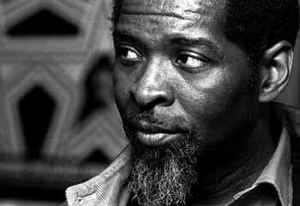 Muhal Richard Abrams Source: Harlem Jazz Museum |
|
|
Born in 1932 in Basel, Switzerland, pianist, George Gruntz
[1,
2,
3,
4],
performed locally in Switzerland until he was invited into the International
Youth Band to tour to the Newport Jazz Festival in Rhode Island in 1958.
Their concert was recorded and released that year by Columbia: 'Newport 1958'.
He had earlier held a number of unissued sessions in Switzerland from May 3,
1952 to September 15, 1956, some of which would later be included on '30 Jahre Jazz Made in Switzerland 1935-1965' in 1976 [Lord]. In 1960 Gruntz recorded tracks which wouldn't be found
until 2003 on 'Mental Cruelty'. In 1964 he was a member of the Swiss All Stars, issuing 'Swiss
All Stars' that year. His first name issues were also in 1964: 'Bach Humbug!
Or Jazz Goes Baroque' and 'Jazz Goes Baroque'. Among American musicians whom
he accompanied on tours in Europe was
Phil Woods in 1968-69 and 1972. Gruntz became artistic
director for JazzFest Berlin in 1972, which role he served until 1994. He
had also formed his Concert Jazz Band in 1972 at which he stood at helm
through the coming decades. 1980 found him with the Basel All Stars
recording what would get released on CD as 'Happy 60th Birthday and Happy
Returns'. Gruntz toured globally, including China, during
his career. He issued at least forty albums as a leader or co-leader. Gruntz
is thought to have made his last recordings in 2011 with the NDR Bigband,
'Dig My Trane', issued the following year. He had issued 'Matterhorn
Matters' in 2010. Gruntz died in his home in Basil in January 2013
[obits: 1,
2].
Further reading: Doug Ramsey.
Discos: Gruntz: 1,
2;
Concert Jazz Band: 1,
2.
Compilations: 'The First Ten Years' by MPS Records 1982. Concert itinerary 1972-2011.
Gruntz in visual media.
Per 1960 below, 'East of the Sun' is from the LP, 'Franco Cerri and his European Jazz Stars''. George Gruntz 1959 Filmed live with Roland Kirk Music: Jimmy Davis 1941 Lyrics: Ram Ramirez/James Sherman George Gruntz 1960 Composition: Brooks Bowman Album: 'Franco Cerri and His European Jazz Stars' George Gruntz 1964 Johann Pachelbel Published <1901 LP: ' Jazz Goes Baroque' Symphonie Les Echanges Jazzversion Prepared piano: Gruntz Drums: Daniel Humair/Pierre Favre LP: 'Les Echanges' George Gruntz 1967 LP: 'Noon in Tunisia' Compositions: Gruntz George Gruntz 1969 Filmed in Paris with Phil Woods Filmed in Paris with Phil Woods Composition: Eddie Harris Filmed live George Gruntz 1987 Filmed live Composition: Gruntz George Gruntz 1994 Filmed live Composition: Franco Ambrosetti George Gruntz 1998 Filmed concert George Gruntz 2007 Filmed live Bass: Herbie Kopf Drums: Rafi Woll Composition: Thelonious Monk 1944 George Gruntz 2010 Filmed live with Tobias Preisig Music: Johnny Green 1930 Lyrics: Edward Heyman/Robert Sour/Frank Eyton
|
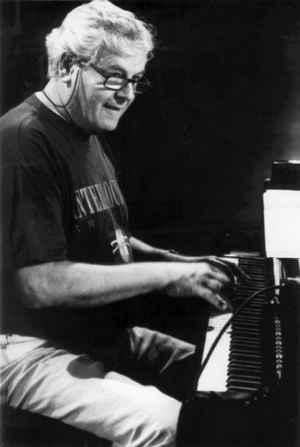 George Gruntz Source: PrimeTime Orchestra |
|
|
Born in 1933 in Uppsala, Sweden, composer and pianist,
Nils Lindberg, studied at Uppsala
University and the Royal Swedish Academy in Stockholm while performing with
such as Benny Bailey, Ove Lind and
Putte Wickman. Lindberg first
emerged on vinyl with Bailey in 1958 on a 7" EP: 'Benny's Blues'/'It's You
or No One' (Sonet SXP 2512). In 1960 Lindberg released his first album, 'Sax Appeal' (33 rpm LP)
recorded in February w his Swedish Modern Jazz Group of Rolf Billberg (alto
sax), Harry Backlund (tenor sax), Allan Lundstrom (tenor sax), Lars Gullin
(baritone sax), Sture Nordin (bass) and Conny Svensson (drums). Titles
included such as 'Curbits' and 'Brand New'. That was followed in Oct by
'Jazz in TV Time' (45 rpm 7" EP) w Lindberg's TV-orkester of Allan Lundstrom
(tenor sax), Torsten Wennberg (baritone sax), Maffy Falay (trumpet), Ake
Persson (trombone), Sture Nordin (bass) and Conny Svensson (drums). Tracks
on that amounted to 'Cotton Tail', 'Taboo', 'Blues for Bill' and 'Moonlight in
Vermont'. June of '61 saw 'Jazz from Studio A' go down w Rolf Billberg (alto
sax), Bjarne Nerem (tenor sax), Benny Bailey (trumpet), Ake Persson
(trombone), Georg Riedel (bass) and Egil Johansen (drums). Tracks for that
didn't see issue until 1998 by Dragon Records on 'Symphony No 1 & Jazz from
Studio A'. Lindberg's next album, 'Trisection', went down 18 Dec 1962 w his
Nils Lindberg Orchestra. Lindberg's jazz was often in an orchestral context
such as his 'Symphony No. 1' w the Swedish Radio Orchestra conducted by Egon
Kjerrman on 13 August of 1961 w jazz solos supplied by Lindberg, Rolf
Billberg (alto sax), Harry Backlund (tenor sax), Lars Gullin (baritine sax),
Erik Nilsson (baritone sax), Jan Allan (trumpet) and Ake Persson (trombone).
Those would see issue per above in 1998 by Dragon Records on 'Symphony No 1
& Jazz from Studio A'. Come the Swedish Radio Symphony Orchestra in winter
of 1972-73 for '7 Dalmalningar'. His 33rd album (32nd LP) in 1986:
'Stockholm Big Band'. Marc Myers draws attention to 'Seven Dalecarlian
Paintings', a blend of classical w jazz issued in Sweden in 1987, again as
'Timeless' in 2005
[Discogs]. Composing classical music as well, such included choral
mixtures like those which appeared on 'Carpe Diem' in 1997. Come another weave of classical
and jazz in 2002 per 'A Christmas Cantata'
[1,
2].
Lindberg's memoir, 'As You Are: Musikminnen', was published by Svensk
Visarkiv in 2006. References: 1,
2,
3,
4.
Timeline.
Discographies: CA,
Discogs,
Lord,
RYM.
Compilations: 'Symphony No 1 & Jazz from Studio A' 1961/63 by
Dragon Records 1998.
Marc Myers
interview 2015. Per below, Lindberg composed what titles on which he may not
appear at piano. Per 2013, Agnes Lindberg, is vocalist on
titles from 'O Mistress Mine' first sung by Lena Willemark in 1988 for
release in 1990. Agnes Lindberg is wife of upright bassist,
Olle Lindberg,
son of Nils since 1967. Nils Lindberg 1960 Album: 'Jazz in TV Time' Composition: Ernesto Lecuona Sidney Keith Russell (Bob Russell) Nils Lindberg 1963 Album: 'Trisection' All compositions: Lindberg Filmed live Date unconfirmed Conducting: Egon Kjerrman Composition: Lindberg Note: Date is estimated. The date of 1960 at wasaexpress seems in error. No instance of this symphony being performed earlier than 13 August 1963 is found. Personnel are identical to those in Lord and Discogs on that date. Both were produced by Lasse Sarri. Nils Lindberg 1975 From 'Reflections' All compositions: Lindberg Nils Lindberg 1994 Album: 'Requiem' All compositions: Lindberg Nils Lindberg 2001 Vocal: Alice Babs Music: Lindberg Lyrics: Red Mitchell Album: 'Don't Be Blue' Nils Lindberg 2013 Titles from 'O Mistress Mine' Music: Nils Lindberg 1988 Lve Bass: Olle Lindberg Vocal: Agnes Lindberg Text: Robert Herrick Filmed live Bass: Olle Lindberg Vocal: Agnes Lindberg Text: William Shakespeare Nils Lindberg 2014 Bass: Olle Lindberg Vocal: Agnes Lindberg Music: Nils Lindberg Lyrics: Red Mitchell
|
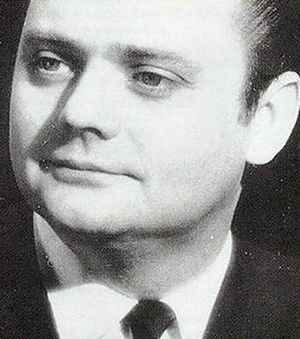 Nils Lindberg Source: Discogs |
|
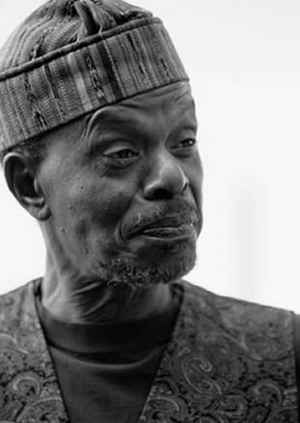 Horace Tapscott Source: NeFormat |
Born in 1934 in Houston, trombonist and pianist,
Horace Tapscott,
had a professional pianist and singer for a mother. Graduating from high
school in Los Angeles in 1952, he joined the Air Force and played trombone
in a military band in Wyoming. Discharge saw his return to L.A. where he
would freelance with numerous such as
Eric Dolphy,
Frank Morgan,
Wardell Gray,
Dexter Gordon,
Gerald Wilson. Lord's disco has him playing trombone for Dootone (DL
240) with Peppy Prince in 1956 in Los Angeles. Both Sides Now has that
issued in January of 1958 as 'Dance Party', a review for it existing in the
January 20, 1958, edition of 'The Billboard'. Tapscott is thought to have toured with Lionel
Hampton from 1959 to '61. Going by Isoardi [pdf], Tapscott began working on
the formation of his group, the Underground Musicians Association (UGMA) in
December of 1961, that to expand into a broader organization to the
purpose of such as finding employment for musicians, dancers and the like in
Los Angeles. That later became the Union of
God's Musicians and Artist's Ascension (UGMAA), an umbrella organization out
of which musicians were drawn to man Tapscott's Pan Afrikan Peoples Arkestra
(PAPA aka the Ark). Isoardi has the UGMMA rehearsing as a group as early as 6 Dec 1969,
PAPA following on 19 April at Foshay Jr. High School in Los Angeles. While
the mission of the UGMAA was to assist Los Angeles musicians, painters,
poets and the like, PAPA was formed to preserve, perform and develop
African-American music. We need back up, however, to October of 1962 for
Lou Rawls' 'Black and Blue'. Lord's disco shows
that to be Tapscott's last with trombone. Dental troubles from a serious auto accident in high
school had him exchanging that instrument for piano on his next session,
that with Lou Blackburn for 'Jazz Frontier' on January 25 of '63. His first
sessions with pianist, Onzy Matthews, were held on February 6 toward 'Mosaid
Select' issued in 2007, posthumously for both of them, Matthews dying in
1997. Among the more important drummers of Tapscott's career was Everett Brown Jr,
their first mutual session thought to have been on May 8, 1968, for
Sonny Criss' 'Sonny's Dream (Birth of
the New Cool)'. Brown joined Tapscott for the latter's
first session as a leader on April 1 of 1969 for 'The Giant Is Awakened'
in his Quintet consisting of
Arthur Blythe (alto sax) and bass by
both David Bryant and Walter Savage Jr. Brown provided rhythm on
multiple Tapscott LPs, including the Pan Afrikan Peoples Arkestra, to
sessions in August of 1983 eventually getting issued on 'Faith in
2010. Among the more important bassists in Tapscott's career was Bryant,
per above, first joining Tapscott on 'The Giant Is Awakened'. Bryant
provided bass on multiple Tapscott LPs, including the Pan Afrikan Peoples Arkestra, to 'Horace Tapscott
Octet Live' in September 1987. The PAPA recorded its
first LPs in 1978
: 'Flight 17' [personnel] and 'The Call'
[personnel]. 'Live at I.U.C.C.'
[personnel] went down
at the United Church of Christ in June of '79. Among what Wikipedia lists as
17 albums by Tapscott was his suite of solos on 'Songs of the Unsung' on February 18,
1978. Other solos went down from '82 to '85, issued as Volumes 1 through 11 of 'The Tapscott
Sessions'. His last studio release is
thought to have been 'Thoughts of Dar es Salaam' in 1997, recorded in July 1996.
The other members of that trio were Ray Drummond (bass) and
Billy Hart
(drums). Prior to that in June that trio had put down 'Caravan' to be found
on the album by various, 'What Is Jazz? 1966'. Tapscott died on February 27
of 1999 of lung cancer [obits: 1,
2]. His memoir edited by Steven Isoardi, 'Songs of the
Unsung', was published posthumously by Duke University Press in 2001. Others on whose recordings he can be found include
Bob Thiele, Elaine Brown and Nelly Pouget. It was with Brown that Tapscott composed the Black Panthers' [black
revolution organization: 1,
2,
3,
4,
5,
6]
anthem, 'The Meeting', included on Brown's 'Seize the Time: Black Panther
Party' in 1969. References for Tapscott: 1,
2,
3.
Chronology.
Discos: 1,
2,
3.
Compositional credits for PAPA.
Interviews: Bob Rosenbaum 1982;
Jason Weiss 1983;
Elaine Cohen 1984 Part 1,
Part 2;
Steven Isoardi 1993;
Serge Baudot 1998.
Further reading articles: David Keller;
the PAPA: 1,
2;
Alexandre Pierrepont;
Andy Thomas;
the UGMAA.
Further reading books: 'The Dark Tree' by Steven Isoardi (U of CA Press 2006).
Collections: UCLA. Forum.
Other profiles: 1,
2.
See also the Horace Tapscott Tribute Ensemble *.
Horace Tapscott 1963 Composition: Lou Blackburn Blackburn album: 'Jazz Frontier' Composition: Lou Blackburn Blackburn album: 'Jazz Frontier' Lou Blackburn album: 'Two Note Samba' Horace Tapscott 1968 Alto Sax: Sonny Criss Album: 'Sonny's Dream (Birth of the New Cool)' All compositions: Tapscott Horace Tapscott 1969 Album Horace Tapscott Quintet All compositions: Tapscott Horace Tapscott 1978 Composition: Jesse Sharps Album: 'The Call' With PAPA Horace Tapscott 1979 Composition: Jesse Sharps Album: 'Live At I.U.C.C.' With PAPA Composition: Sabir Mateen Album: 'Live At I.U.C.C.' With PAPA Horace Tapscott 1991 Filmed live Horace Tapscott 1995 With PAPA Horace Tapscott 1998 Filmed live Bass: Roberto Miranda Composition: Tadd Dameron
|
|
|
Cedar Walton |
Cedar Walton was born in 1934 in Dallas. Walton was a busy pianist who worked largely in a supporting role. Of 400 sessions documented in Lord, being far from complete, only 67 of those were his as a leader. He is thought to have first recorded in July and August sessions in 1958 with Kenny Dorham, those for the Riverside label. Those saw release on Dorham's album, 'This Is the Moment!'. Dorham and Walton would see one another on several occasions to 1967, Walton backing Dorham toward 'Blue Spring' in '59 and 'Last But Not Least 1966 Vol 2' in '66. Dorham would contribute to a couple titles on Walton's 'Cedar!' in July of '67. On the same date as Walton's second session with Dorham above in August he held an important session for Blue Mitchell which included drummer, Art Blakey. Blakey would become an important element in Walton's career, they working together again in 1960, Walton to become one of Blakey's Jazz Messengers to 1964, later in 1972-73, 1980 and, finally, April 11 of 1982 for 'Art Blakey & The All Star Jazz Messengers'. Mitchell would be a significant figure as well, backing each other's projects on several occasions. Walton would contribute to Mitchell's 'The Cupbearers' in '62, 'Boss Horn' in '66, 'Stratosonic Nuances' in '75 and 'Summer Soft' in 1977. Mitchell participated in Walton's 'Spectrum' in '68, 'The Electric Boogaloo Song' in '69 and 'Beyond Mobius' circa 1975. Their last visit together may have been in 1978 in Berkeley in support of Philly Joe Jones' 'Advance!'. After Walton's Dorham session in '59 per 'Blue Spring' above, he fell in with trombonist, JJ Johnson, in March for 'Really Livin''. Their last of several sessions were in August of 1960 for 'J.J. Inc.'. They would reunite years later in March of '88 to support Milt Jackson's 'Bebop'. On March 26 of '59 Walton had joined tenor saxman, John Coltrane's, Quartet including Paul Chambers (bass) and Lex Humphries (drums) for 'Alternate Takes'. One reason for Walton's prolific 415 sessions was becoming a studio musician for Prestige in the latter sixties. We need limit this account, then, to some of the more significant figures with whom he recorded on multiple occasions over a period of at least two decades. That would include tenor saxophonist, Stanley Turrentine, with whom he first recorded in November of '59 for Abbey Lincoln on titles like 'Afro Blue' and 'Let Up'. Turrentine projects to which Walton later contributed were 'Another Story' in 1969, 'Inflation' and 'Use the Stairs' in 1980, 'More Than a Mood' in 1992 and 'Christmas Waltz' recorded the next day (Valentine's Day) to be found on Turrentine's 'A Jazz Christmas'. Walton would see considerably more of trumpeter, Freddie Hubbard, their first titles together on August 1, 1960, for JJ Johnson's 'J.J. Inc.' above. Hubbard and Walton would see a great deal of one another, both backing other operations, especially Art Blakey's, and supporting each other. Hubbard Projects to which Walton contributed were 'Hub Cap' in 1961, 'Here to Stay' in 1962, 'The Body and The Soul' in 1963, 'Extended' and 'Intrepid Fox' circa 1974 and 'Bolivia' in 1990. Hubbard supported Walton on 'Reliving the Moment: Live at The Keystone Korner' in 1978 and 'Soundscapes' in 1979. Their last session together is thought to have been with Turrentine on February 13, 1992, for the latter's 'More Than a Mood' per above. Walton's first session with Hubbard above on August 1 of 1960 also included tenor saxophonist, Clifford Jordan. Like Hubbard, Jordan and Walton's paths merged numerously through the years, both backing other ensembles and each other. Jordan projects to which Walton contributed were 'Spellbound' in 1960, Starting Time' in 1961, 'Bearcat' in 1962, 'These Are My Roots' in 1965, 'Half Note' in 1974, 'Night of the Mark VII', 'On Stage Vol 1 & 2' and 'Firm Roots' in 1975, and 'The Pentagon' in 1976. Walton albums to which Jordan contributed were 'Spectrum' in 1968, 'The Electric Boogaloo Song' in 1969, 'A Night at Boomer's Vol 1 - 3' in 1973 and 'Plays the Music of Billy Strayhorn' in 1988. Returning to Walton's earlier career, another significant date was September 16, 1960, he joining the Jazztet run by trumpeter, Art Farmer, and tenor saxophonist, Benny Golson, for 'Big City Sounds'. Walton would accompany Farmer on a number of occasions to as late as April 1982 for 'Voices All', again with Golson and their Jazztet. Golson and Walton had recorded into 1961 but aren't found on any sessions together until April 11, 1982, with Art Blakey's All Star Jazz Messengers for such as 'Moanin' and 'City Bound'. Their last session is thought to have been for Golson's 'This Is For You, John' in December 1983. Returning to the early sixties, come trumpeter, Lee Morgan, on April 15, 1964, for Blakey's 'Indestructible'. Morgan and Walton hung tight for four years, backing other bands when Walton wasn't working on Morgan's projects: 'Charisma' and 'The Rajah' in 1966, 'Sonic Boom' and 'The Sixth Sense' in 1967, 'Caramba!' in 1968. Nigh thirty years later Walton would participate in the December 1994 recording of 'Tribute to Lee Morgan' with Eddie Henderson (trumpet), Grover Washington Jr (soprano sax), Joe Lovano (tenor sax), Peter Washington (bass) and Billy Higgins (drums). September 22 of 1964 saw Walton's first titles with tenor saxman, Eddie Harris, toward 'Cool Sax from Hollywood to Broadway'. Harris' 'Here Comes the Judge' was recorded in December, 'The In Sound' and 'Mean Greens' in 1965, 'The Tender Storm' in 1966. Nigh ten years later Harris would support Walton's 'Beyond Mobius' circa 1975. Walton's first titles with drummer, Billy Higgins, had been on August 9, 1965, to back Harris' 'The In Sound'. Higgins and Walton kept to much the same rail for another thirty-five years into the new millennium, they backing other bands when Higgins wasn't supporting Walton. They would appear on countless recordings together, such that it was a good guess that where the one was the other would be also. Walton backed Higgins on 'The Soldier' in 1979 and 'Once More' in 1980. They last recorded together on September 15, 2000, for Walton's 'Manhattan After Hours', Higgins to die the next year on May 3 of 2001. Vibraphonist, Milt Jackson, was another musician requiring mention in Walton's career, Walton first joining Jackson on August 12, 1965, at the Museum of Modern Art in NYC for 'Milt Jackson at the Museum of Modern Art'. For another thirty years one could almost bet that when Jackson released an album Walton would on it, including concerts in Tokyo in 1976. Their final session together is thought to have been in Hollywood in 1994 for Jackson's 'The Prophet Speaks'. Highlighting the seventies was Walton's first 'Eastern Rebellion' December 10, 1975, with George Coleman (tenor sax), Sam Jones (bass) and Billy Higgins (drums). With the exception of Higgins personnel in that ensemble would change for six more volumes recorded to May of 1994, that last being 'Just One of Those . . . Nights at The Village Vanguard'. Also highlighting the seventies was a concert at the Karl Marx Theatre in Havana, Cuba, on March 3, 1979, with the CBS Jazz All-Stars for what got released as 'Havana Jam'. Later on November 15 Walton put down 'Cedar's Blues' in Bologna, Italy. Highlighting the eighties was the Aurex Jazz Festival in Japan (that held at various venues) to get issued on 'Aurex Jazz Festival '80 - Battle of the Horns'. Later that decade is was Japanese producer, Ken Akemoto, for whom Walton's V.I.P Trio recorded 'Standard Album' and 'Standard Album Vol 2' in 1988 for release by California Breeze, now titled 'Standards' and 'Standards Volume 2' [*]. Walton gave his first 100 Gold Fingers performance in Tokyo in 1990, several to follow to as late as 2009. Also highlighting the nineties was Walton's first session with vocalist, Etta James, in Los Angeles in 1994 for 'Mystery Lady: Songs of Billie Holiday'. 'Blue Gardenia' followed in the winter of 2000-01. Prior to that in 2000 Walton contributed to eleven titles on 'The Legacy Lives On'. Walton issued a number of albums in the new millennium until his final recordings for Houston Person's 'Naturally' on July 5, 2012. He was made an NEA Jazz Master in 2010. Walton died on August 19, 2013, at his home in Brooklyn. References: 1, 2. Sessions: JDP, Lord. Discos: 1, 2, 3. Interviews: Les Tomkins 1976, Molly Murphy 2009, William Brower 2010 (pdf), Ethan Iverson 2010. Further reading: Brian Charette on composition; Richard Brody tribute. Per below, all tracks for 1958 are with Kenny Dorham on trumpet. Dorham also performs vocals. Cedar Walton 1958 From Kenny Dorham's 'This Is the Moment!' Composition: Earl Brent/ Matt Dennis Composition: Joseph Kosma/Jacques Prévert/Johnny Mercer Composition: Ray Evans/Jay Livingston/Victor Young Composition: Benny Golson/Jon Hendricks Tribute to trumpeter, Clifford Brown Cedar Walton 1959 Tenor sax: John Coltrane From Coltrane's album 'Giant Steps' From Kenny Dorham's 'Blue Spring' Composition: Richard Rodgers/Oscar Hammerstein II Composition: Kenny Dorham Composition: Kenny Dorham Composition: Kenny Dorham Cedar Walton 1960 Tenor sax: Benny Golson Trumpet: Art Farmer Composition: Golson Cedar Walton 1961 Trombone: JJ Johnson Composition: JJ Johnson From Johnson's album 'J.J. Inc.' Cedar Walton 1962 Trumpet: Blue Mitchell Composition: Tom McIntosh From Mitchell's album 'The Cup Bearers' Cedar Walton 1963 With the Jazz Messengers Composition: Juan Tizol From the Art Blakey album 'Caravan' Cedar Walton 1967 Composition: Cedar Walton Album: 'Cedar!' Cedar Walton 1976 Filmed live at the Umbria Jazz Festival Composition: Thelonious Monk From 'Beyond Mobius' The Girl with Discotheque Eyes Composition: Cedar Walton/Mike Lipskin Composition: Jerry Goldstein/War Cedar Walton 1982 Live performance Trumpet: Freddie Hubbard Composition: 1939: Billie Holiday Arthur Herzog Jr. Composition: Cedar Walton Cedar Walton 1986 Live performance Trumpet: Freddie Hubbard Composition: Erroll Garner
|
|
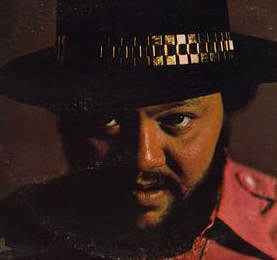 Charles Earland Source: Last FM |
Charles Earland
[1,
2]
was born in 1941 in Philadelphia. He began began playing sax in high school
and it's tenor with which he began his recording career in 1959, appearing
on 'Gold Coast Saturday Night' (Elektra 167), an album by Saka Acquaye and
His African Ensemble. In 1960 Earland popped up on Jimmy McGriff's 'Foxy Do 1 & 2'.
Recorded for the White Rock label, those were
never issued. Earland played tenor sax on those. It was with
McGriff, who played the Hammond
B3,
that Earland switched from saxophone to organ, the Hammond B3. It was with that
instrument that he issued 'Daily Double 1 & 2' in 1964 [45Cat]. 'Walking
with Feets 1 & 2' may have been recorded at the same session for Quaker
Town, but no issue is discovered. 45Cat has 'Rescue Me and 'The Midnight
Hour' issued in 1965 by the Greezie label. Earland produced a couple
tracks by Jean Wells in '65: 'Song of the Bells' and 'Sharing Your Love',
but isn't known to have performed on them. He
did appear on organ with Wells in 1966 on 'I Know That She Loves Me' and 'All This
Madness'. Those were recorded with the vocal group, the Butlers. Titles with
Wells were for the Quaker Town label. Earland got attached to a big
name in 1968 when he joined
Lou Donaldson on the latter's 'Say It
Loud', issued in 1969. Thre more albums ensued with
Donaldson that year: 'Boss Organ',
'Hot Dog' and 'Everything I Play Is Funky'. He is thought to have released his own albums in 1969
for the Choice label as well: 'Boss Organ' and 'Soul Crib' (both per Jazzlists). He may have
issued 'Black Power' for Rare Bird as early as 1969, but Billboard puts it
at 1971. Also in '69 Earland issued 'Cherie Amour' b/w 'Yes Suh'' (Charlie
Earland's Erector Set on Eldorado) and 'My Cherie Amour' b/w 'One For Lee'
(Rare Bird label). Earland may have issued a live recording for Trip Records
eponymously titled, 'Charles Earland' in 1969. However, the 'Goldmine Record
Album Price Guide' has that obscurity recorded in 1969 but not issued until
1974. Earland broached the seventies with the Prestige label and two albums
released in 1970: 'Black Talk!' and 'Black Drops'. He began using the
synthesizer per 'The Dynamite Brothers', issued in 1974. By the eighties Earland
had achieved the national spotlight and would tour heavily into the nineties
until his premature death of heart failure in December of 1999. His last
issue of some forty LPs had been 'Cookin' with the Mighty Burner' that year.
Posthumous releases in 2000 were 'The Almighty Burner' and 'Stomp!'. Per
1971, below, 'Living Black!' contains the track, 'Killer Joe'.
Discographies: 1,
2,
3.
Other profiles: 1,
2. Further
reading: the Hammond organ: 1,
2,
3,
4,
5; 'The Jazz Organ'
by Geoff Alexander *; 'The Organ in Jazz' by Steven Cerra: 1,
2. Charles Earland 1965 Composition: Steve Cropper/Wilson Pickett Composition: Carl Smith/Raynard Miner Lyrics possibly Fontella Bass: 1, 2 First issue: Fontella Bass 1965 Charles Earland 1969 Composition: Duke Ellington/Irving Mills/Juan Tizol Lou Donaldson LP: 'Say It Loud' With Erector Set Composition: Henry Cosby/ Sylvia Moy/Stevie Wonder Composition: Henry Cosby/ Sylvia Moy/Stevie Wonder Composition: L. Fisher/Earland Composition: Earland LP: 'Boss Organ' Album With Erector Set Composition: Erland (on label) Charles Earland 1970 Composition: Pat Upton LP: 'Black Talk' Charles Earland 1971 Album Charles Earland 1972 Composition: Earland LP: 'Live at the Lighthouse' Composition: Earland LP: 'Intensity' Composition: Robert Lamm LP: 'Intensity' Album Charles Earland 1974 Album Composition: Earland LP: 'Leaving This Planet' Charles Earland 1976 Composition: Earland/Jackie Turner LP: 'The Great Pyramid' Composition: Earland LP: 'The Great Pyramid' Album Charles Earland 1980 Composition: Earland/Sheryl Kendrick LP: 'Coming to You Live' Charles Earland 1998 Composition: Randy Muller LP: 'Slammin' & Jammin'
|
|
|
Shirley Horn, a vocalist as well as pianist, formed her first band, a trio, in 1954. Born in Washington D.C. in 1934, Horn's first known recordings are thought to be with violinist Stuff Smith on August 7, 1959, in Washington DC, contributing piano and vocals to 'Cat on a Hot Fiddle' [Fitzgerald/ Lord]. She released her first album, 'Embers and Ashes', the next year. Among her most important associates in the music business were Miles Davis and Quincy Jones. The latter's orchestra backed her for the issue of 'Shirley Horn With Horns' in 1964. More than two thirds of Horn's 90 sessions in Lord were her own as a leader. She released her last album, 'May the Music Never End', in 2003. Her final recordings are thought to have been live at Le Jazz Au Bar in NYC in January 2005: 'Jelly Jelly', 'Loads of Love' and 'I Didn't Know What Time It Was'. Horn had lost a foot to diabetes in 2000, dying of the same on 20 October 2005. Fuller account of Shirley Horn w references in Modern Jazz Song. Shirley Horn 1960 Composition: Jimmy Van Heusen/Johnny Mercer Shirley Horn 1992 Composition: Artie Butler/Phyllis Molinary Album: 'Here's to Life'
|
Shirley Horn Photo: John O'Hara Source: SF Gate
|
|
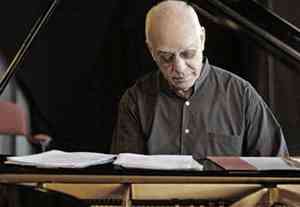 Steve Kuhn Photo: Mike Colyer Source: New England Public Radio |
Born in 1938 in Brooklyn, pianist, Steve Kuhn,
began training at age five. His piano teacher was
Serge Chaloff's mother. Kuhn
attended both Harvard and the Lenox School of Music [1,
2, 3] in Connecticut, the
latter where
Bill Evans was on the faculty. It was at
the Lenox School of Jazz that Kuhn made his initial recordings on August 29, 1959, with
Don Cherry and
Ornette Coleman. 'The Sphinx' and 'Inn Tune' weren't issued,
however, until 1980, they private recordings in Lenox, Massachusetts.
Gravitating to NYC, Kuhn first emerged on vinyl
with
Kenny Dorham in 1960 on the album, 'Jazz Contemporary'. His
debut session as a leader was in 1960 as well, with his trio consisting of
Scott LaFaro on
bass and
Pete La Roca on drums. Those tracks,
not issued until 2007 on '1964', were 'Little Old Lady',
'Bohemia After Dark', 'What's New', 'So What' and 'So What' (alt take).
December of 1960 saw Kuhn supporting vibraphonist, Johnny Rae's 'Opus de
Jazz Vol 2'. Come February 21, 1961, for Stan Getz'
'Airegin', other titles unissued by Verve. 'Airegin' went down again
with other titles at the Newport Jazz Festival on July 3. Kuhn kept with
Getz to 'Stan Getz with Guest Artist Laurindo Almeida' in March of '63.
Kuhn's first release as a leader was in 1963 with pianist,
Toshiko Akiyoshi, per 'The Country
and Western Sound of Jazz Pianos'. Among his more important partners through
the years arrived in March of 1965 for Art Farmer's
'Sing Me Softly of The Blues', that bassist,
Steve Swallow. Kuhn and
Swallow held a musical
dialogue through countless sessions together into the new millennium. The
Farmer session in '65 included drummer,
Pete La Roca, with whom Kuhn
and
Swallow oft performed. Another
drummer with whom they frequently collaborated was
Bob Moses. After
Farmer they supported
La Roca's 'Basra' on May 19 of
'65 with tenor saxophonist,
Joe Henderson. Their first
together for
Moses was for 'Family' in August
of 1979. In the meantime they had been backing other ensembles as well as
each other. Their first trio had been in Paris on October 29, 1969, with
Aldo Romano on drums for
'Childhood Is Forever'. Their next, after numerous projects together, was
'Wisteria' in 2012 with drummer, Joey Baron. 'At This Time' arrived on
August 7, 2015, with Baron again. 'Two by Two' on March 11, 1995, had been a duo. A couple
years after Kuhn's first session with
Swallow he had
moved to Stockholm in 1967 and toured Europe until his return to New York in
1971. While across the sea he supported 'Alto Summit' in June of '68
featuring
Lee Konitz, Pony Poindexter,
Phil Woods and
Leo Wright. Kuhn's LPs, 'Watch What
Happens' and 'Childhood Is Forever', two of numerous trios, were also spread
during that period. He was present as well on November 28, 1969, in Hamburg for NDR Workshop #64, 'Catching the New
Ones' [*].
[NDR Workshops: 1,
2, 3]
Upon Kuhn's return to the States in 1971 he recorded 'Steve Kuhn' [1,
2] in July w
Ron Carter (baas),
Billy Cobham (drums) and
Airto Moreira
(percussion). Come 'Trance' [1,
2,
3,
4,
5,
6] on 11 and 12 Nov of 1974 w
Swallow,
Jack DeJohnette (drums)
and Sue Evans at percussion. Among titles gone down in the eighties was
'Porgy' in Dec 1988 w
Buster Williams and
Eddie Gómez at bass,
Al Foster (drums) and Laura
Ann Taylor at vocals. The nineties brought such as 'Seasons of Romance'
[1,
2,
3] in April of '95 w
Foster, Bob Mintzer at tenor
sax, Tom Harrell (trumpet) and
George Mraz
(bass). At the cusp of the new millennium it was
Fosterr and Kuhn in a trio w
David Finck at bass on 20 Feb of 2000 toward 'Quiereme Mucho' [1,
2,
3].
It was Finck again w Joey Baron at drums and Joe Lovano at tenor sax toward
'Mostly Coltrane' [1,
2]
in Dec 2008. Having issued about 35 albums, Kuhn's most recent as of this
writing was 'To and From the Heart' [1,
2,
3,
4,
5,
6]
in 2018 w Baron at drums and
Swallow again at
bass. Among numerous others on whose recordings Kuhn can be found are Karin Krog,
Carol Fredette and pianist, Tisziji Munoz ('Incomprehensibly Gone'
'13). Kuhn's were among the thousands of master tapes destroyed by the 2008
Universal studios fire. Kuhn is yet active, recently gigging at the Birdland in NYC perhaps an hour from
his home in rural New York. References: 1,
2.
Sessions: Fitzgerald (w composers): main,
multiple versions,
personnel;
JDP; Lord (leading 53 of 111).
Discos: 1,
2,
3,
4.
Facebook.
Interviews: Dan Del Fiorentino 1997;
Tom Reney 2004;
NPR 2007;
Mathieu Perez 2014.
Other profiles: 1,
2. Steve Kuhn 1959 From 'The Lenox School of Jazz' Session 29 August 1959 Issued 1959 Reissued 1990 and 2009 Funky edit: song duration is 3 minutes Composition: Margo Guryan Composition: Ornette Coleman Steve Kuhn 1960 From '1960' Recorded 29 Nov 1960 NYC Bass: Scott LaFaro Drums: Pete La Roca Composition: Oscar PettifordComposition: Hoagy Carmichael/Stanley Adams Steve Kuhn 1969 Composition: Tom Jobim/Ray Gilbert/Vinicius De Moraes Album: 'Childhood Is Forever' Recorded 13 Oct 1969 Paris Steve Kuhn 1971 Bass: Ron Carter Drums: Billy Cobham Percussion: Airto Moreira Steve Kuhn 1972 The Saga of Harrison Crabfeathers Composition: Kuhn Steve Kuhn 1986 Composition: 1942: Dick Robertson/Nelson Cogane/Sammy Mysels Album: 'Mostly Ballads' Recorded 3 Jan 1984 Steve Kuhn 1998 Bass: David Finck Drums: Billy Drummond Music: Kurt Weill 1943 Lyrics: Ogden Nash Steve Kuhn 2004 Album: 'Easy to Love' Bass: David Finck Drums: Billy Drummond Composition: From 'Ack Varmeland Du Skona'' Music: Max Bruch from Op 88 1911 Lyrics: Anders Fryxell/Fredrik Dahlgren Commonly credited anonymously as a Swedish folk song Steve Kuhn 2005 Bass: Davod Finck Drums: Billy Drummond Composition: Maurice Ravel 1899 Steve Kuhn 2007 Composition: Kenny Dorham Album: 'Live at Birdland' Bass: Ron Carter Drums: Al Foster Steve Kuhn 2012 Filmed live Bass: Steve Swallow Drums: Billy Drummond
|
|
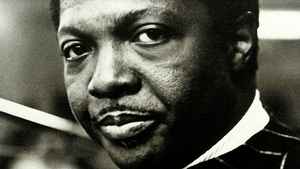 Brother Jack McDuff Source: Wax MP3 |
Born in 1926 in Champaign, Illinois, pianist and organist
(Hammond B-3),
Brother Jack McDuff,
originally played bass in the bands of Joe Farrell and
Willis Jackson. He
switched to organ before making his first recordings with Shakey Jake in NYC
in 1959 toward the latter's album, 'Good Times', issued in 1960 [Lord]. On May 5
of 1959
he backed
Jackson for the album, 'Please Mr. Jackson'',
issued that year. Multiple
recordings with
Jackson in 1959 affected the release of several albums from
1960 to 1966 including 'Together Again' gone down on 13 Dec 1961 and
'Tobacco Road' recorded 22 August 1966. McDuff had released his debut album, 'Brother Jack', in 1960,
recorded for Prestige Records in January. Engraving more tracks that July
wrought the album, 'Tough 'Duff', in 1960 as well. McDuff began 1961 w the
recording of 'The Honeydripper' on 3 February w saxophonist,
Jimmy Forrest, Grant Green
at guitar and Ben Dixon on drums.
Green and McDuff would partner on multiple future occasions. Following Jackson, the second major
contributor to McDuff's early career was saxophonist,
Gene Ammons, with whom he recorded
Ammon's 'Twistin' the Jug' on 28 Nov 1961. Marc Myers draws attention to 'Brother Jack Meets the
Boss' gone down on 23 Jan 1962. Come 'Soul Summit' on 19 February of
'62 w
Sonny Stitt also on tenor sax and
Charlie Persip on drums. Among projects during McDuff's third year into
the sixties were the recording and releases of 'Somethin' Slick!' and
'Crash!' supported by guitarist,
Kenny Burrell. Come 5 June of '63 at
The Front Room in Newark, New Jersey, for 'Brother Jack McDuff Live!' in a
quartet w
Red Holloway (tenor sax),
George Benson (guitar) and Joe Dukes
(drums). It was the same gang w
Harold Vick added on
tenor sax and flute on 3 October that year at the Jazz Workshop nightclub
in San Francisco for 'Brother Jack at the Jazz Workshop Live!'. 'Prelude'
went Down in December in NYC w
Vick out, but making
for a big band arranged by
Benny Golson w 11 musicians added to McDuff's quartet of
Holloway,
Benson and Dukes.
Holloway,
Benson and Dukes each played major
roles in McDuff's career.
Benson and McDuff would issue above
ten albums together, most in McDuff's name at lead excepting
Benson's debut LP, 'The New Boss
Guitar of George Benson', recorded in May of 1964 w backing by McDuff,
Holloway, Ronnie Boykins (bass),
Montego Joe (drums) and Dukes on 'My Three Sons'.
Holloway and McDuff partnered on
numerous albums together, several for McDuff, others in support of such as Etta James
and
Carmen McRae in the eighties.
Lord shows George Dukes' first session w McDuff back on 14 July of 1961
toward McDuff's 'Goodnight, It's Time to Go', McDuff's quartet on that
filled by
Vick and Grant Green.
As w
Green, McDuff would record w
Vick on multiple
occasions.
Dukes and McDuff were steady partners through countless sessions into
1966. Along the way
Benson,
Holloway and McDuff backed
Dukes' 1964 album 'The Soulful Drums of Joe Dukes'. December of '69 saw
Dukes supporting McDuff's 'Moon Rappin'. Benson,
Holloway, Dukes and McDuff would
reunite in 1992 for McDuff's 'Color Me Blue', that prior to Dukes' death
in December. Other personnel were Kevin Axt on bass, Ron Eschete and Phil
Upchurch at guitar, and vocalist, Denise Perrier.
Benson,
Holloway and McDuff reunited
again in 1998 for the latter's 'Bringin' It Home', that supported by seven
other musicians including Andrew Beals on alto sax. Slipping back to the seventies, McDuff backed tenor saxophonist,
Houston Person, on 'Angel
Eyes' in March 1973 at Watt's Club Mozambique in Detroit, that released on
Person's double LP, 'The
Real Thing'. Ten Years later it was vocalist,
Joe Williams', 'Nothin' But the
Blues' recorded Nov 16 and 17 of '83. A tour to Italy in 1991 went toward
'Jack-Pot' w a crew of Piero Odorici (tenor sax) Bruno Marini (baritone
sax), Massimo Farao (piano) and Bobby Durham (drums, vocals). Lord's disco has McDuff
in 145 sessions, above
90 of those his own as a leader. He released
above fifty albums, his last posthumously in June 2001: 'Brotherly Love'. McDuff
had toured Japan in 2000, then died of heart failure in Minneapolis,
Minnesota, on 23 January 2001. References: 1,
2.
Sessions: JDP, Lord.
Discos: 1,
2,
3,
4,
5. Jack McDuff 1959 From Willis Jackson's 'Please Mr. Jackson' Composition: Ernesto De Curtis Composition: Eubie Blake/Andy Razaf Composition: Bill Jennings/Jack McDuff/Willis Jackson Jack McDuff 1960 Album Jack McDuff 1962 With Gene Ammons & Sonny Stitt Composition: Sonny Stitt Jack McDuff 1963 Guitar: George Benson Composition: Nat Adderley Jack McDuff 1964 Filmed live Drums: Joe Dukes Guitar: George Benson Tenor sax: Red Holloway Filmed live Drums: Joe Dukes Guitar: George Benson Tenor sax: Red Holloway Jack McDuff 1966 Album Composition: Johnny Mandel/Paul Francis Webster Album: 'Tobacco Road' Jack McDuff 1967 Also on the album 'Do It Now' Jack McDuff 1969 Composition: McDuff Album: 'Steppin' Out' Album recorded 1961-66 'Chicken Feet' recorded February 1966 Album All compositions: McDuff Jack McDuff 1970 Composition: McDuff Album: 'Who Knows What Tomorrow's Gonna Bring?' Jack McDuff 1972 Composition: Richard Davis Album: 'Check This Out' Jack McDuff 1994 Composition: Harold Vick CD: 'Crash!' Guitar: Kenny Burrell
|
|
|
Born in 1932 in Atlanta, Duke Pearson originally arrived as Columbus Calvin Pearson before his uncle began calling him Duke after Ellington. Playing piano by age six, he also picked up brass instruments and performed largely on trumpet into college until after meeting Wynton Kelly while in the Army in the early fifties. Completing his duty in '54, he returned to the South where Wikipedia has him performing with Tab Smith [1, 2, 3] and Little Willie John in Georgia and Florida before heading to New York City in 1959. He is thought to have first recorded to issue on 4 October that year with the Donald Byrd Quintet for Blue Note. Alto saxophonist, Jackie McLean, was also in on that session toward 'Fuego' [1, 2]. Pearson made his first name recordings for Blue Note later the same month as the Duke Pearson Trio, releasing the album, 'Profile', that year w Gene Taylor on bass and Lex Humphries at drums. Pearson's second album, 'Tender Feelin's', was recorded w the same personnel in '59 and released in 1960. Among his more important musical associates in the sixties was Donald Byrd. with whom he stuck into 1964, including another session involving McLean on July 10 of 1960 for titles like 'Bo' and 'My Gal Shirl'. Byrd would contribute Pearson's albums 'Hush!' on January 12 of '62, 'Wahoo!' on November 21 of '64 and 'Baltimore 1969' on April 22 of '69. Tenor saxophonist, Stanley Turrentine, had joined Byrd's Brass and Voices in December of 1964 toward 'I'm Trying to Get Home'. He next found himself with Turrentine on September 22 of 1966 toward the latter's 'The Spoiler. Pearson and Turrentine worked together for a couple of years to spring of 1968, such as Pearson's 'The Right Touch' with trumpeter, Freddie Hubbard, along the way on September 13, 1967. Pearson joined Byrd again in May and June of 1969 toward 'Fancy Free'. His last tracks with Byrd were on December 4 of 1970 ('Elmina' et al) before quitting to tour with both Carmen McRae and Joe Williams in the early seventies. One result of his time with McRae was contributions to her album, 'Carmen', recorded in Hollywood in Nov of 1971 and March of '72. Fitzgerald, JDP and Lord list that as Pearson's final recording engagement, presumably due that he was diagnosed with multiple sclerosis in the early seventies. Pearson had headed the A&R division at Blue Note since 1963, switching to teach at Clark College in '71. He died relatively young at age 48 of multiple sclerosis at the Atlanta Veterans Hospital on August 4, 1980. He attended above seventy sessions during his brief recording career of perhaps 13 years, more than thirty of those his own projects. Composition and arrangement being major facets of his career, Fitzgerald has Pearson composing above fifty titles of which Gordon Vernick highlights several as well as arrangements. Ejazzlines draws attention to 'Is That So?' recorded in May of 1965 toward issue on the album, 'Honeybuns'. References: 1, 2. Sessions: Fitzgerald: w composing credits *, multiple versions *, personnel in alpha *; JDP; Lord. Catalogs: 1, 2, 3, 4, 5. Reviews. Archives: 'DownBeat' 1973. Other profiles: 1, 2. Duke Pearson 1959 From: 'Profile' Composition: Sonny Burke/Paul Francis Webster Composition: Jimmy Dorsey/Paul Madeira Composition: Cy Coleman/Carolyn Leigh Note: Most sources including Blue Note have 'Profile' issued in 1959. Discogs and RYM show 1960. Duke Pearson 1960 From Donald Byrd's 'Fuego' All compositions: Byrd From Pearson's 'Tender Feelin's' Composition: Cole Porter Composition: Joel Herron/Frank Sinatra/Jack Wolf Duke Pearson 1961 Composition: Donald Byrd Album: 'Dedication!' Composition: Pearson Album: 'Dedication!' Recorded '61 Issued '68 Composition: Pearson Recorded '61 Issued '68 Composition: Pearson Note: The above versions of 'Jeannine' and 'Say You're Mine' were recorded 1 August 1961. Originally intended for issue on Jazzline JAZ 33-04 in 1962, that apparently didn't occur. They and other titles recorded on that date eventually saw release on 'Angel Eyes' in 1968 by Polydor (UK). Black Lion issued another version in Germany in 1990 on 'Bag's Groove' including alt takes. Duke Pearson 1968 Composition: Jerry Dodgion Album: 'The Phantom' Composition: Pearson Album: 'The Phantom' Duke Pearson 1969 Recorded 3 Dec 1968 Composition: Chick Corea Album: 'Now Hear This'
|
Duke Pearson
Source: Jazz WCLK
|
|
|
Born Eunice Kathleen Waymon in 1933 in Tryon, North Carolina,
composer,
pianist and vocalist, Nina Simone,
began playing piano at age three. Her early influences were classical and
gospel. One incident as a child illustrates her
later involvement in civil rights: At one recital her parents, who had sat
in the front row, were moved to the rear of the hall to make room for white
folk. Simone refused to play until her parents were moved back up front.
Simone later studied at Julliard. Among her first jobs was at the Midtown
Bar & Grill in Atlantic City, New Jersey, where, upon the owner's request,
she added singing to piano performances. About that time she changed her
name from Eunice Waymon to Nina Simone. "Niña" is Spanish for little girl.
"Simone" was in honor of the French actress, Simone Signoret. It was
December of 1957
that Simone came out the gate with a group of powerful recordings that made
her abilities conspicuous, issued more than year later in Feb 1959 on an album titled, 'Little Girl Blue',
missing its scheduled issue of Sep '58 per 'Billboard' [Boscarol]. The same session saw 'I Loves You Porgy' and 'Love Me or Leave Me'
eventually issued in June of 1959 on Bethlehem 11021. During the year
between recording and releasing those, Simone married one Don Ross in latter
1958 to divorce about a year later. More notably, not having the wherewithal
to wait for royalties, Simone had sold her rights to 'I Loves You Porgy' for
$3000, after which she lost an estimated one million dollars from that
record's sales when it mounted Billboard's R&B chart at #2, its Pop chart at
#18, in August of '59. Other strong early titles were 'Nobody Knows You When
You're Down and Out' in 1960 followed by 'Trouble in Mind' in '61.
Simone began addressing racial inequality with song in 1964, upon the
release of the live album, 'Nina Simone In Concert'. During that period she
advocated violent revolution, Martin Luther King's strategy of protest too
slow. Among such songs was her 1965 cover of
Billie Holiday's 1939 recording
of 'Strange Fruit', concerning the lynching of blacks.. Her first of several Bob
Dylan covers arrived in 1965 per 'The Ballad of Hollis Brown'.
Highlighting the latter sixties was her issue of 'Nina Simone and Piano!' in
1969 before moving to Barbados in 1970. She intended to quit the music industry in 1974 with the
release of the album, 'It Is Finished', but started to record again in 1978,
issuing the album, 'Baltimore'. During the eighties she worked at Ronnie
Scott's Jazz Club in London. She lived in Switzerland and the Netherlands
before calling France home in 1992, the year Simone published her memoirs,
'I Put a Spell On You'. She released her last album, 'A Single Woman', in
1993. Simone died in her sleep in Carry-le-74 with the
release of the album, 'It Is Finished', but started to record again in 1978,
issuing the album, 'Baltimore'. During the eighties she worked at Ronnie
Scott's Jazz Club in London. She lived in Switzerland and the Netherlands
before calling France home in 1992, the year Simone published her memoirs,
'I Put a Spell On You'. She released her last album, 'A Single Woman', in
1993. Simone died in her sleep in Carry-le-Rouet, France, on the
Mediterranean coast, in 2003. Among her longest musical associations through
the decades were with guitarist and musical director, Al Schackman, and
percussionist, Leopoldo Fleming. Among her awards were the Grammy Lifetime
Achievement Award in 2000 and honorary degrees from three schools. A statue
was erected in her honor in 2010 in her birthplace, Tryon, North Carolina.
We list only one performance by Simone below, a concert filmed live in
Montreux, Switzerland. More piano by Simone
w a fuller account and references in Modern Jazz Song. Nina Simone 1959 Debut LP
|
Nina Simone Source: Sound Projections |
|
|
We pause this Birth of Modern Jazz Piano with Duke Pearson. By the time Pearson arrives jazz is well developed beyond big swing orchestra, largely via the introduction of sounds from without the United States in the thirties, then bebop and individualists such as Nat King Cole in the forties. The fifties will have commenced with "cool" jazz ('Birth of the Cool' by Miles Davis representative of such, recorded in 1949-50 though not released until 1957) and be a decade of experiment giving passage to prominent compositions in the sixties announcing that modern jazz had arrived (such as 'Take Five' by Brubeck above). Keyboardists who began their careers in the sixties at Modern Jazz 8. |
|
Early Blues 2: Vocal - Other Instruments
Modern Blues 2: Vocal - Other Instruments
Romantic: Composers born 1770 to 1840
Modern: Composers born 1900 to 1950
Early Jazz 1: Ragtime - Bands - Horn
Early Jazz 2: Ragtime - Other Instrumentation
Modern 4: Guitar - Other String
Modern 5: Percussion - Other Orchestration
Modern 7: Latin Jazz - Latin Recording
Modern 8: United States 1960 - 1970
Modern 9: International 1960 - 1970
Latin
Latin Recording 2: The Caribbean
Latin Recording 3: South America
Total War - Sixties American Rock
Classical - Medieval to Renaissance
Classical - Baroque to Classical
Classical - Romantic to Modern
Jazz Early - Ragtime - Swing Jazz
Jazz Modern- Percussion - Latin - Song - Other
Boogie Woogie - Doo Wop - R&B - Rock & Roll - Soul - Disco
Sixties American Rock - Popular